


Sofía Ruiz/Master Habanosommelier
Our daily lives are something we often take for granted. The alarm rings every morning, and we’re ready to get breakfast, shower, and head off to work, repeating this at least five days a week. In this “normality,” we could walk down Fuencarral street and, if we added the #78 (Centro, Madrid), we’d simply pass by, unaware that this very spot commemorates –and in a way, preserves– over 500 years of Madrid’s history.
So, I decided to set my responsibilities aside and unravel this city, which I now also hold in my heart. Along with a great friend, I explored the Museum of the History of Madrid during an afternoon that transformed into a time of learning, conversation, and good smokes –moments that require time and aging, like a Habano.
Read in the magazine (rotate your device for a better reading experience):
Behind the baroque facade of what was once the Hospice of Madrid, this art gallery was established in 1929 as the Municipal Museum to document the life of the Spanish capital between the 16th and 20th centuries, although I would dare to say it extends to the present day.
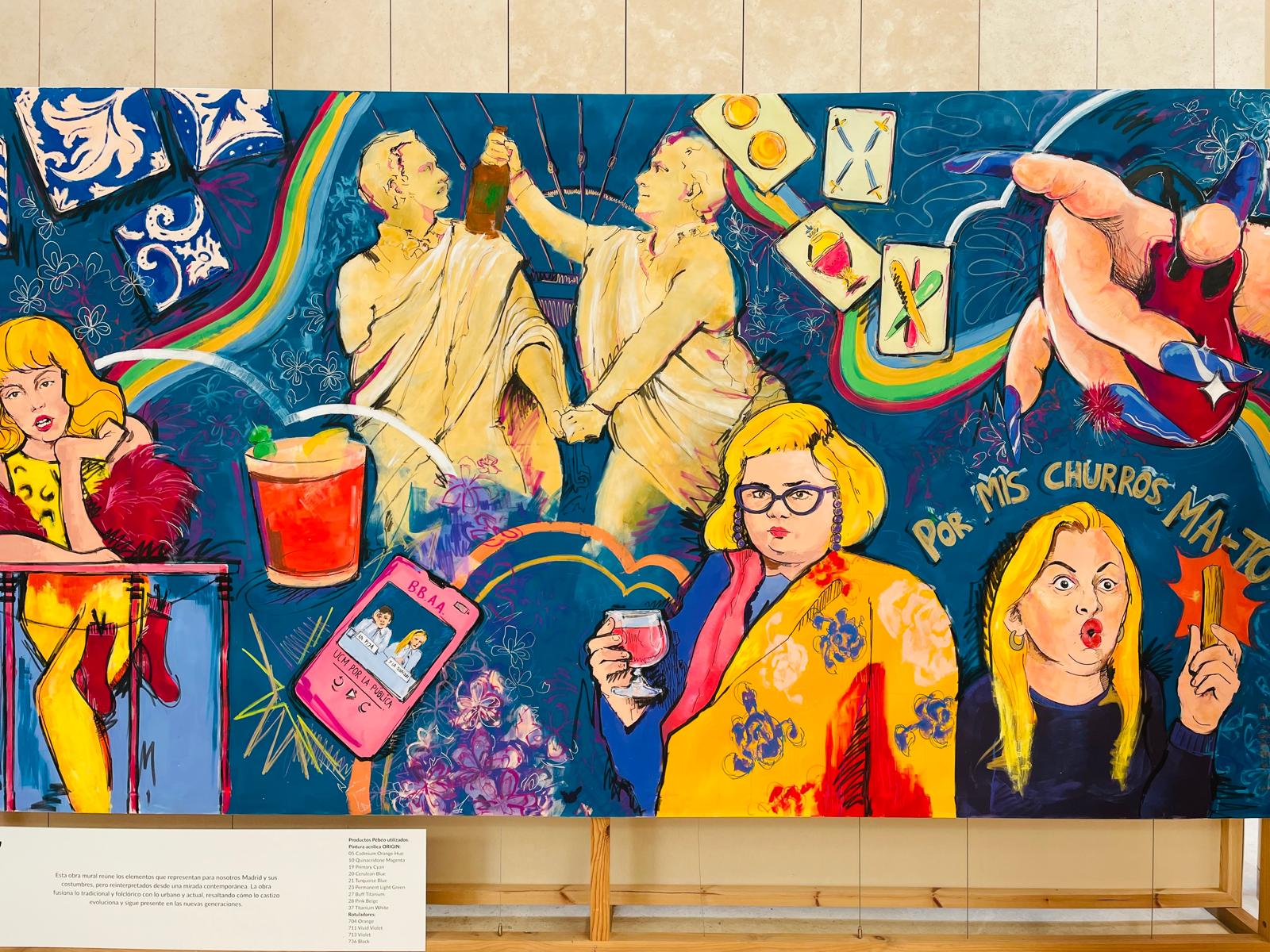
The first approach seemed a bit reflective to me, because instead of the city’s beginnings, as we passed the reception desk, we found a pictorial exhibition that reflects the thoughts, customs, and includes characters who shape today’s society. The fun, anecdotal part was immediately finding Brays Efe, who brings Paquita Salas to life, my favorite Spanish comedic character who can be your best friend when you just want to laugh and blame life for your troubles.
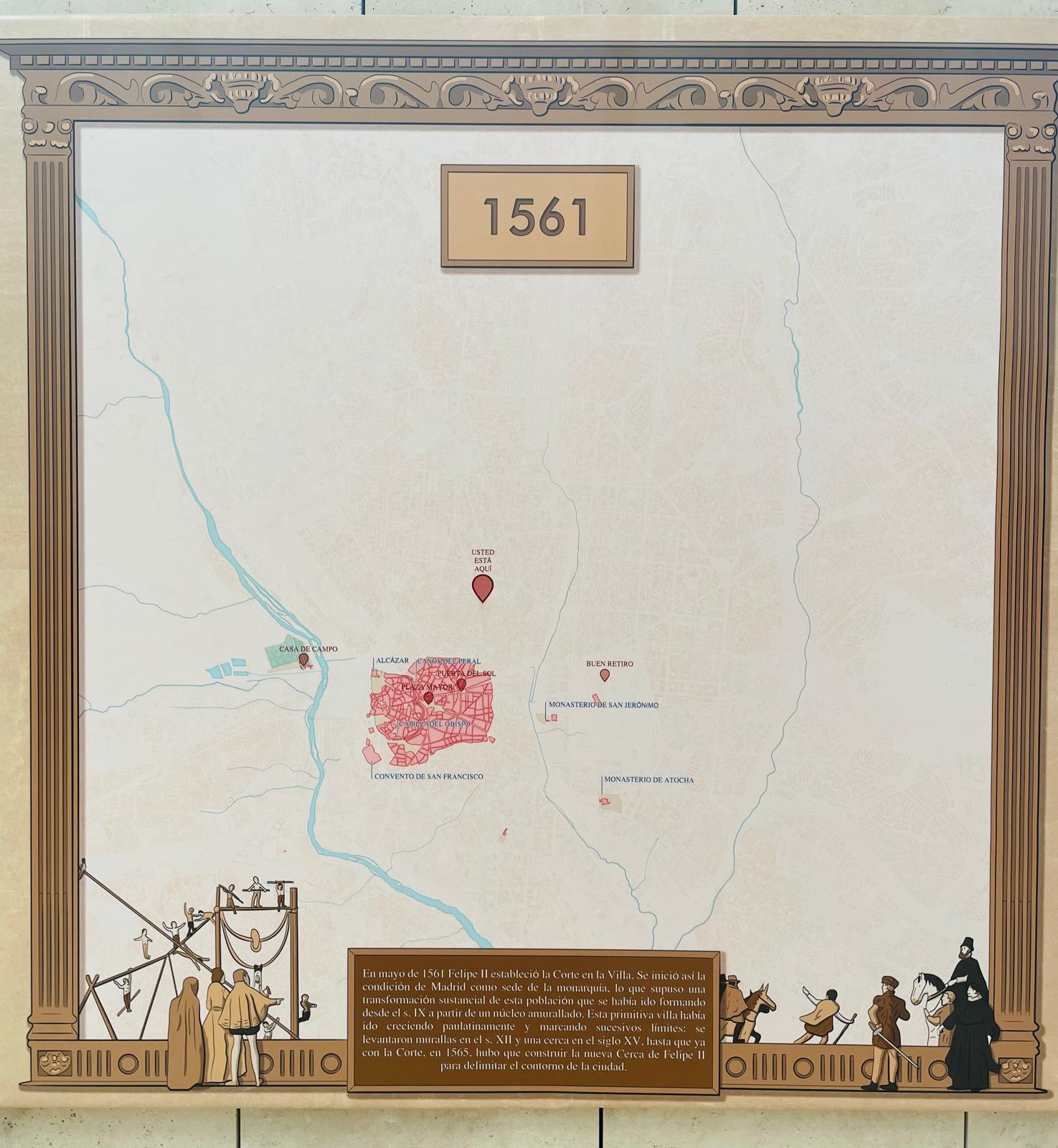
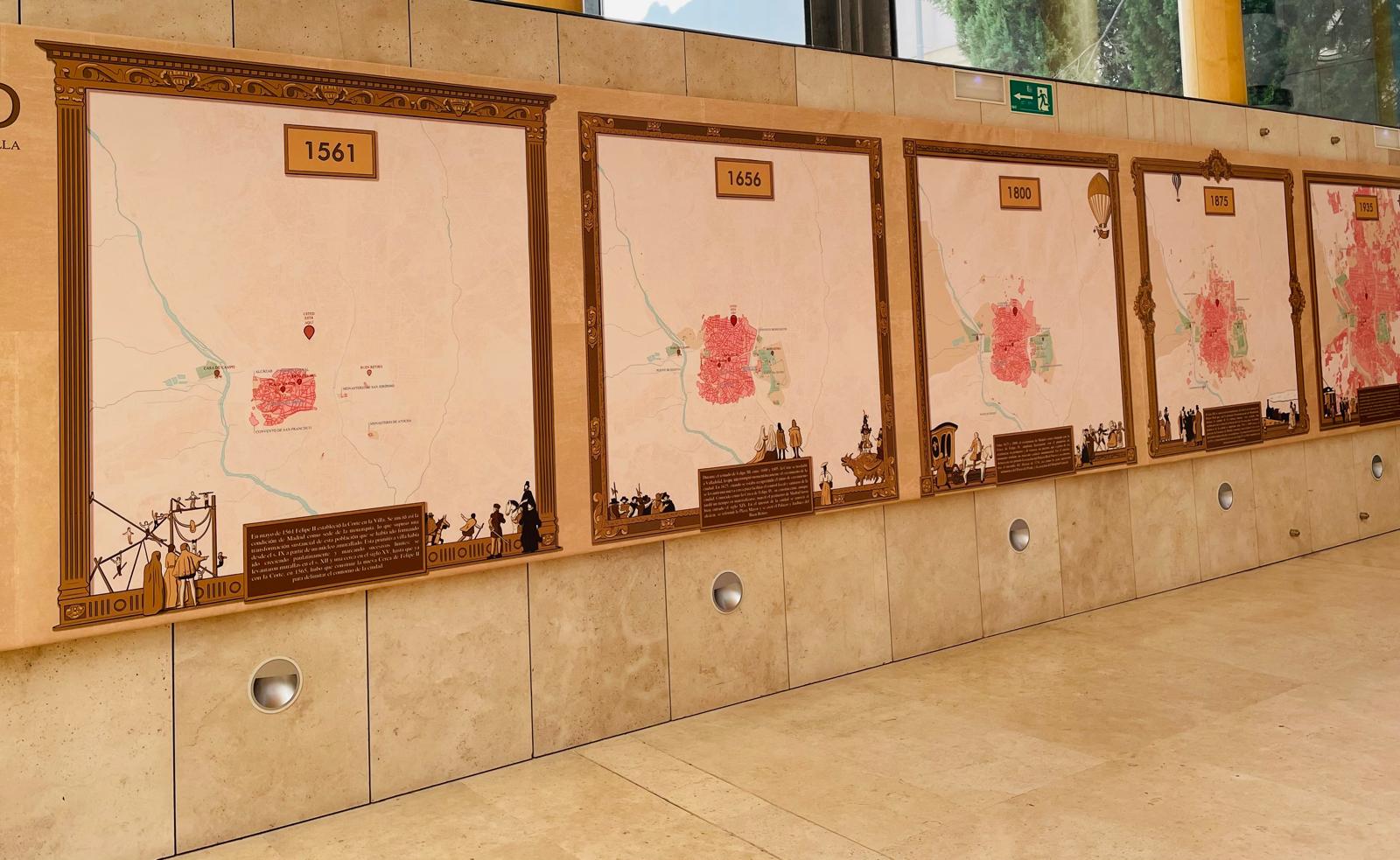
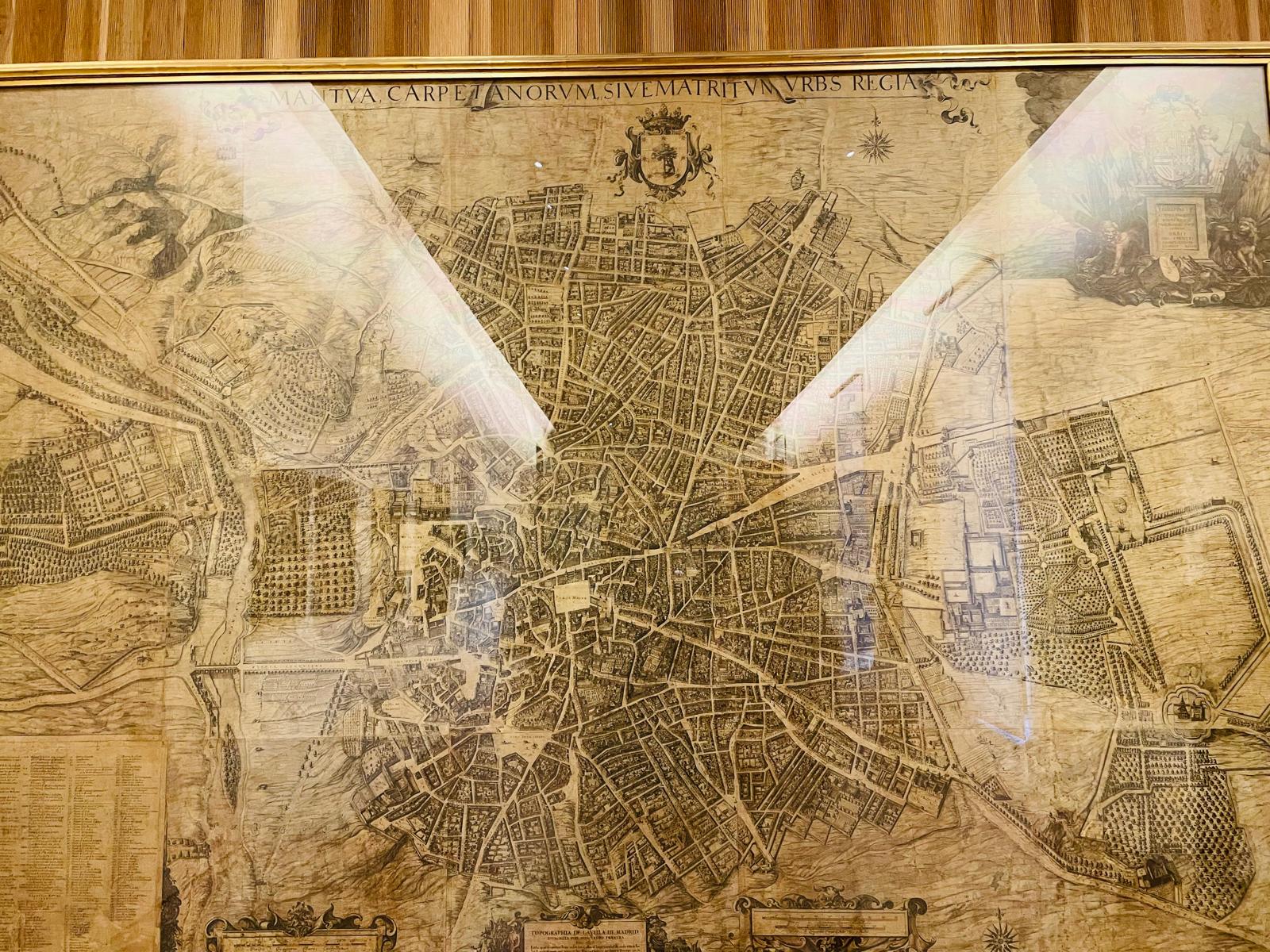
On the first level, a series of historical maps from the 18th to the 20th centuries are displayed, by renowned cartographers such as Nicolás de Fer, Tomás López, and Núñez Granés, showing the evolution and urban growth of the city.
A fun fact is that in the early 15th century, the seat of government was not in Madrid, which was a small town with little development. The decision to make it the capital of the Monarchy was made by King Felipe II, who considered, among other reasons, the abundance and purity of its water, the large number of existing flour mills, and its proximity to El Escorial, whose construction was of great importance to him.
As our conversation, historical facts, and my friend’s lessons on the Bourbon dynasty progressed –enriching moments that forge bonds between people– we came across a model created in 2000 by Juan de Dios Hernández and Jesús Rey, at a scale of 1:1250 (which is 1,250 times smaller than the original), representing Madrid in 1656.
Following the ten blocks that make up this floor, through the oil paintings, we got to know the streets, squares, palaces, orchards, and the life of the aristocracy of other times, when the sun determined the length of the day. Not like now, when we can extend our activities for 24 hours, order food at home in the early morning, or go out to enjoy our favorite cigar on a terrace. Is that why we live so fast?
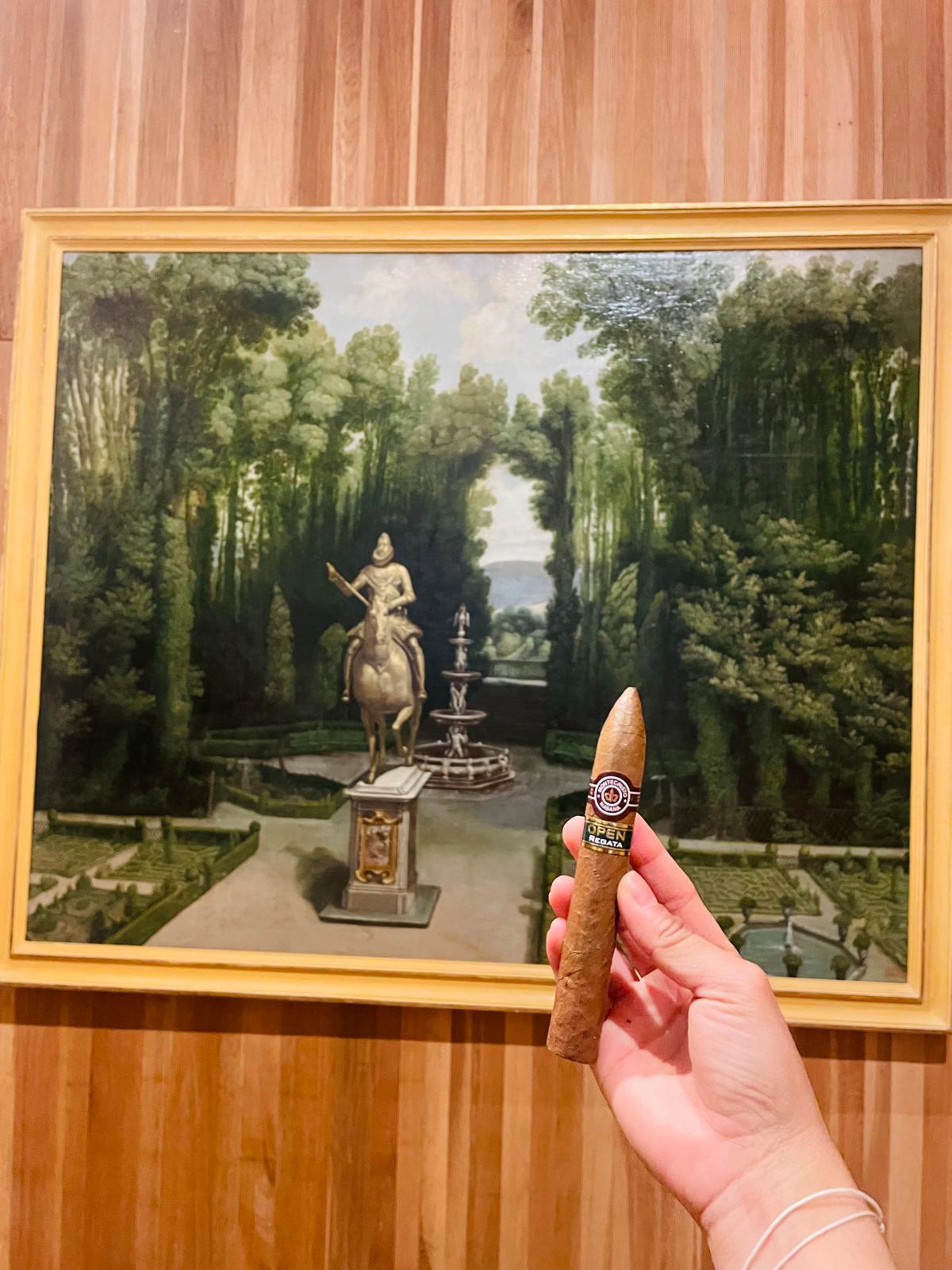
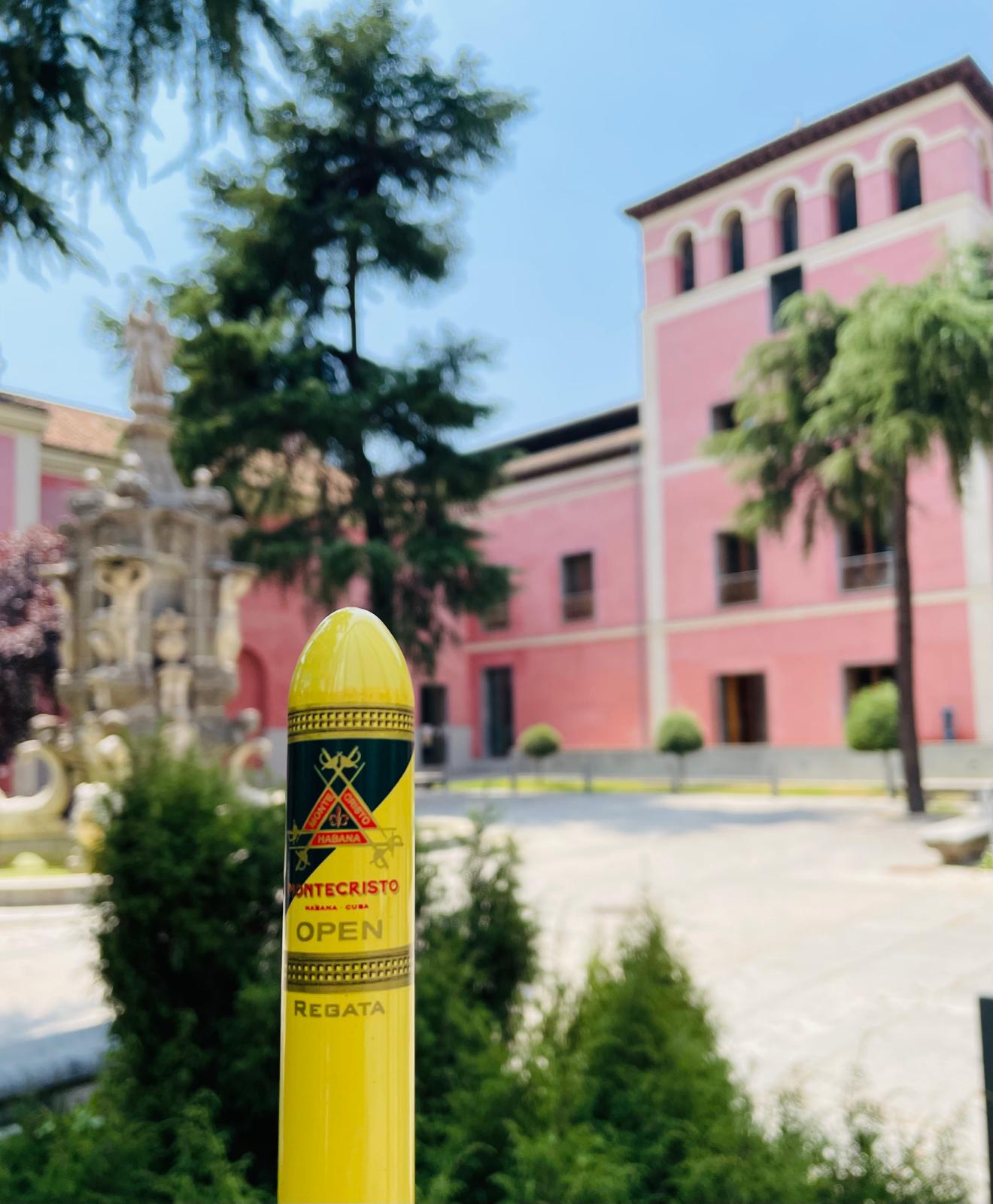
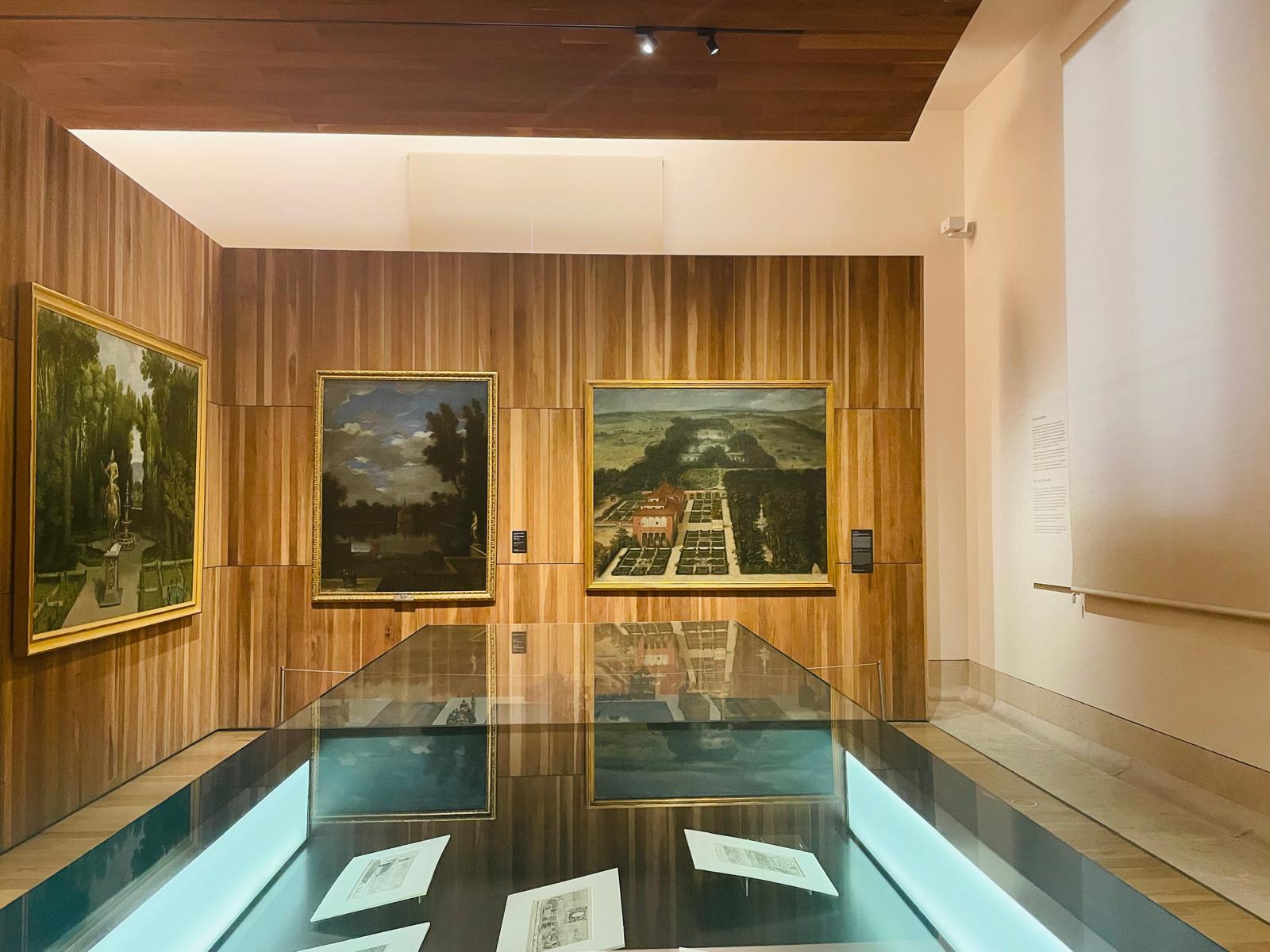
If you visit this museum, I recommend you don’t miss the oil painting next to the main model of Madrid, which shows a frontal view and every detail of a majestic garden. I associated this image and the feeling it gave me with a Montecristo Open Regata, so every time I light one, I will connect with this moment, without needing to see the painting. Because in the end, life is all about feeling.
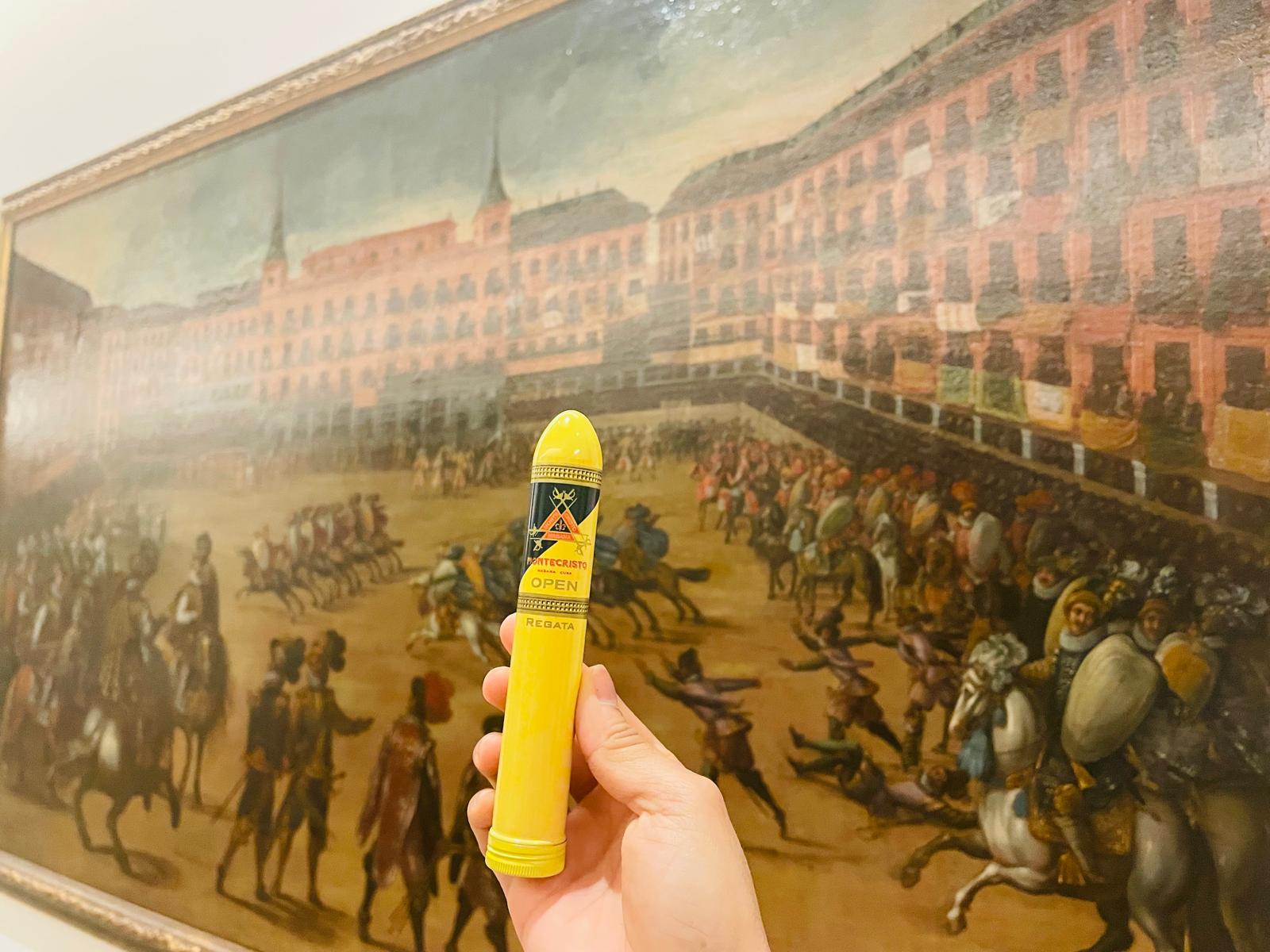
On the ground floor, the area called “Village, Court, and Capital of Two Worlds” spans the 16th to 18th centuries, and different paintings show the transformation of the capital city. There are portraits of the monarchs of the House of Austria, their residence the powerful Alcázar, and a very special work about my favorite place in Madrid: the Plaza Mayor, where Juan de la Corte captured the “game of jousting” (an equestrian spectacle). Also, The Return of the God Manzanares to the Casa de Campo, by the painter Félix Castello.
But among the stories in this museum, my favorite is the one I saw on TV when I was 13: the wedding of King Felipe VI and Leticia –which might be the seed of my curiosity for this country– as part of the reigning house to this day. In fact, the 18th century coincided with the arrival of the Bourbon dynasty, which initiated an urban transformation to turn the city into a setting worthy of a modern European monarchy.
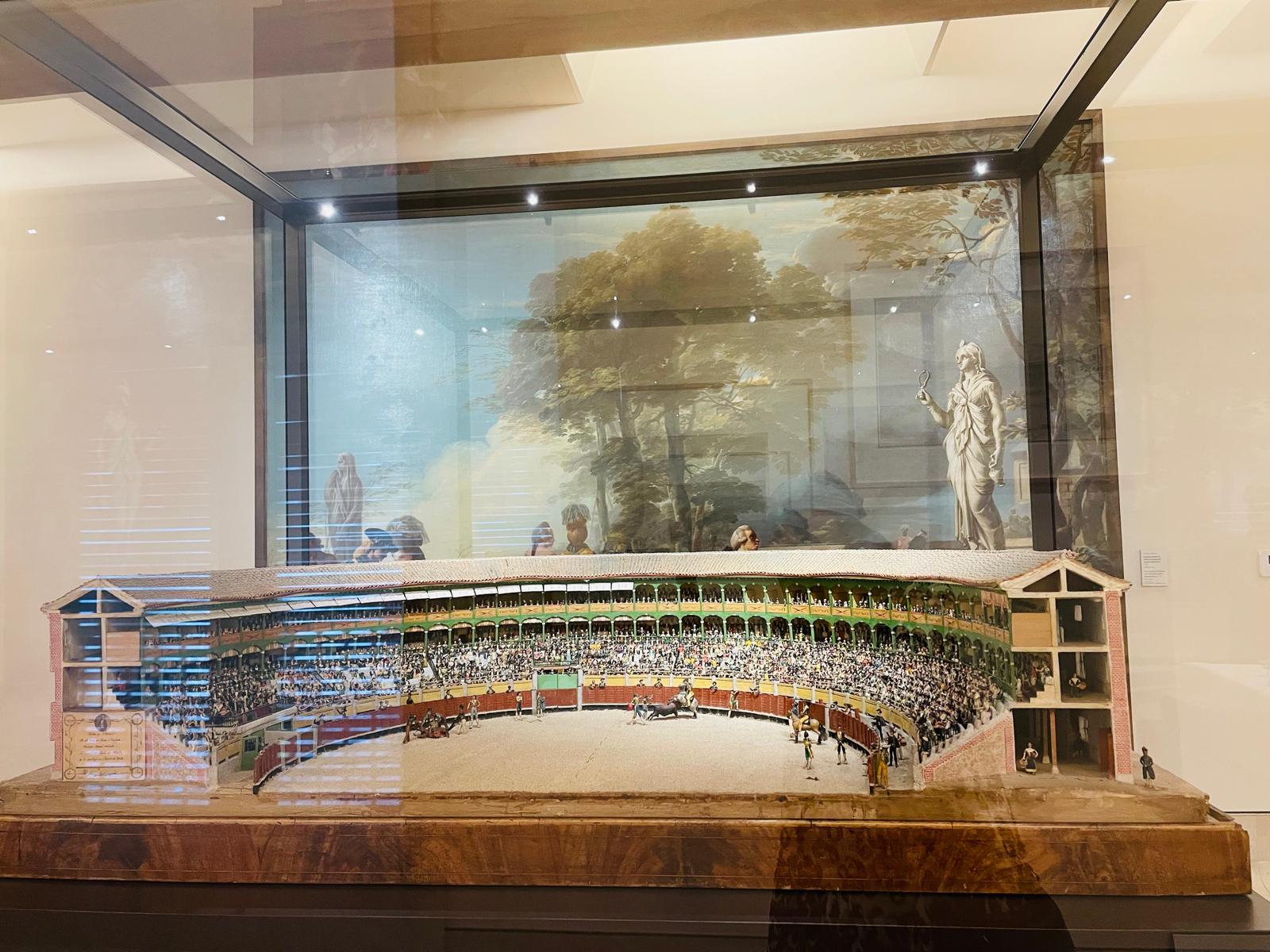
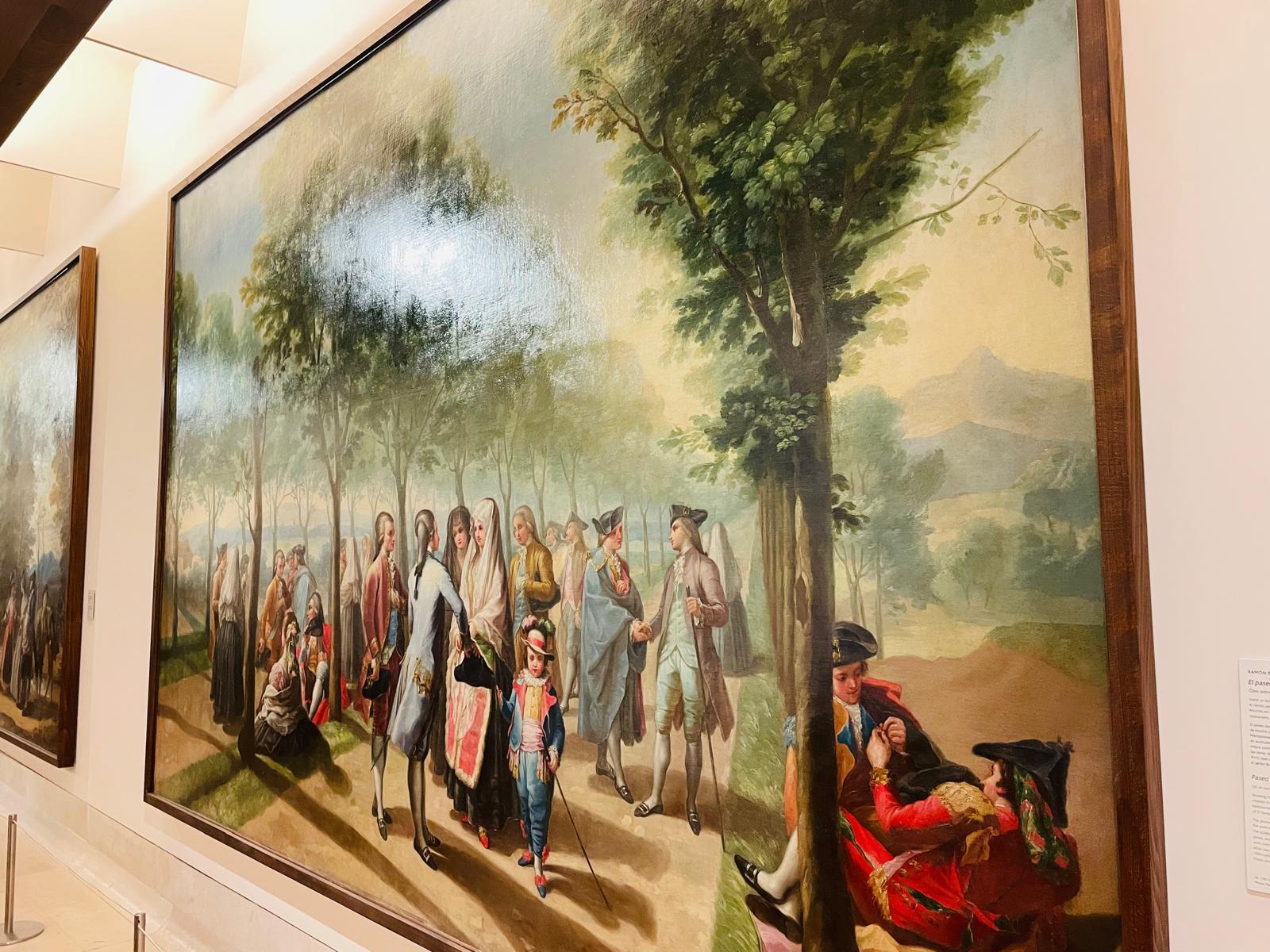
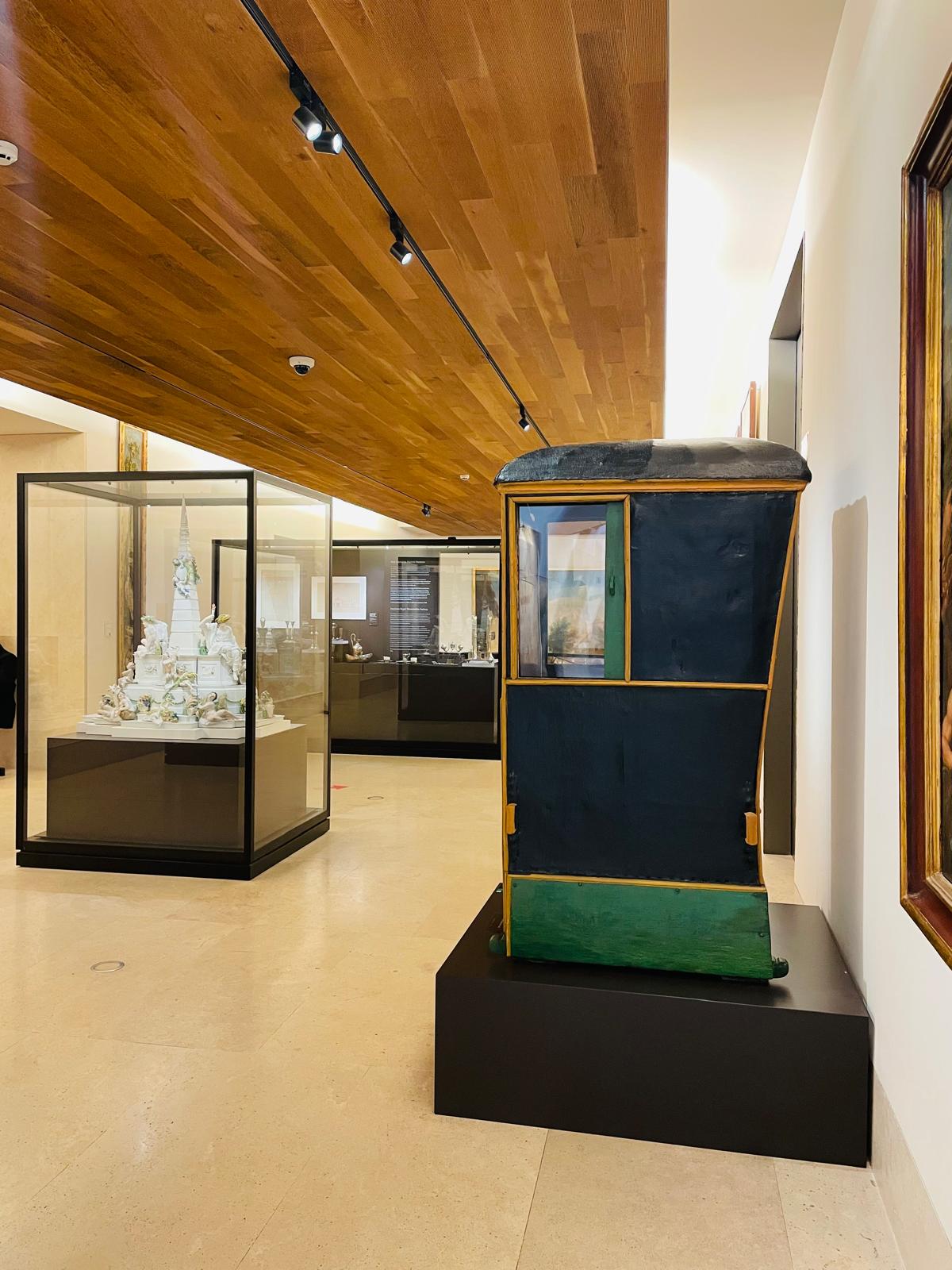
A series of portraits guides you past those who have worn the Spanish crown, accompanied by collectible objects from the monarchy, such as porcelain, La Granja crystals, tapestries, and for all bullfighting fans, some models of the first bullrings.
At the end of this room, a portrait of José Bonaparte, Napoleon’s brother and better known as Pepe Botella because of his fondness for drinking, awaits us; an anecdote shared by my charming Spanish friend Cecilia, who always has some curious fact about her country at hand. Pepe Botella was the last emperor and practically fled to France in 1813, when Napoleon recognized Fernando VII as the legitimate king.
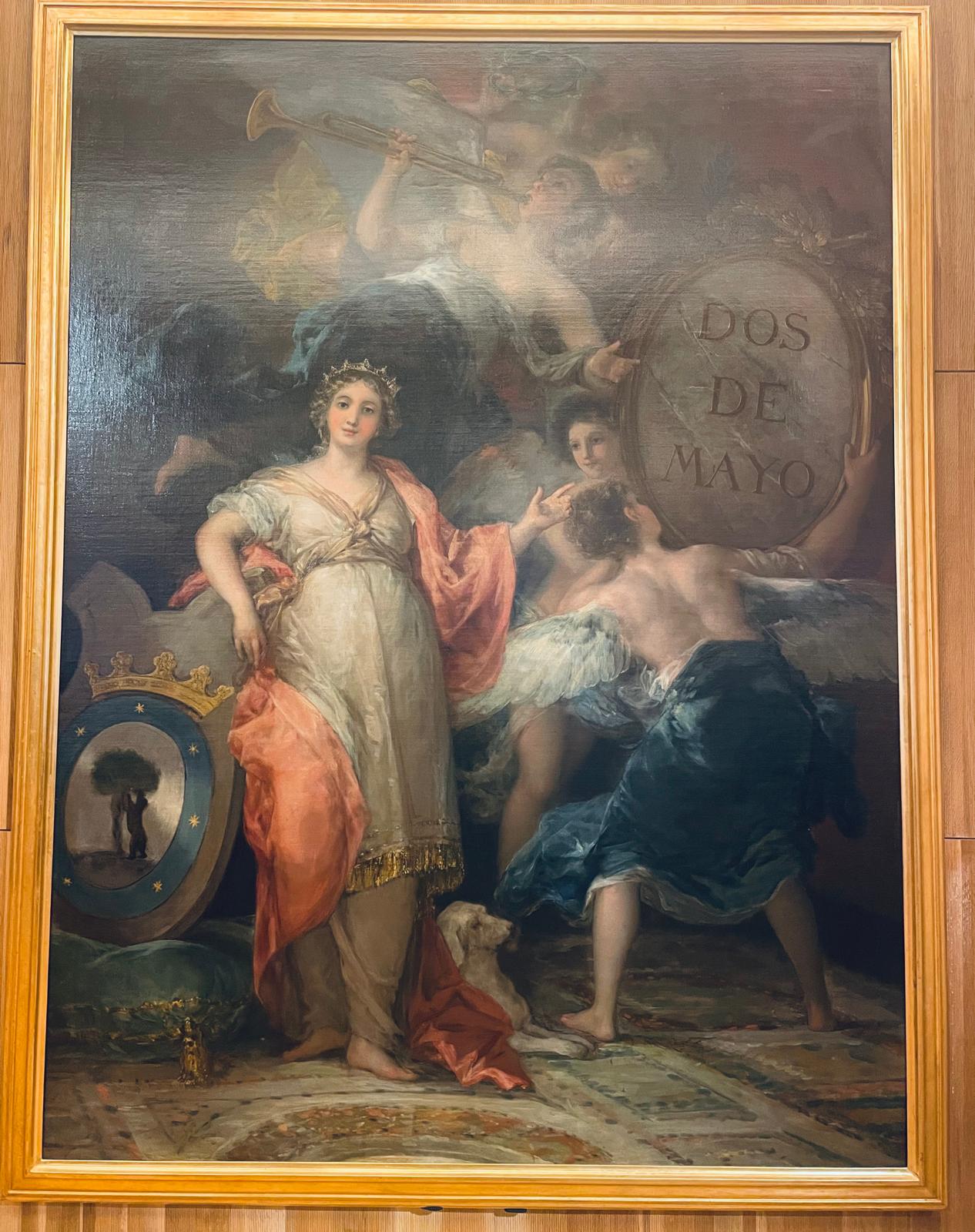
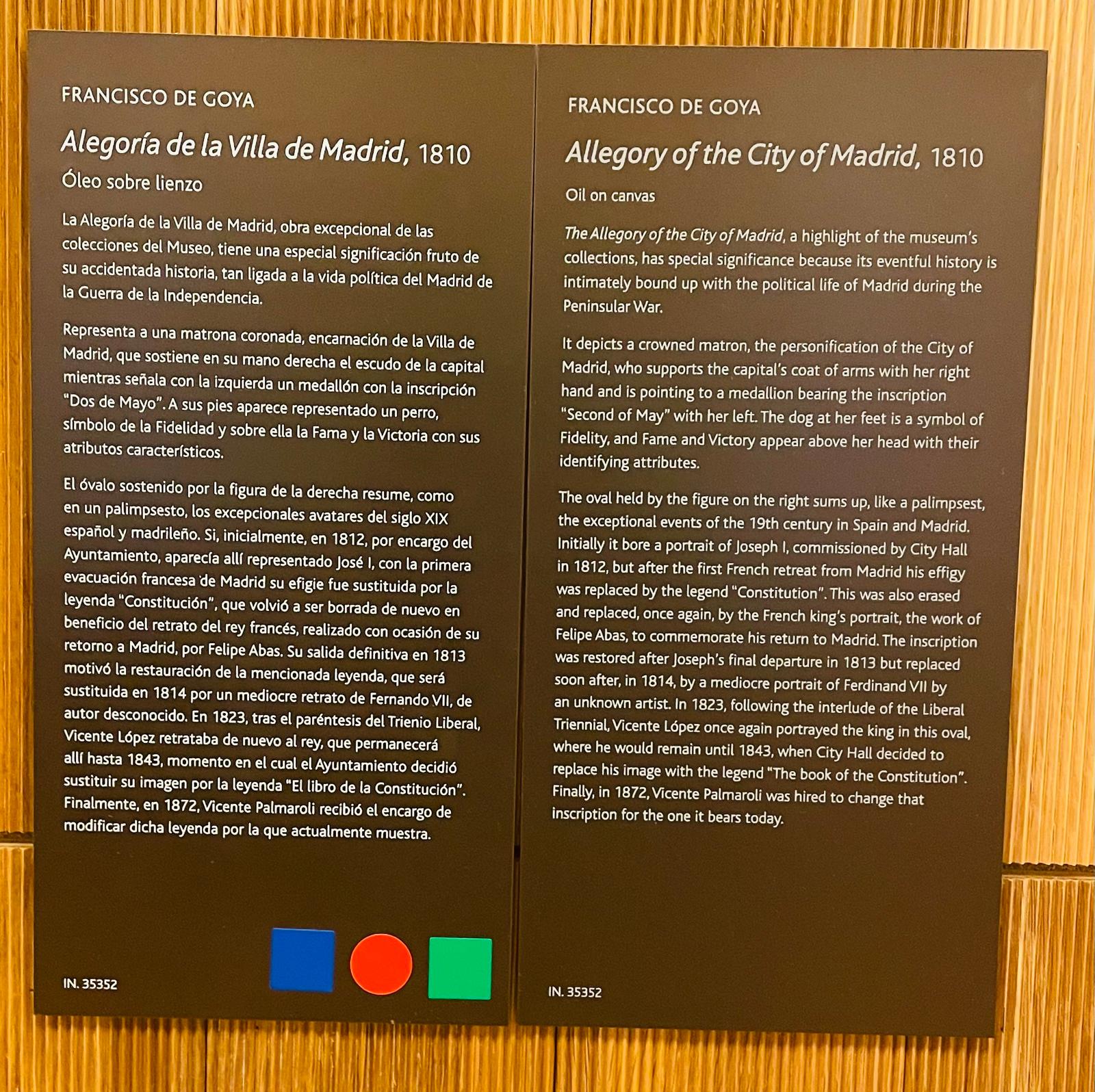
This era of the Spanish War of Independence, when the people of Madrid rose up against the French troops on May 2, 1808, is remembered in the painting Allegory of the City of Madrid, by the great painter Francisco de Goya, and in the satirical prints of the aforementioned Pepe Botella.
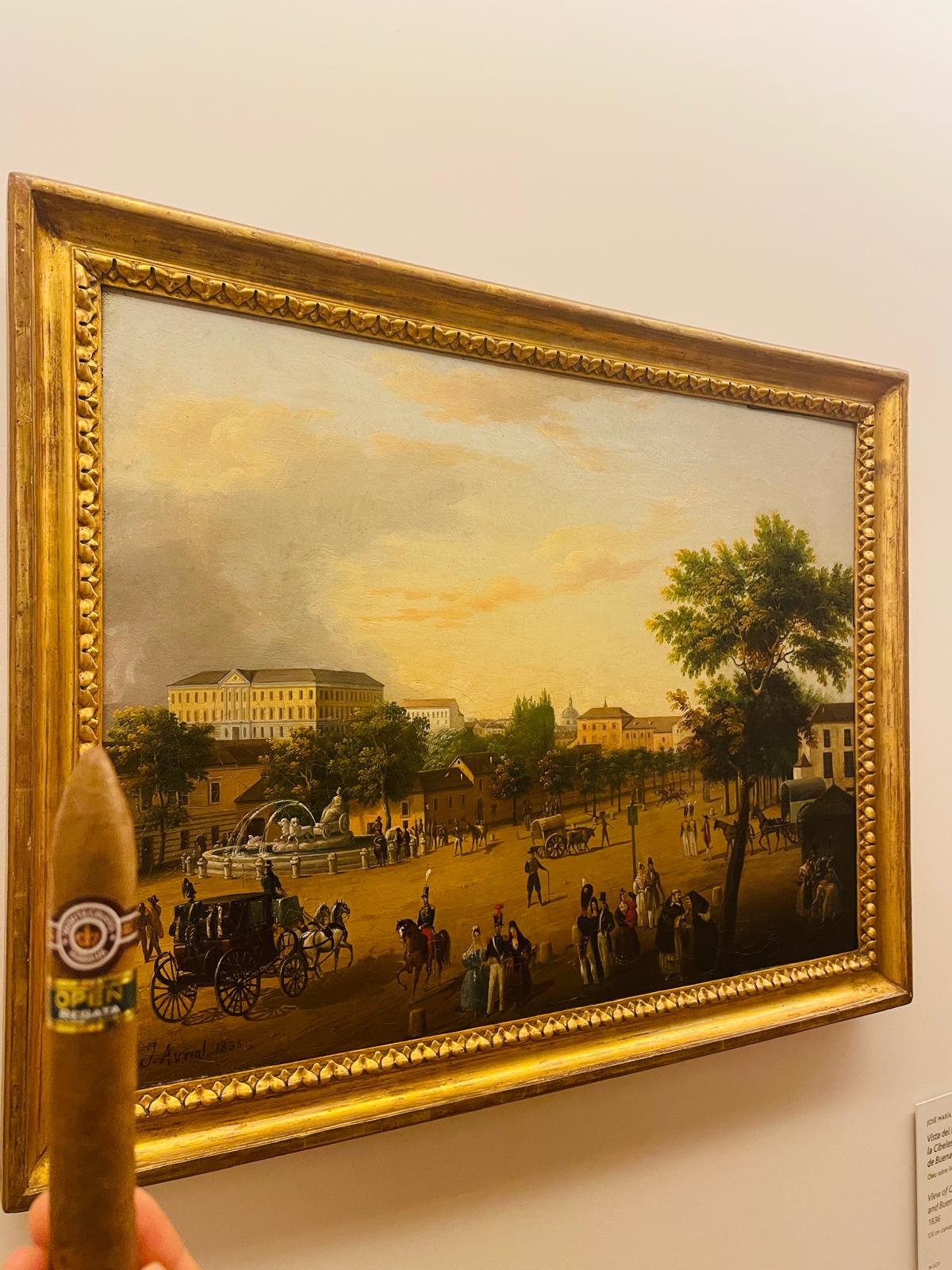
The last floor greeted us with a curious sight: among the paintings mounted there, we found one of the newly completed Cibeles fountain, still with dirt streets and horse-drawn carriages –another moment to remember with good smokes. Without art, we couldn’t compare that image with the current state of one of the most visited monuments and a city landmark. Who would think of horses, when today electric cars are circling the fountain?
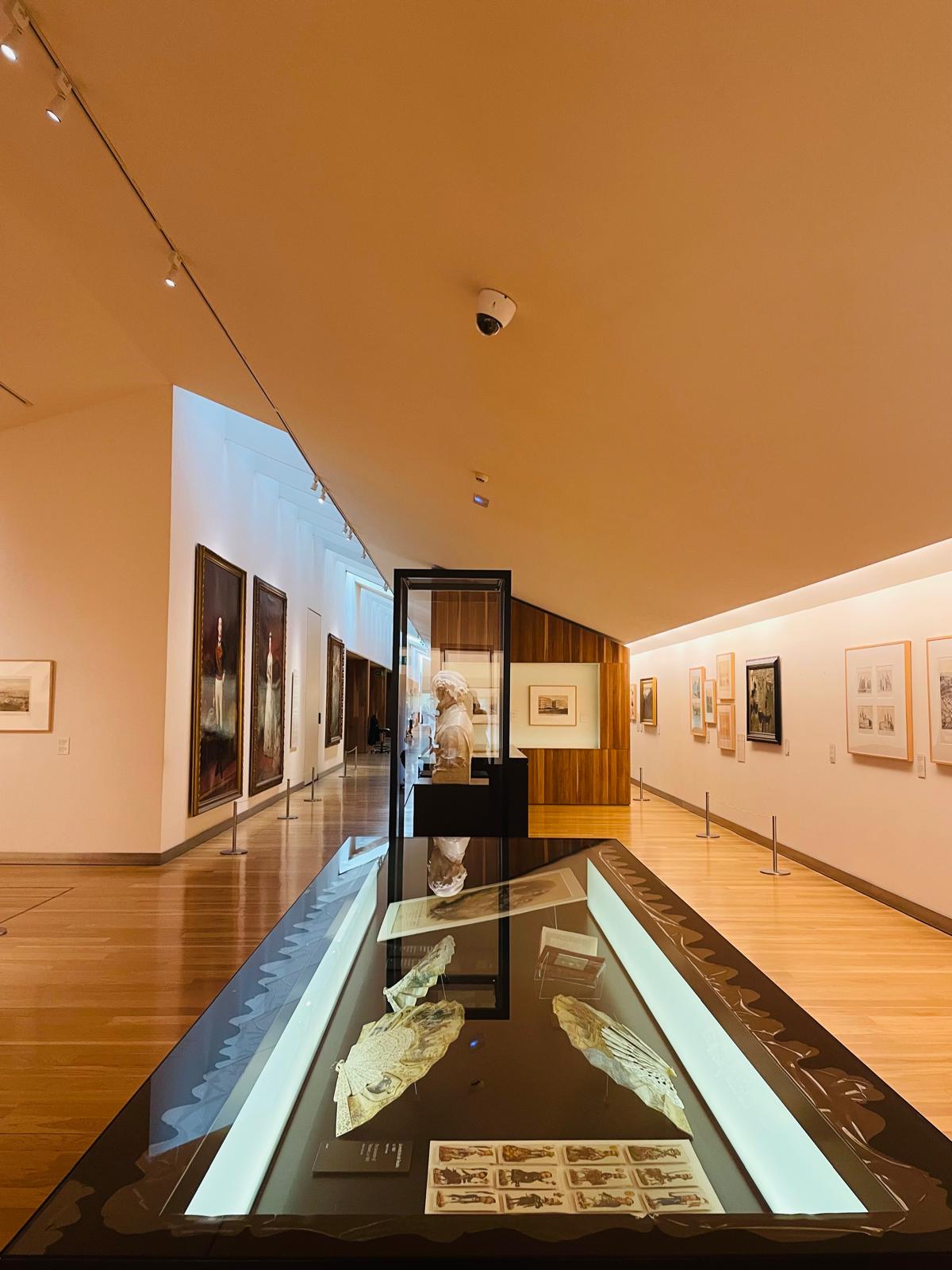
This space, named “The Dream of a New City,” allows you to journey through Madrid from 1814 to 1900. From the popular struggle to the arrival of a late industrial revolution, the images include postcards and photographs that coexist with models, such as the Teatro Real, and some traditional costumes with mantillas. We contemplated paintings by Joaquín Sorolla, Aureliano de Beruete, and Ricardo Baroja, influenced by the use of light and color from Impressionism.
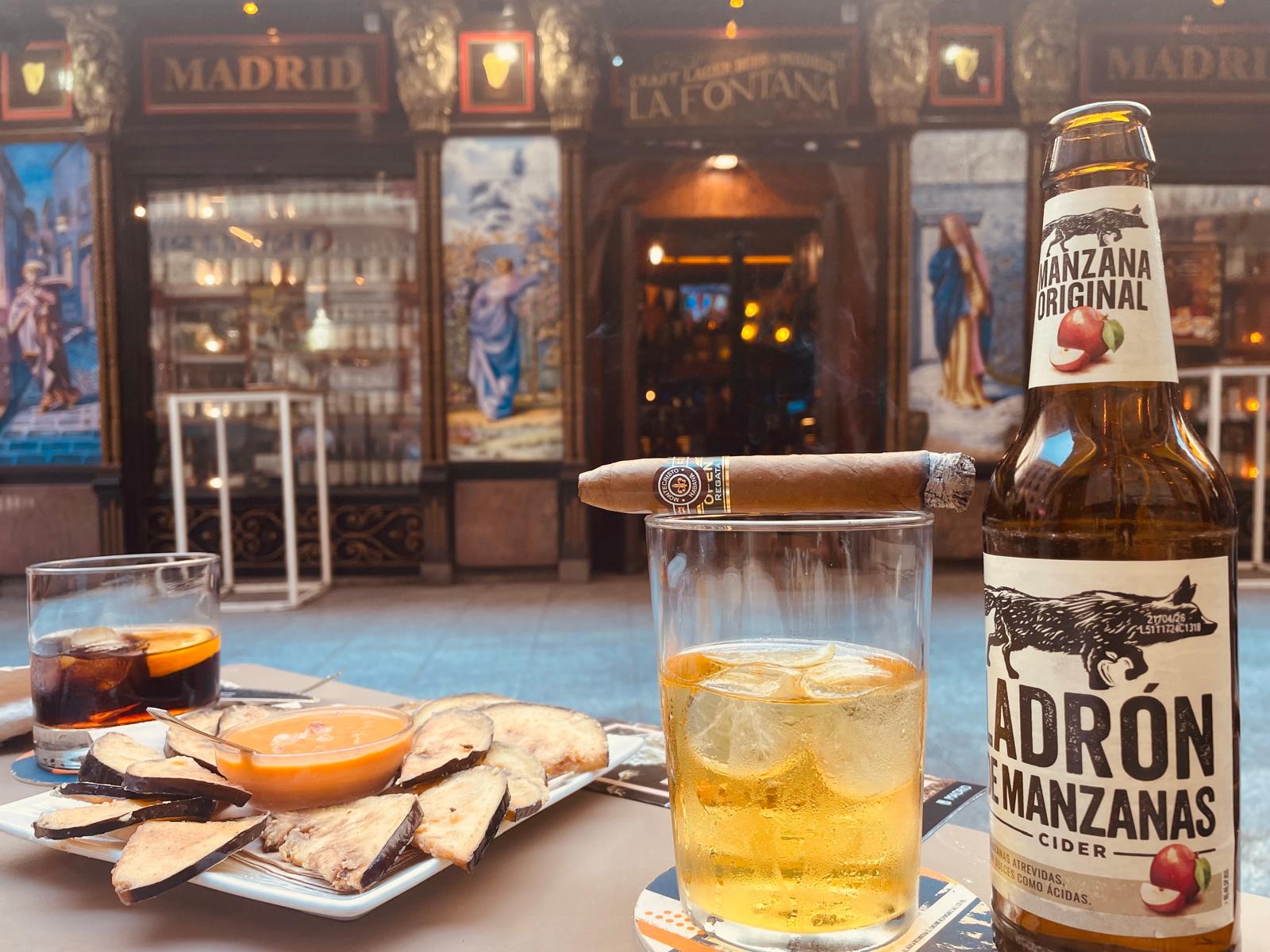
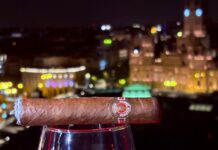
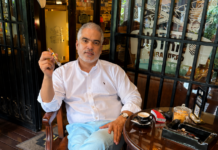
Infused with the spirit of Madrid and feeling a bit hungry, we sought refuge in an area as Spanish as jamón serrano. In a nearby street off Plaza del Sol, we ordered a cider and a vermouth, lighting up the afternoon with the Montecristo Regata, with its spicy notes and smoky flavors. In each third, this medium-strength Habano served as a “smoky tapa,” framing this connection that made us feel alive on the streets of Madrid.
, we'd simply pass by...)