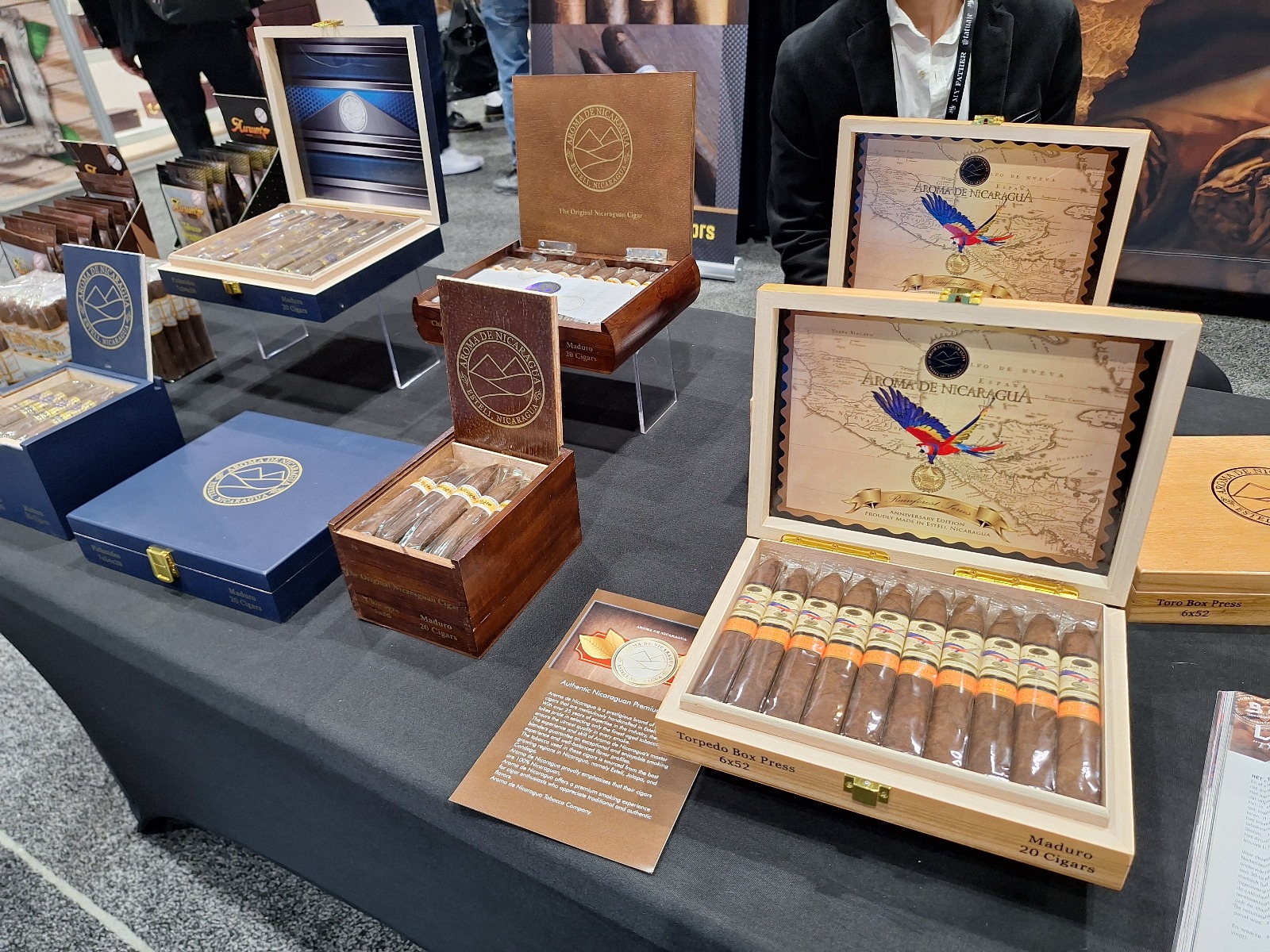
Nicaraguan Premium Cigars will not receive new tariffs from the United States in 2026. In a press release from the Office of the United States Trade Representative (USTR) regarding the Section 301 action against the Central American country, it established additional tariffs of up to 15 percent, but excluded products covered under the Dominican Republic-Central America-United States Free Trade Agreement (CAFTA-DR).
“Effective January 1, 2026, the United States will impose a tariff that is phased-in over two years on all imported Nicaraguan goods that are not originating under the Dominican Republic-Central America-United States Free Trade Agreement (CAFTA-DR). The tariff will be set at zero percent on January 1, 2026 and will increase to 10 percent on January 1, 2027, and to 15 percent on January 1, 2028. Any tariff would stack with others such as the existing 18 percent Reciprocal Tariff. Further, should Nicaragua show a lack of progress in addressing these issues, this timeline and these rates may be modified,” the statement notes.
This means that any Nicaraguan goods that do comply with the CAFTA-DR rules of origin and are eligible for tariff preference will not be subject to this new Section 301 tariff. Therefore, premium cigars that already enter duty-free remain outside the scope of the new levy.
It is worth noting that last October, the U.S. Government threatened the possibility of imposing “additional tariffs of up to 100 percent on some or all products of Nicaragua,” either “immediately or phased, over a period of up to 12 months,” which would have been a major blow to the industry.
The U.S. tobacco market, one of the largest in the world, imported 8.453 billion cigars, both handmade and machine-made, in 2024. Of these, 97.7 percent correspond to large cigars, and the rest—193 million units—to small cigars.
Among the so-called large cigars, 430 million units (5.2%) are premium cigars, and Nicaragua leads with 253 million, which accounts for 58.8 percent of the total; 6.8 million (2.8%) more than in 2023. And in the first quarter of 2025, it reinforced its leadership in the high-end segment with a 13 percent growth, consolidating its overall dominance.