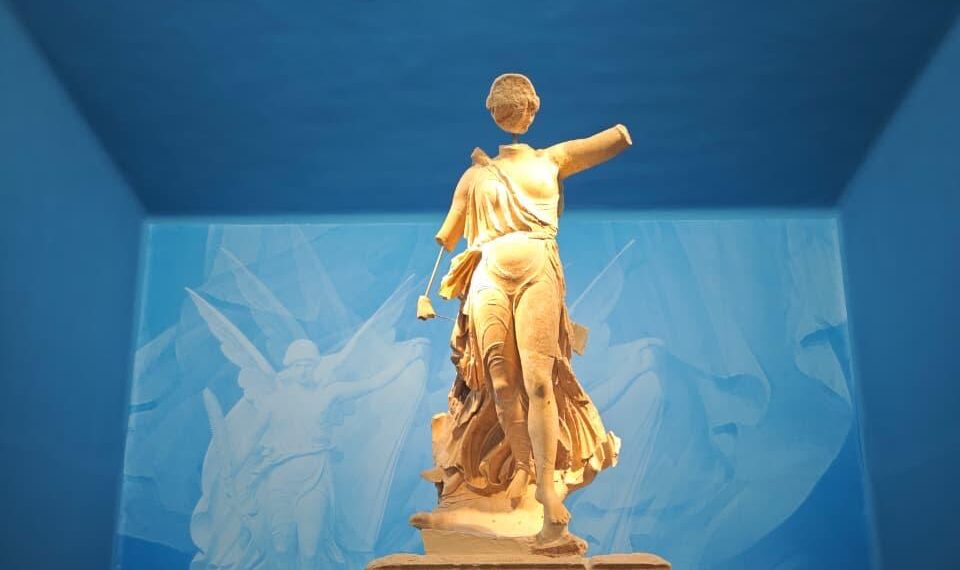
It was five in the morning when the plane’s wheels touched down on the runway at Athens International Airport “Eleftherios Venizelos.” Our next adventure had begun, and over the course of 15 days we would travel across Greece, the country where democracy was born and where some of the fundamental pillars of Western philosophy were laid.
Entre Humos
Greece: A Habano Among Gods and Legends
(Part One)
Sofía Ruiz / Máster Habanosommelier
Known officially as the Hellenic Republic, Greece is located on the Balkan Peninsula in southeastern Europe. Spanning approximately 132,000 square kilometers with a population of 10.4 million, its geography blends mountains, coastlines, and more than a thousand islands alongside 4,000 islets and rock formations bathed by the Aegean and Ionian Seas. Its capital is Athens; its official language, Greek; and its currency, the euro.
Considered one of the cradles of Western civilization, it is also the birthplace of classical philosophy and the ancient Olympic Games, a country that has preserved its history, mythology, and culture.
For me, arriving in Greece was a dream come true. Ever since I was a young girl in my sociology classes, reading Aristotle or Plato felt like being transported to a distant, almost unreachable world. And now I was standing right there, where great thinkers asked the questions that shaped the course of Western philosophy.
And although what I am about to say may spark some debate, and hopefully reflection as well, this country is not merely history, philosophy, and literature: it is a vibrant stage in every corner, at every sunrise, and, of course, in every dish of its rich gastronomy, in every glass of wine, and in the extraordinary colors of its beaches.
All of these are ideal settings to indulge in another of my passions: Habanos, which for this occasion I carefully selected and packed in my travel humidor. There was much to celebrate and savor with all five senses.
Upon leaving the airport, our first task was picking up our rental car. For anyone planning a trip to Greece, renting a car is an excellent option, especially when exploring different regions of the country, as bus connections between certain towns can be quite complicated.
We set out on a roughly three-hour drive south toward the first region on our itinerary: the Peloponnese. Alongside the first light of dawn, we discovered landscapes offering postcard-worthy views every time we glanced toward the sea, that endless expanse of turquoise blue.
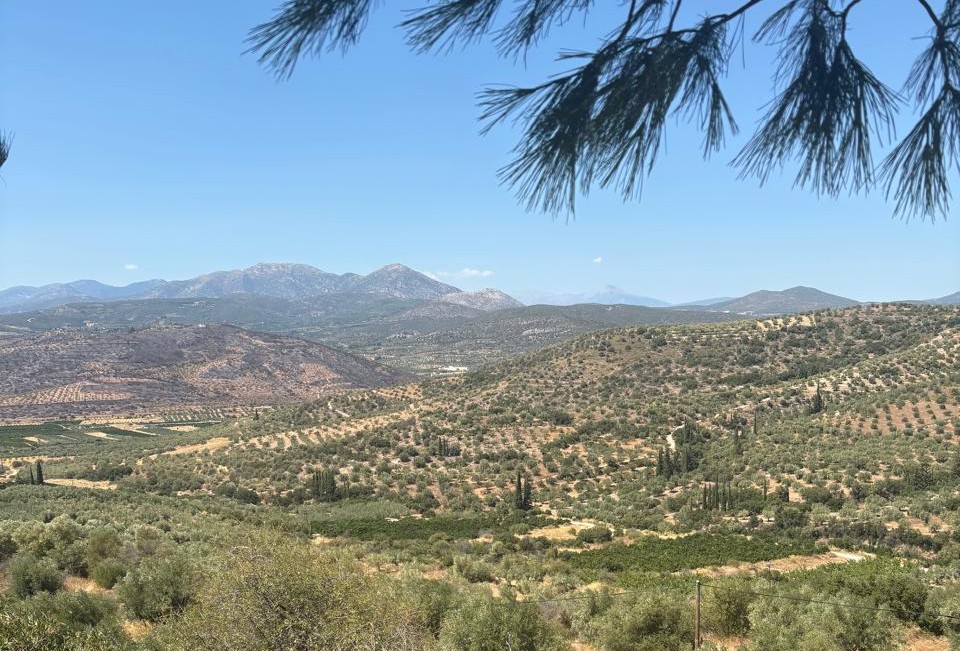
A land of philosophers, athletes, and warriors, the Peloponnese is one of Greece’s most fascinating regions and also a major agricultural hub renowned for its vast olive groves and vineyards. It is home to iconic sites of Greek history, including Olympia, Mycenae, Nafplio, and Corinth, among others.
In contrast to the idyllic beaches that tend to summarize Greece on social media, the road revealed towering mountains on the horizon, endless olive groves, and hillsides bathed in ocher and reddish hues rising behind vineyard after vineyard.
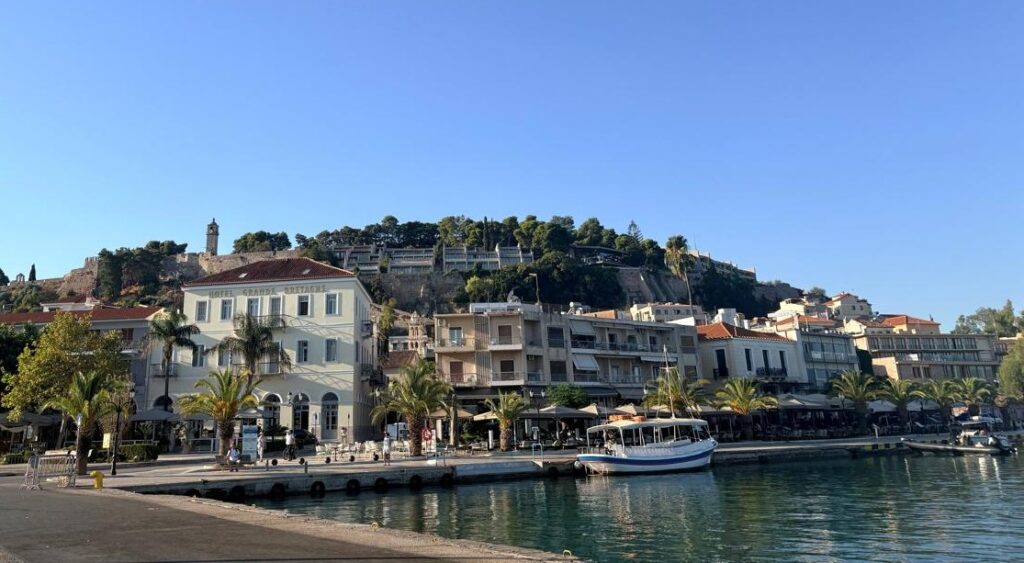
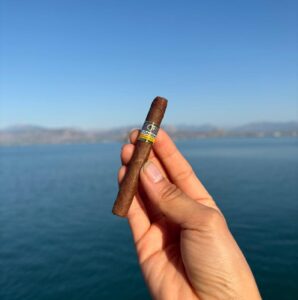
Once in the charming town of Nafplio, our first priority was enjoying a good cup of coffee and a breakfast to recharge after the long journey. Overlooking its bay, I found the ideal moment to celebrate one of my favorite rituals, enjoying fine smoke, with a short-format option: a Cohiba Short, a mild Cuban cigarillo measuring 82 millimeters in length by 10 millimeters in diameter, preserving the signature quality of the brand in a miniature format.
Described by Javier Reverte in his book Corazón de Ulises (The Heart of Ulysses) as “the most beautiful city in Greece,” Nafplio captivates you from the very first stroll. Its history dates back to antiquity, and while there is no exact date for its founding, its name is linked to Nauplius, a figure in Greek mythology and the son of Poseidon and Amymone.
A notable historical fact is that Nafplio served as the first capital of modern Greece, from 1827 to 1834, before Athens assumed that role.
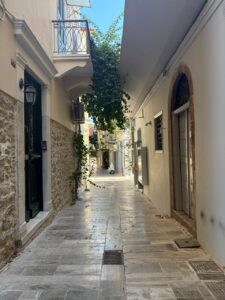
Its historic center, filled with narrow cobblestone streets, colorful facades, flowers cascading from balconies and windows, and small local shops, invites you to pause and explore. You can easily walk through it in a few hours, yet there is always another hidden corner waiting to be discovered.
I wholeheartedly agreed with the friends joining us on this reunion trip: this city is far more enjoyable by night than by day, transforming completely after sunset. Its streets take on a new personality, and the outdoor terraces come alive with a blend of history, light, and movement. I ended up falling completely in love with the place.
The following day, we visited Palamidi Castle, one of its most imposing monuments. There are two ways to reach the top: climbing its endless staircase, just looking up at the steps at midday in 30-degree Celsius heat felt like an athletic feat, or driving up while taking in the hillside scenery… naturally, we chose the latter.
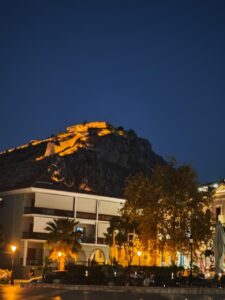
From the summit, the panoramic view of the region is majestic, and I must confess that the vista proved far more captivating than touring the interior of the fortress, so we decided to make the most of our time and head back down into town. I realized that traveling is also about keeping an open mind. It isn’t solely about checking off monuments or collecting photographs, but about observing, learning, and respecting the customs of each place.
And we had a small lesson in that regard. When lunchtime arrived, we ordered a beer and a few glasses of wine. However, the waiter gently let us know that it was still quite early and that local customs regarding the timing and occasions for enjoying certain drinks were different.
I must admit that I chose that particular restaurant for its cigar menu, which featured selections primarily of Nicaraguan and Dominican origin, a wonderful excuse to savor the local cuisine without setting aside one of my favorite passions.
Our drinks arrived alongside a classic Greek salad, sparking a conversation that stretched on for hours. Ultimately, travel is also about sharing, debating, and discovering local traditions, moments that remind us every culture has its own rhythm and its own way of savoring life.
Time slipped by without us noticing, and as we resumed our walk, we once again got lost in the streets of Nafplio, where we stumbled upon something I never expected to find: a small shop window displaying machine-made premium Cuban dark-tobacco cigarettes. Naturally, my curiosity got the best of me, and moments later I was greeting the shopkeeper inside.
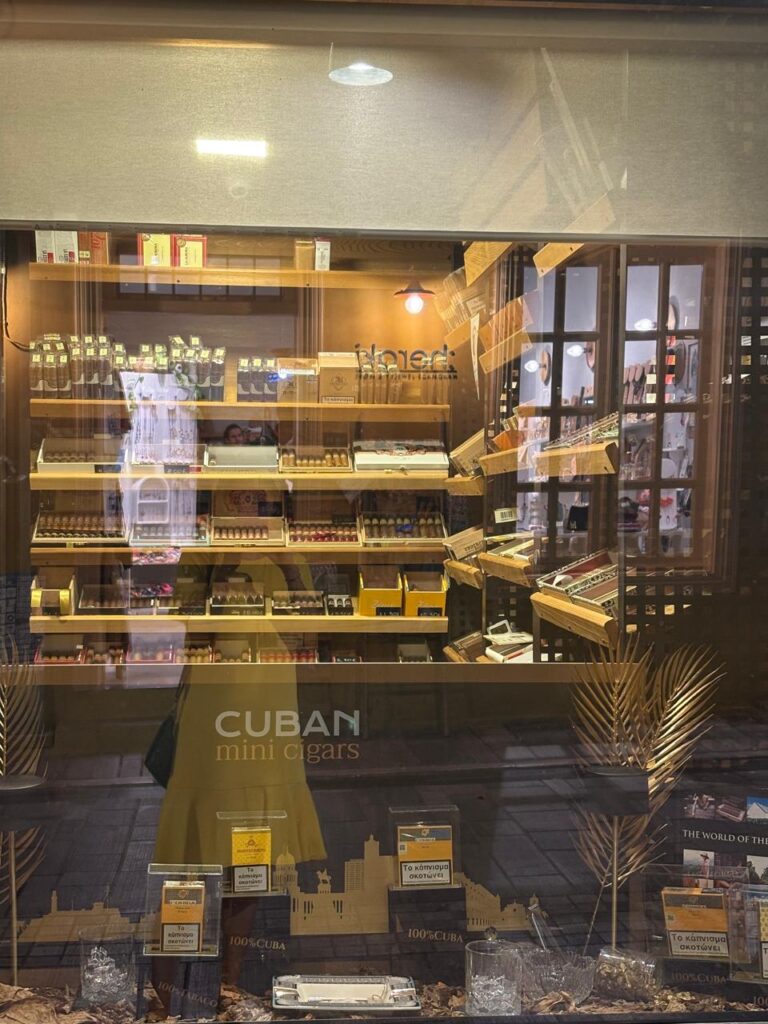
The modest storefront concealed a cigar humidor stocked with various origins and formats, one of those unexpected surprises that makes a journey feel even more personal. There is something wonderful about discovering that your passions can find a home in the most unlikely places. To travel is to allow the extraordinary to appear suddenly, like a gift that brings pure joy.
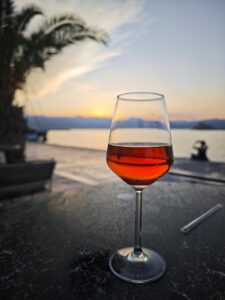
The finest setting to bid farewell to the day was the waterfront promenade. Before us, the sunset painted the horizon, and set against that backdrop stood the imposing Bourtzi Fortress, a small Venetian-built castle perched on an islet just off the city’s harbor. Time simply stands still, inviting you just to gaze and take it all in…
Time to rest, ready to continue our journey the next morning.
***
Reaching our next destination took roughly three hours, though amid lively conversation, laughter, shared memories, and our favorite playlist, the drive flew by in a heartbeat. When you travel in good company—with people you haven’t seen in a long time yet who remain an essential part of your life—even the longest distances grow short.
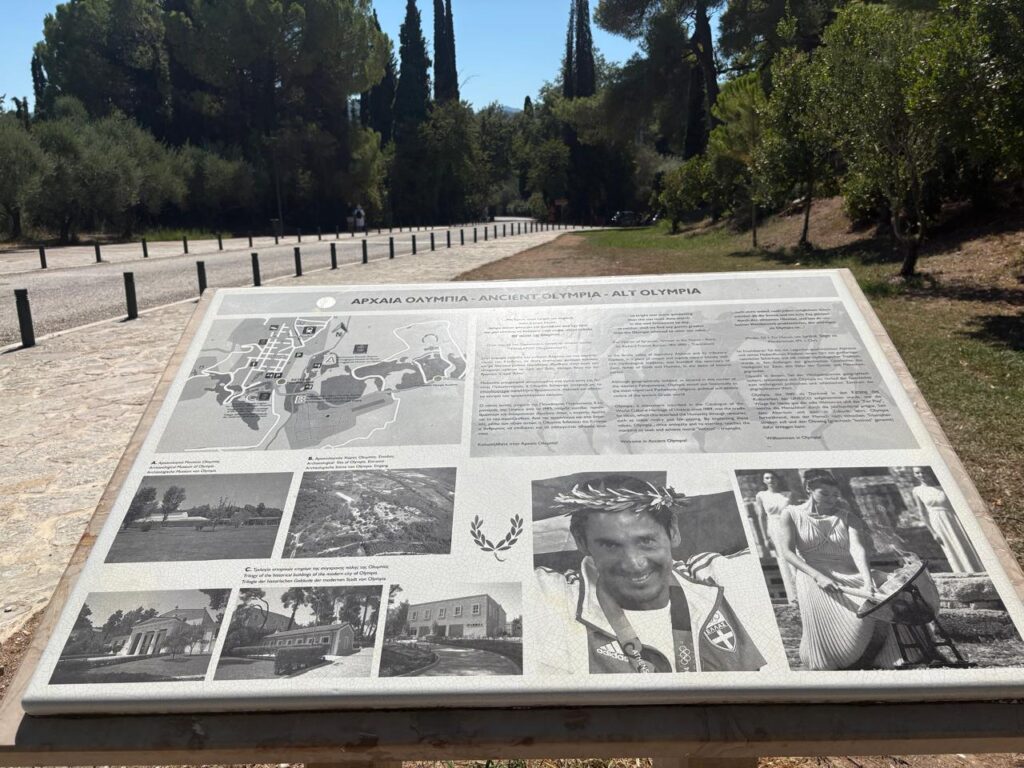
And suddenly, there was Olympia, one of Greece’s most important archaeological sites. It served as a major religious sanctuary and the venue for the first recorded Olympic Games in 776 B.C. Standing here is deeply meaningful for anyone passionate about history.
Located in the region of Elis (Ilia), Olympia spans approximately 150 hectares and can be divided into two main areas: the archaeological site itself, housing the remains of the temples, athletic facilities, and buildings that comprised the sanctuary, and the Archaeological Museum, which preserves artifacts and sculptures unearthed during excavations.
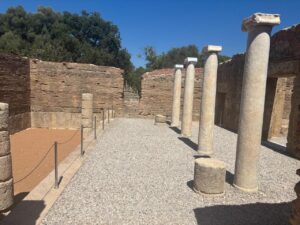
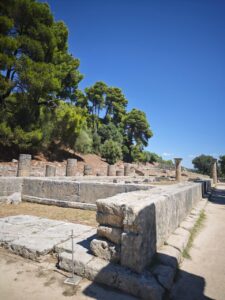
Overall, the ruins are remarkably well preserved considering their antiquity. While barely traces remain of certain structures, others retain enough architectural elements to let you envision their former grandeur. The site is vast, and exploring it at a leisurely pace can easily fill an entire day.
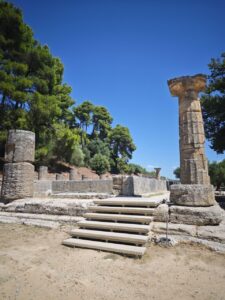
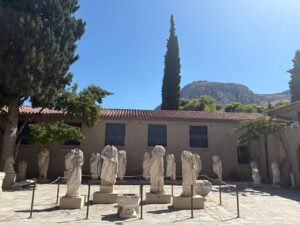
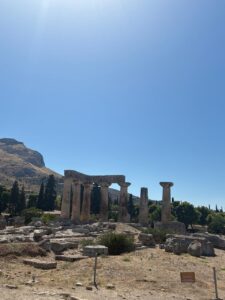
It is hard to put into words the emotion stirred by discovering each landmark. Every so often, you have to pause and consult the map so as not to miss a single monument within this extraordinary complex, where several highlights stand out:
- Temple of Zeus: Although few remains survive of this monumental structure, they are enough to convey the immense religious significance Olympia held in antiquity.
- Temple of Hera: Among the oldest buildings in the sanctuary, this spot holds special meaning as the traditional site where the Olympic flame lighting ceremony takes place.
- Baths and Aquatic Facilities: Spaces that formed an integral part of daily and athletic life in the ancient sanctuary.
- Olympic Stadium: Reaching it requires walking through a large portion of the archaeological complex, yet the reward is nothing short of extraordinary. It was easily my favorite moment.
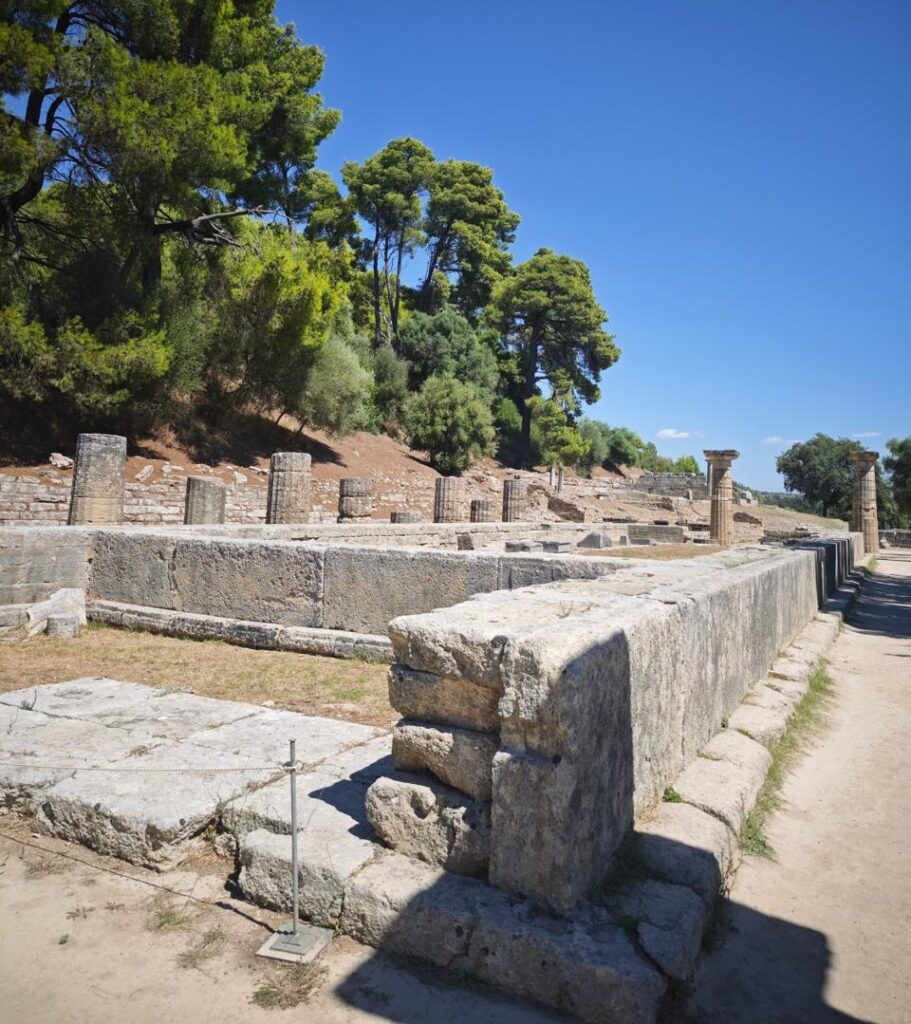
Gazing upon everything still standing, walking across the ancient stadium, and imagining the athletes competing there felt truly magical, the entire place radiates energy. It reminded me of the feeling I experienced watching a sunset in Cuba for the very first time from La Guarida: one of those moments you instinctively know will stay etched in your memory forever. Olympia was, without question, one of life’s great gifts.
Later on, it was time to visit the Archaeological Museum. It is relatively modest in size compared to other major European museums, yet essential for grasping the historical and artistic magnitude of the site.
My favorite space was not the hall housing the recreation of the monumental statue of Zeus, but rather a gallery a friend had recommended near the very end of the tour: the room dedicated to the pediments and metopes of the Temple of Zeus.
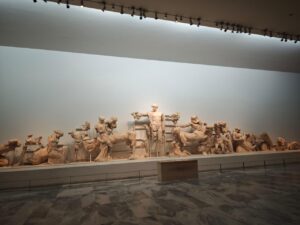
Preserved here is one of the most extraordinary sculptural ensembles of ancient Greek art. Carved in marble, these compositions bring to life two great mythological narratives:
The East Pediment: Depicts the preparations for the chariot race between Pelops and Oenomaus, with Zeus occupying the central position.
The West Pediment: Portrays the battle between the Lapiths and the Centaurs during a wedding celebration, with Apollo as the central figure.
Pausing before these sculptures allows you to understand how the ancient Greeks used art to tell their myths, embody their values, and convey their worldview.
After so many hours on our feet, it was finally time to head back. We were in serious need of rest, after a day like that, we were already starting to feel a bit like Olympic athletes ourselves.
TO BE CONTINUED…