San Juan de la Maguana, in the southwestern region of the Dominican Republic –the country’s largest province by area and one of its poorest– is undergoing an unprecedented transformation, largely thanks to dominican tobacco. Two years ago, President Luis Abinader stated that the prosperity this sector had brought to the northern region could be replicated in the south… and the work began.
Now, with the implementation of the Plan San Juan, the region expects a harvest of 20,000 quintals of tobacco for filler, binder, and –for the first time in this area and the country– premium Dominican wrapper leaf of the highest quality. This will generate over $500 million in revenue while reducing dependence on imported raw materials from Ecuador or Nicaragua for the production of premium cigars.
Read in the magazine (rotate your device for a better reading experience):
The Unknown Greenhouse
On February 10, 2022, President Luis Abinader signed the decree establishing the Plan for the Economic Development of San Juan Province, better known as Plan San Juan. One of its main objectives is to promote productivity and crop diversification for export and high-value products, such as tobacco, grapes, and peppers.
The most significant discovery was that the Dominican Republic had a natural greenhouse in San Juan de la Maguana –a valley with over 25,000 hectares of flatlands, situated at an altitude of more than 450 meters above sea level, where temperatures are at least three degrees lower than in the country’s traditional tobacco-growing regions.
The valley stretches between two mountain ranges: the Central Range to the north and the Sierra de Neiba to the south, with deep, fertile soils. Even in peak summer, temperatures do not exceed 32°C (90°F) at noon, averaging 24–26°C (75–79°F) the rest of the year. The land is nourished by three major rivers: San Juan, Yaque del Sur, and Mijo.
Known as the Granary of the South, the San Juan Valley has long been dedicated to low-value crops like beans, corn, pigeon peas, and rice, leaving farmers trapped in debt. According to engineer Luis Manuel Bonilla Bonilla, executive director of Plan San Juan, farmers would profit one year only to lose money the next two. Their debt levels severely limited their development.
“This led us to design a program with a methodological approach aimed at shifting the production matrix toward higher-value crops –those that could generate dollars for the country, beyond just field production, by incorporating agro-industrial processing, even at a primary level.”
He adds that for the Dominican tobacco industry, “it was a huge surprise to discover this zone, with its enormous potential for tobacco production.”
A Calling for Wrapper Leaf
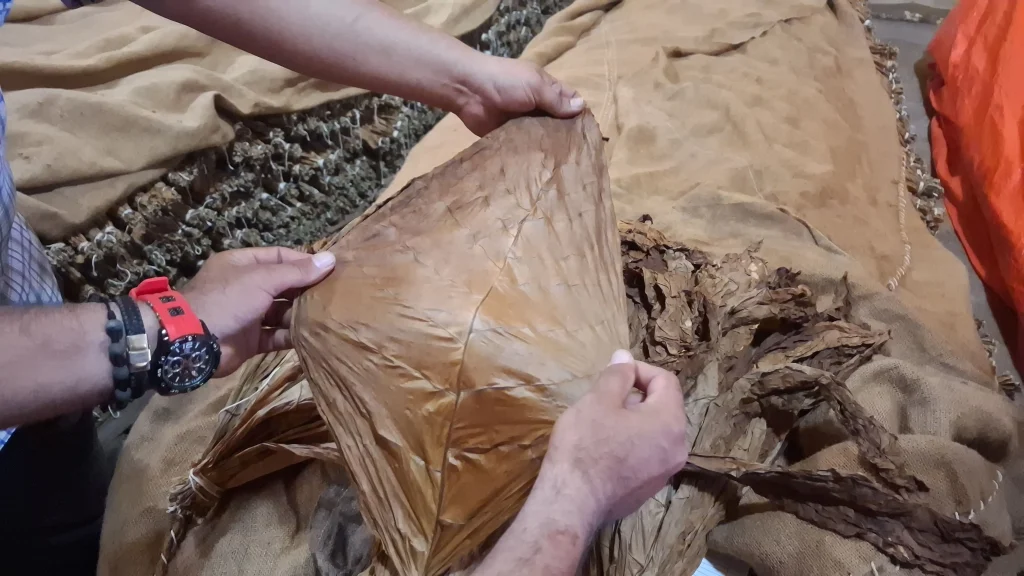
Bonilla recalls that during the first six months, alongside Dr. Alberto Rodríguez and engineer Jesús Lora, they realized that the agroclimatic and soil conditions were ideal for growing tobacco –particularly wrapper and binder leaf, which offer the highest profitability.
About 25 years ago, tobacco was cultivated in this region, but farmers abandoned it due to a lack of government support. This time, they had to start from scratch, planting five different tobacco varieties suited for wrapper leaf in various municipalities –including San Juan de la Maguana and Las Matas de Farfán– to identify the most suitable ones.
“We found areas where, even without shade cover to control light intensity and temperature, it was possible to grow wrapper leaf. We selected the best varieties and locations, and today we are developing this crop, taking the first steps to position ourselves in the market.”
The results in terms of quality and productivity were excellent, but one of the first challenges –which remains ongoing– was training tobacco growers, as the traditional knowledge around cultivation had been lost.
What seemed like a disadvantage became an opportunity: since past practices had faded, they could train new farmers from the ground up, implementing best practices in tobacco production comparable to those in leading tobacco-producing countries.
Professionalization and Modernization
For training purposes, the Plan San Juan team established a “Farm School” in its first year, educating new producers and technicians in what they call “the new tobacco production model.” With support from the Agricultural Bank (over $3 million USD), they began cultivating tobacco three months ahead of the official planting season so farmers could practice techniques before applying them in their own fields.
“Among agronomists, there’s a saying: ‘The seed determines 60% of a farm’s productive potential.’ That’s why we transitioned from the Farm School to a Seed Bank, ensuring purer, higher-quality, and more uniform seeds.”
This bank operates through the Tobacco Institute (Intabaco, acronym for it Spanish name) and foreign companies, sourcing, cleaning, and segregating seeds to achieve optimal varietal purity. “Everything starts with a good seed, produced in aseptic conditions, with proper nutrition and phytosanitary controls. That’s the purpose of the Seed Bank.”
Additionally, macro-tunnels and greenhouses were built to produce seedlings in a controlled environment, ensuring only the best plants reached the fields. The next phase involved introducing drip irrigation systems, a relatively new practice in the country, significantly improving efficiency.
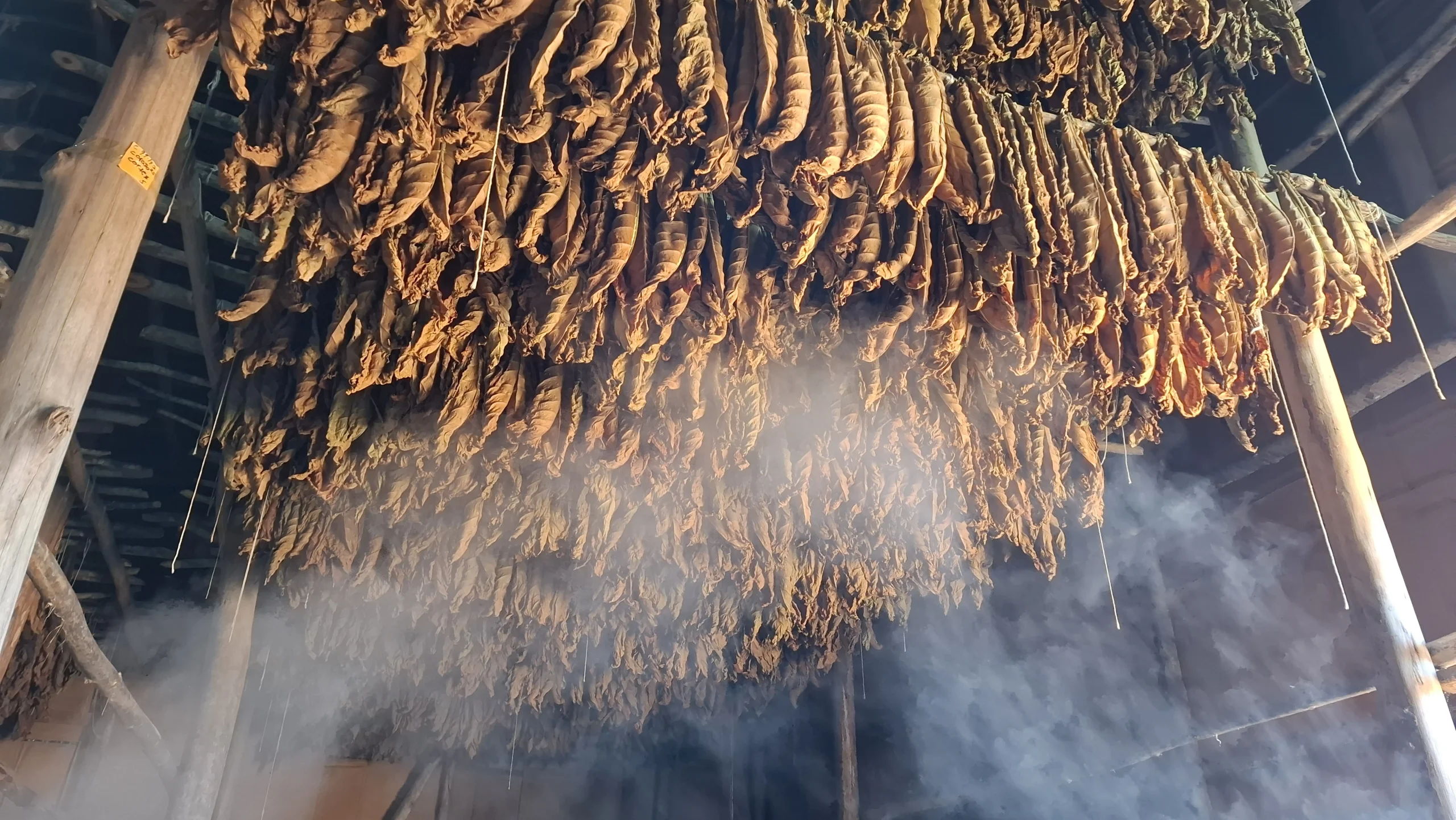
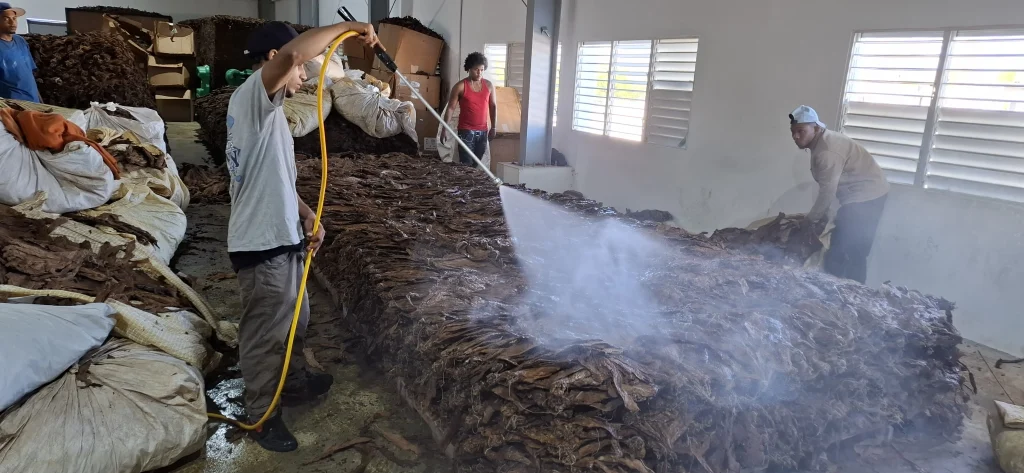
To complete the cycle, Plan San Juan promoted and financed curing barns, ensuring tobacco was not just dried but properly cured to preserve its organoleptic qualities and presentation –key for a competitive and demanding market.
Betting on the Future
The transformation in San Juan de la Maguana is just beginning. While Plan San Juan includes other high-value crops like grapes, major tobacco companies are already setting their sights on the region. When President Abinader announced the construction of a Free Trade Zone, Tabacalera El Artista was the first to request space. La Aurora is also building facilities there.
Private companies like Tabacos del Sur and Samuel Rodríguez y Asociados are already producing excellent-quality wrapper leaf, competing with the best in the world. Universal Leaf Tobacco, through its Dominican subsidiary Inetab-Kaubeck, is also interested in expanding operations in the area.
Bonilla notes that businessmen from Santiago and Tamboril are traveling to San Juan to buy tobacco: “It’s only a matter of time. Rome wasn’t built in a day, but we’re taking the right steps –we have the inputs, soil, climate, and commitment to produce wrapper leaf at the same level as any developed country.”
The ultimate goal of Plan San Juan is combating poverty, and tobacco is playing a key role. Tabacos del Sur, for example, has revitalized the economy of its local community, providing steady employment in both farming and tobacco processing.
The challenge remains to train more farmers –many of whom have never grown tobacco– to ensure efficiency at every stage, from planting and harvesting to curing, fermentation, and, eventually, cigar manufacturing.
Currently, the region grows Habanensis varieties and some Broadleaf, with outstanding results. “Under Plan San Juan, we aim to cultivate 3,000 hectares of wrapper-grade tobacco within five to ten years. We might even exceed that, given the rapid expansion by La Aurora and Tabacalera El Artista. Small independent growers are also increasing production each year.” Bonilla concludes with conviction: “We are planting the seeds of a promising future –for a country-brand: Dominican tobacco.”