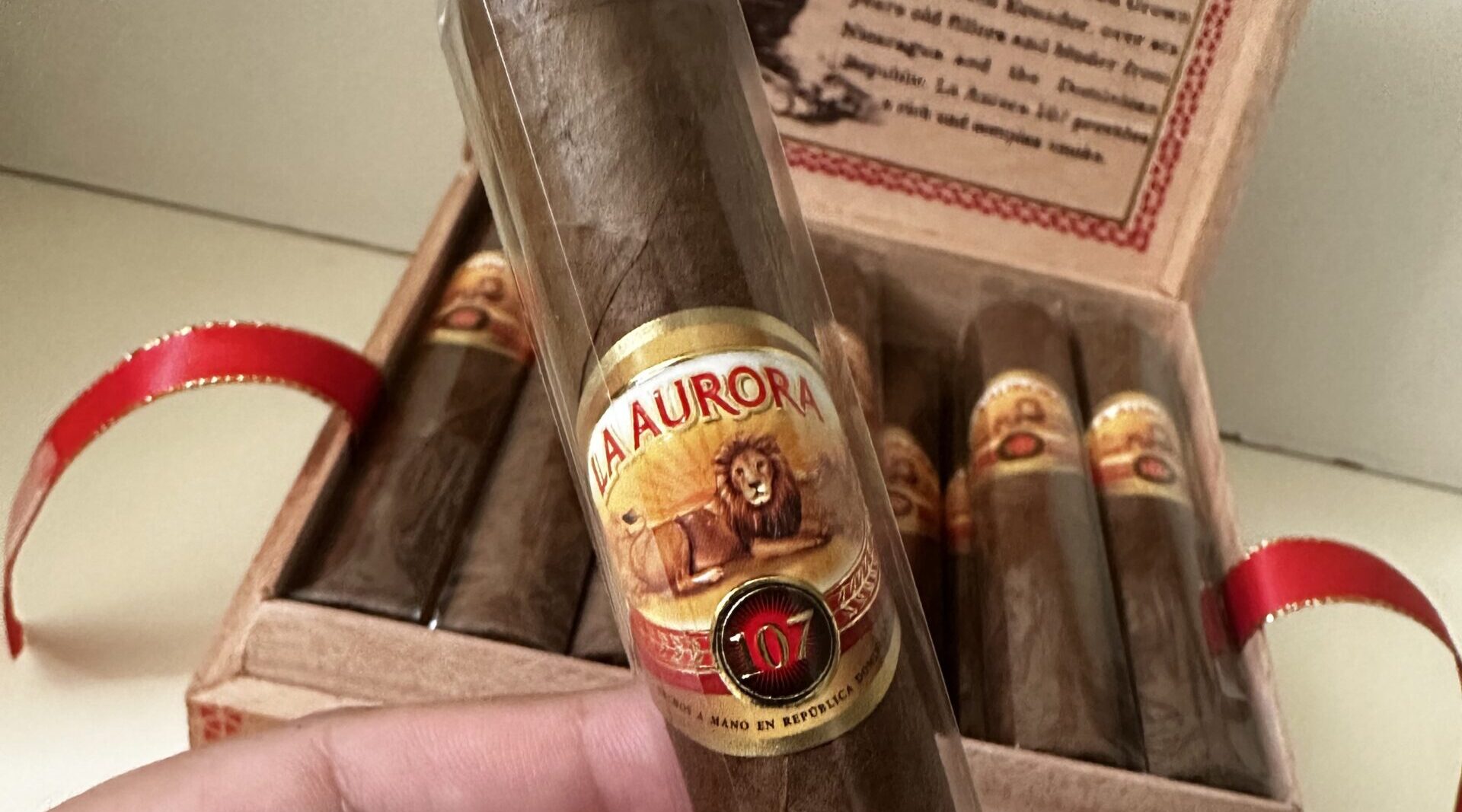
I began this pairing one afternoon at home, during one of those moments of clarity when one decides to give free rein to intuition. I had smoked La Aurora’s 107 Original many times, and just as often, I had poured a glass of Quinta Ruban to let its dark sweetness speak for itself. But that afternoon, both crossed my mind with unexpected naturalness, as if they recognized each other. I understood then that it wasn’t about forcing an encounter, but about allowing it to happen.
Read in the magazine (rotate your device for a better reading experience):
Gut Feeling
Because sometimes a pairing isn’t thought out; it’s heard
The history of these two houses helps us understand this dialogue. La Aurora, founded in 1903 in the Dominican Republic by Eduardo León Jimenes, is the dean of its country and an unavoidable benchmark for Caribbean premium tobacco.
The 107 Original was born to commemorate those years of history, with a blend designed to express balance and depth: an Ecuadorian wrapper from Sumatra seed; a Dominican binder and filler with a presence from the Cibao Valley, and a Nicaraguan contribution that provides structure and nerve. It is not an exuberant cigar; rather, it knows how to converse.
On the other side of the Atlantic, in the Highlands of Scotland, The Glenmorangie has been distilling since 1843 in stills that are among the tallest in the industry. This verticality is no minor detail: it encourages a lighter, more ethereal distillate, which is later transformed by time and wood.
The Glenmorangie Quinta Ruban 12 Years Old belongs to its extra-maturation series: it first rests in ex-bourbon American oak barrels and is then moved to Ruby Port pipes from Portugal. That second aging is what provides the “twilight”: dark chocolate, ripe fruits, and a vinous note that doesn’t invade, but rather embraces.
I settled into a chair, poured the glass, and examined the cigar, as I usually do before lighting. The silent conversation was beginning. The pre-light analysis revealed a silky, slightly oily wrapper with a deep colorado tone. Cold draws brought forth cocoa powder, dry wood, and a barely hinted fruity undertone. The first sip of the whisky confirmed the hunch: plums, candied orange, dark chocolate. There was no stridency; there was affinity.
During the first third, the smoke was contained and elegant. Light woods, soft cocoa; a natural tobacco sweetness that didn’t need to be exaggerated. When accompanied by the Quinta Ruban, the chocolate became sharper, and the whisky’s fruits found an echo in the cigar’s slight vegetal sweetness.
From a simple perspective, chemistry helps explain it: the phenolic compounds that the wood yields to the whisky during aging –vanillin, eugenol– dialogue with the essential oils and natural sugars present in fermented tobacco. More than magic, it is sensory interaction; distinct molecules that, together, amplify similar perceptions.
The second third brought more body. The 107 Original unfolded darker cocoa, soft coffee, and a firmer woodiness. The whisky, aerated in the glass, revealed its spicy side and the depth that the Port cask patiently imprints. Here, the pairing found its center: the cigar’s structure sustained the vinous sweetness of the single malt, which, in turn, rounded off any edges, providing the whole with an almost creamy texture. The conversation became a fluid exchange, without overlaps.
In the final third, as the tobacco concentrated its character, more intense notes appeared –a noble bitterness reminiscent of pure cocoa. The Quinta Ruban responded with riper black fruit and a slightly dry echo that balanced the finish. Nothing imposed itself. Both accepted the passage of time and the natural transformation that occurs as the ember advances and the liquid breathes.
Why do we pair? Perhaps because we seek meaning. Because we sense that two stories, when they meet, can tell us something new about ourselves. That afternoon, I understood that pairing is not a technical demonstration or an exercise in precision, but an act of listening.
There is a silent conversation that happens between wood, tobacco, and time. We only sit in the middle, attentive, and let them speak. When the smoke dissipates and the glass is empty, no list of notes or precise analysis remains: we are left with the feeling of having witnessed something that, for an instant, made perfect sense.
(*) Gastón Banegas. Habano sommelier and enthusiastic smoker, he is passionate about whisky and pairings. He lives in Buenos Aires, Argentina, and writes about premium tobacco and sensory culture.
Suscribe to our Newsletter