His life has been like a movie, or like a great journey of encounters, misencounters, and improbable coincidences. Like everyone, he lost a love he never heard from again, and like no one else, he made film and television, celebrated awards and a birthday at Pablo Neruda’s house, a party with 150 bottles of wine…
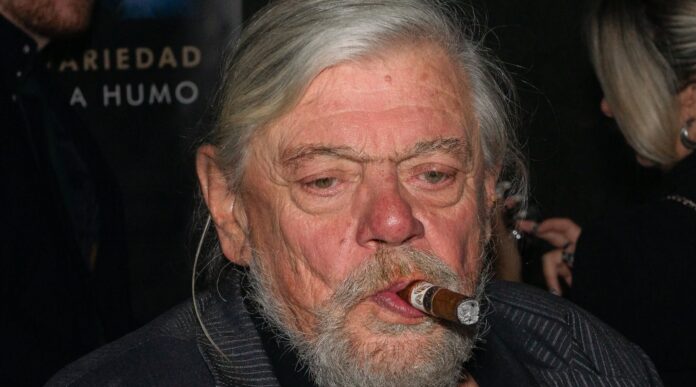
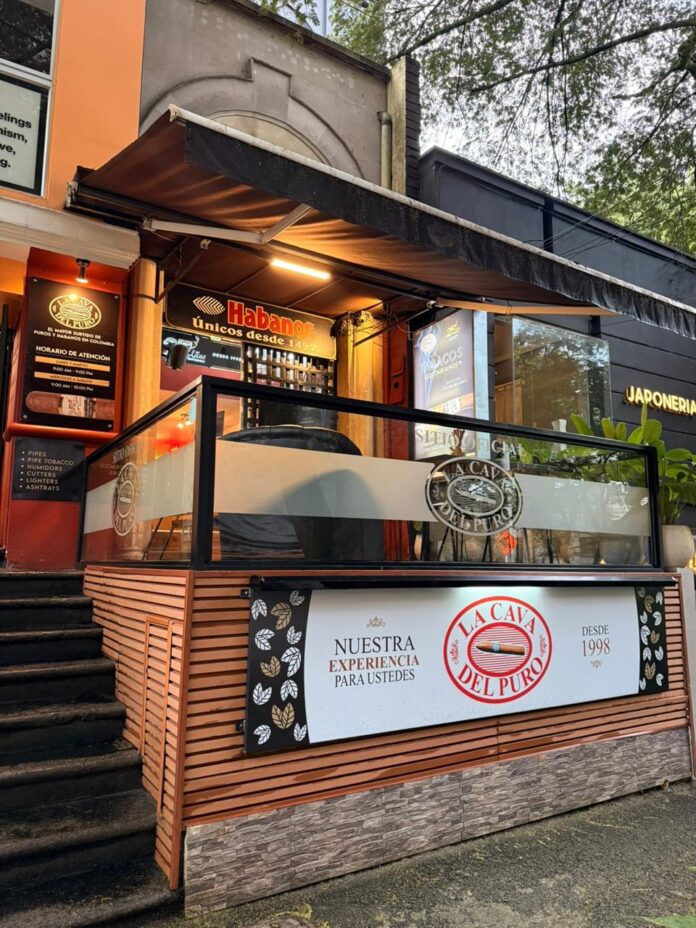
His name is Gustavo Ernesto Moris, the man who at eight years old smoked his first cigar with an Italian great-uncle, recovered 300 years of tobacco tradition for Colombia that seemed forgotten, and today is the owner of the boutique shop La Cava del Puro.
Rubén Rojas
The beauty of pure tobacco
His biography could say that he stood out in film and television as a filmmaker, director of photography, producer, cameraman, and even actor, but his life is far from being flat, like letters.
It all started in 1942, when he was born in San Miguel de Tucumán, Argentina, a city that then had barely 200 thousand inhabitants. He lived in a downtown apartment and while attending elementary school he had his first contact with tobacco, thanks to an Italian great-uncle who lived 12 kilometers away.
Perhaps because of the distance, because he was an older man, or because he had to run a general store where everything from alfalfa for cows to suits, shirts, and ties was sold, the uncle would ask Gustavo to buy him Montecristo and Romeo y Julieta Habanos –the most common brands of the time– from the shop of a certain Mr. Güido, which was across from the apartment.
Sometimes, the great-uncle would travel to the city and buy the Habanos himself, but other times he would call him on the phone: “I would buy them for him and put them on the bus that passed in front of the house, I would send them with the driver, and later he would give me the empty tobacco boxes as a gift.” There he kept sweets, toys, colored pencils, erasers –whatever an eight-year-old boy uses.
His father and mother smoked American Club cigarettes, but not cigars: “This man taught me to smoke cigars; every now and then he would let me try. At that time, it didn’t seem like a very pleasant thing to me, rather it was the innocence of having something new.” And thus, began his life linked to “this beauty that is pure tobacco.”
Days of film and television
Perhaps that would have been all and today we wouldn’t have La Cava del Puro; fortunately it was not so, although for many years Moris did not hold a cigar in his hands again.
With his light eyes he looks at a spot in the empty space, as if memories were found there. A brief silence ensues, the smoke from the Sello Azul cigar he is smoking draws deformed, thin clouds that lose themselves between his long beard and gray, disheveled hair, like the past.
Then he remembers that after finishing high school in Tucumán he went to Santa Fe, where he started his career in cinematography, later specializing in documentary filmmaking. In 1965, at 23 years old, he graduated as a Director of Cinematographic Photography from the Universidad Nacional del Litoral.
A few years later came the awards, the recognition for his career. That wouldn’t have happened if his father, a self-taught calligraphic expert, hadn’t had a photographic laboratory at home, which meant that from the age of nine he learned photography: camera handling, lighting, framing, and the processes of developing, enlarging, and copying –the whole old-fashioned process.
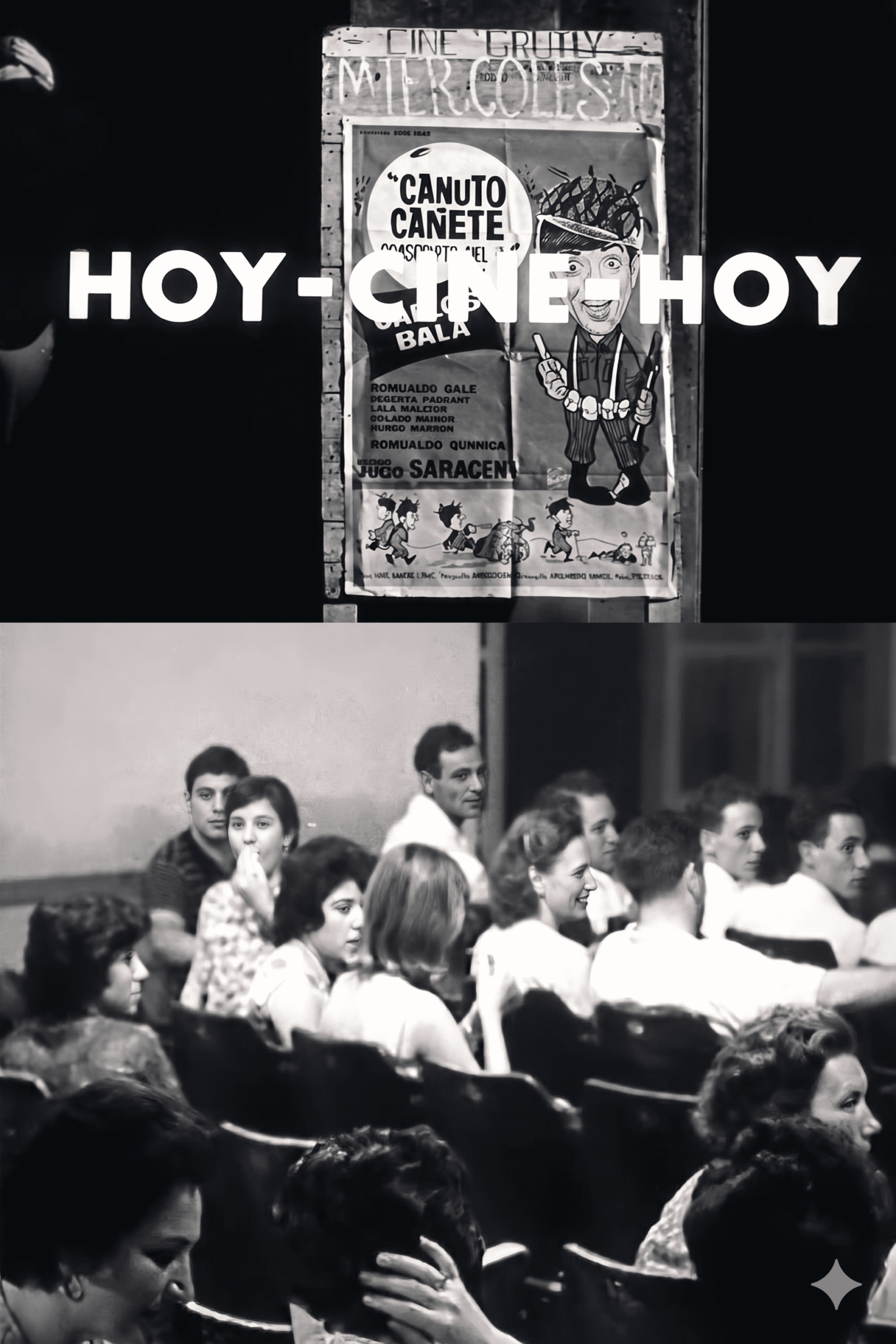
After graduating from the Instituto de Cinematografía Santa Fe, he did postgraduate studies in photographic densitometry and television lighting and production. Between 1962 and 1965 he worked as a filmmaker, director of photography, producer, and cameraman on several projects: Semana del mar, Don Antonio, La cancha, Hombres del tabaco, Viva La Francesa, Casamiento (Jásene), Reportaje a un vagón, Una familia, Las cosas ciertas, and Hoy, cine, hoy.
From 1967 to 1973, already in Chile, he founded Rn Producciones, a commercial production company with which he made more than 100 pieces in 16 and 35 millimeters. Then he returned to Argentina, where he co-directed the photography and camerawork for the feature film El familiar, and co-directed and took charge of the photography for the television film Testimonio de un nuevo 25.
Life, whimsical, took him to the United States, and in 1979 Gustavo moved to Colombia, where he fell in love with the climate, the green landscapes, and the women, though not necessarily in that order.
He began to influence national cinema and television. He made films, directed, and did the photography for more than a hundred television commercials; he worked at Producciones Promec, Innovisión Video, RCN Televisión, Producciones JES, Crear Televisión, and Televideo.
He was in charge of the photography for the documentary Aldea Doradal, which won the Secretariat of Culture award in 1981, and between 1982 and 1984 he was co-producer, co-director of photography, and post-production director for the feature film Ajuste de cuentas, the story of Don Waldo, head of a drug trafficking organization.
He ventured into acting in various television and film productions. He founded Factor Cine, a feature film and commercial production company; El Gordo and El Flaco, Cine y Televisión, a commercial and documentary production company; Correcaminos Televisión, a radio and television programmer on intercity buses; Ecofilm Ltda, a microfilming company; and Gustavo Moris Cinematografía E.U.
He won Catalinas de Oro, Súper Catalinas, “whatever,” he says, as if public praise were the least of honors for him, because the real honor lies in living life or smoking a Sello Azul, a selection from La Cava del Puro.
Coincidence and causality
All that time when he went back and forth from Argentina, passed through Chile, the United States, and made Colombia his residence, was not free from senseless persecutions, censorship, misunderstandings, and chance encounters that made him escape death, until film festivals brought him back to smoking cigars.
One of the first times he did it was at the Viña del Mar Film Festival, with Saúl Yelín and Alfredo Guevara, with whom, after the premiere of the movie El ABC de América Latina, he went out for a few drinks and a smoke. He almost fainted. Between not knowing how to smoke, the Habano, and the rum, he felt like he had caught the biggest drunkenness in the world, he says, and laughs.
Then came another coincidence. In 1992, 1993, he was in Colombia. He had been commissioned to do the photography for a movie about the last days of María Félix. One Thursday, the director met him at a restaurant to announce that the project was canceled.
Then, out of nowhere, the owner appeared. On Saturday he was opening a smoking lounge, but the cigars he had ordered from Cuba were stolen in Caracas. He didn’t know what to do. Gustavo called a Cuban friend and immediately word spread. Before the opening, he brought the restaurant owner 40 boxes of cigars!
That call led him to think: why don’t I do this? Relations between Cuba and Colombia had been suspended for about 12 years. They had just been reestablished under the government of Belisario Betancur, but there was no one selling tobacco in the coffee-growing country. Being a distributor of Habanos could be a business.
He went to see the Cuban ambassador to Colombia, and his response was simple: go to the island and bring some back. So he went with a Cuban friend and they brought some… And just like that, almost unintentionally, he became a distributor.
Since Havana didn’t want to be left out of the business either, they later appointed a representative, but “it turned out to be a dud.” He was a Mexican who came with other partners from the Cayman Islands, but from afar “you could tell they were mobsters,” he says again with a contagious laugh.
That “didn’t work out, and they offered the representation to this Cuban friend and me, and in 1995 we founded the first company, which was called Puro, Habano y Ron,” the seed of what is now La Cava del Puro.
Shortly after, the first Club de Amigos del Puro was born, and he began distributing the product in bars and stores. He eventually had 36 points of sale, but not everything turned out the way he imagined.
On one hand, vacuum treatment did not yet exist, so bugs were sprouting all over the cigars; and on the other, “it was a very bad payoff… If you gave the cigars on consignment, nobody wanted to buy them, they didn’t know what it was, and it was unbelievable because Colombia lived off tobacco for 300 years, but nobody remembered that.”
Being a distributor wasn’t such a good business. But Gustavo was already fully involved and wasn’t going to give up. So he opened the first La Cava del Puro store, which at that time was named Puro, Habano y Ron.
It was no simple task. For one or two generations, smoking cigars had ceased in Colombia. Even so, the grandchildren or older children of fathers and grandfathers who had smoked tobacco began to arrive: “How do you smoke it…? They didn’t know, so we had to start explaining to them, teaching them.”
With the Club de Amigos del Puro, he got a place, set up some humidors, a tobacco display, and a small smoking room, “and people started coming –people from the embassies, foreigners, fundamentally Americans, looking for Cuban tobacco.”
The Colombian cigar
Settling was no longer an option. “Why don’t we make a Colombian cigar?” Gustavo asked, as if that weren’t a dream. So, every year they started making a selection with a black tobacco found in the Montes de María, which was the result of mixing the Cubita variety with native tobacco from the Sierra Nevada de Santa Marta.
It was a very strong, bitter tobacco. It couldn’t be smoked. It had to be worked on; so it was, and in ’98 his first Colombian cigar went on sale. At that time, fine national cigars did not exist; there was only the chicote, a product consumed mainly by cattle ranchers and coffee workers, who practically used it as an insecticide to scare off mosquitoes, he says with a laugh.
Gustavo decided to take advantage of that market void. The first problem was maintaining a flavor standard. “We didn’t have plantations and we bought tobacco from small producers.” Putting a brand on it wasn’t ethical, so he decided to create colored stamps, according to the blends obtained.
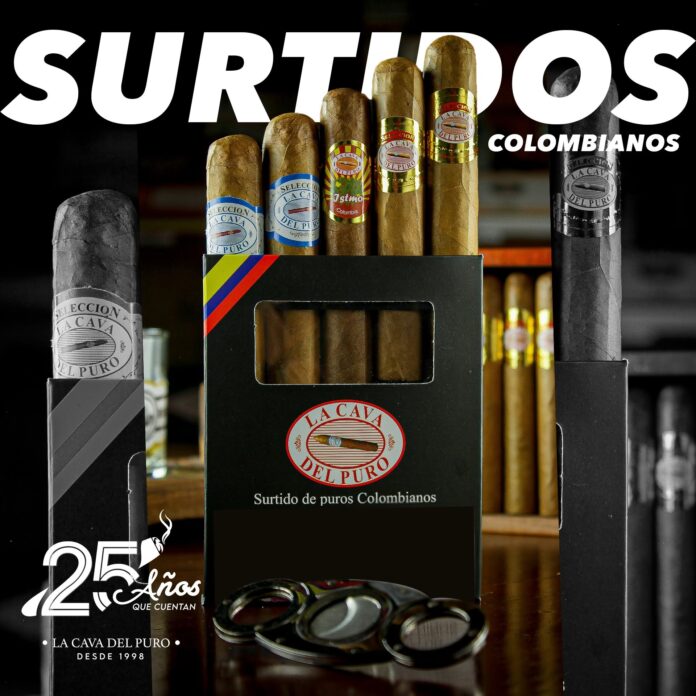
“We managed to make four blends with these tobaccos.” The Sello Azul, which is the mildest; the Sello Rojo, with a medium flavor; and the Sello Negro, intense.
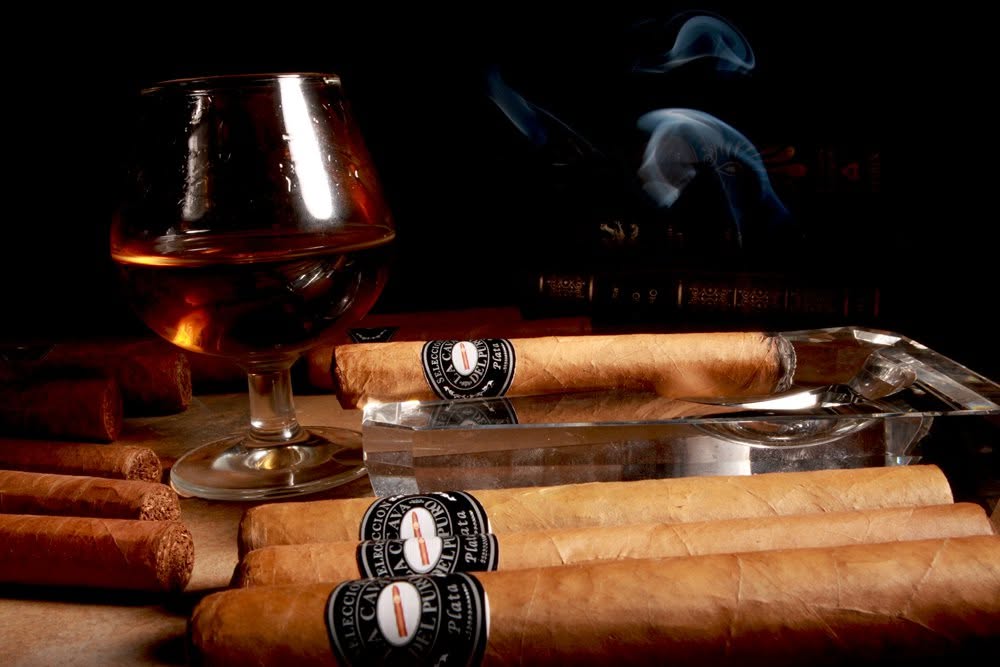
The original blend of Sello Azul had an Ecuadorian wrapper, 15 percent Colombian Cubita, and 40, 50 percent Habana 2000, as well as tobacco from another Cuban seed that was reproduced in Colombia and a certain amount of Dominican tobacco. Sello Rojo was born with a stronger flavor and a San Andrés wrapper; and Sello Negro Oro, with Colombian Cubita filler, and Sello Negro Plata, with a blend of the bases of Sello Azul.
The Sello Verde
For a time, Gustavo put another selection on the market, the Sello Verde, which like many things in life was something fortuitous: “One day they call me from the airport, from the Tax Directorate. ‘What are they going to come up with today?’ he thought. They tell me: ‘Look, we have some tobacco here, I don’t know if you’re interested?'”
It turns out that in an airport warehouse they had a “mountain of tobacco.” They had confiscated it from a plane that nobody knew where it came from or where it was going. Nobody remembered it, until one day they saw it. It had been there for maybe three or four years.
Gustavo thought they wanted to sell it to him, but no, it was a gift, all of it. There were easily three tons of tobacco. He hired some trucks to take it to Cartagena and put it into production: “It was seriously strong tobacco.”
The leaf was refined, what was useless was discarded, and with new blends, they made something milder. Thus arose the Sello Verde, which was very well liked and completely sold out. Those who knew something about the business “asked me: ‘Where is the tobacco from?’ From the airport,” he would answer, just like today, with a laugh.
What is not an anecdote is the growth that La Cava del Puro has had over the years, to the point of becoming a benchmark in the sale of artisanal Colombian tobacco.
Since smoking wasn’t banned everywhere back then and Gustavo knew the television and film industry, it was easy for him to promote tobacco. Business got good.
He opened a store in Bogotá, the second in Cartagena, the third in Medellín, another one in Bogotá, and another in Villa de Leyva, on the Island of San Andrés, while maintaining smaller distribution points in five-star hotels.
On one hand, Cuban tobacco was sold for those who could afford it, and on the other, national tobacco at reasonable costs, which allowed the clientele to diversify. The Colombian cigar was well-liked; it began to sell heavily on ships, among tourists in Cartagena, cruises, stores… and the company grew and grew.
South America, the future
Now there is nothing left to do but keep growing. Gustavo knows that the future does not forgive and does not wait. For this reason, he is preparing a major alliance with Karen Berger Cigars to be their exclusive representative and distributor in Colombia.
The plans also include entering South America, especially Brazil, Argentina, and Chile. He hopes to be able to do a good job and maintain reasonable prices: “We have to keep thinking that we are poor; the day we think we are rich, we are all screwed.”
If you want to expand the market and customers, you cannot sell tobacco for 10 or 12 dollars: “It’s a lot at this moment, so we must lower the cost, and that is achieved through mass production.”
That does not mean La Cava del Puro will stop being a boutique shop. “We will continue to be one, but we have to maintain a reasonable price for our South American countries… that’s what we want,” he says, and with his light eyes he looks to the future, while waiting to smoke his next cigar, which always tends to be the best one.
Suscribe to our Newsletter