The story of La Prueba began with an unexpected discovery. Ramón and José Balsa Pérez del Río, two Asturian businessmen who had worked as tobacco growers and Havana cigar manufacturers in Cuba, arrived in Mexico following the independence uprisings that shook the island. They brought with them seeds, knowledge of tobacco cultivation and cigar making, and the ambition to establish a new business. In Veracruz, they founded a factory that would eventually become one of the most important tobacco companies in the Americas during the late 19th century.
In 1877, according to the company’s history, a Chinantec Indigenous man appeared at the port of Veracruz offering tobacco leaves grown in Oaxaca. Their quality astonished the Balsa brothers: the leaves were beautiful, elastic, and possessed an extraordinary flavor and aroma. Intrigued, they decided to travel to San Juan Bautista Valle Nacional, in the Papaloapan Basin, to discover where they came from. There, they found fertile land, permeable soils, abundant water, and exceptionally favorable growing conditions. The region had the potential to produce tobacco capable of competing with the finest in the world.
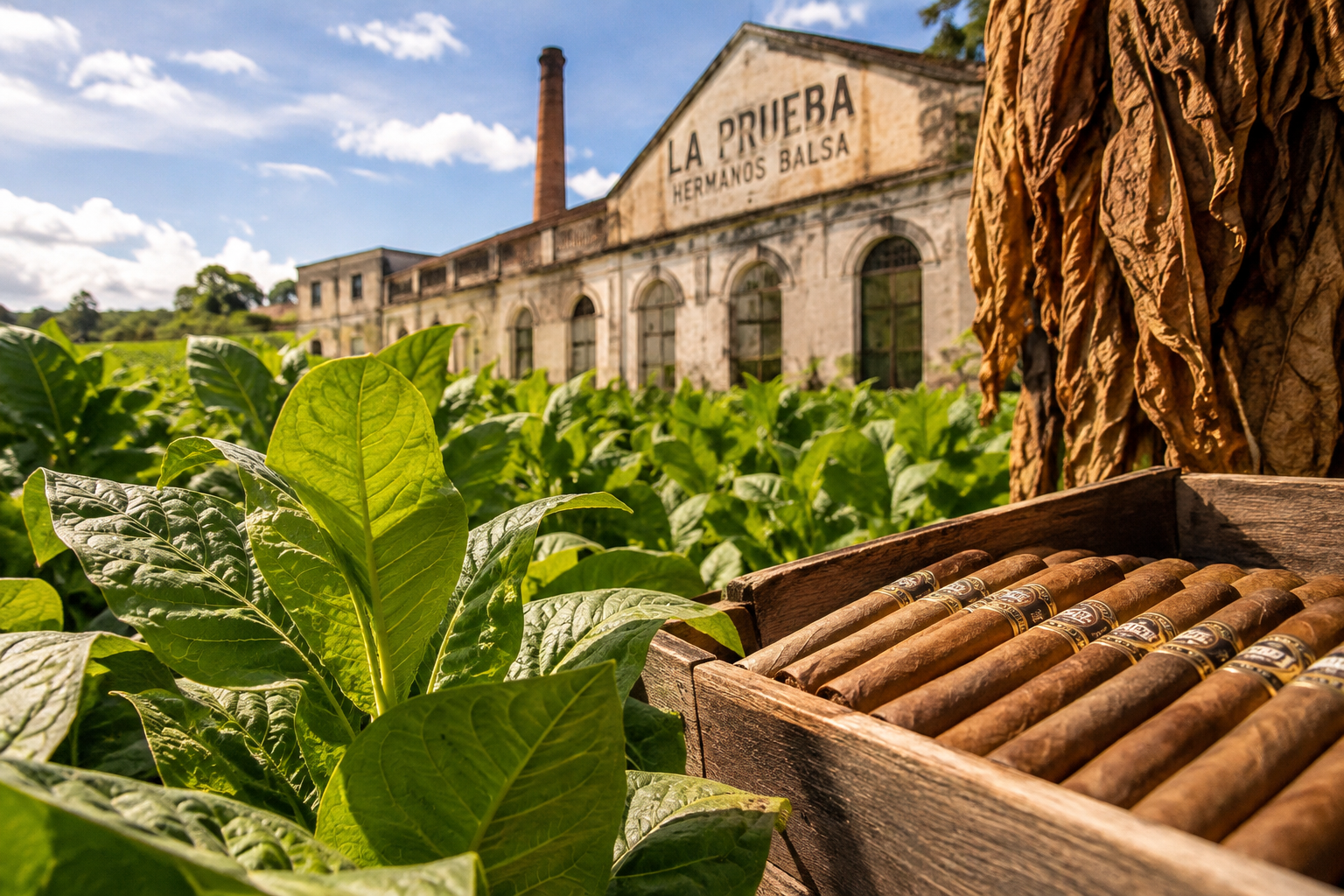
Convinced of its potential, the Balsa brothers began developing plantations in Valle Nacional and the surrounding areas. To draw on the expertise of Caribbean tobacco growers, they brought in skilled workers from the Canary Islands, some of whom had previously settled in Cuba. In October 1884, 41 Canary Island settlers arrived at the port of Alvarado, helping introduce cultivation and leaf-selection techniques that considerably improved production. Over time, the region became one of Mexico’s leading tobacco-growing centers.
The company’s growth was extraordinary. In 1894, Balsa tobacco commanded prices higher than those of some of Cuba’s renowned Vuelta Abajo tobacco plantations. The company eventually operated twelve plantations covering thousands of hectares, along with a factory in Veracruz that employed hundreds of cigar makers. Production reached approximately 50,000 cigars a day, destined for both domestic and international markets. Brands such as La Prueba, Flor de Balsa, and Glorias de Colón helped establish its reputation, while its products received recognition at international exhibitions in Paris, Chicago, and Atlanta.
However, the prosperity of this industry was also tied to the profound labor inequalities of the Porfiriato. Valle Nacional became infamous for the abuses and exploitative working conditions endured by many plantation workers, later denounced by journalist John Kenneth Turner in Barbarous Mexico. Despite these contradictions, the story of the Balsa brothers remains a fundamental chapter in Mexican tobacco history: that of a company that transformed the lands of Oaxaca into a major tobacco-producing center and carried the name of its cigars to international markets.