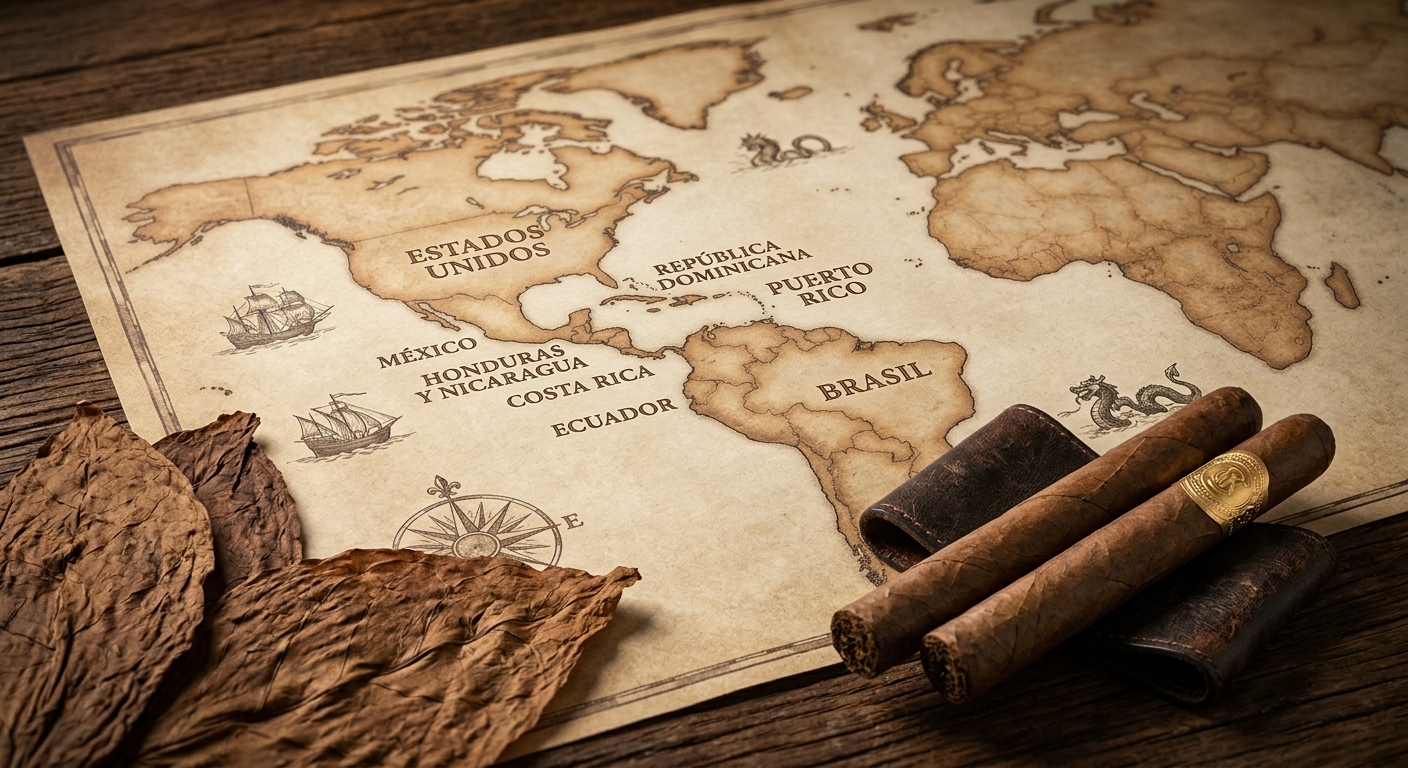
The world of premium tobacco has its leading regions: places where climate, soil composition, and a long-standing agricultural tradition have given rise to leaves renowned for their quality and distinctive character. The Dominican Republic, Nicaragua, Honduras, Ecuador, Cameroon, Brazil, and Mexico are among the major tobacco-producing countries, each offering unique growing conditions that shape the characteristics of its tobacco.
These countries not only supply the industry with leaves used for binder and filler. They have also earned recognition for their wrappers, one of the most highly valued components in cigar manufacturing. Their flavor, color, elasticity, and texture result from a combination of natural conditions and cultivation techniques refined over generations. Ecuador, for example, is particularly well known for its wrappers, prized for their uniform shades and fine texture, while Cameroon has built a reputation around its distinctive leaf and its popularity among cigar manufacturers.
Nicaragua, Honduras, and the Dominican Republic, meanwhile, have established themselves as leading producers of premium cigar tobacco. Their different growing regions offer leaves with a wide range of flavor profiles and strengths, used both in their own brands and in blends produced by international manufacturers. Mexico also holds an important place in this landscape, particularly through the tobacco-growing tradition of San Andrés Tuxtla, Veracruz, whose production has contributed to the identity of numerous cigars.
However, the tobacco map extends beyond these major producers. The United States maintains a particularly significant tradition through varieties such as Connecticut, Pennsylvania, and Broadleaf, used primarily for wrappers and other components of cigars. Each has its own distinctive characteristics, ranging from the mildness and lighter color of certain Connecticut leaves to the greater intensity and rustic appearance of some Broadleaf varieties.
Costa Rica and Puerto Rico represent other origins seeking to regain and strengthen their presence in the industry. Both territories have favorable climatic conditions for tobacco cultivation and a history closely connected to the crop, providing a foundation for renewed production efforts. Although their contribution remains smaller than that of the leading international producers, their development demonstrates how the premium cigar landscape continues to diversify.
Ultimately, every origin brings something different to the table. The richness of premium cigars lies precisely in this diversity of soils, climates, varieties, and agricultural knowledge, which makes it possible to combine leaves from different parts of the world in a single cigar. Behind every cigar lies, quite often, a journey across several countries before it finally reaches the hands of an enthusiast.
To discover more about the origins, varieties, and traditions that shape the world of tobacco, visit HumoLatino.com.