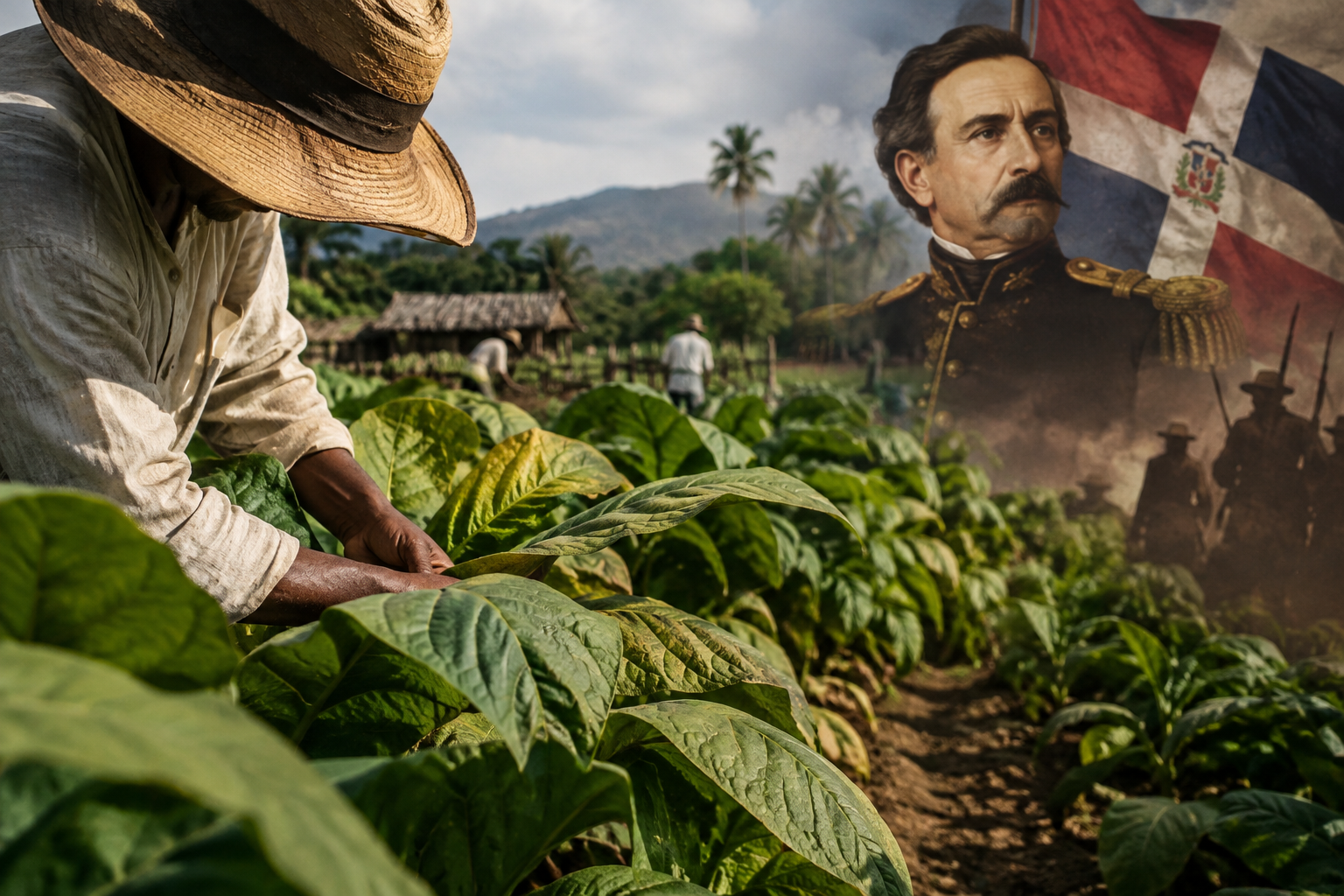
In 1857, Cibao tobacco was the Dominican Republic’s leading export product. The Cibao region, in the north of the country, accumulated considerable wealth through tobacco production and trade, giving it significant economic power despite its limited political influence over the central government.
President Buenaventura Báez triggered a crisis by issuing vast quantities of unbacked paper money and using it to purchase the tobacco harvest at prices that harmed producers. As the banknotes lost their value, the government acquired gold and silver, leaving numerous merchants and tobacco growers on the brink of ruin. The scheme sparked outrage throughout Cibao, turning an economic dispute into a political rebellion.
On July 7, 1857, the people of Cibao launched a revolution and established a provisional government in Santiago de los Caballeros. After nearly a year of civil war, Báez resigned and went into exile in June 1858. His government had acquired gold and seized the tobacco harvest through the monetary scheme, while the defeated president left the country. Thus, tobacco became the catalyst for a revolution that shook the Dominican political establishment.