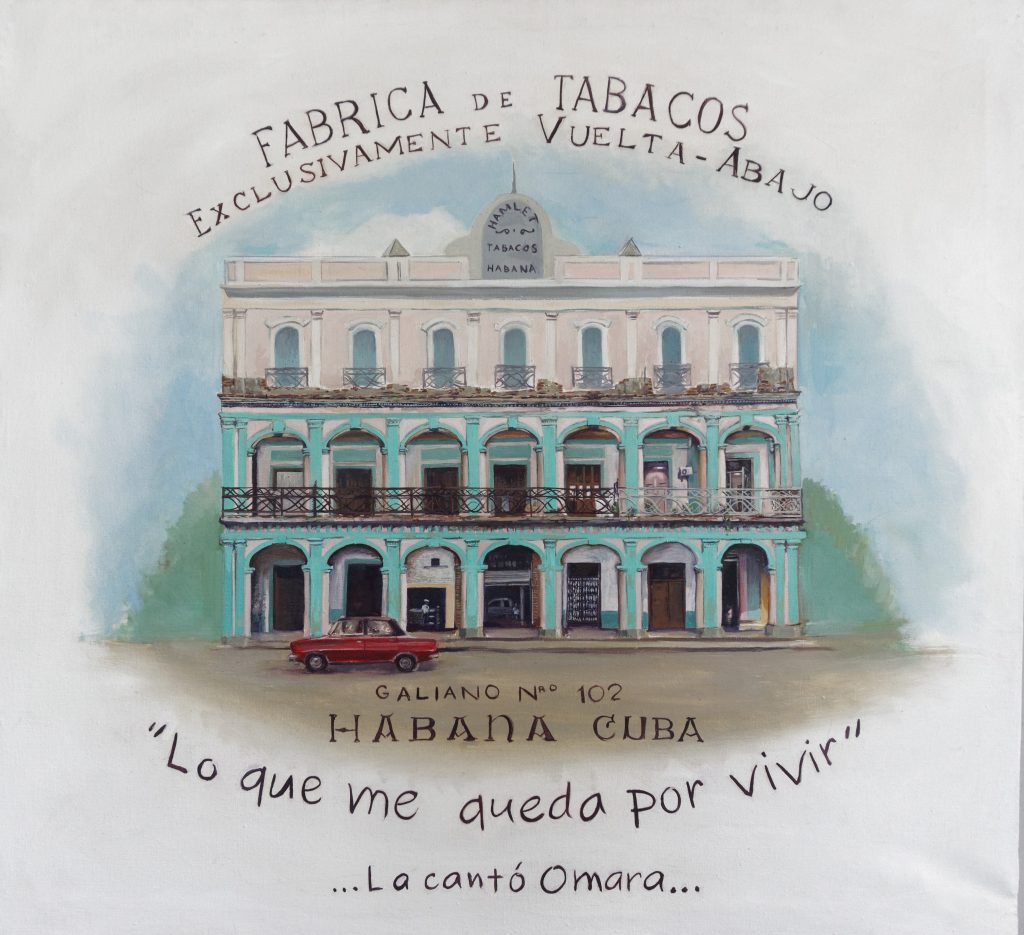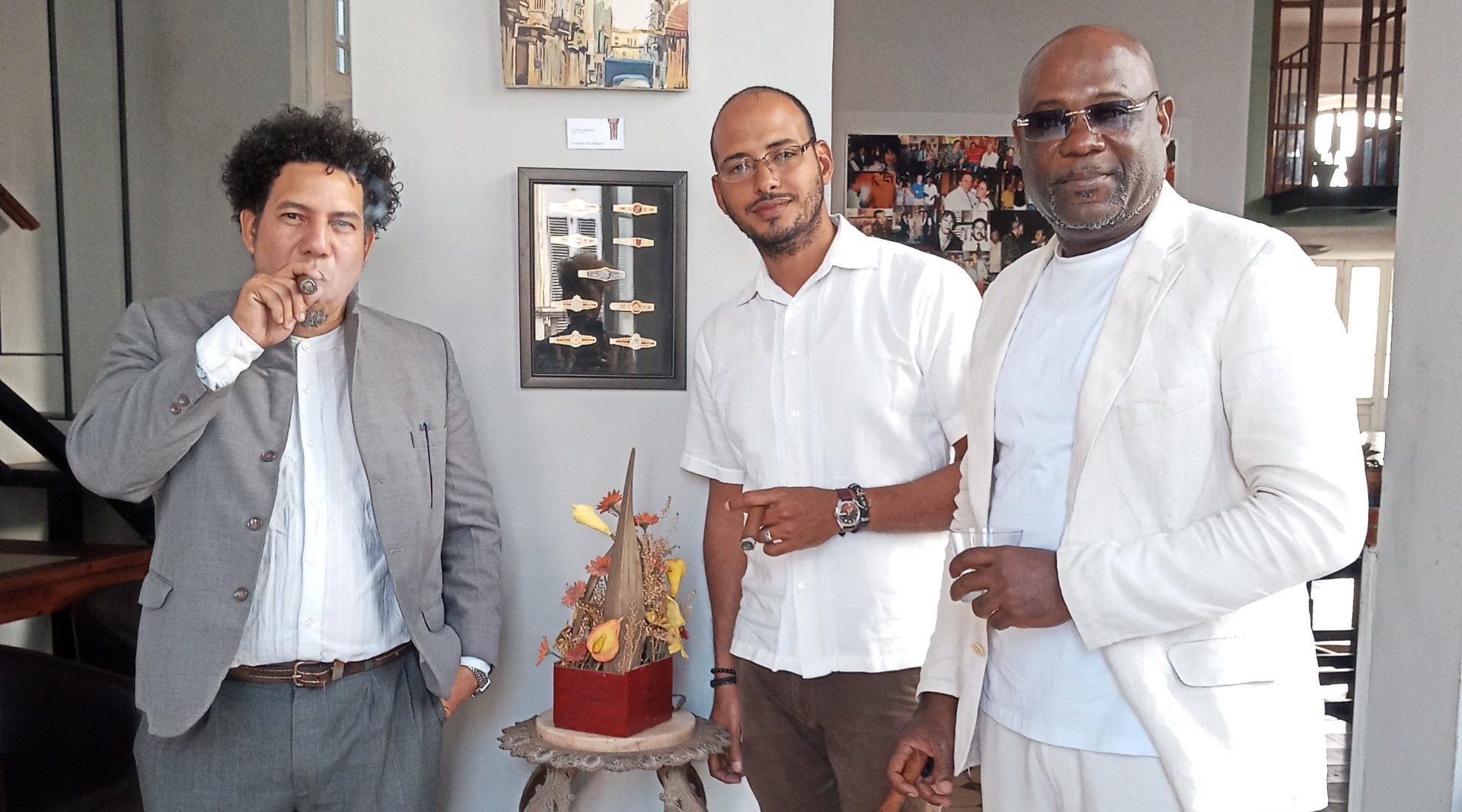
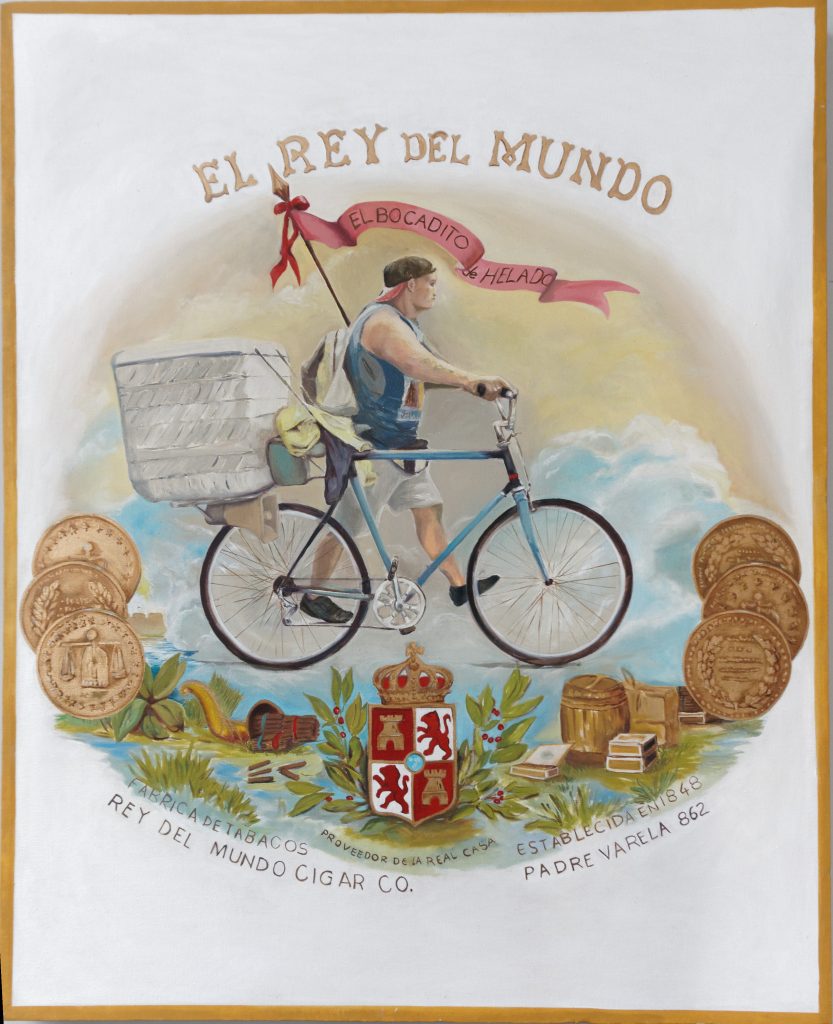
A graduate of Havana’s prestigious San Alejandro National Academy of Fine Arts and Sociocultural Studies at the University of Havana, with exhibitions in Cuba and abroad, Humberto Monteagudo is the artist behind Pruebe y Compare (Taste & Compare) –a collection of paintings that pay homage to the only surviving industry from those that once shaped the island’s national identity: Cuban tobacco.
Read in the magazine (rotate your device for a better reading experience):
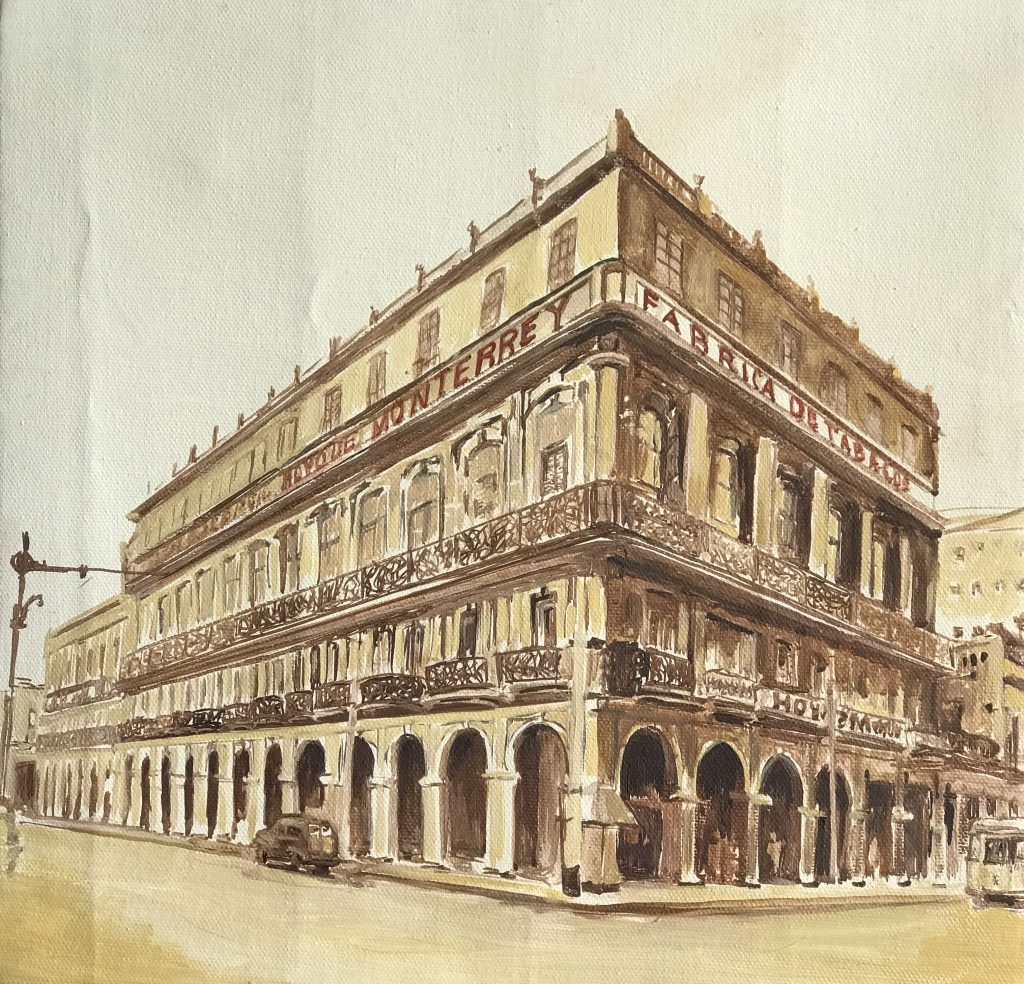
In Pruebe y Compare, each piece reimagines Cuba’s most iconic cigar factories through a vintage aesthetic, blending costumbrismo with the faded grandeur of 19th-century lithography and decaying architecture –structures Humberto seeks to preserve through his art.
The city is a recurring theme in his work, reflecting the social dynamics of urban life. His paintings capture socioeconomic struggles that erode quality of life, visibly etched into Havana’s crumbling facades.
Inspired by architecture as a “giant container of human stories,” Humberto approaches his subjects through two lenses: The social analysis, revealing truths about contemporary Cuba, and technical mastery, employing mediums like acrylic, resin, oil on canvas, or plexiglass to amplify his message –whether conceptual or classically rooted.
The Inspiration
An avid habano smoker, Humberto’s study of Cuba’s tobacco history led him to its industrial architecture, particularly the 19th-century factories designed like Havana’s aristocratic palaces.
“These industrial colossus, built amid political turmoil, stood as testaments to the cigar industry’s might. Through my work, I immortalize them in collective memory –a tribute to the cradle of our national identity.”
His art revives forgotten urban spaces, where cultural significance has faded: “Each piece commemorates lost places. Nostalgia is a powerful language to awaken emotion.”
For this collection, habanos became a creative ritual. Limited time forced Humberto to plan each detail meticulously, with cigars and Cuban rum as his creative catalysts from start to finish.
Women & Tobacco
In Cuba, women were pivotal –yet overlooked– in tobacco’s history. Initially hired only as destemmers and banders, they gradually earned recognition as master rollers and tasters, now dominating the industry.
Yet societal acceptance lagged. Smoking women –like French actress Sarah Bernhardt or Jennie Jerome (Winston Churchill’s mother) –were once seen as transgressive, paving the way for future generations.
Humberto applauds the SOTL Global Movement, echoing Cuba’s own Amigas del Habano, a project uniting women in tobacco culture. His wife, singer Hera de Cuba (director of Música es Mujer), champions similar gender-driven initiatives.