Manolo Santiago
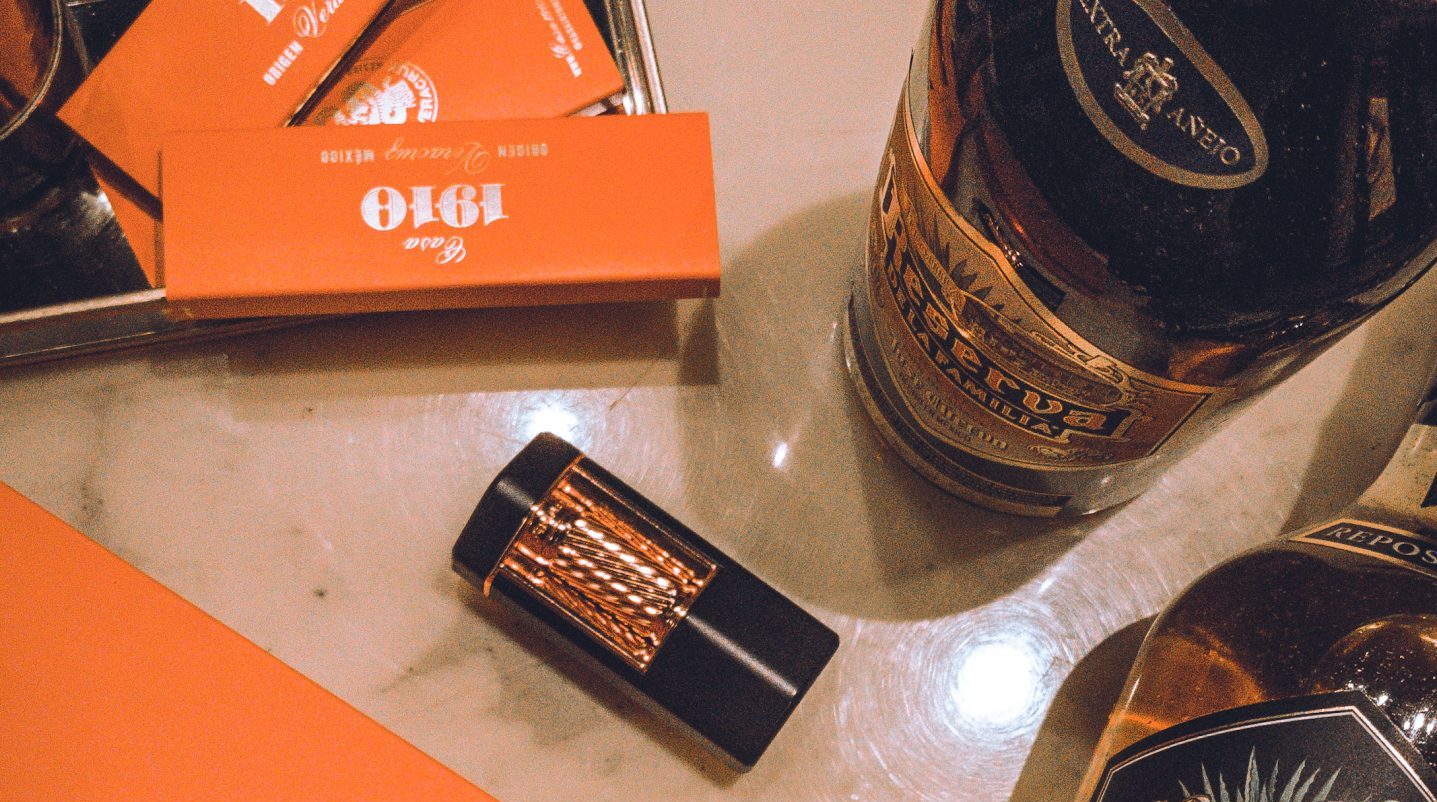
In recent years, we have seen an incredible growth in consumption, sales, and obviously in the creation of a gigantic cluster of brands, which increasingly are betting on creating a select culture of lovers of this great drink, tequila. However, we have to ask ourselves: how much do we know about this distilled spirit? How much can we adopt it to pair with our cigars? These are some of the questions we will try to answer in the following text.
Read in the magazine (rotate your device for a better reading experience):
Tequila is a distilled spirit from the blue agave variety Tequilana Weber, whose process is regulated by the Tequila Regulatory Council (CRT) and Mexican official standards, precisely NOM-006-SCFI-2012 and must comply with a series of characteristics:
- It is produced in the facilities of an authorized producer.
- Its harvesting, production, aging, and bottling must be located in the territory included in the Designation of Origin.
- The raw material must be blue agave Tequilana Weber variety.
- Formulation with other sugars can be made up to a proportion no greater than 49%.
- The geographically delimited zones for tequila production in Mexico are: Jalisco, Guanajuato, Nayarit, Michoacán, and Tamaulipas, with a parenthesis that not all territory of the state can produce, but in a narrow delimitation indicated by the regulatory council.
As for its class, we must understand that every so often, the tequila masters, who are in charge of the production of this wonderful spirit, can experiment internally; however, for a new class to be declared, it should have the endorsement of the Tequila Regulatory Council. The current classes are blanco, joven, reposado, añejo, and extra añejo.
BLANCO
It is a tequila that generally will not go through barrels, although up to two months are accepted. Only after distillation will it undergo correction with water to balance the alcohol content.
General organoleptic characteristics: In sight, you should find a white or silver color on the edges and a bright background. On the nose, you may find a fresh sensation, herbal, mineral, cooked agave, wet soil, and some astringency. On the palate, you can find a range of descriptors such as fruity, spicy, sweetness, acidity, bitterness, after the alcohol attack.
Pairing with cigars: This type of tequila, due to its characteristics, is not indicated or recommended to accompany with a cigar, because it tends to present acidity, bitterness, minerality, or astringency, so it is usually better to accompany food or make cocktails with this type of spirit.
It is worth mentioning that in the market there are indeed very fine options, which we can use to start some smokes, to mention some brands: Tequila General Gorostieta Blanco, Ambhar Tequila Blanco, Casa Dragones Blanco, Reserva de la Familia José Cuervo Platino, Loco and Clase Azul Blanco, where you will find sweetness, cooked agave, and silky sensations.
JOVEN
This class is relatively new and is the result of blends, the base will be blanco tequila with a smaller part of reposado, añejo, or extra añejo. It should be noted that additions of any allowed sweetener by the standard can also be made, such as glycerin, oak essence, caramel, and agave, although the best joven tequilas will always be just a blend with another tequila (reposado, añejo, or extra añejo).
General organoleptic characteristics: In sight, straw yellow color, golden, silver nuances, bright. On the nose, cooked agave, raw agaves, wet soil, citrus, vanilla, caramel, maple, and chocolate. On the palate, it leaves a silky and quite lasting sensation with descriptors such as cooked agave, wet soil, cinnamon, citrus like grapefruit, preserved fruits, vanilla, caramel, maple, and chocolate.
Pairing with cigars: Undoubtedly, this is a great prospect for pairing with cigars and due to its characteristics, it preserves the balance between both elements. It is recommended for a first third. For this type of spirit, cigars that usually have a better impact are those where sweetness and wood are their main characteristics, whose acidity and tannicity are not so high and preferably of mild, medium to medium strength. The most recommended brands for this purpose are: Tequila General Gorostieta Joven, Casa Dragones Joven, Tequila Gran Sociedad, and Tequila Casa Noble Joven.
Pairing with food: White meats, seafood, dishes with citrus dressings.
REPOSADO
It is the result of the minimum aging of the spirit in wooden oak barrels for a minimum of two months up to a time of less than one year. This tequila can be rectified with some añejo or extra añejo tequila.
General organoleptic characteristics: In sight, you will find a yellow color with straw and golden highlights. On the nose, you will find mainly cooked agaves, ripe fruits, wood, and spices like vanilla and cinnamon. On the palate, it will be sweet, oily, with medium or prolonged permanence, with descriptors such as cooked agave, sometimes you may discover a bit of minerality or wet soil, ripe fruits, woods, and spices. Of course, depending on the type of barrel used, you could find some characteristics such as maples, flowers, or brines.
Pairing with cigars: We are getting closer to more sensitive and obvious pairings, due to the characteristics of both products. Undoubtedly, I would opt for the first or second thirds of the cigar. The best cigars for this purpose are usually those with medium tannicity, well balanced, and medium stored in the humidor, from mild to medium to strong strength, where leather, woods, and nuts predominate. The most recommended brands for this purpose are: Ambhar Tequila Reposado, Reserva de la Familia Reposado, 7 Leguas Reposado, Clase Azul, El Tesoro, Cascahuin, Cierto, Tequileño, Fortaleza, and Tequila de la Luz.
Pairing with food: Red meats, spicy sauces, and moles.
AÑEJO
Result of aging the spirit in oak barrels without specifying an origin or previous use, for at least 12 months up to less than three years, and must be barrels of no more than 600 liters capacity and can be mixed with an extra añejo tequila. It should be mentioned that the time that tequila is stored in barrels may or may not be mentioned on the label, as in some other spirits.
General organoleptic characteristics: In sight, you will find an amber color and coppery shades. On the nose, light agaves, dried fruit, wood, honey, maple, vanilla, cocoa, spices, and in some cases, brines. On the palate, it will be somewhat drier compared to reposado, with a characteristic sweetness and woods, losing a bit the agave note, but presenting great complexity and a long aftertaste.
Pairing with cigars: This type of product undoubtedly leads us to place it better in the second or last third of a cigar. In this case, we can already think of cigars with a stronger strength, from medium to strong, also supporting a slightly more defined tannicity. In this case, you can opt for more complex and fine cigars that need balance with the drink. Cigars that go very well with this drink: Mexico San Andrés Maduro, light Estelí, Condega, San Vicente, matured habano, sun-grown, among others. The recommended brands: Ambhar Añejo, Cascahuin Añejo, Fortaleza Añejo, 7 Leguas Añejo, Arette, Tres Generaciones, Xicote, Maestro Tequilero, Tesoro, Clase Azul, Patrón Roca, Casa Dragones, Tequileño, and Casa Noble.
Pairing with food: Desserts, semi-dark chocolate, moles, and nuts.
EXTRA AÑEJO
This distilled spirit must spend at least three years in oak barrels, with a maximum capacity of 600 liters. It should be noted that there is no maximum limit on aging, although some tequila experts mention that after four or five years it may begin to lose organoleptic characteristics, although certain brands have achieved great results of aged tequilas for much longer in smaller barrels. It all depends on the brand.
General organoleptic characteristics: In sight, dark amber color. In aroma, you will find molasses, figs, apples, caramels, woods, and spices. On the palate, initially sweet and dry finish with long permanence, you will find the passage of earth, dried peaches, chocolate, maples with perhaps a residue of cooked agave.
Pairing with cigars: Due to its robustness, dry and spicy sensation, this type of tequila can work with cigars of medium to strong strength without fear. Ideal for last third and in cigars with medium or high tannicity. The origins that go very well with this type of tequila are Cuba strong, maduro Mexico, strong Nicaragua, complex Dominican Republic, and blends with Mexico, as well as blends with maduro wrappers or a certain level of complexity. The recommended brands are: Ambhar Extra Añejo, Reserva de la Familia extra añejo, Clase Azul, El Tesoro Paradiso, Gran Centenario Leyenda, 7 Leguas Single Barrel, 7 Leguas D’Antraño, Cascahuin, Ocho Tequila, Maestro Dobel Extra Añejo, and Tres Generaciones, to name a few.
AND WHAT ABOUT THE CRISTALINO ONES?
It must be mentioned that the Official Mexican Standard still does not contemplate crystal clear tequilas, however, the Tequila Regulatory Council does regulate them and mentions that they must be reposado, añejo, or extra añejo and within their process their color is removed, leaving the natural characteristics of the barrel such as caramel aromas, vanilla, maple, etcetera.
The process: The crystallize, which is more of a clarification process, will be done through activated carbon, depending on the time the distillate is in contact with the carbon will be the color, aromas, and flavor it loses.
General organoleptic characteristics: In sight, it can be slightly silver or amber, depending on the producer. On the nose, vanilla, caramel notes, and light agave usually stand out, but these aromas will be very delicate. On the palate, you will surely find very low astringency, agave essence, vanilla, and woods.
Pairing with cigars: Due to its smoothness and lightness, I would use it as an appetizer, before or during the first third, to enjoy slowly. With cigars of mild to medium strength where herbal or earthy notes predominate and low tannicity. The recommended brands are: Ambhar Cristalino, Tequila, Herradura Ultra, Maestro Dobel reposado cristalino, Maestro Dobel 50 añejo cristalino, 1800 cristalino, and Volcán de mi tierra cristalino.
Pairing with food: Seafood, white meats, and some desserts with citrus.
Something very important to mention is that you should check certain characteristics on the label when purchasing your tequila to be sure that you are buying a quality product:
That the label clearly says Tequila, never Agave Distilled, Agave Liquor, or something strange.
That it mentions that it is made 100% from agave, it can also say 100% blue agave or 100% pure agave.
Check the class of tequila: Blanco, joven, reposado, añejo, extra añejo, or cristalino.
Bottle capacity and alcoholic graduation.
The Official Mexican Standard of the product, which is the producer’s registration number in front of the council and the government.
Regarding defects that we may find in low-quality tequilas or some production errors, they may be:
Particles in the liquid or turbidity, this generally due to poor hygiene in filtering or pipes, possibly does not affect its taste or smell. But it is not indicated.
In the nose, you can distinguish certain important defects, such as varnish, thinner, vinegar, decomposed cheese, or cooked vegetables aromas, it can indicate that we are not drinking a pure distillate, perhaps it has a bit of the heads or tails of the distillation and it will surely provoke a strong hangover. Avoid them, as there is also the possibility that the drink is manipulated or adulterated.
Alcohol sensation or astringency: this sensation both in the mouth or nose should be secondary, if the alcoholic sensation is presented abruptly it speaks of a production error.
In an añejo or extra añejo tequila, silky and delicate sensations should prevail, at some point it may present astringency, but it should not be the first impression, if this occurs, we are surely facing the presence of a tequila that was corrected with colorants, to make it look like a great añejo.
With this brief introduction to the world of tequila, I hope that without a doubt it will be a great option when choosing your cigar and starting your after-dinner, since tequila is part of Mexico’s great ambassadors in the world, along with our mariachi, our food, our people, and our tobacco. Give yourself the opportunity to taste a great elixir like tequila and create unforgettable moments.
Try it and let me know what you think.