


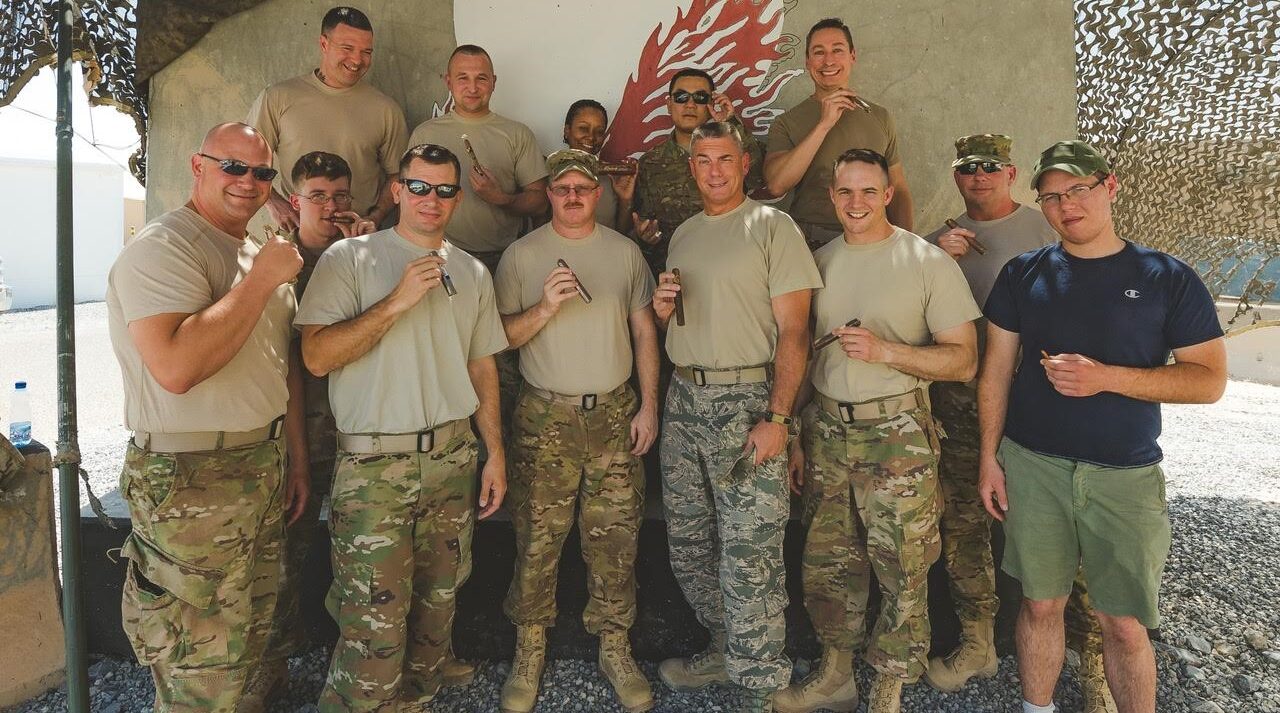
What began as a memory of camaraderie has consolidated into a global non-profit organization dedicated to sending moments of peace to troops deployed in the most remote combat zones in the world; long-term deployments in 2nd and 3rd-tier environments, and on long Floats. Operation: Cigars for Warriors (CFW) is a testament to how a simple cigar can be transformed into a tool for survival.
Read in the magazine (rotate your device for a better reading experience):
Beyond the logistics required to move an average of 200,000 cigars annually, CFW’s actions stand as a pillar of mental health and social cohesion for soldiers. Challenging legal and operational barriers, it has ensured that at the end of a difficult day, no warrior has to face their demons alone, but rather under the shelter of a good smoke and the brotherhood that only tobacco can build.
Long-Term Mission
Retired First Sergeant Storm Boen’s relationship with the Army and cigars began nearly two decades ago when he enlisted to serve his country. Today, at 52, he recalls that before his arrival in Iraq in 2003, he and his brothers-in-arms spent nearly a month stationed in Kuwait, where day after day they were warned about everything they could expect upon reaching the front lines.
Gas attacks, diseases, ambushes, and an endless list of horrible ways to die flooded his mind and those of many other young men, as the anticipation of these tragic scenarios was worse than the actual struggle… “It’s like when you pull adhesive tape off your skin; the seconds before are worse than when you actually do it.”
However, in the midst of chaos, there was something that gifted them brief but significant moments of peace: tobacco. “I think it was on the way to Baghdad when I saw a commander sharing cigars with his officers, having a good time amidst so much negativity,” he relates.
His passion for tobacco began then, and in 2011 an idea emerged that seemed innovative to him, though he later discovered that the history of camaraderie around cigars dated back many years. Thus, Operation: Cigars for Warriors (CFW) was born and formally established a year later.
Storm was in the process of retiring from military life and was a regular cigar smoker who enjoyed talking about tobacco, both in person and on social media. From those conversations emerged his desire to include the troops in the experience, sending them cigars as a thank-you for their service.
When the project started, he had no idea what he was doing, but once the association was formed, the Board of Directors defined the positions and obligations of its members during their first meeting. “Although I begged not to be at the front, here I am. I was young, I was retiring, and it made sense for me to take over,” he states.
Vocation and Commitment
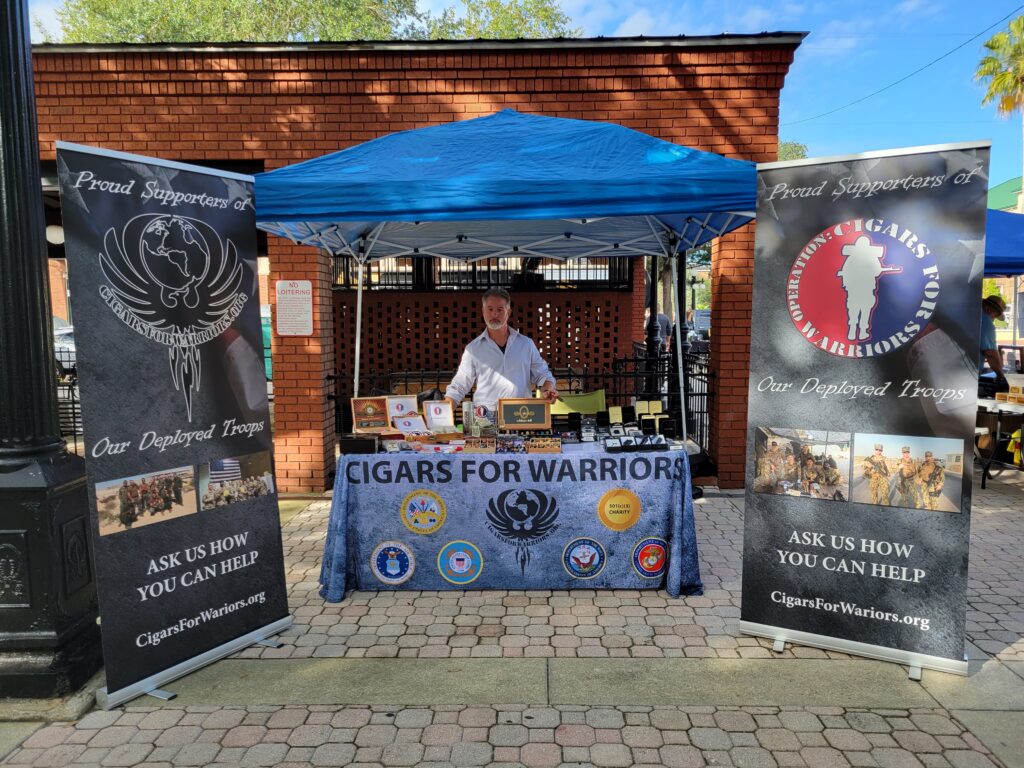
Board members span across Florida, Texas, Colorado, Wyoming, and other states, reducing operational costs to a minimum. When they meet –which has only happened three times– they do not hold a grand convention in Hawaii; they choose small cities where everything is more affordable, and generally, everyone covers their own expenses. This ensures that donation income is focused on what truly matters.
According to Storm, it has been proven that tasks performed by paid staff are usually completed faster than those carried out by volunteers, but this is not the case here, as the CFW team is strong and committed. “While in other places an average good volunteer doesn’t last more than six months, here there are people serving since 2012.”
He maintains that this vocation and revitalization arises from contact with the troops, “or at least that is what happens to me when I see these men and women approach to receive the packages, I hear their stories, and I realize what it means to them.”
Although the organization receives cash donations, they are not used for salaries. Every dollar is invested in shipping costs, packaging materials, website maintenance, and other expenses ranging from 15,000 to 30,000 dollars per month. “I am impressed by what our organization costs, but I am even more impressed that every month we manage to collect these amounts to keep moving forward.”
While funding comes mostly from individual contributions, among the companies that donate cash, cigars, accessories, etc., some stand out like Drew Estate, which over the years has delivered more than 200,000 cigars and more than half a million dollars in cash, as well as a large amount of high-end promotional items for raffles.
Also Boveda, the first to join the cause, helped legitimize the care put into every donation. Volunteers ensure that every package includes a sachet of their product to keep the inventory well-hydrated in the warehouse and in the mail.
Other companies such as Hiram & Solomon, Oliva, Toscano, Caldwell, Oscar Valladares, Ventura, Cigars International, Famous Smokes, and Micallef –which broke the record for the largest individual donation with 67,000 cigars– are some of those that have made significant contributions, in addition to those offered regularly.
The list is far too long to name every organization, inside and outside the tobacco industry, that has responded to the hard work done to earn their trust and demonstrates love for the troops.
The Logistical Challenge
Although sending cigars to soldiers was not a new concept, the true challenge was ensuring that each package was delivered to those who truly needed it. Other organizations or shops lacked transparent processes or had difficulty proving that shipments reached their recipients rather than staying in some warehouse.
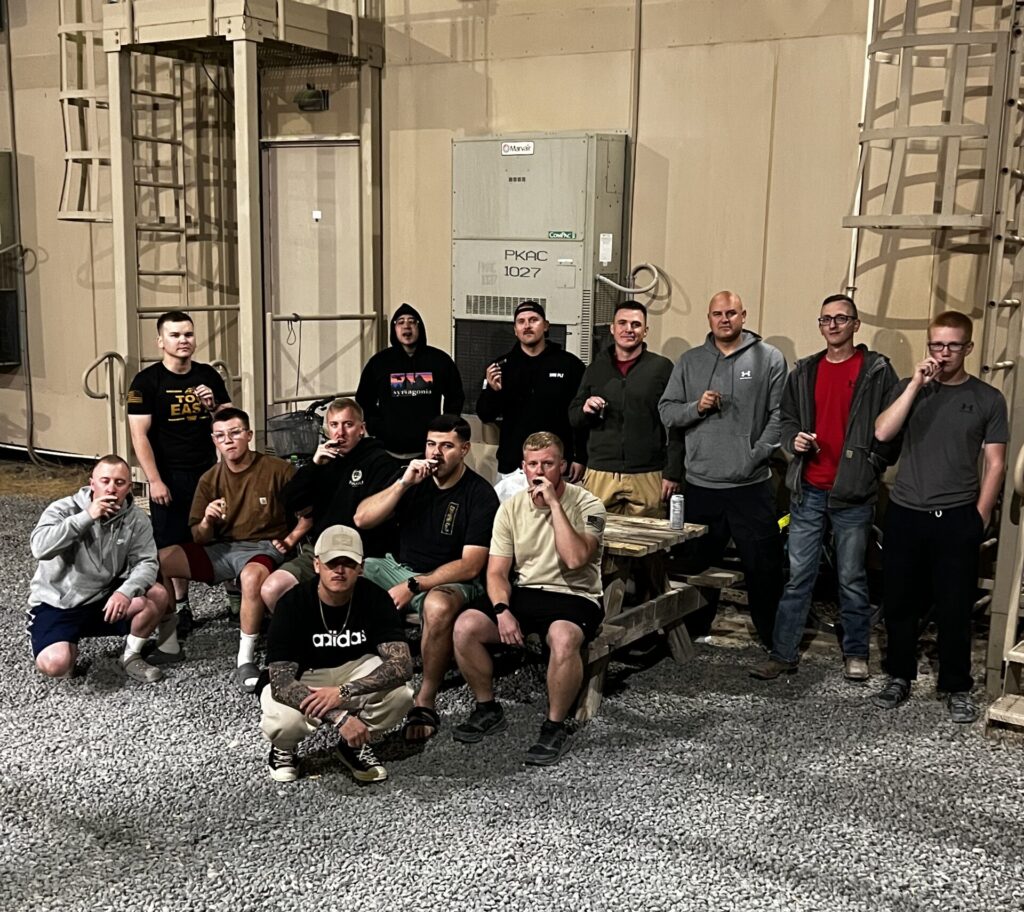
CFW’s primary mission has been to ensure that every box reaches the requester, regardless of rank or location, as long as they are deployed on long-term missions in critical locations or at sea. “Since day one, we have been blessed to have an active-duty service member who works in operations and has been able to validate the process.”
We do not obtain personal information, but it is confirmed that the request comes from a U.S. service member deployed in the location they declare. “No other charity that sends packages to U.S. troops can say the same. We are very strict with checks and balances; it is part of our core principles,” Storm asserts.
Each package contains between 25 and 50 cigars, with a minimum value of 300 dollars, achieving a balance between premium and budget cigars. It is not about luxury or status, but about relieving the stress that troops experience. “Even if they are not in combat, staying far from home in a strange place is a stress trigger that leads you physically and mentally to unwanted situations.”
As part of the organizational strategy, retail stores serve as donation centers, and each establishment has a special humidor to place the cigars, ensuring their correct classification and preservation. The respective manager sends them personally, by mail, to one of CFW’s distribution points.
“Volunteers do not receive products, and that protects our integrity. It is sad to say, but there are those who wish we would fail, and that is why it is vital to do everything by the book.”
CFW maintains 350 volunteers nationwide, mostly event coordinators, and between 1,500 and 2,000 donation centers, which allow for the mobilization of an average of 200,000 cigars per year, as well as tons of coffee, gift cards, magazines, and accessories, sent every month in nearly 500 boxes.
Respect for the Product
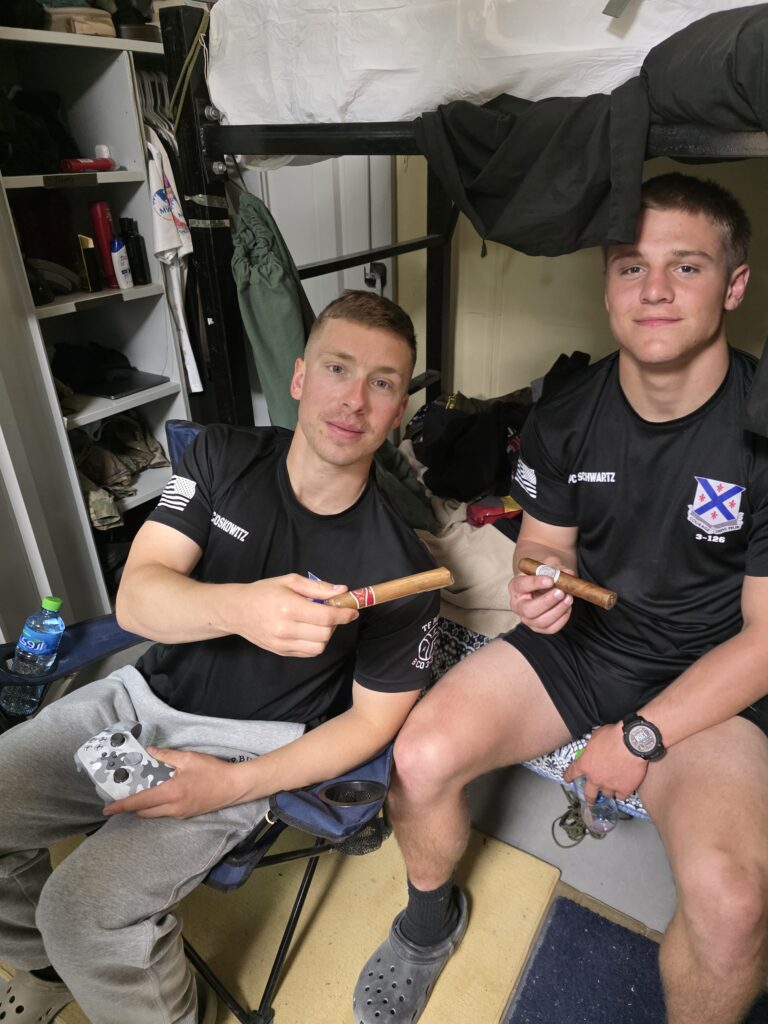
To participate, the consumer visits a partner retail location, buys a cigar, and places it in the designated humidor. Once a month, the store sends its contents and volunteers count, inspect, and classify the cigars by ring gauge, strength, wrapper, and brand to assemble balanced packages.
“Thanks to Boveda packs, we can recondition cigars that are too dry, because it’s not just about sending donations, but about treating them with the respect they deserve.”
Then, each package must be requested by a soldier, friend, or family member, and combat lines and long deployments have priority. Once their location is verified, the box is moved to shipping centers in Florida or New Jersey to travel via USPS and the Military Postal Service. Each shipment includes accessories, such as lighters and cutters, but the second most requested item is coffee, provided through Coffee 4 Warriors.
“The first year’s goal was to distribute 800 cigars, but at the end of the first chaotic 30 days we sent 860, and after twelve months we had delivered 92,000 cigars to our brothers and sisters.” The majority of those donations came from people on social media who supported CFW and the troops.
Tobacco and Morale
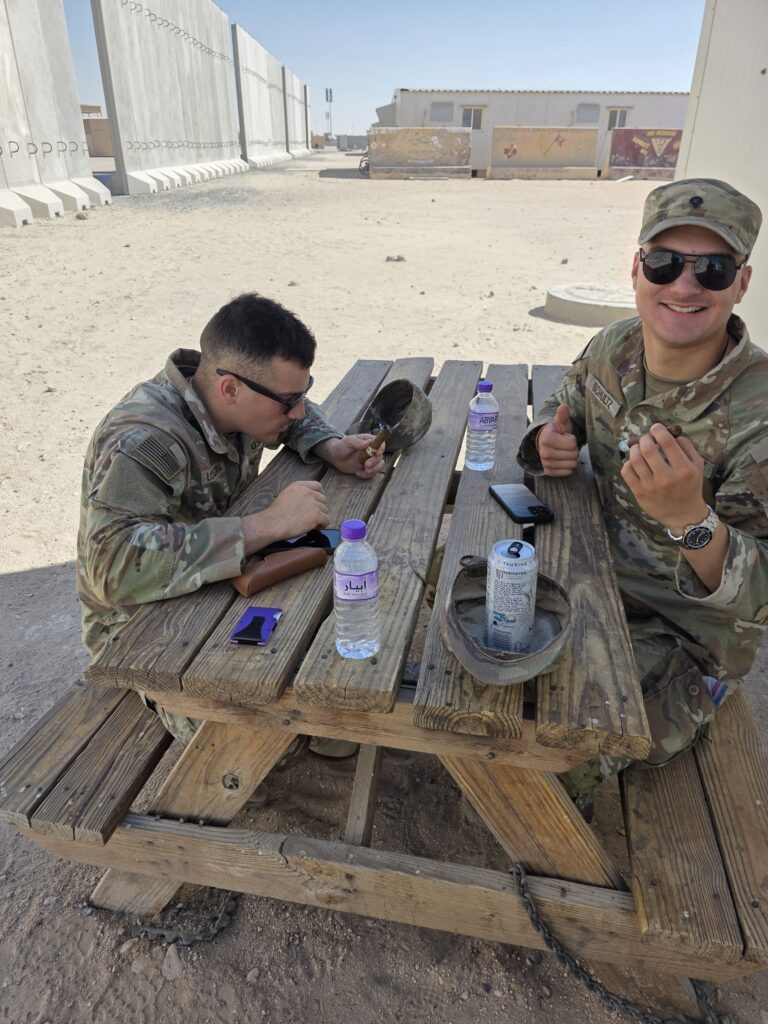
In initial conversations, Storm spoke with his first treasurer about the high suicide rates recorded in Iraq. The idea was to ensure that, after a difficult day, soldiers would not sink into their own pain, but would have the option to light a cigar and talk about their feelings. “Hey, let’s smoke, and you can say whatever you want without being judged,” is a way to get the demons out and conduct a mission debriefing without a rigid protocol.
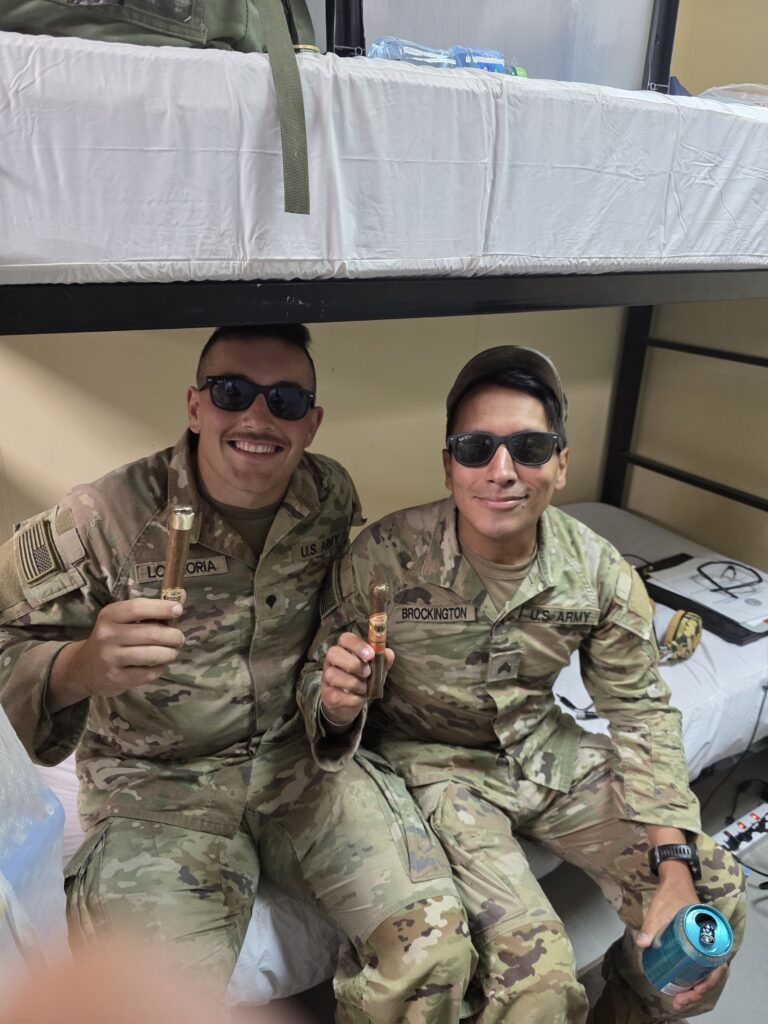
CFW works with other military wellness organizations and brands like Oliva, Drew Estate, and Hiram & Solomon; collaborates with chaplains to facilitate Holy Smokes Nights or Fireside Devotions, creating a relaxed environment to talk about problems, and organizes send-off and welcome-home parties to raise morale. “We visit military hospitals to give talks and give away cigars,” he adds.
For someone returning from combat, the transition is difficult, as camaraderie is lost and the environment changes drastically. Therefore, CFW has partnered with specialized organizations such as 22Kill, now One Tribe Foundation, focused on preventing suicide among veterans and first responders.
The name 22Kill comes from a 2012 report which indicated that an average of 22 veterans died daily by suicide. Their motto, One Tribe, One Fight, emphasizes reducing the stigma surrounding mental health through traditional and non-conventional therapies.
The relationship between the U.S. military and tobacco is historical. Tobacco was included in soldier rations until 1975, and although its consumption has decreased, active personnel and veterans continue to smoke at higher rates than civilians due to combat stress and military culture.
Even though current policies tend toward smoke-free environments, premium cigars are seen differently, as natural products used in traditions dating back to the time of George Washington. CFW is proud to have helped create at least 30 official smoking clubs within the Army.
Embrace the Suck
Embrace the Suck is a military phrase commonly used to tell troops that even if a situation is extremely difficult or adverse, they should accept it as part of the journey and drive on with the mission.
Despite regulations and other actions by the U.S. Food and Drug Administration (FDA) against tobacco, which in some cases intended to cover premium cigars, CFW and its followers remain firm.
When factories were prohibited from donating cigars, they offered cash contributions and sponsorships, or dedicated the profits from specific blends to the cause, such as Hiram & Solomon’s Live 2 Serve; Caldwell’s Mad Mofo; Ventura’s The Operator, and CFW by Oscar by Oscar Valladares. There were also companies that decided to ignore the measure and continued gifting cigars, willing to pay fines to keep supporting the troops.
CFW’s fight includes the right to smoke for members of the Army who are between 18 and 20 years old, because “if you are old enough to die for your country, you should also be old enough to smoke a cigar with your comrades.”
To learn more about how to donate cigars, funds, or time, visit:
https://cigarsforwarriors.org/
Instagram: cigars_for_warriors_official
Facebook: Cigars for Warriors
Suscribe to our Newsletter

.)