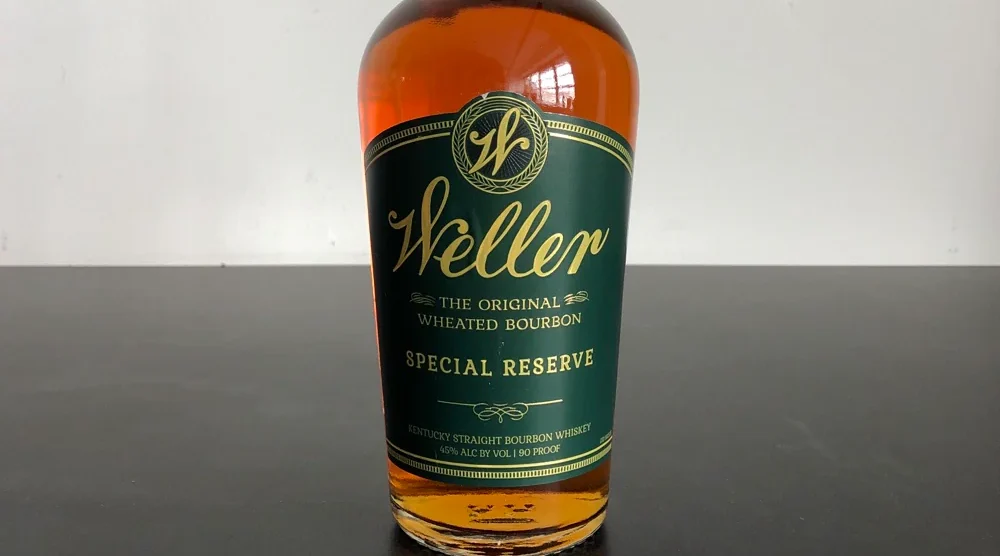
CLASSIFICATION: Straight Bourbon
COMPANY: Sazerac Company Inc.
DISTILLERY: Buffalo Trace
ABV: 45% (90 proof)
AGE: NAS (No Age Statement)
MASHBILL: Unknown (developed from Buffalo Trace’s “wheated” mashbill, consisting of Wheat, Corn, and Malted Barley)
COLOR: Medium-intensity caramel
Read in the magazine (rotate your device for better reading experience):
W.L. Weller Special Reserve is a bourbon that incorporates wheat as a secondary grain in an undisclosed proportion, originally created by the Stitzel-Weller Distilling Company. The brand is named after William Larue Weller, who is credited by some as the first to use wheat as a secondary grain in straight bourbon, instead of the more commonly used rye.
Anecdotally, William Larue Weller hired Julian Van Winkle, later known as Pappy Van Winkle, who began his career working for Weller. Weller passed away in 1899, and coincidentally, his company, W.L. Weller & Sons, later merged with A. Ph. Stitzel Distillery, owned by his former employee Julian Pappy Van Winkle. During Prohibition, the companies operated together under a medicinal license and eventually became the Stitzel-Weller Distilling Company in 1935.
NOSE: Sweet notes dominate, with aromas of caramel, vanilla, and honey blending seamlessly. In the background, floral notes and oak provide a distinctive character to W.L. Weller’s core range.
PALATE: The sweetness from the nose carries over to the palate, accompanied by subtle fruity notes and mild spice. The wheat in the mashbill gives it a very approachable character on the palate, complementing the chosen ABV presentation for this bourbon.
FINISH: The wood becomes more pronounced, along with a warm and sweet sensation that is delicate yet complete. The finish is long and very satisfying.
COMMENTS: W.L. Weller brand products are highly sought after by bourbon enthusiasts worldwide, as they share production characteristics with its perhaps more famous and expensive counterpart, Pappy Van Winkle, except for the price. Indeed, while there may not be recognizable differences in their tasting profiles, the basic expressions from both brands can differ significantly in price. A bottle from the least expensive line of Pappy can be up to ten times more expensive than its W.L. Weller counterpart.