Christopher Nicolás Sáez Ahumada
This time, we delve into one of the key ingredients in the art of crafting a fine pipe tobacco blend, comparing it to other versions I’ve sampled over the years. Specifically, we’ll share insights on the Brazilian Burley, Duque do Ferro.
Read in the magazine (rotate your device for a better reading experience):
Burley is a tobacco variety cultivated in various parts of the world, but the majority –around 70 percent– is grown in Kentucky, USA. Tennessee contributes another 20 percent, with the remaining production spread across Indiana, North Carolina, Missouri, Ohio, Virginia, Maryland, Pennsylvania, and West Virginia, as well as countries like Brazil, Malawi, Italy, Thailand, Mexico, and Argentina.
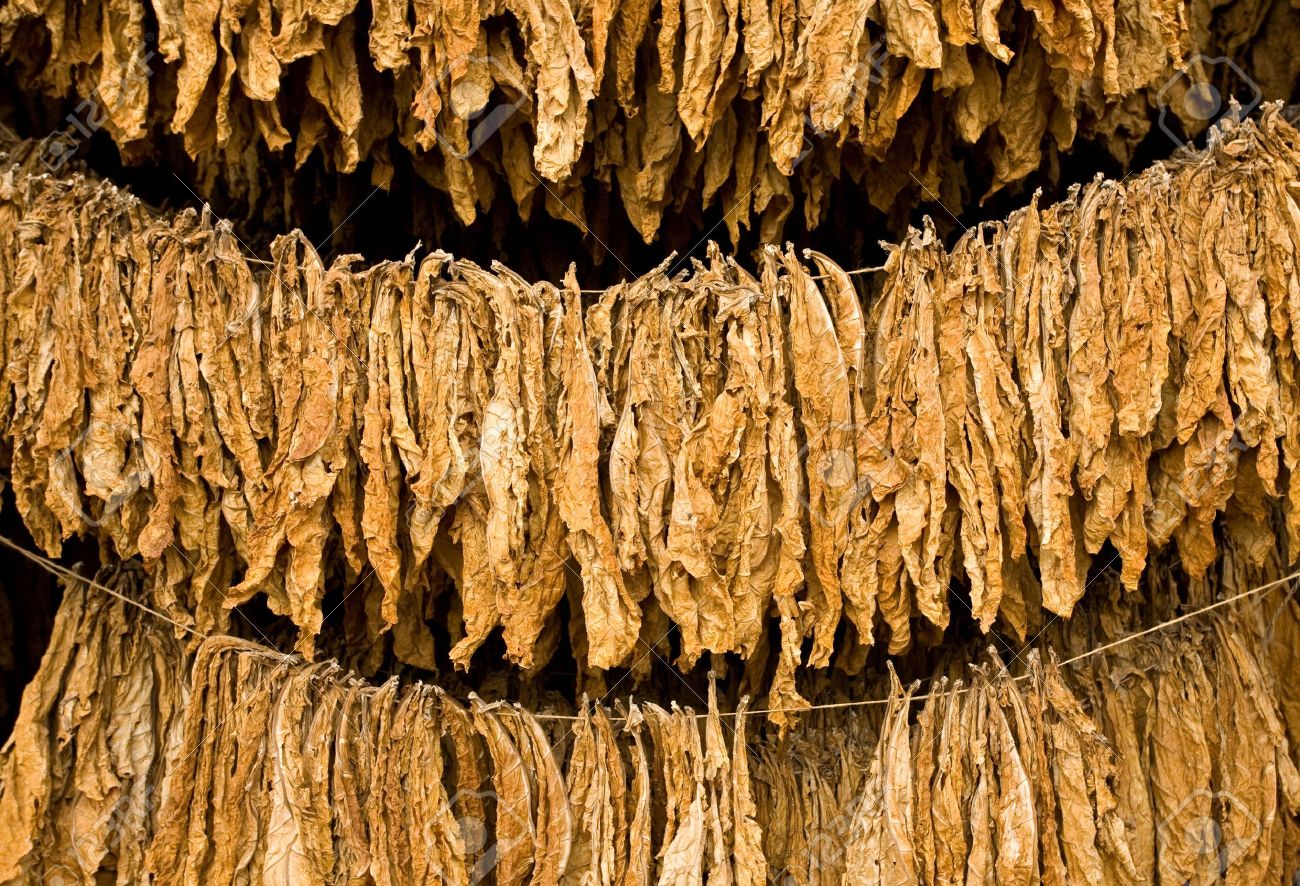
The name “Burley” traces back to Mr. Burleight, a wealthy landowner along the Ohio River. This tobacco is characterized by a curing process that avoids direct sunlight, taking place over one to two months inside large, open barns.
The leaves have a low sugar content, ranging from 1.5 to 4.5 percent, and their fast burn makes them an excellent base for cigarette production. With a brown hue, they often impart chocolate notes in most blends. The curing process breaks down the sugars, altering the flavor profile, resulting in a medium to full strength with a relatively dry finish.
The most notable feature of Burley tobacco is its ability to temper the often-spicy flavor of Virginia tobacco. With a neutral pH of around 7, it contrasts with Virginia’s pH of 5, offering a smoother smoke.
The history of Burley begins in 1864, when George Webb and Joseph Fore brought tobacco seeds from Kentucky to southern Ohio. The leaves of this plant were distinct from those traditionally grown in the region: thinner and turning white to yellowish after harvest.
Another aspect to consider is the variety of strains used in blends, typically chosen for their resistance to pests and certain fungi, as well as their maturation time. According to the Burley Tobacco Production Guide (2023-2024), developed by the universities of Kentucky, Tennessee, North Carolina State, and Virginia Tech, the following varieties are recognized:
– KT 222 LC: The newest Burley variety, developed by the Kentucky-Tennessee Tobacco Improvement Initiative. Post-pruning, the plant yields 20 to 22 leaves, similar in length to TN 90 LC but about an inch wider. It’s a late-maturing hybrid, though not as advanced as other varieties.
– KT 219 LC: Released by KTTII in 2019, this early-maturing Burley variety is notable for its resistance to black shank fungus. Its resistance level is comparable to KT 209 LC, but it stands out for its rapid flowering cycle, reaching 50 percent bloom in about 60 days post-transplant. It produces a relatively short plant with fewer but slightly longer leaves.
– KT 215 LC: A late-maturing, high-yield variety with superior resistance to black shank but no tolerance to blue mold or tobacco mosaic virus (TMV). The cured leaf quality is acceptable but inferior to other varieties, especially when harvested late. It should be planted early and by mid-September.
– KT 212 LC: An early-maturing variety with moderate yield.
– KT 210 LC: Late-maturing, high-yield, and highly resistant to black shank, with moderate resistance to wilt. It can grow very tall and produce a large number of leaves if pruned during full or late flowering.
– KT 209 LC: A medium to late-maturing variety with high yield and superior resistance to black shank, though lacking tolerance to blue mold and wilt. Its yield potential, stem size, growth habit, and maturity are similar to KT 206 LC and KT 204 LC, with cured leaf quality comparable to TN 90 LC.
– KT 206 LC: Medium to late-maturing, with high yield potential and good disease resistance. This variety can grow quite large, producing a thick stem that may complicate harvesting. Some growers have expressed concerns about the cured leaf color.
– KT 204 LC: Medium to late-maturing and high-yielding, with good resistance to black shank, this variety gained popularity upon its 2004 release due to its improvements. It tends to grow slowly early in the season, making it more susceptible to drought.
– TN 90 LC: A medium-maturing variety with moderately high yield potential, its popularity has waned with the rise of newer “KT” varieties. However, it retains a small but loyal following due to its slender stem, upright growth (easing handling), and good cured leaf color.
– KY 14 x L8 LC: Its use has declined due to the rise of improved varieties, increased black shank incidence, and the labor required for high yield and quality. Early-maturing, short, and spreading, its large leaves tend to droop excessively, making it fragile and requiring skilled labor for harvesting.
– HB 04 PLC: A medium-maturing variety with high yield potential, similar to Hybrid 403 LC, and resistance to black root rot.
– Other notable varieties include: HB 3307 PLC, N 7371 LC, and NC 7 LC.
As we can see, Burley offers a wide range of qualities and, with proper care, can lead us into a Tobacco World rich with notes ranging from nuts to sweet flavors like chocolate.
Duque do Ferro
Regarding the tobacco selected for this review, its aromatic base stands out with a strong nutty note, minimal sweetness, and earthy, woody undertones that linger on the fingers when packing the pipe.
Visually, it’s cut into uniform strands a few millimeters wide –ideal for combustion– with light to very light brown hues that are nearly indistinguishable under low light. Its moisture is controlled at 69 percent.
Packing a Peterson Spigot pipe and lighting it posed no issues. Upon ignition, it surprises with subtle citrus and white pepper notes, along with a hint of nutmeg. Another notable feature is its dense, heavy smoke, which leaves a robust retro taste. The initial dark chocolate notes are tempered by the nicotine’s rough edge, reducing the minimal sugars in the Burley leaf.
After a brief pause to relight, the palate is overwhelmed by an intense nutty flavor that even permeates the saliva produced during puffing. The second heat contact amplifies the smoke, filling the room with a toasted wood note while toning down the citrus undertones.
Duque do Ferro is a hard, nutty leaf. Unlike other Burley-based blends like Down The River by 4noggins or University Flake by Peterson –which, containing Virginia tobacco, have a slight acidity– it delivers more pronounced cocoa or chocolate notes. A comparable example might be the Burley Flake series by Cornell and Diehl, as described earlier.