Tales and Portraits
“Very content, because I earn my weight in gold every day working with tobacco… I depend on no one, for I have my own money; the law doesn’t bother me, and as long as I keep the employees happy, no one can oppress my will or make me suffer.”
Manuela. Eugenio Díaz Castro, 1858.
Emmanuel Gutiérrez Pérez
Read in the magazine (rotate your device for better reading experience):
In his costumbrist novel, Colombian author Eugenio Díaz Castro captured the spirit of the women dedicated to rolling cigars. This group was so self-reliant that they weathered a tobacco export crisis in the late 1870s, which severely weakened one of the main pillars of Colombia’s economy. Yet, these women persisted in their craft, preserving the culture of enjoying black tobacco for future generations.
This is why I share the story of Colombian tobacco through four women who carry on the legacy of those early torcedoras, fostering the enjoyment of this passion from different roles and serving as mentors to other “lovers of tobacco.” Like Manuela, the heroine of Díaz Castro’s novel, who escaped the conventions of her time and found a place where women gathered around tobacco to enjoy life on their own terms.
——————-
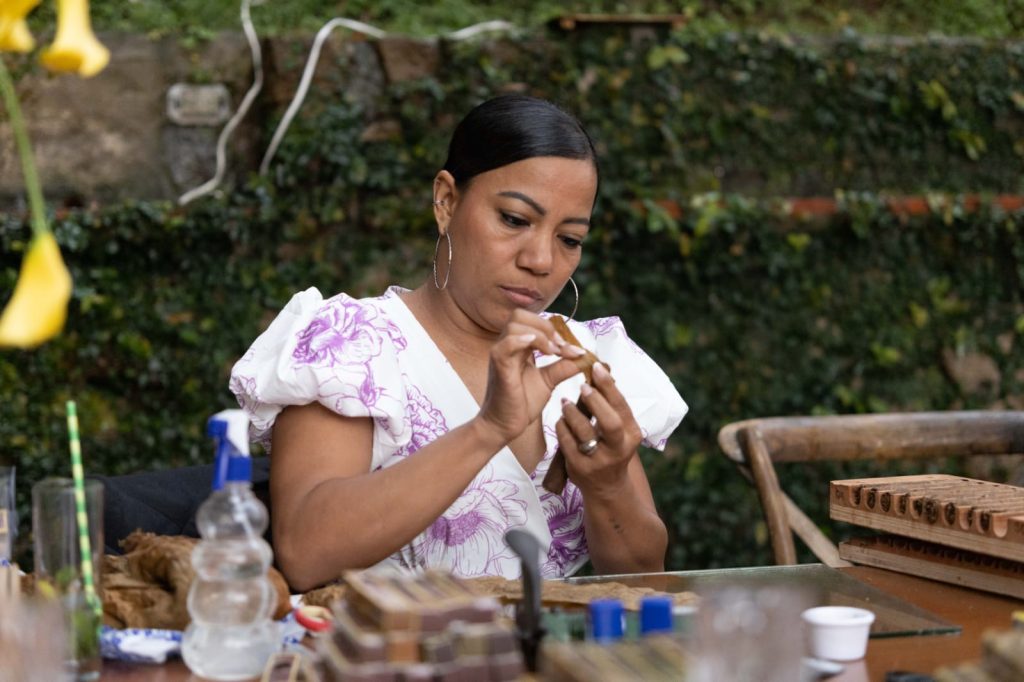
Osmelia Velásquez
Proudly a Chicotera
In Colombia, there is a type of cigar known as criollo or chicote, made from tobacco scraps and veins rolled into a rustic bundle. Due to its low cost, it is often consumed by farmers and boatmen to accompany their daily labor. Those who make them are called chicoteros. When Osmelia arrived in Piedecuesta at 22, she quickly found work in this trade, where women often involve their families in the production process, allowing them to care for their children while working.
However, as it is such an inexpensive product, for over a decade, the payment for rolling a thousand chicotes was around four dollars, and often, workers couldn’t meet the quota. Osmelia recalls that when she started, she could roll 500 cigars a day, and at her peak, up to 1,600.
For Osmelia, transitioning to premium cigar production not only meant better pay and the ability to focus on “quality over quantity” but also receiving praise and recognition from smokers who appreciate the craftsmanship of her cigars. She proudly declares that being a chicotera is “a source of pride,” and she has inspired many of her colleagues to train in the craft, taking advantage of the growing demand for torcedoras due to the recent surge in domestic cigar consumption and the revival of tobacco artistry.
——————-
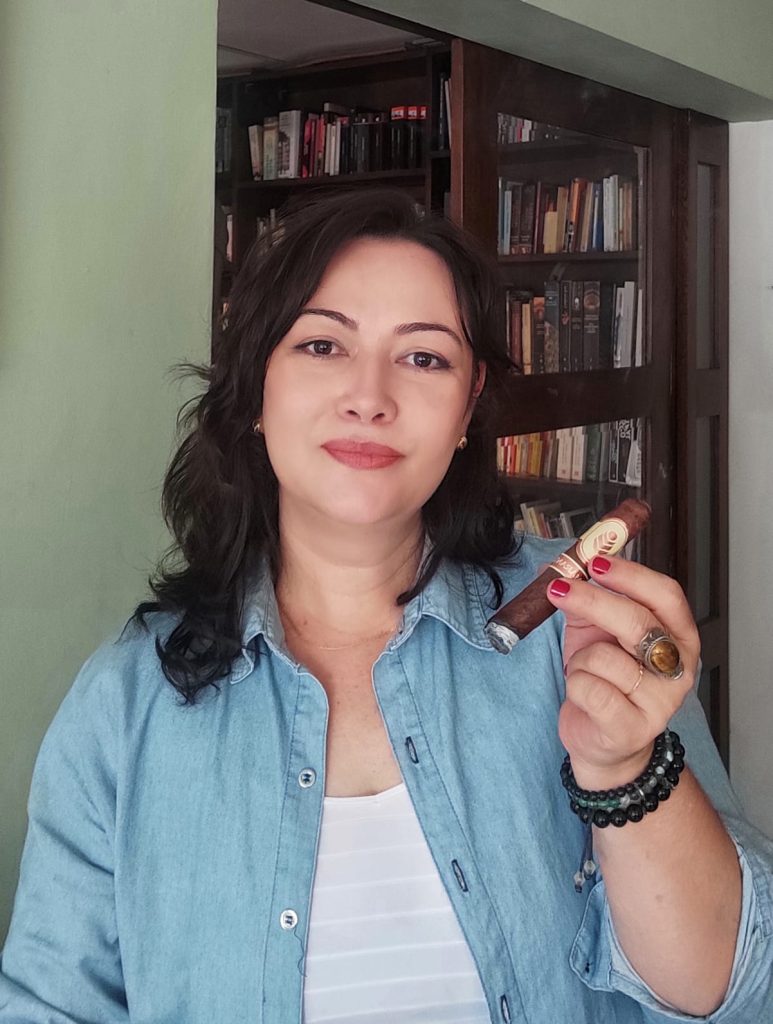
Ángela Cardona
Tobacco with a Woman’s Soul
Ángela is the only woman in the Cardona family who inherited the drive to answer the call of tobacco and share it, much like her maternal grandmother did before her. After working at Colombia’s first cigar lounge, La Cava del Puro, where she stayed for 12 years, she sought to fully understand the mystique surrounding tobacco. This led her to earn her Master in Habanos certification in 2016 and become a Certified Cigar Sommelier through the IACS in 2019.
In 2017, she created Tacones y Puros (Heels and Cigars), a space to introduce women to tobacco and unite female cigar enthusiasts in Medellín. This initiative sparked a series of projects related to cigar enjoyment. In 2022, she launched Amaranta Cigars, Colombia’s first brand to highlight the feminine essence of tobacco, inspired by the strength of the character Amaranta in Gabriel García Márquez’s One Hundred Years of Solitude.
Ángela remains highly active in Colombia’s tobacco community. Beyond offering new lines to her brand’s consumers, she brings cigars to weddings and social gatherings, organizes tastings, and hosts meetups with smokers, sharing the opportunity to recognize that tobacco carries a woman’s soul.
——————-
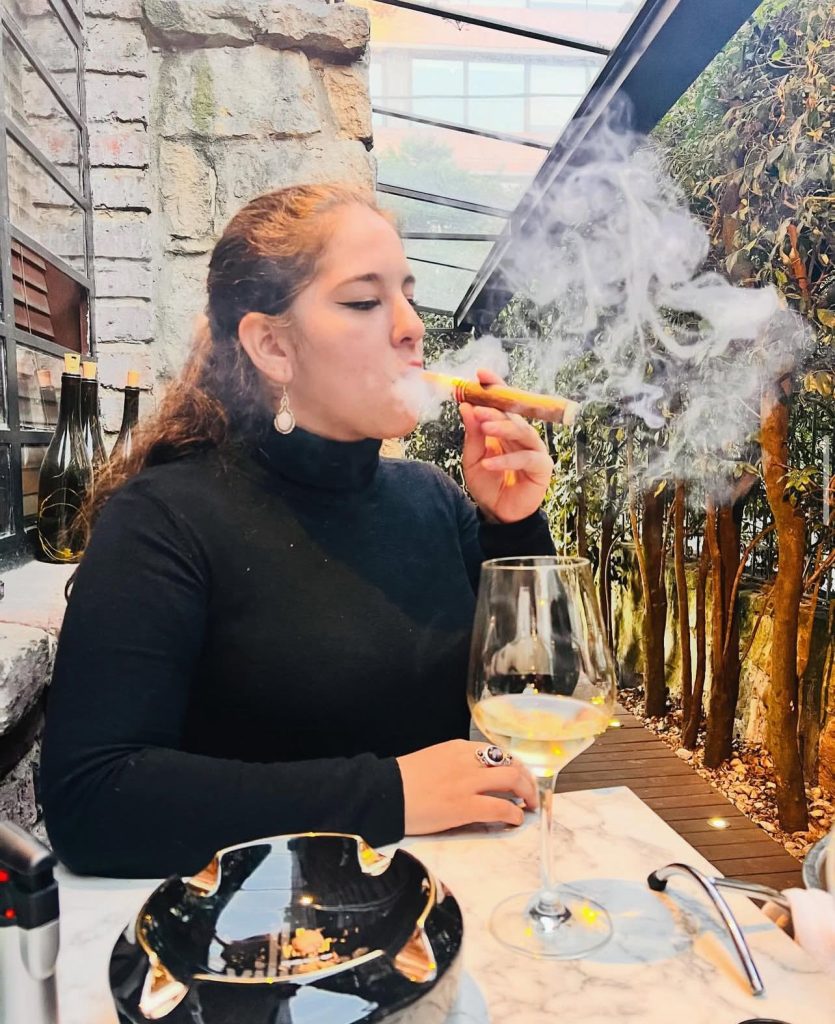
Catalina Angarita
The Women of Habanos
A proud promoter of Habanos and fine spirits –which she affectionately calls “superior alcohols”–Catalina is an ambassador in Colombia for Pernod Ricard, a French multinational specializing in spirits distribution, while also being an enthusiastic member of the Tobacco World, certified as a Habano Senior since 2024.
She began in 2015 at the age of 18, when her fluency in English led a relative to offer her the chance to interact with tourists at a friend’s bar. Captivated by the array of alluring spirits, she felt compelled to learn the rituals and language of sommelier and mixology.
Catalina now trains restaurant and bar staff to develop events that highlight the qualities of Pernod Ricard’s products. Alongside spirits, she promotes the enjoyment of cigars, personifying the experiences she advocates and finding her place in the ceremony where Habanos and spirits unite.
Her sensory memory allows her to connect with smokers, giving cigars the place they deserve by creating the right conditions for the ritual to evolve and be fully enjoyed. Over the years, she has noticed that women are increasingly asking technical questions, showing a genuine desire to understand rather than pretending to. After all, she asserts, the best spa she can recommend to another woman is a Habano and a fine spirit.
——————–
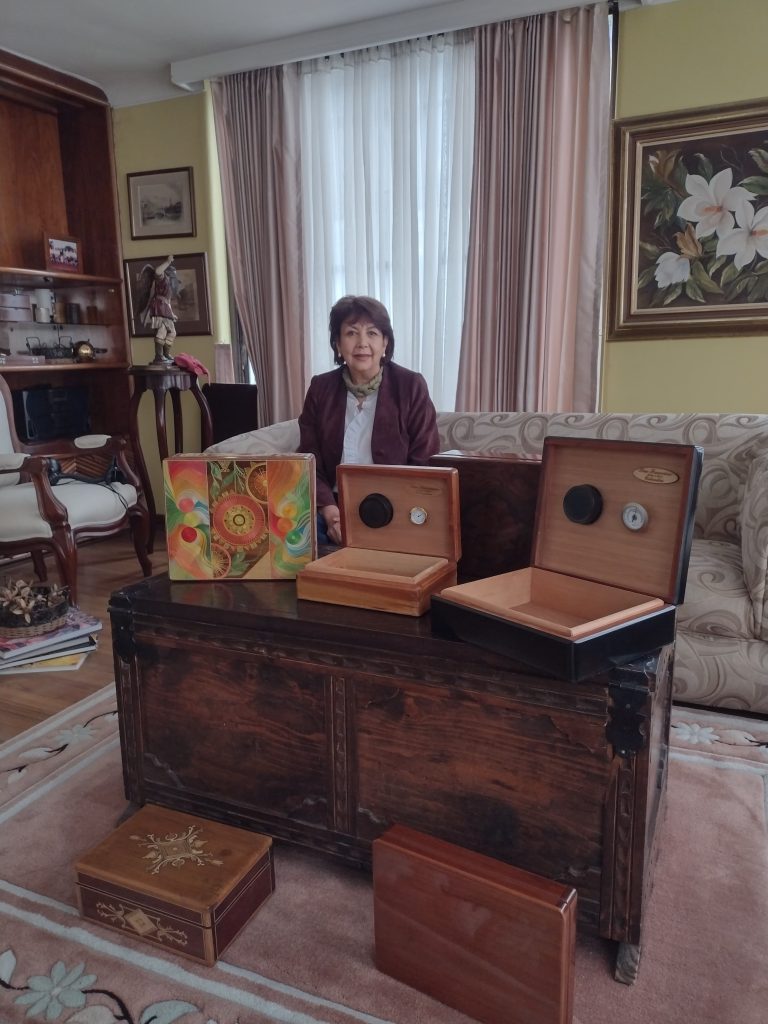
Flor Gladys Martínez
Hands, Heart, and Life
Born out of her partner Ricardo Luna’s need for a local product to store his cigars, Humidores San Francisco began operations in 2002 and has since been led by Flor Gladys. She takes pride in being the only woman in Colombia dedicated to selling a product so essential for cigar lovers, while also reflecting the distinctive craftsmanship of Nariño’s culture.
Her humidors showcase the traditional artistry of the Nariño department, using the Tallo de Trigo technique to create colorful engravings and figures, as well as the Mopa Mopa varnish, made from the buds of the Wax Tree, transformed into thin strips that artisans cut and engrave. The latter was declared an Intangible Cultural Heritage by UNESCO in 2019.
Over the years of interacting with smokers, Flor Gladys has come to see them as generous souls, lovers, and poets who open their hearts during gatherings and share fascinating discussions. Offering care and protection to something as precious as cigars highlights that “in all the important things in life, you’ll find the hand and heart of a woman.”
She celebrates the growing number of women in Colombia who allow themselves to enjoy cigars, fondly recalling that in her early days, only one female smoker purchased her humidors. Today, they are recognized not only as essential pieces for enthusiasts but also for their beauty.
——————–
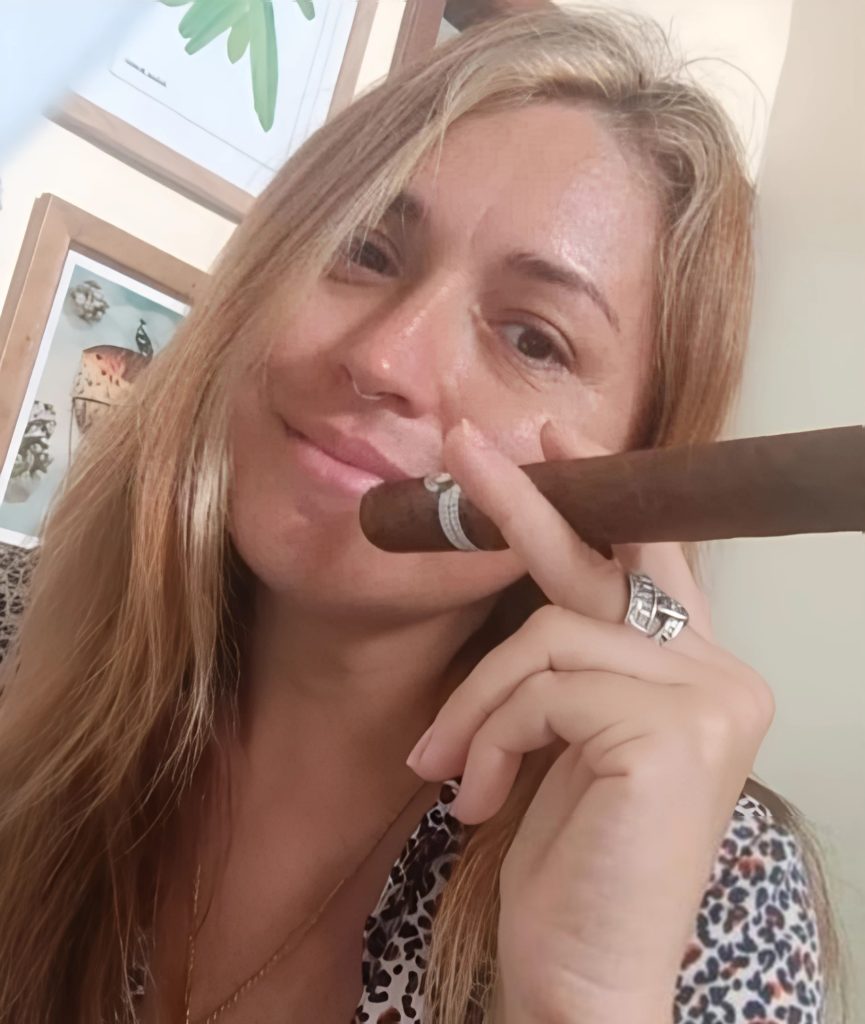
Alejandra Intriago
An Amazing Entrepreneur
Alejandra is the owner of Real Fábrica de Cigarros La Clemencia, founded in 2017 by her late husband, Eduardo Jurado, in the coastal city of Guayaquil, Ecuador. Known as the “cigar capital” of the country, Guayaquil is home to four other cigar manufacturing companies. However, the enjoyment of cigars remains part of an emerging culture, as the industry primarily focuses on wrapper tobacco production.
It has been four years since she took over the factory, and many of her clients and colleagues have watched in awe as a woman paves the way for cigars among Ecuadorians and tourists visiting Guayaquil.
Although most of La Clemencia’s customers are men, Alejandra continues to work on attracting Ecuadorian women to tobacco and uniting female smokers in a collective that fosters the culture and enjoyment of this passion.