With a career spanning nearly five decades in martial arts, three of which were in the military system and the last years in the construction and tobacco industries, Ismael Rodríguez Oliván is a citizen of the world, possessing a mind as restless as it is creative and powerful. Guided by Asian philosophy emphasizing the value of work and perseverance, and possessing a palate educated by the wide diversity of tobaccos worldwide, he boasts an impressive catalog of blends and cigar formats grouped under nearly a hundred private brands, including his own. Among these, B.A.M.F. stands out, a brand that reflects his personality and discipline in prioritizing quality over quantity.
Read in the magazine (rotate your device for a better reading experience):
Fists and Weapons
Ismael Rodríguez Oliván was born 52 years ago in Bilbao, Spain, and has resided in the United States since 1999, with intermittent periods and diverse journeys around the world throughout his life. His accumulated experiences and knowledge have shaped him uniquely, allowing him to develop his own style in every endeavor he undertakes.
Born to a hardworking mother—until her marriage—and a Merchant Marine father, Ismael was a restless child who grew up on both sides of the Nervión River—a defining feature of the Basque Country—between his grandmother and neighbors, educated by Lasallian friars.
From a very young age, his “amona,” as a grandmother is called in Euskera, decided to channel all of Ismael’s energy into Karate Do, noticing his early passion for martial arts thanks to Bruce Lee movies. This training forged in him a disciplined personality that characterizes him today.
At the age of 14, as a gift from his father, who was often absent due to work, Ismael received a small motorcycle that he used to travel from his home to the gym to continue training day after day, eventually becoming an instructor in exchange for free facility use.
His martial arts training continued under the guidance of Osamu Aoki, a sensei with whom he perfected his Karate technique before venturing into Full Contact, Kick Boxing, Thai boxing, and other disciplines, from which he derived the foundations to create his own style.
Around his 20s, military life beckoned, a mandatory rite of passage for every young Spaniard at the time, unless they were Conscientious Objectors or Jehovah’s Witnesses. Ismael, neither one or another, tried to avoid conscription but ended up finding a way to continue pursuing martial arts within the armed forces.
“I didn’t want to be there, and I tried to get out by claiming to be a Conscientious Objector, a person against all forms of violence. But to my misfortune, which has always been bad, the Colonel of the barracks, who had been my student, recognized me and called me sensei. That’s when my pacifist facade fell apart.”
As the expert he had become, Ismael found a place in the Army as a guard for two different Generals, and after the mandatory three months, he became an instructor for officers. Thus, what he thought would be a low point in his life turned into a career as a private contractor, a role he continues today, following eleven years in the military and serving in an Anti-terrorism unit.
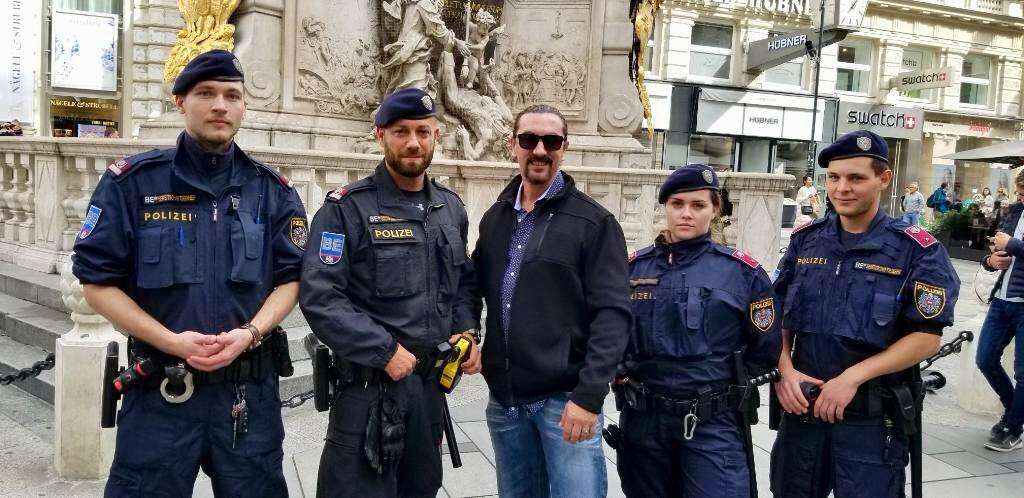
Then came another agency that sought him out for his expertise in martial arts, driving, and weapons, where he became an international instructor for both the military and police forces, a role he still performs in semi-retirement, requiring him to work 40 days a year in any of the 167 countries where its influence extends.
Smoking Around the World
For Ismael, life as a military contractor has been neither entirely good nor bad. It’s a profession that involves traveling the world but is also fraught with violence. “But if you signed a contract, you do it without complaining,” he asserts.
The adrenaline and pay motivate him to take on missions, but he also values the opportunity to travel to different corners of the globe and the benefits that come with it, such as experiencing tobaccos from diverse places like Africa.
In late 1994, military life took him to the war in Angola, where he spent nearly three years. There, he encountered the aroma of locally grown tobacco and handmade cigars: “I saw the locals rolling their own leaves and asked to try some. It was incredibly satisfying,” he recalls.
Thailand, Romania, Peru, and Ireland were among the other 69 countries where his work allowed him to discover new aromas and flavors, developing—unbeknownst to him—a specialized palate and unique creativity for blending. “I would taste tobacco from here and there, and imagine that mixing a bit of this with a bit of that would yield something good.”

Spain and Tobacco
Ismael’s journey with tobacco began at the age of 12 or 13, initially with cigarettes, a common topic among Spanish youth. “My brother and I were caught smoking by our mother, who decided that before we started smoking anything on the street, she would buy us cigarettes,” he remembers.
Upon returning from one of his trips as a Merchant Marine, his father discovered his son smoking and decided to teach him a life lesson. “Let’s see if you’re a real man,” he said, offering him a Farias, a strong Spanish cigar, accompanied by a Sol y Sombra, a cocktail of cognac and anise.
During a Zoom interview, Ismael recounts feeling green around the gills from the nicotine hit, as he was unaware that cigar smoke isn’t meant to be inhaled. This was his first experience with a pure tobacco cigar, “and being as stubborn as I am,” he continues, “I kept smoking milder cigars from then on, now to enjoy them properly.”
Ismael upholds a tobacco tradition in Spain that transformed tobacco consumption as it’s known today, twisted like a blend of leaves in the filler, bound by a binder, and adorned with a wrapper.
“Indeed, in pre-Columbian times, peoples like the Tainos smoked tobacco leaves, but it was simply taking a plant and smoking it; whereas in Spain, the idea of blending began and was taken to manufacturing in Cuba, for example,” he explains.
Dream Builder
Painting houses to earn some money, he encountered a man reviewing blueprints, and as a trained engineer and curious person, he took a look and found several errors. It was the project manager who was with the owner of Inkeepers USA, a company dedicated to hotel construction and remodeling, and Ismael’s fresh perspective helped correct the work. For four years, he participated in the development of more than twenty projects.
Rolling tobacco is common among Spaniards, who often twist their own cigars and even forge cigarettes. By 2003, Ismael was already creating his first blends for personal use, while engaging in conversations with Óscar Arias, through phone calls to the Dominican Republic.
Until then, the tobacco business was unfamiliar to him, but having made some money by blending for a couple of private clients, he took advantage of the new tobacco boom in the United States in 2015 and dove headfirst into the industry.
That year, he joined forces with Clint Scherb, a former Marine based in Palm Beach, Florida, and a member of the local SWAT team, whom Ismael had met through his wife’s professional relationship with Clint’s father.
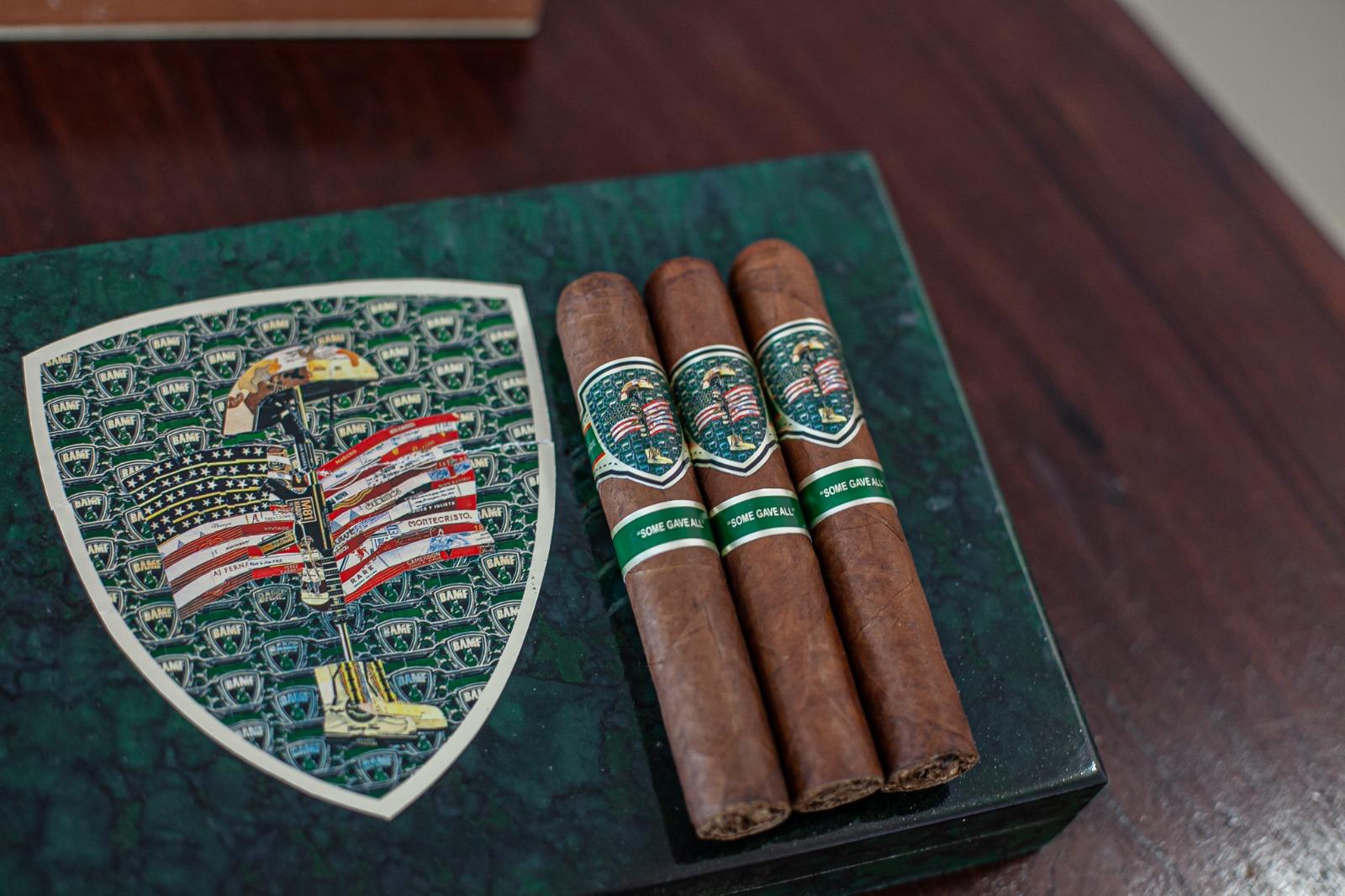
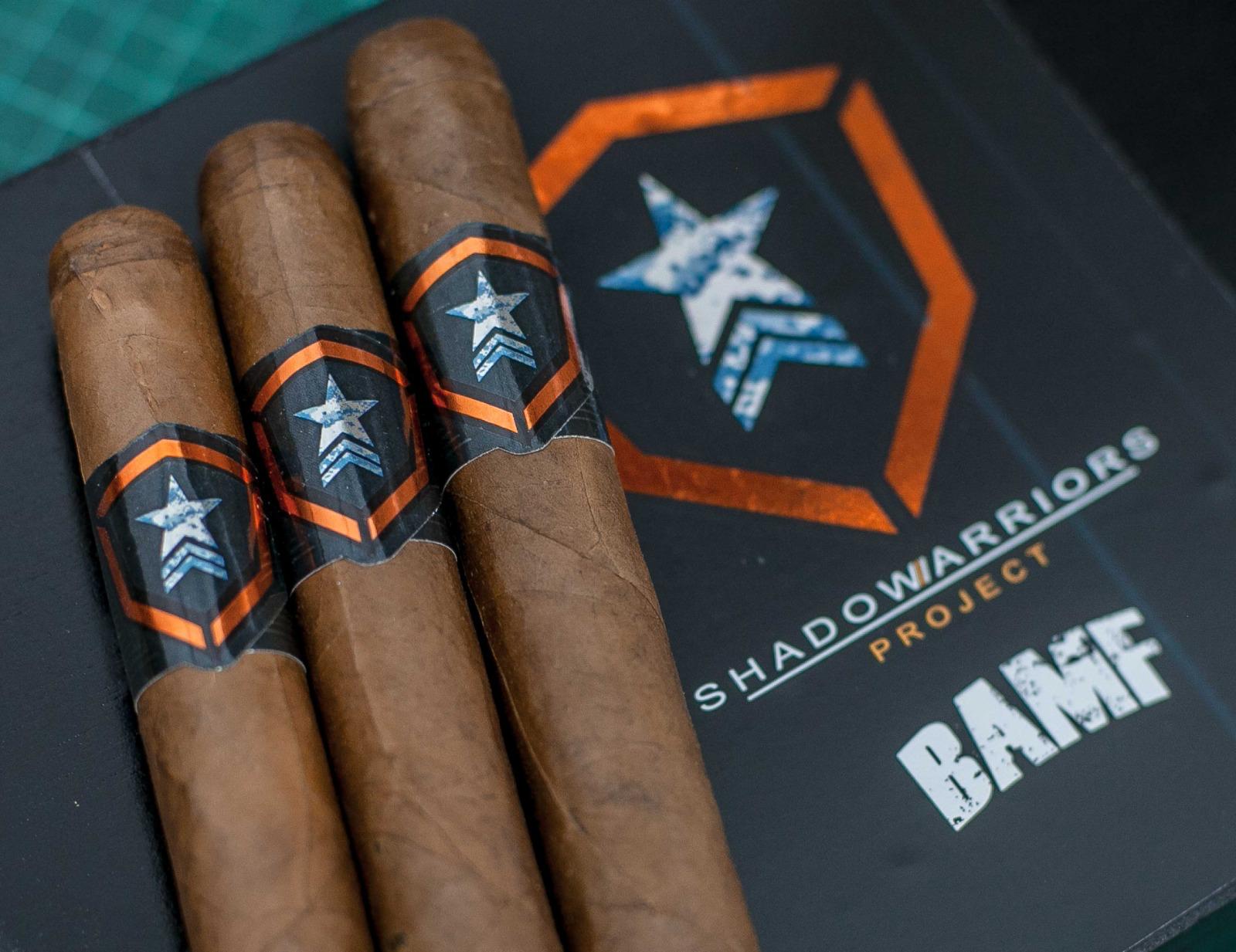
Tobacco was a common denominator between them, and after a year of sharing smokes, the idea to create a brand emerged. Due to their military and police backgrounds, they had connections with individuals in these fields, leading to the registration of the brand as B.A.M.F. (Bad Ass Mother Fuckers), a term that describes fearless individuals in the parlance of “first responders”: paramedics, police officers, and firefighters, among others.
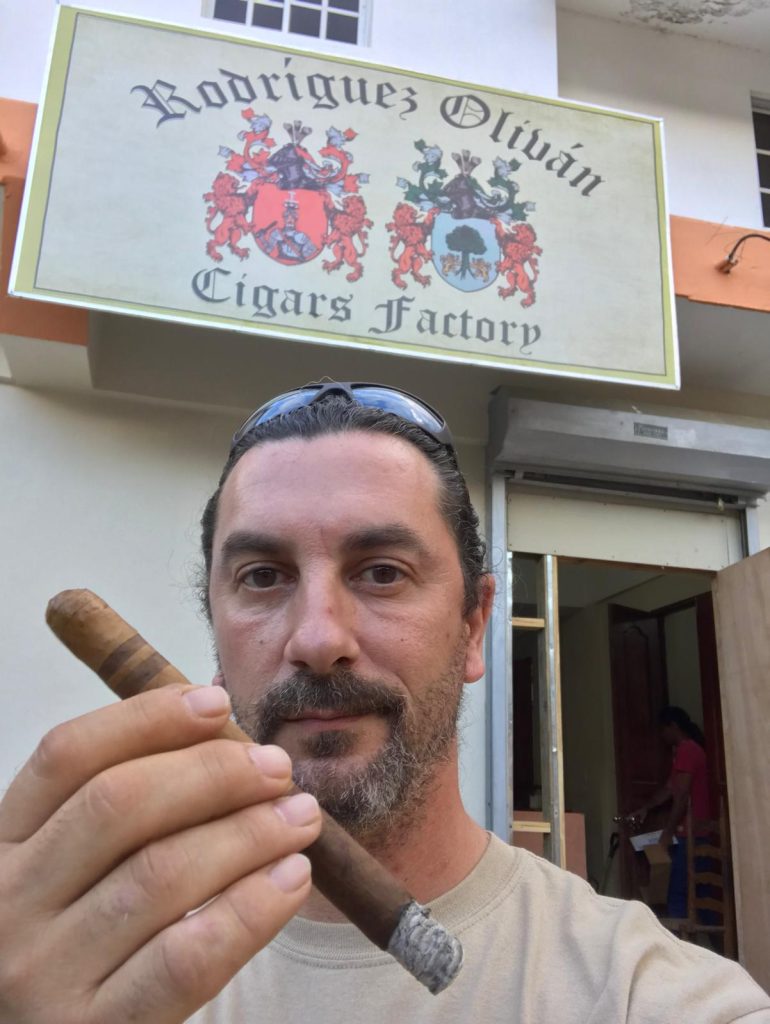
A neighbor then offered to manufacture the brand in the Dominican Republic, claiming ownership of the factory. They traveled to the island, and although the individual turned out to be a scammer, Ismael heard Óscar’s familiar voice advising him: “Don’t pay any attention to this man; I rent the factory, and he pretends it’s his.” Nevertheless, this initiation allowed him to enter the Tobacco World, and over time, Rodríguez Oliván Cigars Factory (ROCF) established three factories in the Dominican Republic and a sister factory in Zimbabwe.
B.A.M.F.
Their operations began with the proprietary brand and a few private clients, now totaling 98 different companies. All this, intertwined with construction business, international missions, and training of security forces.
“The name B.A.M.F. was agreed upon one night, and the next day it was registered. We were just two military and police officers tired of smoking what others made, knowing we were already blending for others but had nothing of our own,” he recalls.
In 2018, Clint’s personal and professional commitments led him to sell his shares to Ismael, who continued the venture solo. “It was something I never thought I’d do because I was content making blends for others. Thank God everything turned out well.”
As of today, B.A.M.F. maintains a presence in over 200 distribution points, alongside online sales through the website https://bamfcigars.com. With five years of experience as an importer, a new status acquired to gain more control over the administrative process of cigar sales. “We sought independence. Now we have it and use it to help others too,” he asserts.
Experience and Creativity
With a range of 74 blends under the B.A.M.F. line, 22 as Don Oliván, nine in the K9 line, and over 500 private blends registered with the FDA (Food and Drug Administration of the U.S.), Ismael boasts a creative mind, attributing some of these creations to the need for problem-solving and making the most of what’s available.
One of his standout blends is Intercontinental, a cigar that blends tobaccos from four continents and seven countries, including Nicaragua, Cuba, and Italy. It has been recognized among specialized podcasts as Cigar of the Year in two consecutive editions.
He also recalls Inside Out, created one evening when the craving for a good smoke coincided with a shortage of materials: “On the table, I only had three wrappers, one binder, and one filler.” Inspired by the movie “One Night at the Roxbury” – featuring the song “What is Love” – and its approach to solving a particular problem, he used the wrappers as filler, turned the binder into a wrapper, and the filler into a binder. Adorned with a reversed band, he describes it as “a cigar that wasn’t supposed to exist but ended up having a spectacular flavor and sold 10,000 units in a day.”
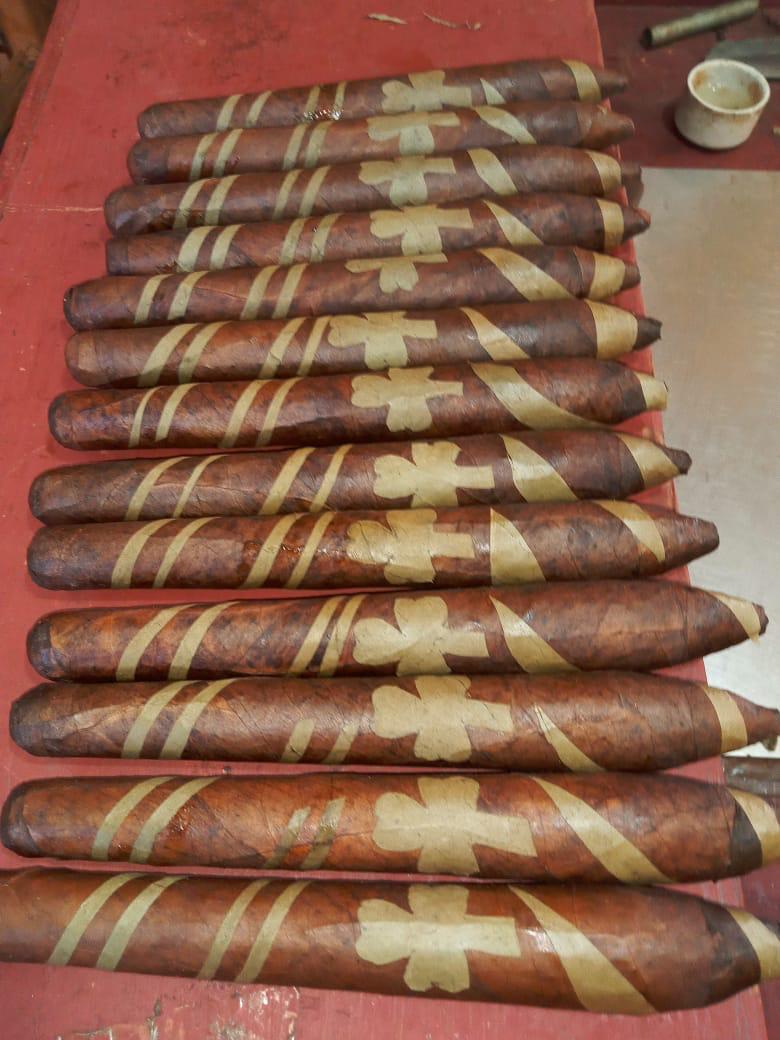
B.A.M.F.‘s catalog includes classic formats like Toro, Gordo, or Robusto, as well as other shapes such as Torpedo and Salomón, alongside innovations like the Double Torpedo with dual binder for cutting the cigar in half and smoking two pieces, or the M.O.A.C. (The Mother of all Cigars), a 12-inch, 110-ring gauge cigar.
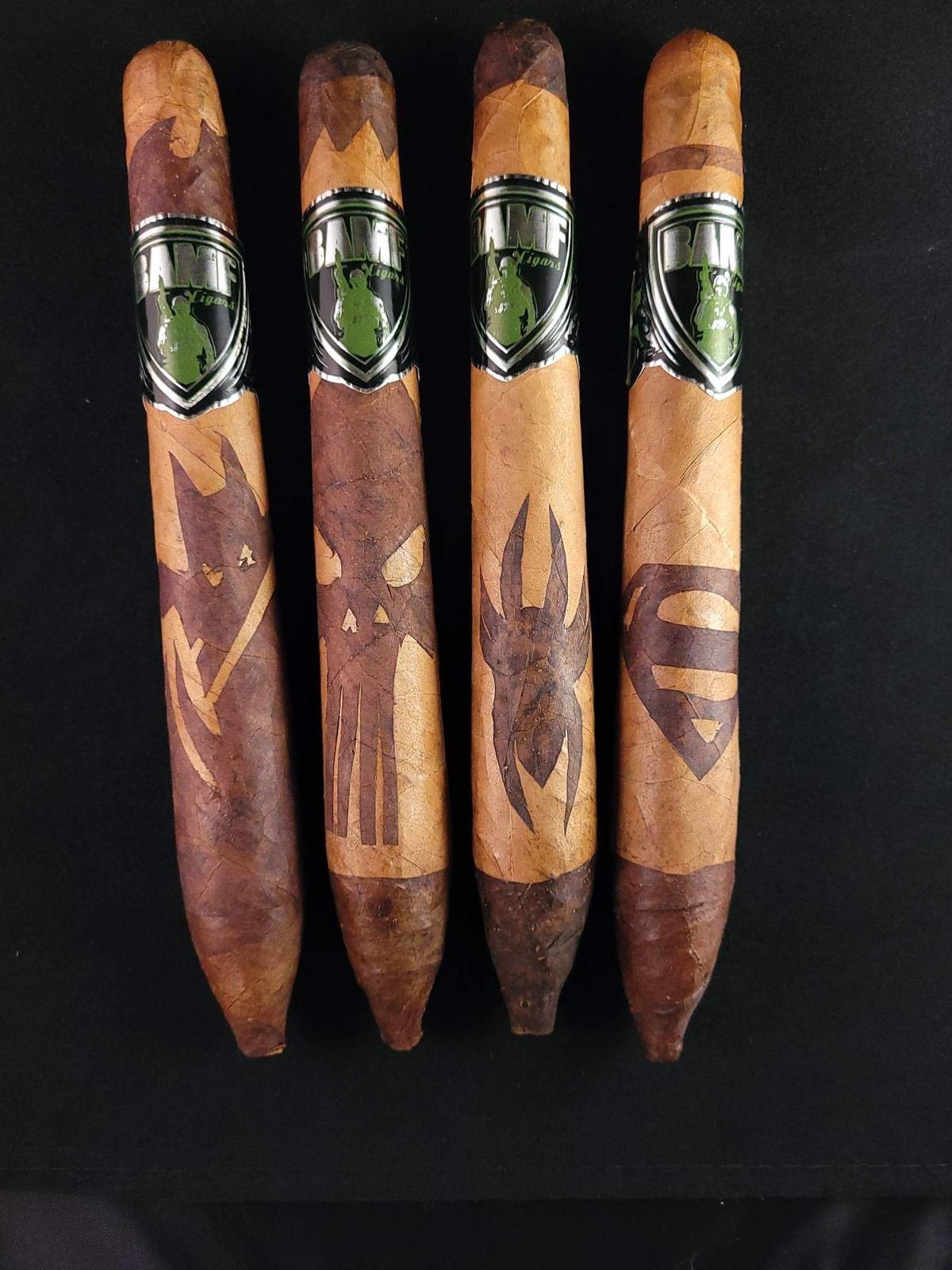
Special mention goes to his Salomones licensed by Marvel and DC, adorned with logos of characters like The Punisher, Spiderman, Batman, and Superman. Ismael is the world’s only producer with this permission, under the condition of making them ephemeral, where the logo on the band disappears once the cigar is consumed.
Also, the BTC, entirely manufactured with Negro Cubano tobacco legally imported to the Dominican Republic, where it’s rolled and then exported to the U.S. for sale, distinguishes them as the sole sellers of legally Cuban tobacco in the U.S., an issue discussed and approved by the FDA.
Boutique Vision
According to Ismael, when a brand starts with limited production – characteristic of boutique markets – the worst move is placing the cigars in stores where they compete against major brands dominating the market. Worse still, if priced high, they’re compared with more renowned products for just a few dollars more. “We live in a consumerist country (the U.S.), where if someone sees you smoking a $35 cigar, they want the $40 one, regardless of quality.”
His advice is straightforward: “Start with low prices that cover production costs and traditional formats. Even if you make less, it’s better to earn 12 cents per piece on a thousand units than to aim for a dollar and sell nothing.”
Out of the 110 brands ever produced by ROCF, 98 survive, following the philosophy of prioritizing production over profits, available online or in dedicated boutique stores. “More than being in this business for money – sometimes I spend more than I earn – it’s about making a presence and contacts. It’s not about getting rich in five days but accumulating and maintaining clientele,” he says.
The Path
As a martial artist, Ismael has gained diverse knowledge of Asian culture, particularly their ways of thinking and acting, emphasizing the need to stay active. He describes himself as someone with a restless mind, always thinking ahead and setting short-term goals; achievable milestones to reach one after the other. “Having a single goal is boring; it’s better to have a new one every four months or every couple of years.”
Consequently, he doesn’t have a “final goal” but a series of steps or objectives to pursue, one after another. The idea is to evolve one business after another, without neglecting them, as he has done with construction, cigar factories, B.A.M.F. itself, or the TPA (Tobacco Products Association); a recently created group focused on utilizing his skills and knowledge for all links in the tobacco production and consumption chain: producers, traders, and final consumers alike.
He also enjoys seeing people enjoy his cigars, expanding from “first responders” to general consumers. In this evolution, B.A.M.F. is making headway in markets across China, Italy, Spain, Canada, the U.S. (in 38 of 50 states), England, Japan, Germany, and Austria, offering experiences as diverse as its formats and blends.
Additionally, with active plantations in Zimbabwe, the company’s expansion includes the possibility, by 2025, of growing tobacco in the Dominican Republic, thus completing the circle of production and controlling processes from seed to worldwide marketing.