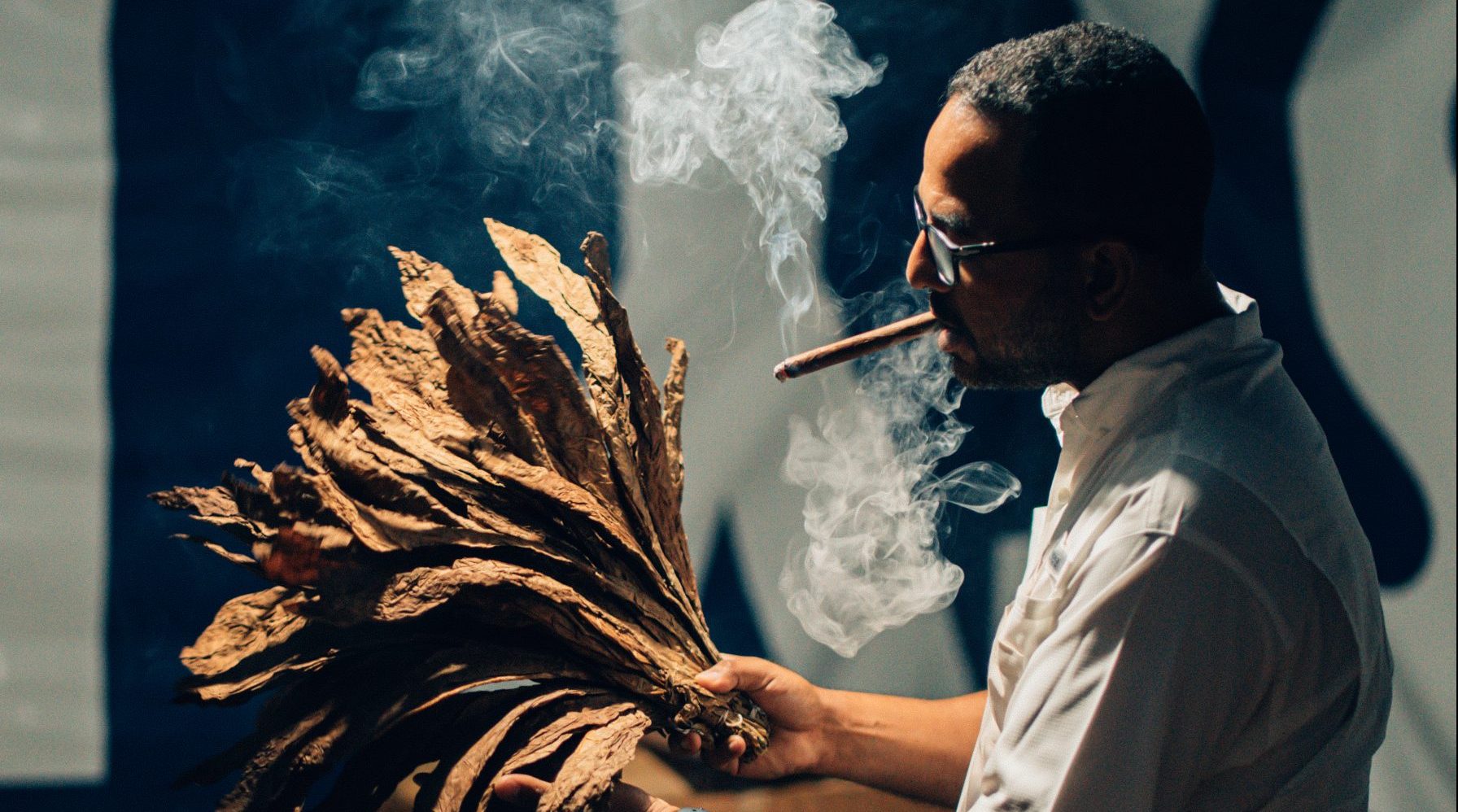
At Linga Cigars, challenges are an everyday theme that represents a series of steps to climb in order to improve oneself, without thinking about the competition. And that is why Jonathan Almánzar, its CEO, affirms that the main characteristic of his companies is constant evolution, which starts from “learning from your deficiencies to develop your strengths.” A learning obtained by traveling the paths of the tobacco industry in the Dominican Republic and the United States market.
Read in the magazine (rotate your device for better reading experience):
Challenge and goals
According to Jonathan, a businessman with extensive experience, when your business lacks a specific structure to operate in the United States, the first thing that is required is to look for alliances that allow you to take the step towards one of the largest markets in the world; An objective that represents a great challenge, but also the goal that everyone in this industry pursues.
Based on his experience, he explains that a Linga company that is starting out faces endless difficulties when it seeks to enter a foreign market, especially in the tobacco industry, since it is fundamental to have the necessary tools to guarantee the importation of your product, the correct storage, the dispatch of orders, the monitoring of clients and, most importantly –he clarifies– the collection of invoices.
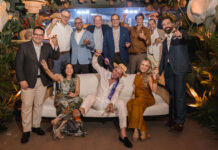
Once this structure is established, whether in-house or via outsourcing, the next step is to strengthen sales actions through the constant presence of the brand, which in the case of Linga arrived in 2021, with a visit to the largest tobacco event in the United States: The Premium Cigar Association (PCA) trade show.
Based on his own learning, Jonathan shares that the best Marketing and Research strategy is to attend as many specialized events as possible, because there is where a brand owner will find the entire industry gathered under one roof.
Although direct contact with retailers and door-to-door visits should not be neglected, events allow you to realize what other brands are doing and what the market is asking for at a given time. “Besides, you know that impossible brand that inspires you; that is, the owners of the brands you aspire to be, and your competition.”
For Linga, entering the United States market was not easy. Invited by friends who live in Florida, Jonathan went to his first PCA as another attendee, to tour the sales floor and study the management of the brands at the event: to know what the industry’s protagonists were wearing, what they were doing and how they behaved.
At the end of the trade show, Jonathan and his team approached the Association to introduce themselves and begin their incorporation process. Meanwhile, the tour of store visits did not stop and they were present in several cities in the states of Florida, Georgia, Indiana, Maryland and Texas, among others.
The brand is currently sold in Cigar Lounges and tobacco shops in Tampa, Jacksonville, Atlanta, San Antonio, Fort Worth, New Jersey, Pennsylvania and Los Angeles, and through Privada Cigar Club and other groups. “We can say that we have a presence in the vast majority of the United States territory,” says Jonathan.
They are also in serious negotiations for the European and Middle Eastern markets, and it is planned to bring the entire line to Asia Pacific islands, such as Taiwan, Hong Kong, Singapore and Malaysia, where different vitolas will be offered, depending on local tastes.
A different factory
When Jonathan started in this industry he produced his cigars in different factories in the Dominican Republic, and as a client he identified unmet needs; experience that enriched the idea and need to take the processes into one’s own hands and give greater attention to the development of brands.
Based on this, verticality has been the main characteristic that drives its factory, Alma & Cru Tobacco Co., to become a successful business. “Even though there are still planks to be laid,” it is on the right path, hand in hand with a different vision.
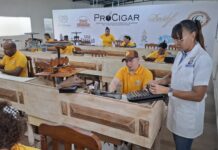
With more than 25 private labels under its control, the involvement with its clients ranges from the conception of the idea to the launch of the final product, since the quality in the manufacture and creation of the blend –taken for granted– is something which in the Dominican Republic is found relatively easily.
“That is why our commitment is one hundred percent, as far as the client allows us. We ask what they have, what they are looking for, and that’s where the professional guidance sessions begin; something essential to have a good brand,” he highlights.
Returning to his beginnings, Jonathan remembers the difficulties he faced and that is why he seeks to facilitate the path for those who are starting out in this world, offering them not only good cigars, but also the support to achieve the greatest development of the brand.
“At Alma & Cru Tobacco Co. we not only manufacture cigars. We are a cluster from which we offer a wide range of services that include packaging options, ringing, Marketing and even advertising, for example.” This is because sometimes foreign clients cannot complete each of the procedures necessary to have a brand, “but we follow up and that has been our strength,” he explains.
Sowing, a satisfaction
Jonathan has always been a restless businessman and, as such, he started in this industry with a brand and later with his factory, but he needed to have control of all the processes to guarantee the best quality in each product.
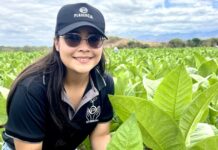
The natural step to satisfy this new need was taken with the incorporation of some small farms, where he could plant and harvest his own tobacco. “Currently we do not produce even ten percent of what is needed, but it is a long road that we have somehow begun to travel,” he says.
The goal, he adds, is not to grow all the tobacco required to produce his lines or the private labels he manages, but to have good leaves to control the fermentation process, bring the tobacco to the required standards and then complement it with raw materials from other farmers.
The objective of Linga is clear: Take as many processes as possible under its control, and in this case “it is a separate business, another point in the industry to pay attention to. It is difficult, but at the same time, beautiful.”
The Dominicanness made into a space
Bhuké Cigar Lounge and Bar is another fundamental part of the Linga cluster, a spontaneous result of the needs of a growing boutique market.
Jonathan initially thought of marketing cigars via the Internet, but his clientele was looking for a space to smoke and share, little by little “colonizing” an outdoor place that they had; a patio adopted as his own by the friends who visited him.
In his own words, Bhuké –originally known as El Patio– is the very representation of Dominicanness: “a Lounge with little protocol; imperfect, but happy and tropical.”
In addition, it is a site dedicated to local boutique brands, where the sense of verticality that characterizes the company led to an open humidor for emerging cigars that did not find a place in traditional stores and tobacconists.
For Jonathan, his participation in the industry is not a game, but a mission that is constantly evolving, under the idea of doing things better for him, and not for the competition or any other reason. And he thinks that people appreciate when you act this way… “more so when they haven’t visited your space or smoked your brand for a while, and they realize that there is always one more brick” in the construction.”
We talked about the spirit that Linga imprints on all its products and businesses, based on love, enthusiasm and the healthy desire to compete against themselves to grow a little every day.
It is, in some way, a constant struggle to perfect every one of its processes, overcoming challenges and seeking international recognition. “We do our best and it is up to the public to prove and rate our achievements, to give us, or not, their trust and preference,” concludes Jonathan.