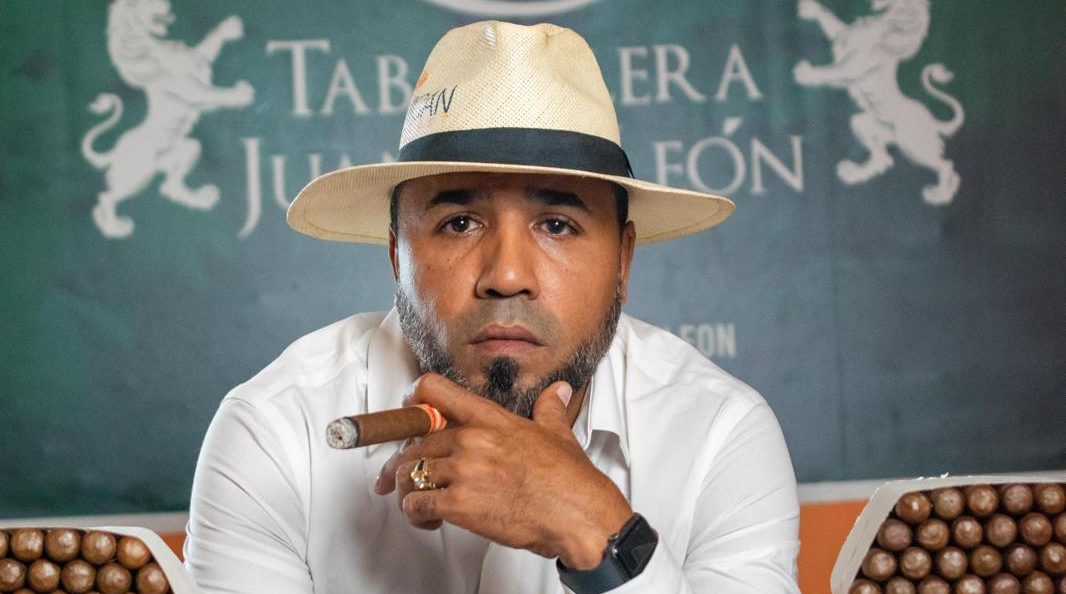
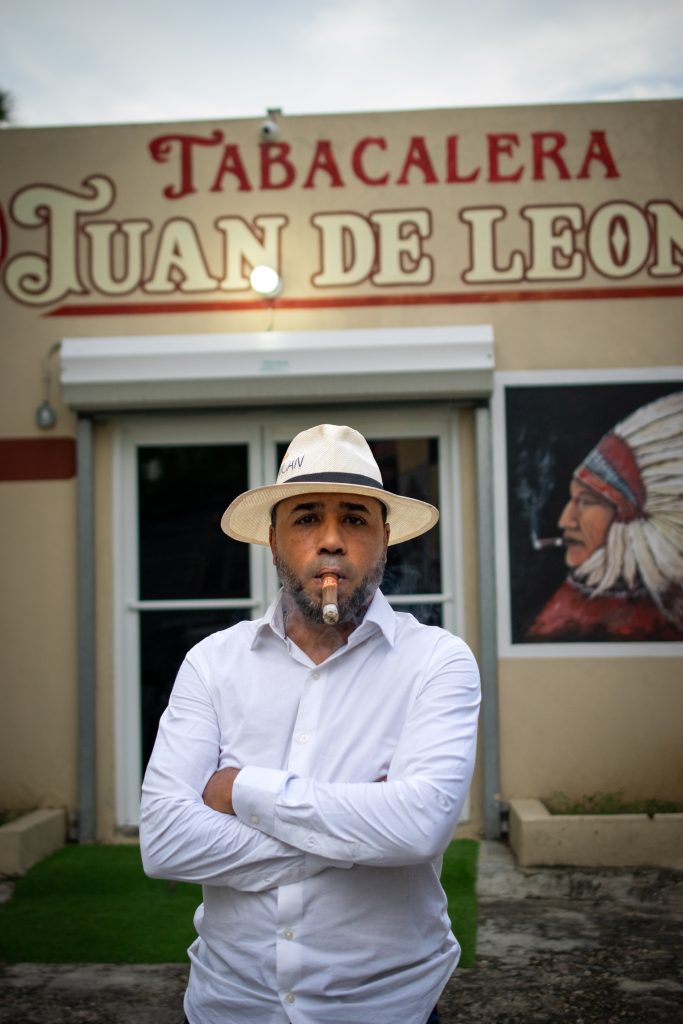
With three decades in the industry and a tobacco tradition spanning generations, Juan de León has successfully established and grown his own factory—named after him—in Tamboril, Dominican Republic. It’s here that countless conversations, learnings, and knowledge bring to life various private brands, and soon will also reflect a family blend.
The recounting of experiences accumulated during the Tobacco Boom era, family workshops, and his immersion and knowledge of the U.S. market stand testament to the fact that life’s paths can be long, but with the right focus and necessary effort, any goal can be achieved.
Read in the magazine (rotate your device for a better reading experience):
Beginnings
Juan de León’s story is intertwined with many others who were born or grew up in Tamboril, a municipality in Santiago known as the World Capital of Cigars, in the Dominican Republic: a childhood marked by tobacco, its aromas, and the hardworking hands of a family dedicated to this industry.
From a very young age, he was involved in the tobacco production process, whether it was walking through fields, conversing with his grandmother, a skilled stem remover, or working in his uncles’ perritos factories—little cigars for the local market—where he learned table work and rolled his first cigars.
It’s clear that in those days, being under age, he did not smoke his creations. But he became familiar with leaf cutting and the classifications of tobacco for wrappers, binders, and fillers, acquiring the skill and muscle memory that would later help him carve out a path in the industry.
Juan’s upbringing included close interaction with members of the Víctor Sinclair family, who owned a small workshop beside his house: “The owner’s children were my best friends, and that’s how I got involved with the company,” he recalls.
Between the ages of 16 or 17 and beyond 23, he continued his tobacco training with the support of this factory, where, upon becoming an adult, he developed his interest in smoking and blending. “I started smoking around 18 and tried something every day on the way to the factory, evolving from a pastime to a more formal learning process.”
Thus, through practice, he became involved in the manufacturing processes of cigars until daily routines fueled his desire to venture out and grow within the industry. The next step was heading to a Free Zone—where job opportunities were abundant—to continue his development by working in various factories, gaining experience, and developing a unique style.
“What I sought was to perfect processes and create a different cigar because I knew tobacco should not just taste like tobacco but should settle and offer pleasant notes on the palate; a clean smoke without bitterness or harshness. In general, a pleasant experience,” he asserts.
For four years, Juan worked in nearly half a dozen factories, leading a team of young people learning under his guidance. He became a supervisor, a role that allowed him to understand the characteristics and differences between leaf varieties and classifications, such as Seco, Viso, and Ligero, or by their colors. All of this, before emigrating to the United States, where he would indirectly continue his training.
The Boom
According to Juan, before the 1990s—when the so-called Tobacco Boom emerged—Tamboril did not have the tobacco industry we know today and was mainly limited to small perritos workshops making rustic cigars for local consumption.
But when tobacco became established as an industrial product, the novelty sparked expectations and ambitions for growth among those living in Tamboril. “In no time,” he remembers, “most people, about 90 percent, turned to tobacco, taking advantage of job offers and opportunities to study in new schools set up to meet the needs of a budding industry.”
During these years, the city took off to become what it is now, growing from one or two factories to over a hundred. The original, established companies received contracts to produce between 5 and 10 million cigars, quantities that exceeded their production capacities. This situation forced them to “share” the demand with different perritos factories, which evolved into the creation of what is now known as Vitola Cigars.
Juan’s memories from those years include working late, paying overtime, and even hiring multiple shifts of staff to maintain continuous production 24 hours a day. “There was economic growth and a passion for this industry. The job offer was such that you could choose to move to a factory where your friends were and… there was always opportunity,” he details.
Master
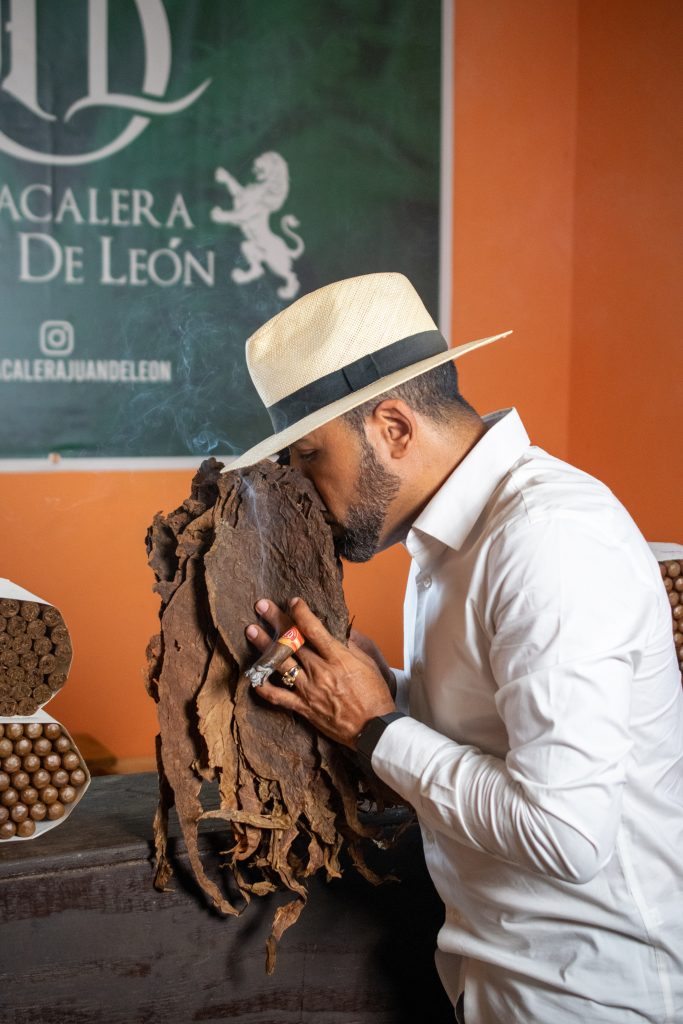
With a thirty-year career in the industry, Juan de León has not only accumulated experience but also friendships, such as with his mentor Tirson López, with whom he began developing his palate, practicing identifying each tobacco by its flavor and strength when smoked.
He recalls working with him on creating a cigar specifically designed for Don Freddyn Beras Goico, a Dominican television personality. It was a robustly constructed cigar, rolled using the accordion technique, where the folds of the leaves—similar to the bellows of that instrument—create a firm cigar but with a very free draw.
“I didn’t want to do it because of the difficulty, and although the master assured me there would be no consequences if I didn’t, he also encouraged me to practice until I succeeded. In the end, I did and learned… He always corrected and pushed me to work without worry, which allowed me to know, try, and learn many things within the industry. These are experiences that mark you in life and that you appreciate from those who teach you,” he says.
From this man, teacher, and mentor, Juan learned techniques he could incorporate into his search for a personal style; knowledge he now applies in every creation that comes out of his rolling tables at his own facilities.
Factory
From a young age, a recurring desire was to one day have his own factory, but life only offered him the opportunity to work for others, from family workshops to the small factory of his neighbors, or a more advanced place like an industrial warehouse in a Free Zone.
At 30, Juan emigrated to the United States to work in a factory in New Jersey, delaying the prospect of starting his own business for another eight years while his experience grew.
But at some point, he changed course and took up plumbing, an unrelated trade from which—nevertheless—he learned how to run a business and established his first company. As this work didn’t diminish his passion for tobacco, it was common “and necessary” to visit a tobacco shop from time to time to enjoy a good cigar and chat with other enthusiasts.
It was during one of those occasions, in a casual conversation, that the foundations of the future Juan had envisioned for nearly 20 years were laid. “While smoking, I shared with someone that one day I would set up my cigar factory in Tamboril, and he assured me that if I was willing to do it, he would be with me.”
However, that day, the topic did not advance further. It was later, during a softball game, when his current partner reminded him of that conversation, and they agreed immediately. “The deal was done, I left the plumbing business in the hands of a friend, and set up my dream in the Dominican Republic.”
According to Juan, the factory setup process was tedious but filled with emotions, including fear, especially due to the risks involved in investing in raw materials, equipment, and necessary staff training. “But setting up a tobacco factory is a permanent issue; you never starts a business thinking that one day it will close; it becomes a matter of attachment, and that’s what we did.”
Initially, Tabacalera Juan de León focused on producing private labels for cigar stores chains in New Jersey, such as La Casa del Tabaco, or brands for Dominican friends in the U.S. who wanted to enter the industry, such as 1901 Papuro.
After four years running the factory and a client catalog that, reflecting its success, occupies full-time staff, Juan never considered producing his own cigars. However, current conditions allowed him to start working on JDL, the company’s flagship brand set to launch soon.
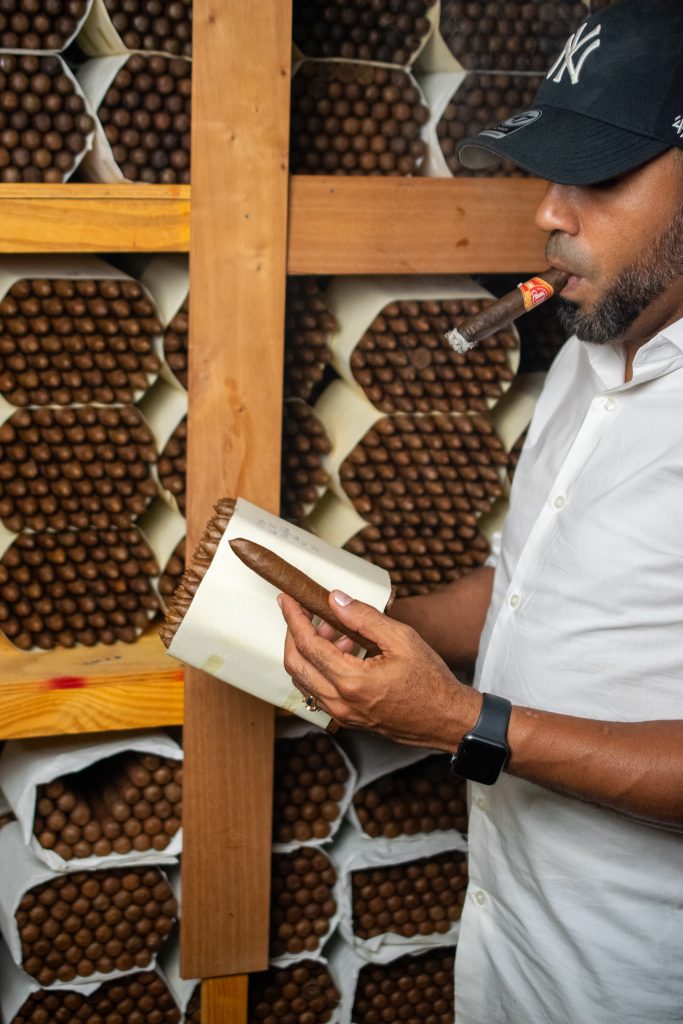
It’s a premium cigar with long-aged tobacco, with two years of aging, whose manufacturing will occupy the necessary space to not interrupt the production of private brands. A medium to full-strength cigar with a well-balanced flavor, intended for all audiences and as a daily smoke: “I believe people deserve to smoke a cigar made by us, the Juan de León family, and showcase what we can do for ourselves as manufacturers,” he adds.
The Cigar
As a Blender and tobacco smoker for so many years, Juan has developed his own criteria, listening to and savoring the stories that tobacco tells. For him, tobacco speaks, and even though the story behind a blend may be short, it can be told through the leaves.
This is how Tabacalera Juan de León operates to satisfy the owners and consumers of each private label approaching; he reminds clients that what they sell is their own palate, so the public should know they are buying what each brand likes.
For all these reasons, Juan believes that the blend of his upcoming JDL is the culmination of all his years in the industry, of the experiences sitting with so many people to understand what they seek… the harvest of years of experience collected in a single cigar: “It carries within it a percentage of each person I know, of each friend who has smoked with me; it’s my journey made into a cigar.”
Tabacalera Juan de León continues to work and grow with doors always open to those who share the dream of entering the tobacco industry, with the finest raw materials and the guarantee of the personal experience of its founder.
Contact:
Tabacalera Juan de León, Avenida 27 de Febrero, Tamboril, Santiago de los Caballeros, Dominican Republic
Phone: 809-679-5010
Email: ventas@tabacalerajuandeleon.com
Instagram: @tamborilcigars