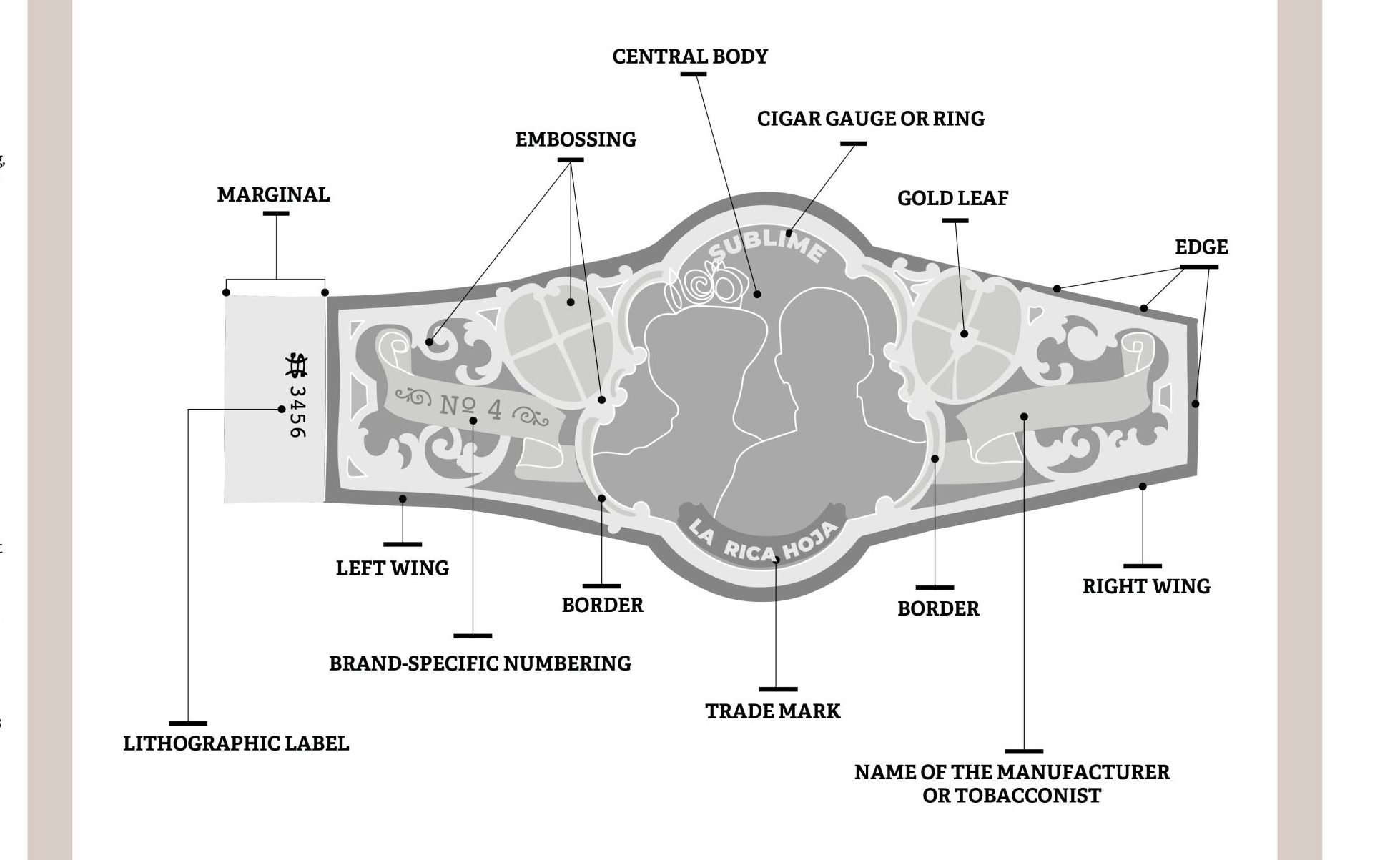
The vitolas or cigar bands, as well as the markings that accompanied their boxes, originated in the early part of the 19th century due to the rise in tobacco, competition among Cuban manufacturers, their struggle to protect their work from fraud and counterfeiting, and the policies of that era to distinguish and adorn their products, which were aimed at or directed towards high social classes.
The first known lithographed labels were introduced by the Cuban Tobacco Industry in cigarette boxes between 1836 and 1840, known as “cigar labels.”
Read in the magazine (rotate your device for a better reading experience):
This led to the luxurious packaging that La Eminencia by Ramón Allones and La Honradez by the Susini family began to use between 1845 and 1850, which drew considerable attention at the tables of European princes, kings, and emperors. Their example soon spread among other Cuban manufacturers.
Later came the cigar bands or vitolas that were placed on each cigar individually. Although there is contrary information, it seems proven that the first vitola appeared after 1870, many years after the first markings.
Experts believe that the golden age of vitolophilia corresponds to its earliest phases up until 1910-1915, when the bands reached their highest artistic quality.