French civil servant, diplomat, and politician, known as Francis Marbois in the English-speaking world. François, Marquis de Barbé-Marbois, was born on January 31, 1745, in Metz, France, and died on February 12, 1837, in Paris, at the age of 92.
Miguel Luis Manrique
His extensive career spanned several decades, from the reign of Louis XVI to the so-called July Monarchy. He is historically famous for being the key negotiator of the Louisiana Purchase to the United States in 1803, under the orders of Napoleon Bonaparte.
He served as French Ambassador to the United States (1784-1785), where he married the daughter of the governor of Pennsylvania, William Moore. He later became Minister of the Treasury under Napoleon I (1801-1806), before the Emperor himself appointed him the first president of the Cour des Comptes (Court of Audit), France’s supreme auditing institution (1807-1814).
In his hometown—where his father was the director of the local Mint—François Barbé-Marbois served as a tutor to the children of the Marquis de Castries. In 1779, he was appointed secretary of the French Legation in the United States, and a year later he sent a questionnaire to the governors of the 13 former American colonies, requesting information about the geography, natural resources, history, and government of each state.
Thomas Jefferson, who at the time was finishing his last term as governor of Virginia, responded to the inquiry with a manuscript that later became his famous Notes on the State of Virginia.
Barbé-Marbois was elected a foreign honorary member of the American Academy of Arts and Sciences, as well as the American Philosophical Society, in 1781. When minister Chevalier de la Luzerne returned to France in 1783, he remained in the United States as chargé d’affaires, and in 1784 he married Elizabeth Moore, daughter of William Moore, former governor of Pennsylvania.
In 1785, he became Intendant of the colony of Saint-Domingue under the Ancien Régime, and in late 1789 he returned to France, putting himself at the service of the revolutionary government. In 1791, he was sent to Regensburg, Germany, to assist the Marquis de Noailles, the French ambassador. Suspected of treason, he was arrested upon his return, but was soon released.
In 1795, he was elected a member of the Council of Ancients, where the general moderation of his attitude—especially his opposition to the exclusion of nobles and relatives of émigrés from public life—made him suspected of being a royalist; although he delivered a eulogy praising Napoleon Bonaparte for his success in Italy.
During the anti-royalist coup of 18 Fructidor on September 4, 1797, he was arrested and deported to French Guiana. Transferred to the island of Oléron in 1799, he was freed by Bonaparte after the coup of 18 Brumaire. In 1801, under the Consulate, he became Councilor of State and Director of the Public Treasury, and a Senator in 1802.
Source: Internet.
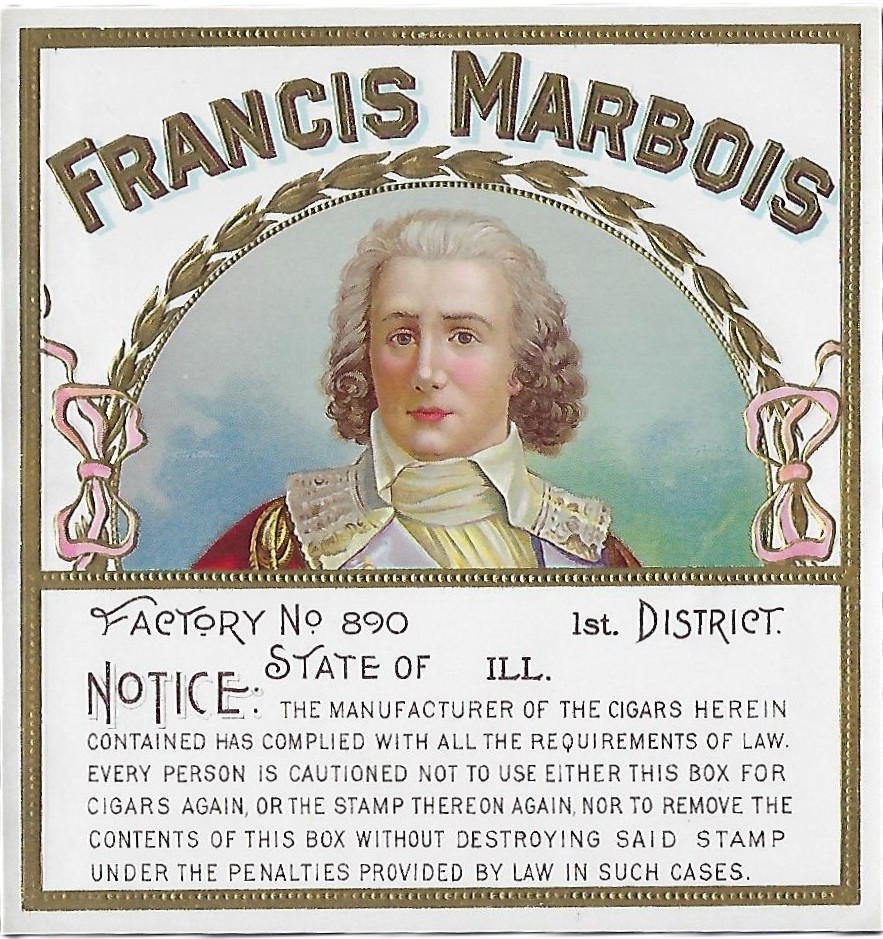
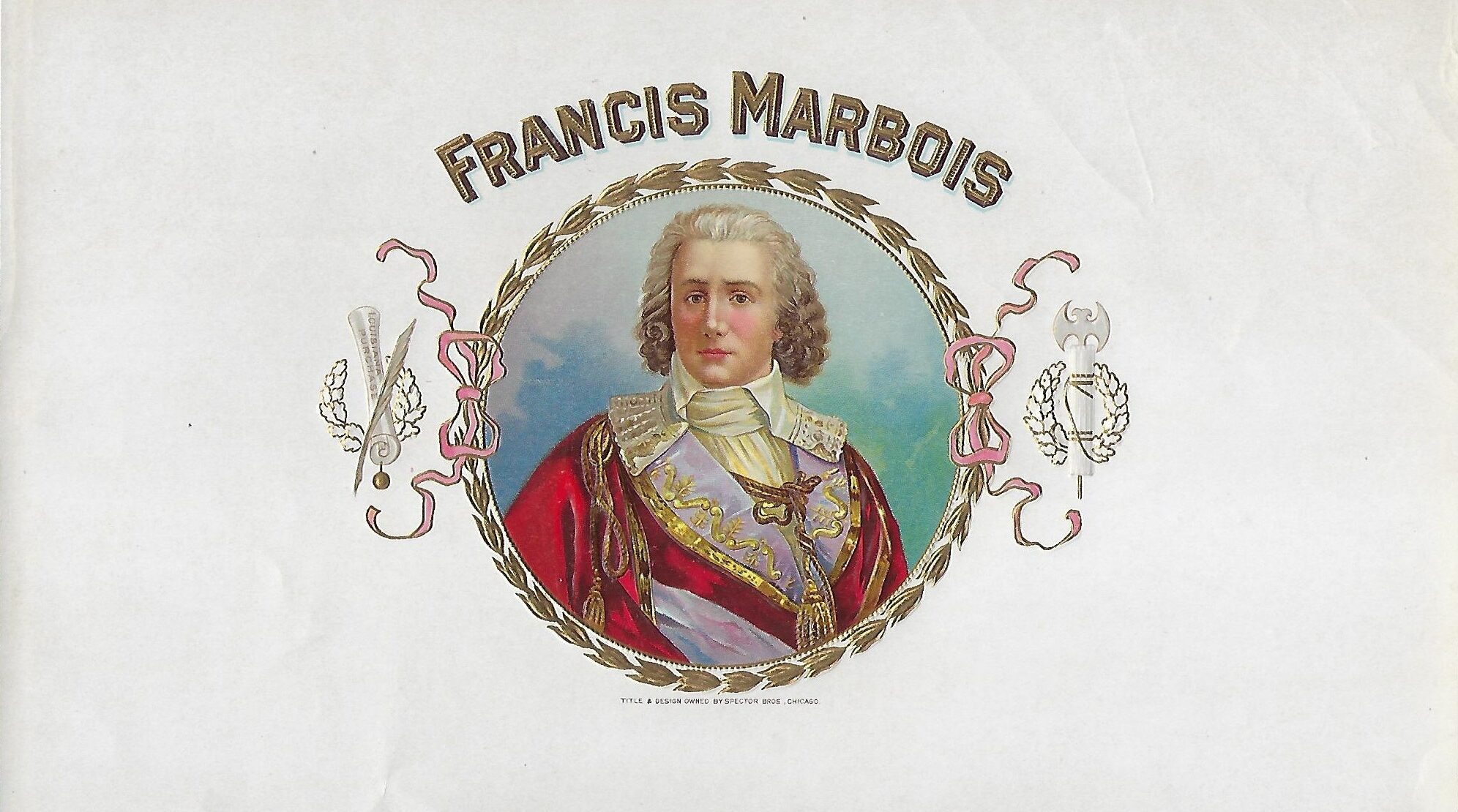
The cigar labels (habilitaciones) shown were produced between 1901 and 1911 by Spector Bros. (Personal collection).
Labels: TITLE & DESIGN OWNED BY SPECTOR BROS., CHICAGO
Produced by Spector Bros., a printing and cigar manufacturing company based in Chicago that operated in the early 20th century. It was known for creating highly ornate, gilded, and embossed labels and inner designs for cigar boxes.
The text “Title and design owned by Spector Bros., Chicago,” functioned as a sort of copyright or trademark registration. It was used to prevent rival Midwestern cigar manufacturers from counterfeiting or stealing the brand’s distinctive imagery, used for their specific tobacco blends.
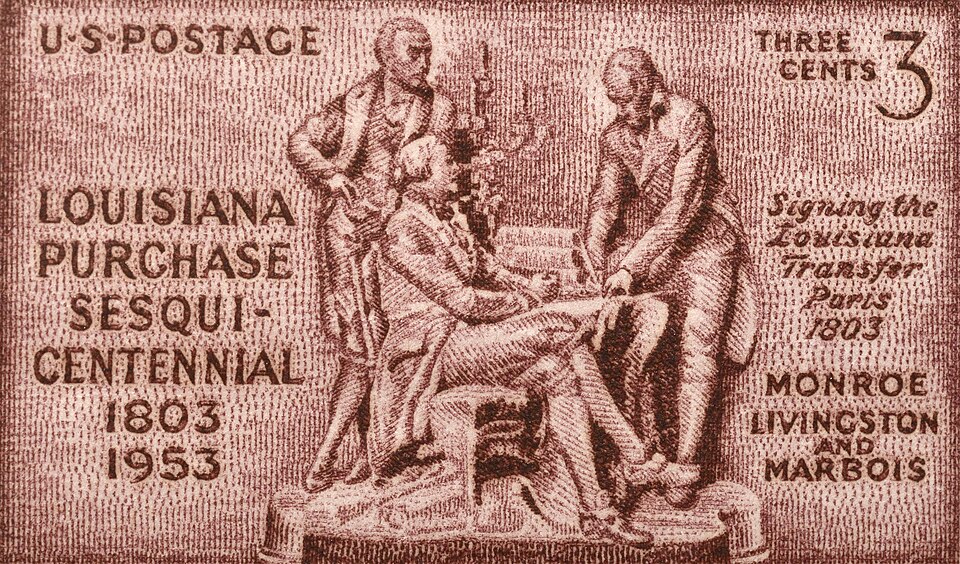
U.S. postage stamp (c. 1953) commemorating the Louisiana Purchase. Barbé-Marbois appears alongside James Monroe and Robert Livingston.