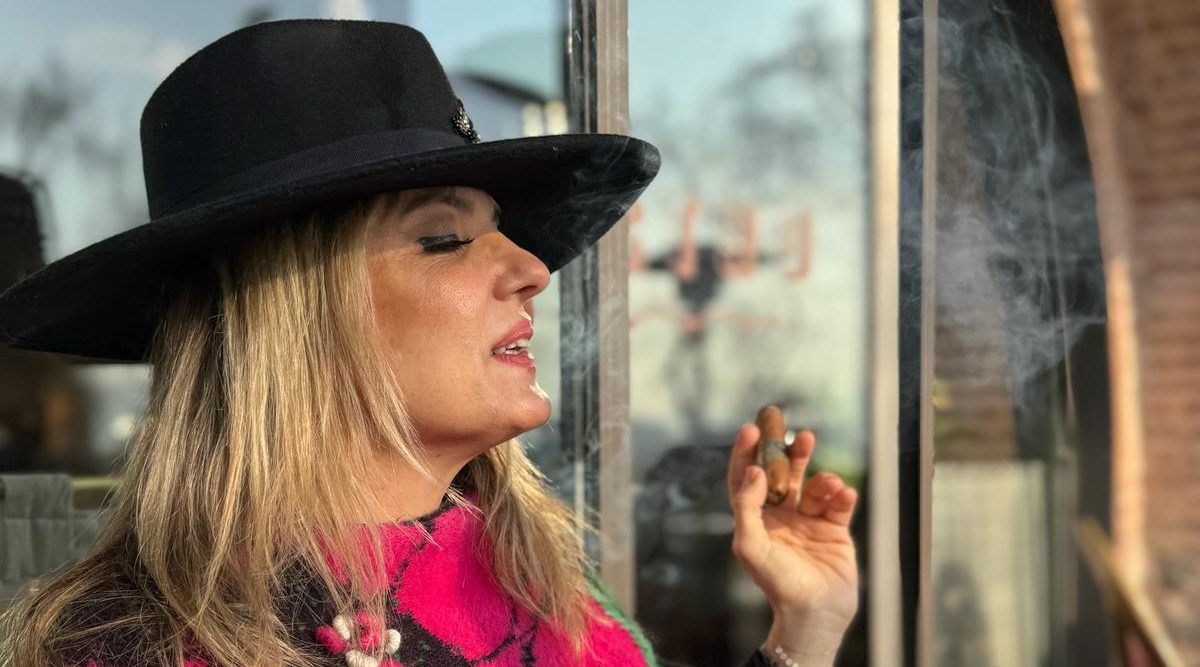
From marketing strategies, transformative art, and Istanbul’s cigar lounges, Selin Bozkurt, this Turkish entrepreneur has woven a global network where excellence and passion converge. Founder of a pioneering agency, an association democratizing art, and the exclusive Bosphorus Cigar Club, she reveals how communication –and cigars– can bridge cultures, genders, and disciplines.
Read in the magazine (rotate your device for a better reading experience):
Selin Bozkurt , tell us a little about your titles, background, activities and life journey.
After graduating from Istanbul University, I completed an MBA program in marketing at Cambridge. In 2009, I took my first step into the communications sector as the co-founder of Manifesto Public Relations. I developed many pioneering projects in sectors such as banking, real estate, tourism, and art, and provided strategic consultancy services to brands across a wide sectoral range. With a mission to strengthen the bond between art and society, I founded the Art for Goodness Association in 2014.
As the president of the association, I developed innovative projects aiming to bring art to wider audiences and led awareness-raising events for the benefit of society. I have also played active roles in various non-governmental organizations, making significant contributions to the fields of culture, art, and education.
Traveling to 66 different countries, I brought the international experience and vision I gained to both the business world and social projects as a unique perspective. To promote cigar culture and create a platform for new collaborations, I founded the Bosphorus Cigar Club, which aspires to be a community for individuals who deeply respect the art of cigars and the pursuit of excellence in this field.
You’ve successfully founded initiatives in communication, art, and cigar culture. What core philosophy connects these seemingly different worlds under your leadership?
The core philosophy behind our successful initiatives is communication. We focus on bringing people together across different domains like art and cigar culture. By combining our deep understanding of communication with the creative power of art, we aim to enrich cultural interactions and artistic experiences. At the same time, by supporting the practices of enjoyment through cigar culture, we contribute to how people express themselves and come together. This approach allows us to unite business people from different fields around a shared vision under our leadership.
How did your journey in strategic communication lead you to create Manifesto? How has the agency evolved under your vision as a woman CEO in Turkey?
My journey in strategic communication is a natural outcome of the multi-layered experiences I gained at different stages of my career, from tourism to management consulting, from the food and beverage sector to international business development. While founding Manifesto with my partners, our goal was to combine this versatile experience with a creative strategy to bring a fresh perspective to the sector.
As a female CEO in Turkey, inclusiveness, inspirational leadership, and creating sustainable value have always been at the forefront of my leadership approach. Together with my team, we created projects that inspire both the sector and young professionals, elevating our agency to a respected position on both national and international scales. Today, Manifesto has evolved into a dynamic structure that produces meaningful communication solutions for local and global brands, centered around art, gastronomy, travel, and cultural experiences.
You are often described as a visionary. What does being a visionary mean to you –and how do you turn your ideas into impactful actions across your projects?
Being a visionary means not only foreseeing the future but also having the courage to shape it. Generating ideas comes naturally to many people, but turning those ideas into reality requires patience, strategy, and strong belief. For me, being a visionary is about drawing a grounded roadmap while dreaming. Before starting any new project, I question how the idea will touch people’s lives, what need it will address, and how it will create a lasting impact.
The most important lesson I learned from my entrepreneurial background is that it’s not just the idea itself that makes a difference, but the belief behind it and the action plan supporting it. Whether it’s an art project, a communication campaign, or a social responsibility initiative, I first envision the big picture and then bring together the right people to turn that vision into reality. Because vision alone means nothing unless it is shared, nurtured, and transformed into action by a team.
Through ‘İyilik İçin Sanat’ (Art for Goodness), you promote young artists and cultural inclusivity. Can you tell us more about its mission and key projects?
The Art for Goodness Association was founded ten years ago with a strong network of solidarity, entirely composed of female members. Our goal was to contribute to the spread of contemporary Turkish art, provide spaces for young artists, and increase the international visibility of Turkish artists. In line with this mission, we developed projects that not only provided production opportunities but also supported artists’ development.
Our regular Tuesday Art Gatherings transformed studios into spaces of idea exchange, inspiration, and solidarity, not just production areas. Through projects like A Year in Passage, Impressions from Anatolia, Atelier Cer, Publicly Art, and Art Ambassadors, we supported the studio processes of more than 255 artists. We hosted 148 young artists from 50 different cities in Anatolia, offering them visibility and production opportunities in Istanbul.
Believing in the importance of instilling a love for art at an early age, we established the Art for Goodness Children’s Academy. Furthermore, we played an active role in social responsibility projects, such as our Women- and Child-Friendly Spaces project focused on the needs of women and children in the earthquake zone. For art enthusiasts seeking academic depth, we launched the MA Certificate Program in partnership with Beykoz University, offering long-term certificate training with international-standard content led by prominent names.
This program offers significant opportunities for those looking to develop personally or pursue a career in the arts, promoting the universal values of art and helping more individuals benefit from its transformative power. With partnerships ranging from DenizBank to Istanbul Metropolitan Municipality, Manifesto to Akkök Holding, and from major holdings to universities, we aim to expand this structure even further. We believe that the more people art reaches, the stronger and more compassionate society becomes.
Do you believe art can serve as a form of social resistance or healing? Could you share a moment when a project deeply moved you?
Absolutely. Art can sometimes be a scream, a refuge, or the strongest language of healing. We have witnessed firsthand how art acts as a unifying, healing, and hopeful force during every societal rupture. One project that profoundly affected me was undoubtedly our Women- and Child-Friendly Spaces project in Hatay after the earthquake. The devastation we saw upon arriving in the region was indescribable. Yet even under those harsh conditions, seeing children’s faces light up when given crayons, and witnessing women regain their strength through creating together, reminded us once again that art is not just aesthetic but a vital necessity.
What impact have your programs had in smaller cities, and how do you decide where and how to act in these communities?
The programs we launched have had a tremendous impact on young artists in smaller cities. Regardless of their field of study, their cultural exposure was often very limited. Thanks to our efforts, they had the opportunity to visit larger cities, meet artists, and begin producing work. Essentially, we determine our actions based on the cultural gaps in these areas, create projects accordingly, and move forward with a results-oriented approach.
The Bosphorus Cigar Club in Istanbul has become a refined destination. Tell us about its mission, membership, and current or future projects.
Bosphorus Cigar Club was founded to bring together individuals who see cigar culture not just as a ritual but as an aesthetic and intellectual extension of life. Our mission is to provide an experience-focused, refined environment for those who want to understand, share, and develop this unique culture. At our club, it’s not just about smoking cigars –we delve into everything from production processes to history, from aromatic structures to countries of origin, creating a space where conversation and discovery are intertwined.
We move forward under the consultancy of Ömer Doğancı, known as Dr. Pro, one of Turkey’s most knowledgeable names in this field. Our membership is very special and selective; we seek individuals who will contribute to the club’s energy, who have refined tastes, enjoy sharing experiences, and consciously follow cigar culture. We maintain a perfect gender balance –50% women, 50% men– which is one of our most distinctive features. The club includes individuals from diverse backgrounds in business and society.
Among our exciting upcoming projects, we plan to host world-renowned cigar sommelier Juan Jesus Machin Gonzalez, whom I met in Cuba, in Istanbul for a private workshop with our members. We are also working on translating his books into Turkish. Moreover, we aim to develop partnerships with international cigar clubs to integrate our members into global cigar networks.
What does cigar culture mean to you personally, and how do you see it playing a role in bringing people together?
Cigar culture feels like a call to slow down in today’s fast-paced world. Every cigar embodies labor, patience, and craftsmanship. Smoking a cigar is a way of respecting this effort, taking time for oneself, and living in the moment with all senses. It also plays a very special role in bringing people together because cigars invite conversation. They cannot be rushed. You set up a table, and around it, people who share similar values gather.
The bonds formed in these moments go beyond just a hobby; they are shaped around a shared philosophy of life. When founding the Bosphorus Cigar Club, I had exactly this idea in mind –creating a space where people could meet around cigar culture, build new friendships, share knowledge, and collect experiences together. Today, I see that this culture truly has a unifying and transformative power.
You’ve received and participated in several awards in communication and cultural leadership. Could you specify them and share what they have meant to you?
When it comes to communication, successful projects and achievements often go beyond recognition and are crowned with awards. For example, just last year, we received the Best Marketing Communication Agency award at the Burj CEO Awards organized by CEO Clubs Network in Istanbul. These awards enhance the perception of Manifesto as a competent and successful team and also serve as a source of motivation for the internal team to achieve new successes.
How do awards and public recognition influence your future initiatives? Do they bring new responsibilities or shape your expectations?
They say to want something is the half way to success and awards are one of the recognitions you receive once you succeed. Beyond motivation, awards push you to strive for even better results. On the other hand, winning an award brings new responsibilities and, if new awards are not achieved, it opens a door for constructive self-reflection.
What is your personal vision for the future –and what are your next steps?
My vision for the future is to remove boundaries between people and cultures and to launch more inclusive, innovative, and sustainable projects. Throughout my life, I have built deep connections with every part of society by combining my experiences in art, culture, and communication.
While continuing with the existing projects of the Art for Goodness Association, I plan to spread the role of art in societal transformation to broader audiences and create a significant impact. Additionally, I am looking for ways to further promote Turkish art internationally by developing global collaborations and cultural projects. In niche areas like the Bosphorus Cigar Club, I aim to create communities where people can unite around shared tastes, share experiences, and foster lifestyles. I plan to focus on projects that genuinely bring people closer together and improve their quality of life.
What kind of change would you like to see the SOTL Global Movement bring to the global cigar community?
Cigar culture is truly a lifestyle, and this lifestyle can serve as a powerful bridge that unites people from different geographies and cultures. I hope that the SOTL Global Movement strengthens these connections, ensures the preservation of traditional knowledge, and passes it on to future generations.