The train door opened, and I felt the winter air on my face. I felt like jumping up and down like a child getting out of bed on December 25th to open those long-awaited gifts. Although in this case, the gift was not under the Christmas tree, but in every street, bridge, and story that the city of Bruges, in Belgium, was about to offer me.
Read in the magazine (rotate your device for a better reading experience):
Sofía Ruiz
Master Habanosommelier
Madrid, Among Smokes
On the way to the center, the cobblestone streets and the first Christmas decorations awakened those feelings that most of us have as this season approaches. Somehow, just like a Cuban cigar –which requires time and dedication– those small details motivate us to keep going when the final third of the day does not turn out as planned.
The morning looked somewhat unpredictable, with a light rain and a cold that cut through the skin, but “so typical,” according to our guide, who even commented: “You’re lucky today, as Bruges welcomes you with one of its 200 days of rain a year.”
As we ventured into its small streets, with brick constructions inspired by the Gothic style and its famous pointed finishes, I imagined myself heading to Hogwarts, the school from the famous Harry Potter saga.
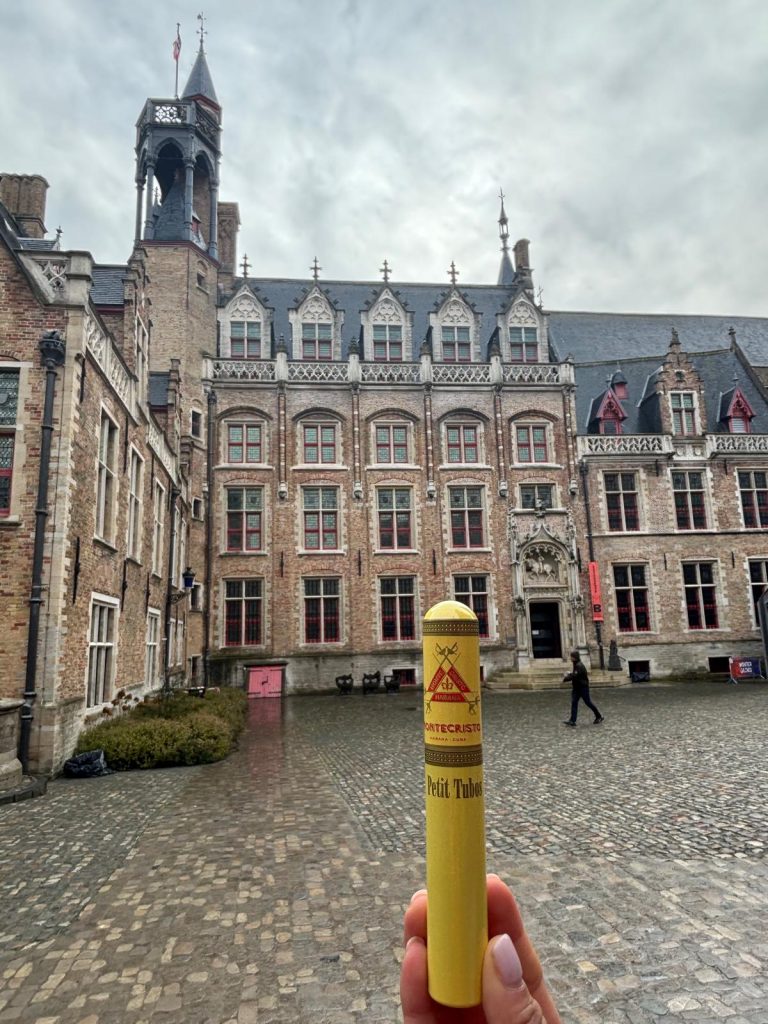
We arrived at the Grote Markt or Market Square, with more than six centuries of existence, occupied by a Christmas market and surrounded by ancient buildings with facades in reddish tones. It is small, but charming, and together with a group of visitors of different nationalities, I prepared to discover the history of Brugge; the name of the city in Dutch.
This area was favored by its famous canals and the Reie River, which connects to the North Sea. Before the 5th century, the region was part of the Roman Empire, which built a wall surrounding the city, but which was destroyed centuries later.
The final name the city received means bridges or canals, and it originated from the Old Norse word Bryggja. As an anecdote, the guide told us that locals are surprised and shocked when they discover that in Spanish, we know their city as Brujas (Witches).
Don’t expect to arrive and find women dressed in black flying on brooms, but do expect some good black beers produced in the area, because if Belgians have anything, it’s beer of all styles, colors, and flavors.
Around the year 863, Baldwin I received the County of Flanders as a gift and, becoming its first Count, changed the city’s history. Thanks to its maritime location, it became –at the beginning of the Middle Ages– an important port and international commercial center.
Wool weaving, especially the famous Flemish cloth, significantly boosted the economy, which, along with the arrival of Italian merchants, allowed for the construction of great buildings such as La Lonja (The Exchange) in the Main Square; the Hospital of St. John, and some palaces of wealthy families, like the Gruuthuse.
The guide told us that during the era of greatest splendor and abundance, there were guilds, such as those for tanners and artisans. That sparked my desire to know about my passion, and I asked if there was any guild related to tobacco. She didn’t have precise information, so it’s possible that some current tobacconist or cigar shop could originate from an ancient guild.
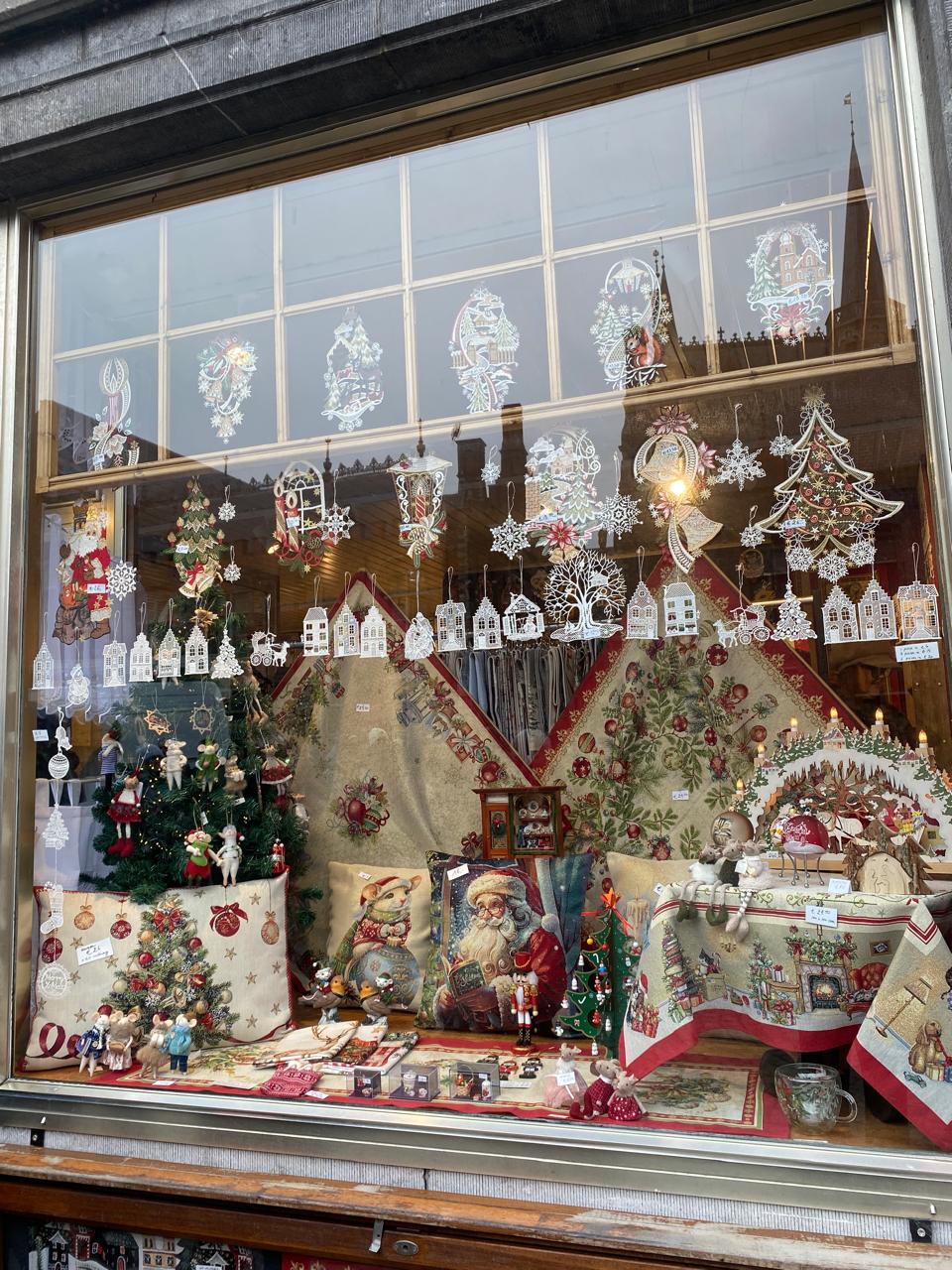
During the walk, window displays full of chocolates flooded the view, awakening the appetite. Belgium has a great chocolate tradition, and its workshops are a cacao amusement park. We stopped at a small shop, where Christmas decorations were mixed with figures of Santa Claus and elves, and where all the molds, chocolates, fillings, and their aromas make you feel like the chocolate is melting in your mouth.
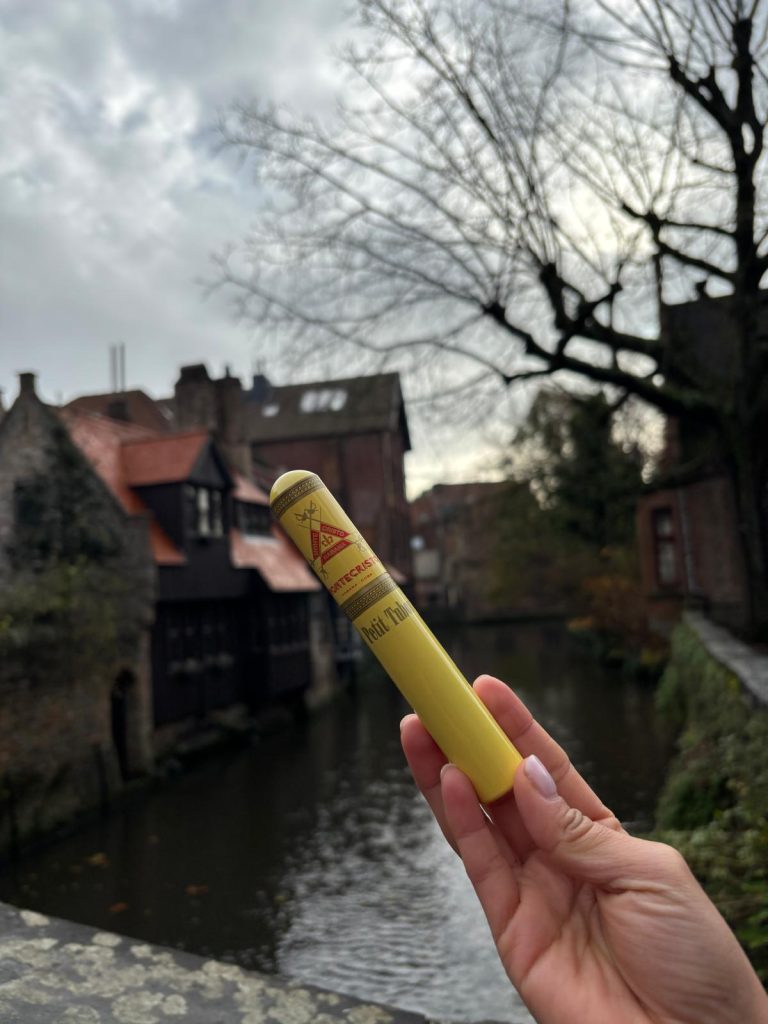
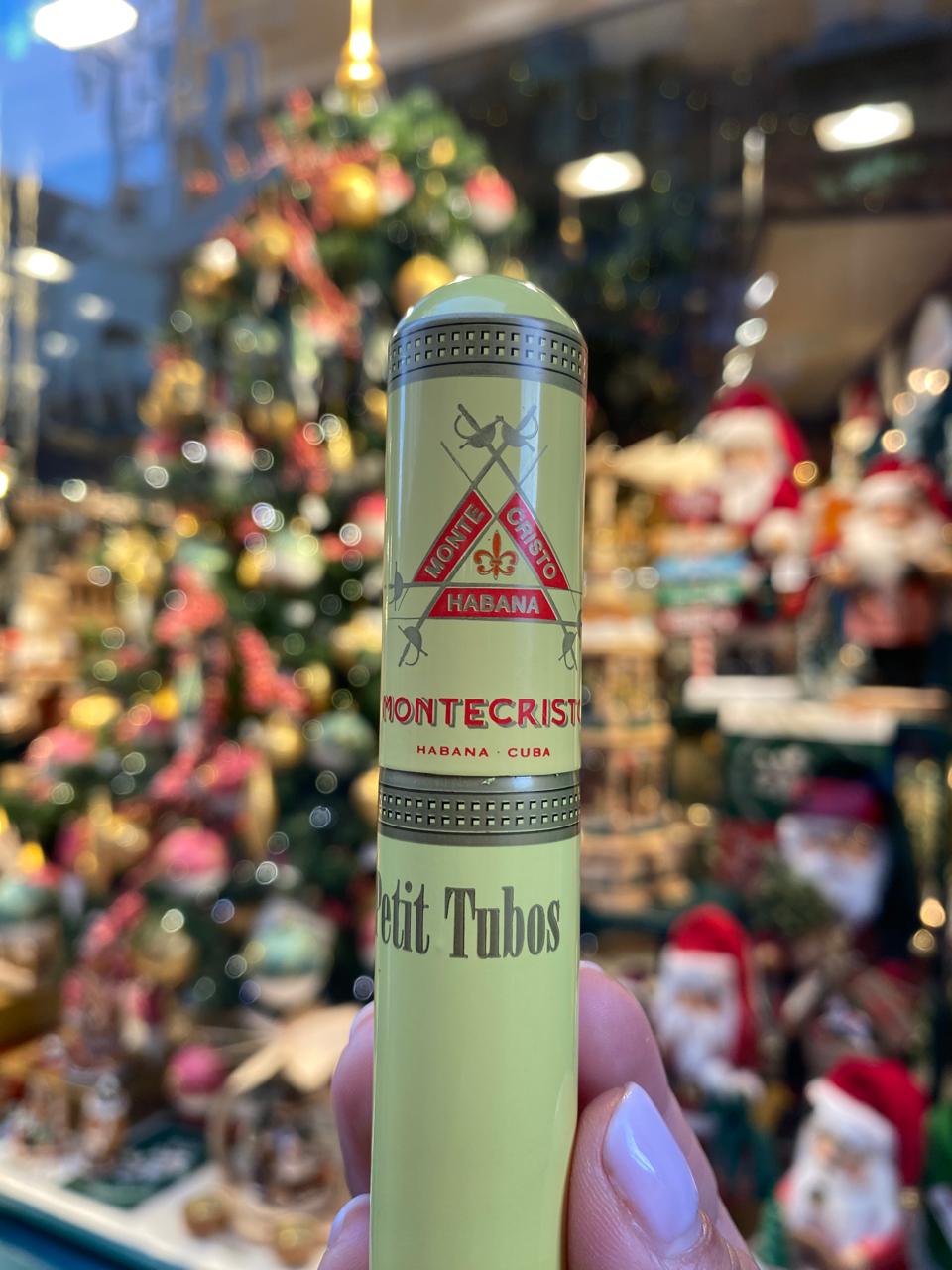
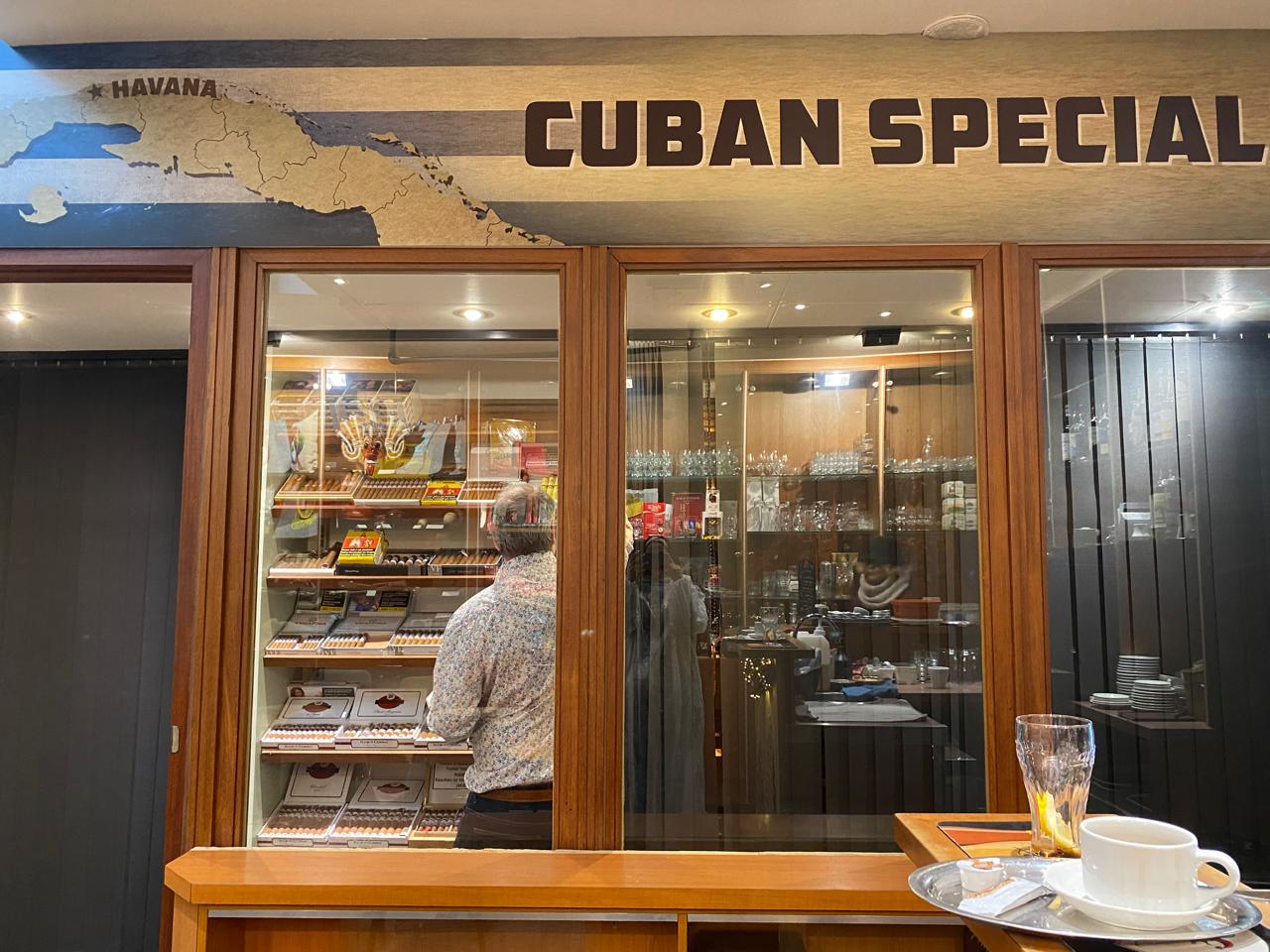
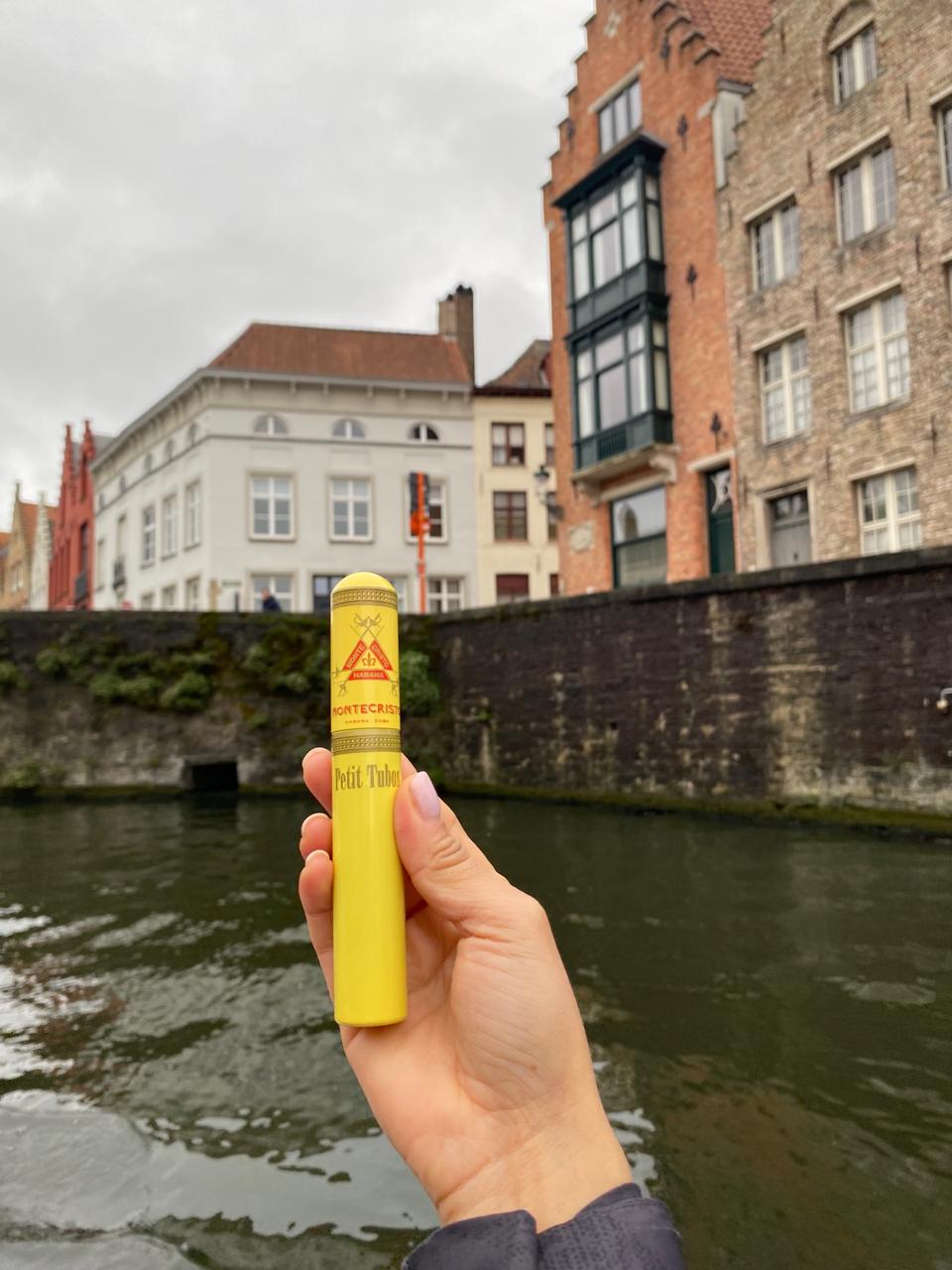
To my surprise, on the way to St. Boniface Bridge, we came across a modern tobacco guild right in the center. Facing the famous Simon Stevin Square, where there is a statue paying homage to the mathematician, there is a beautiful tobacconist’s shop where, after escaping the tour, I found one of my Christmas gifts: a Montecristo Petit Tubos, a vitola created in the late eighties. The place had a wide variety of Habanos in large formats, ideal for smoking on vacation when you have more time to sit and enjoy the after-dinner conversation.
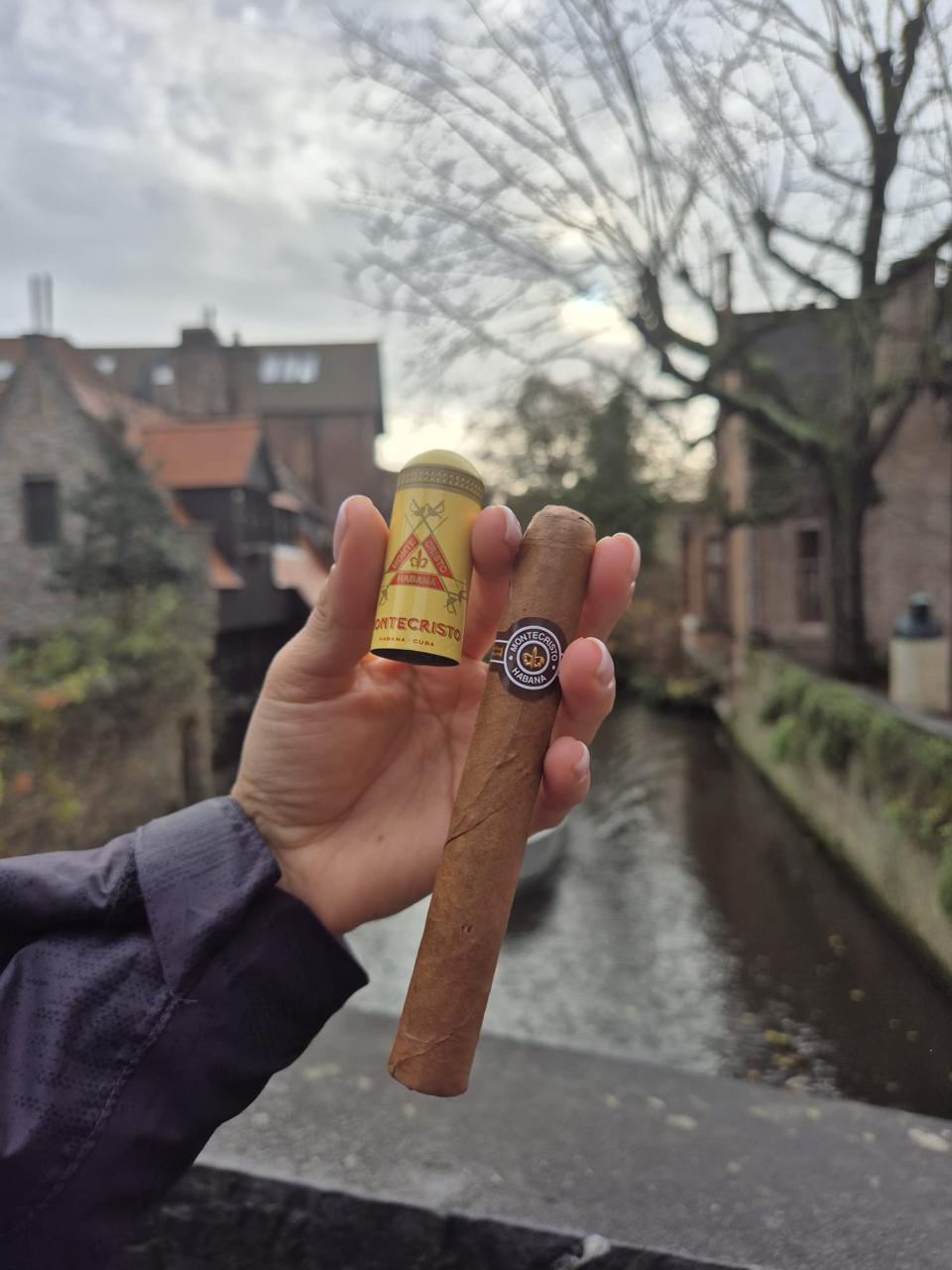
I decided on a tubo (tube), a presentation that, due to the rush of the tour, turned out to be perfect for protecting the delicate wrapper of this Habano, measuring 42 x 129 mm. With a ripe caramel color and velvety texture, due to the natural humidity in the environment, it was ideal for reaching for the lighter, and with the first spark… the first puff!
Now I understand a little more the origin of the tube presentations, which in the early 20th century were intended for railroad workers.
We passed the palace (today, a museum) of the Gruuthuse family, one of the most important of the medieval era. It is said that they began brewing their own beers and had their own water well for this purpose.
Finally, we arrived at St. Boniface Bridge, also known as the Bridge of Love. Legend has it that centuries ago, a man’s fiancée died, and he decided to contact someone from the afterlife to recover her. And although this story does not have a happy ending, the place shows the beauty of medieval architecture from the late 13th century, when it was built as part of a new canal system that connected Bruges to the sea.
It is said that when crossing this bridge with your partner, the one walking ahead should not look back, lest the relationship break. So while all the couples went up and built their stories for social media, I moved forward with my Habano. After all, I also had a legend in my hands: this 2025, the Montecristo brand celebrates 90 years since its creation by Alonso Méndez.
Perhaps not much is heard about this figure, but he was a notable Spaniard who, in 1935, acquired the Particulares factory, where a high-royalty, though little-known, brand called Byron was produced. A year later, he founded the Méndez García y Cía. company, located at Aldama Street number 87, in Havana. Thanks to the success achieved, he later acquired the H. Upmann factory, and Montecristo was born there –an emblem of the Habano and synonymous with the strength and Cuban flavor that aficionados appreciate so much.
The tour came to an end, but like any tourist, along with my travel companion, I wanted to make the most of the city, like enjoying a Habano down to the nub.
We headed north of the historic center, to the Rozenhoedkaai pier (Quay of the Rosary), one of the most photogenic and representative spots in the city. Of course, we took a ride on a small boat, because how could one come to Bruges and not ride through its canals, which –along with its historic center– have been declared a World Heritage Site?
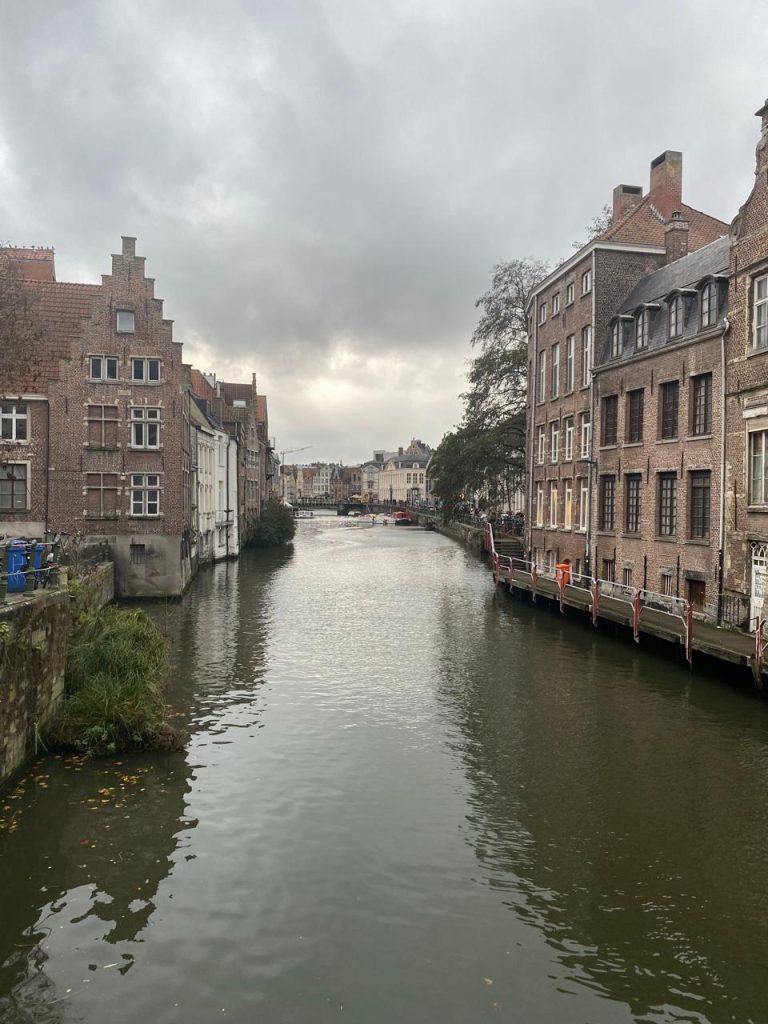
These canals originate from the Reie River, and during the medieval era, they allowed ships to reach the city. Around some of them, like Groenerei and Dijver, there are houses and hotels, but mainly breweries.
Back on land, life called for food and something to drink. Nothing better than hydrating with a beer tasting, as Belgium is considered a powerhouse in the world of barley and houses six of the twelve monasteries that remain in production. The most well-known styles are Trappist, Dubbel, Tripel, and Saison. bitter, hoppy, and with good foam, notes identified on the palate range from citrusy and fruity to chocolate, coffee, or even spices, depending on the style.
Returning to the center, eager to sit and enjoy my Montecristo and very curious about how tobacco was treated in the medieval era, I decided to do a little research online. To my surprise, in the province of Wervik, in northern Belgium, lies the Nationaal Tabaksmuseum (National Tobacco Museum), which opened its doors in 1987.
According to the museum’s website, tobacco was already cultivated in Wervik around 1650. The city became famous as a paradise for those who smuggled tobacco into neighboring France; an intense and especially lucrative trade. Thanks to its sandy loam soils and the technical learning developed over time, this region became the most important cultivation area in Belgium in the 20th century.
I felt a small pit in my stomach. Had I known this information earlier, one of the first stops on this trip would have been this privileged space of good smokes. The information to undertake this trip into the Tobacco World is available at: https://www.nationaaltabaksmuseum.be/nl/
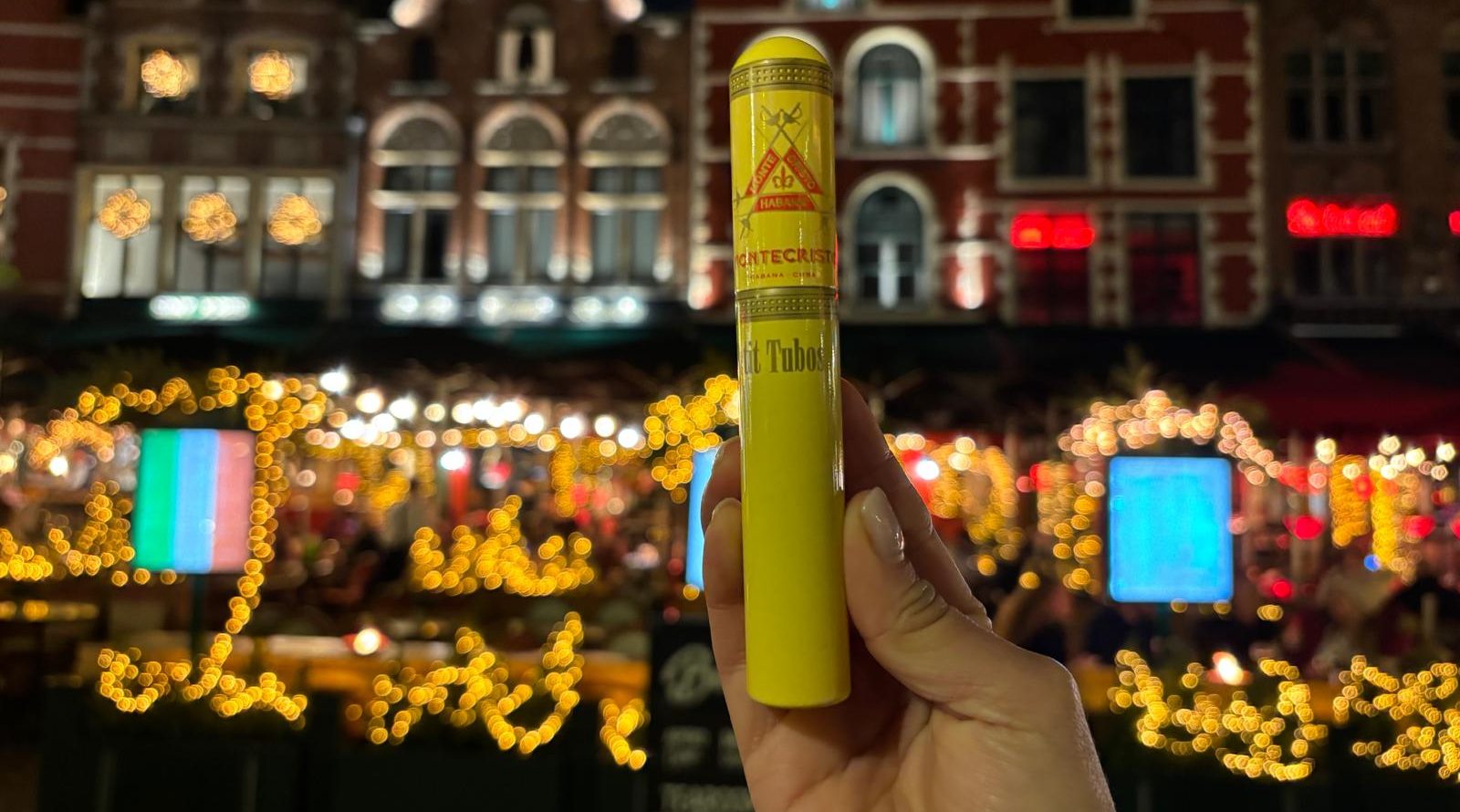
Night fell, and with it, the medieval buildings in the center of Bruges lit up: the Town Hall, the Belfry bell tower, the Basilica, and its Christmas market in the square. The Christmas tree was surrounded by small wooden stalls offering different types of food, from gofre (waffles) to chocolates, beer, and pizza. In the background, a musical band set the rhythm for the carols.
The Christmas spirit reached us with that feeling that slightly catches in your throat when you feel the cold on your face, which you mitigate with a glass of hot wine. Amidst the crowd, on a communal bench, I decided to light the Habano that accompanied me to receive my greatest gift: gratitude for being able to live moments that fill the soul and ignite life.
To you, who have accompanied me throughout all these months, I want to thank you for your support for this column; a space for learning and getting to know each other. I wish you the best for these holidays, may the spirit of Christmas reach your life, and may every one of the wishes you hold in your heart come true this new year.
Suscribe to our Newsletter