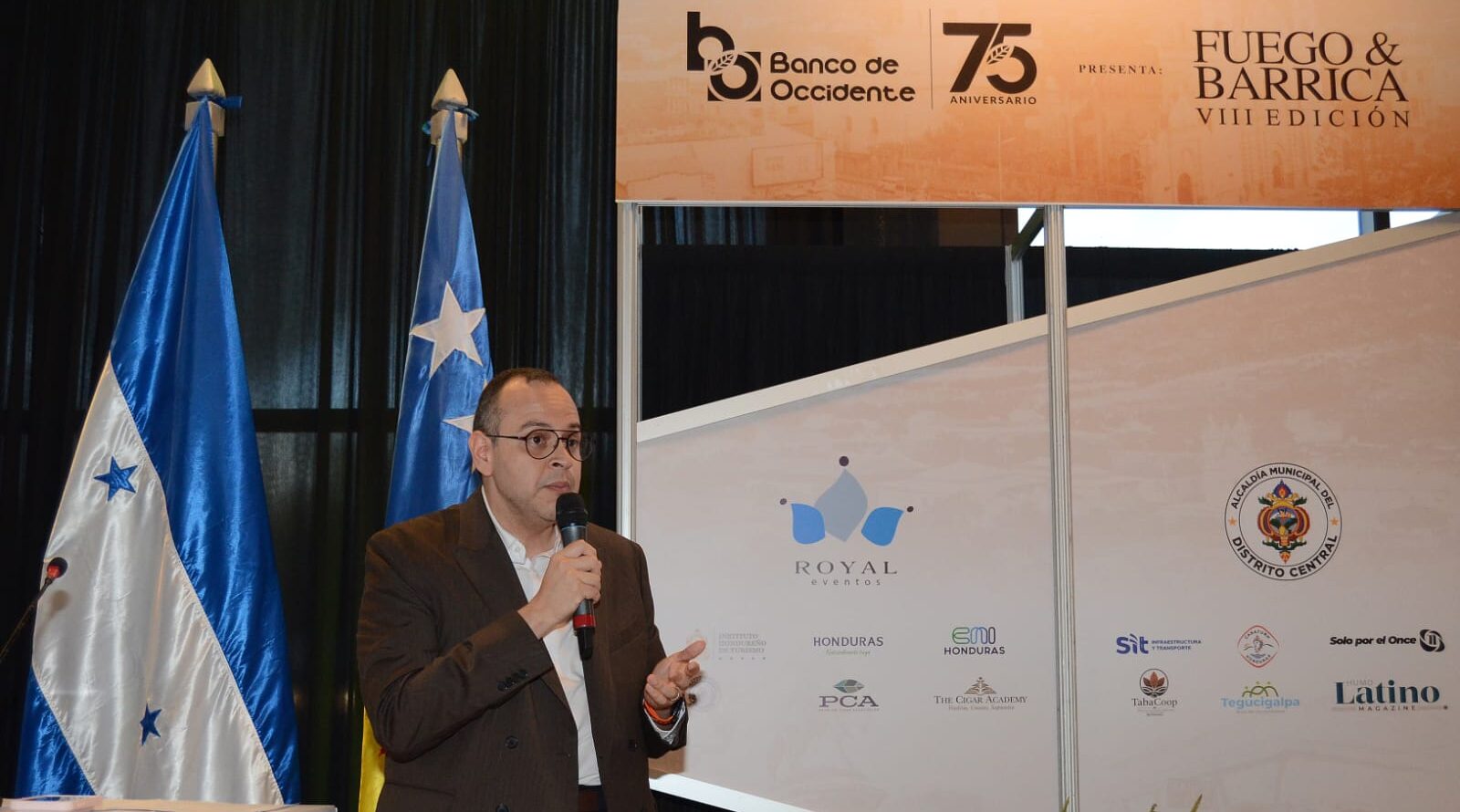
The modern role of banking goes far beyond mere financial disbursement. Banking must transform into an entity providing corporate advisory and technical support to ensure businesses survive and consolidate from generation to generation, and the premium tobacco sector is no exception, stated Leonel Rivas, Corporate Manager of Commercial and Financial Strategy at Banco de Occidente, the event’s main sponsor.
During his intervention at the expert panel “The Honduran Tobacco Industry: Challenges and Opportunities,” held during the eighth edition of Fuego & Barrica and within the framework of the country’s leading banking institution’s 75th anniversary, he highlighted three essential factors that a tobacco producer or exporter must demonstrate to a banking institution in order to access significant credit lines:
First, corporate governance capabilities: “Family legacy is common in this industry, but to ensure financial continuity and professional decision-making, companies must structure formally established boards of directors and succession plans.”
Second, operational and business traceability, as the company must demonstrate comprehensive control of the entire value chain, from seed and raw material acquisition, the curing and manufacturing process, to foreign trade logistics expertise. “Many producers have an excellent tobacco field, but are unaware of the export process and logistical mechanics.”
Finally, educational and accounting formalization. “There is a significant gap in accounting formalization. The bank works shoulder-to-shoulder with producers to help them structure business plans and financial statements to professional standards, capable of being read and approved by major buyers in Asia, Europe, and North America.”
The Fundamental Role of Women
The Corporate Manager of Commercial and Financial Strategy at Banco de Occidente shared valuable historical details about the financial institution, founded in 1951 in the city of Santa Rosa de Copán, which was involved in financing the first plantations and factories, such as the pioneering FR factory, which occupied a significant percentage of the region’s arable land.
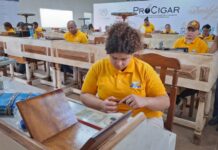
Leonel Rivas affirmed that the Honduran tobacco industry has historically been sustained and perfected thanks to women. In western factories, the decision to incorporate a predominantly female workforce was based on very precise technical reasons: “Women possess a much more delicate touch when handling the leaf, which prevents tearing during the rolling process and ensures extremely demanding and precise craftsmanship.”
“Do not view us merely as a financing window. We are a human, approachable bank and a source of legal, technical, and financial advice. In line with our institutional purpose—‘Supporting today’s small business, we build tomorrow’s leader’—we will continue to drive both micro-producers and major tobacco exporters.”