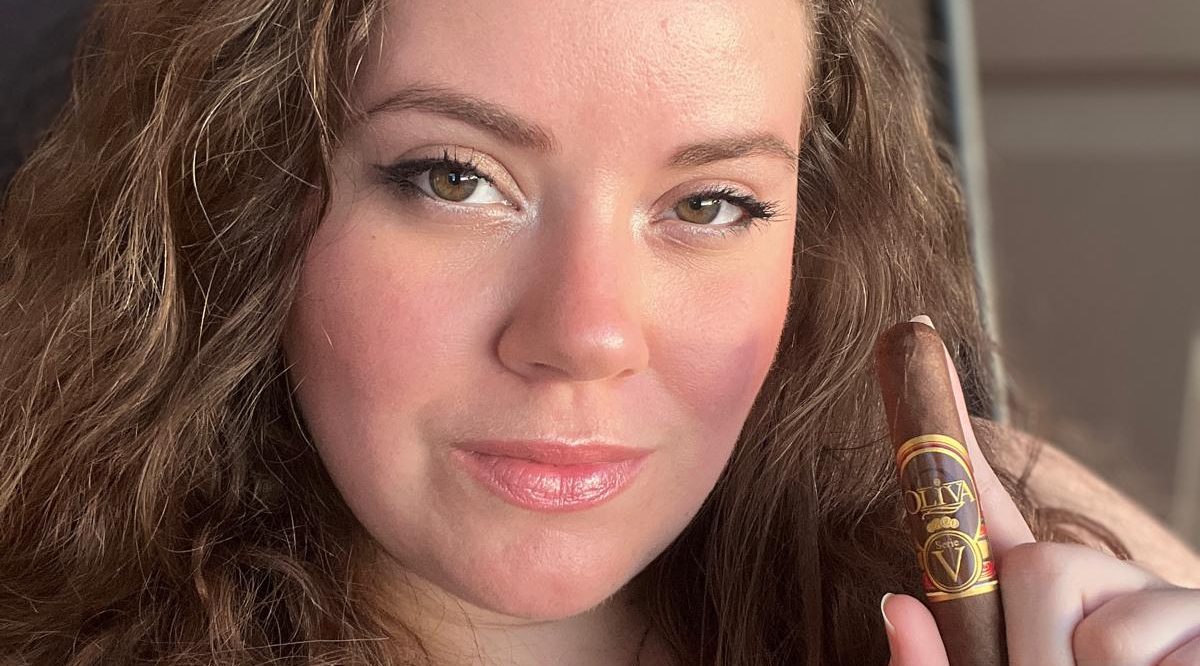
Natasha Cruz-Sánchez is a young woman who loves her native Puerto Rico, coffee, empathy, and the countless roads she has traveled in her red Kenworth. At 29, she recently discovered her passion for premium cigars, owns her own coffee brand, and is an active, conscientious truck driver who fights every day, and from every sphere, to make this a better world –especially for women.
Read in the magazine (rotate your device for a better reading experience):
Made with Coffee
Natasha’s story is one of constant betting on herself, class consciousness, and empathy–that silent revolution. She holds powerful convictions, exemplified by this quote: “I am here to honor the work of those who produce coffee and those who move the world.”
She grew up in Caguas, a Puerto Rican town that is “half country, half city.” At home, her grandmother, since Natasha was five, would serve her café colao (pour-over coffee) in small green or yellow butter cups. She was firm, “chided with love,” and essentially raised Natasha. Coffee was always important in her life because she considered it the “glue” that held families together and sparked conversation.
Her dedication to service led her to study Nursing at the University of Turabo. “I’ve always had that drive to help people, and I thought at the time it was the career that aligned most with what I wanted.”
Before Hurricane Maria, she began working in the coffee sector and loved it. However, her life took a radical turn after the storm when she moved to the United States: “Between the desperation and the destroyed island, I decided to take advantage of a job opportunity that came my way”. But that brief administrative job in the healthcare sector introduced her to the cruel tedium of the corporate world.
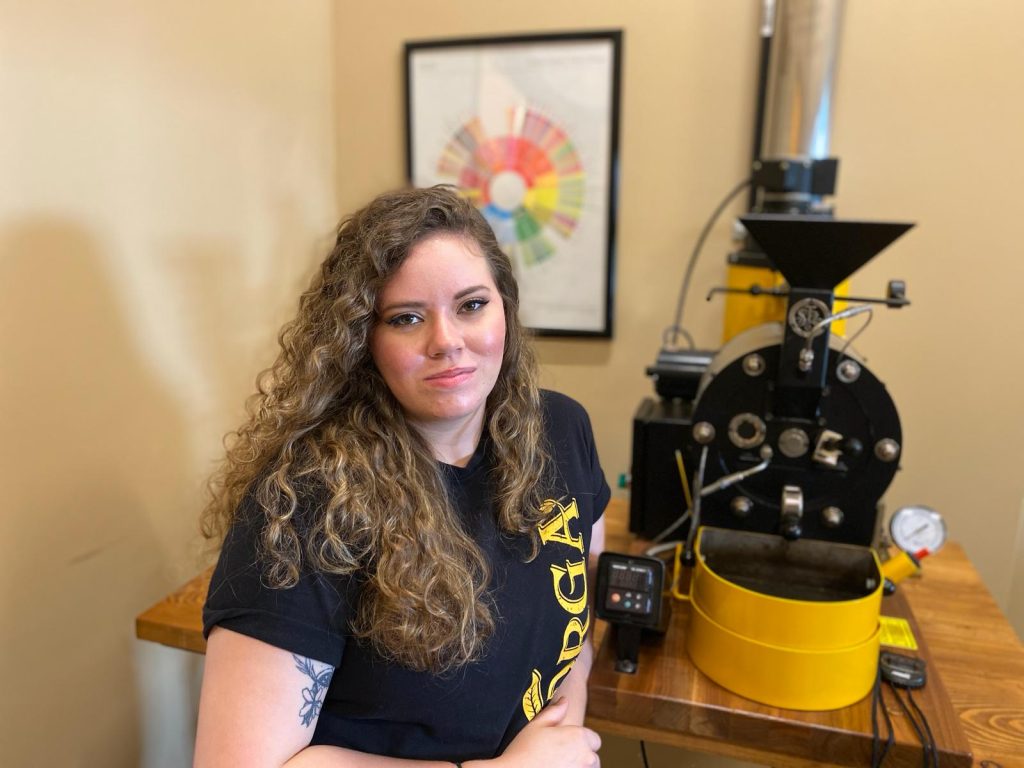
She then made another decision with radical consequences: she went to Italy to take a course in coffee machine repair at the Espresso Academy in Florence. She was greatly surprised that out of 30 people in the classes, only three were women. “It was beautiful to see other women take on the challenge; I was the only Puerto Rican. Al sol de hoy (to this day), we still have a WhatsApp group where we keep in touch and follow everyone’s coffee projects.” Natasha admits that, in addition to seeking out espresso machine pioneers during this trip, she discovered herself there.
Upon her return, she left the security of her job for a position at a La Colombe specialty coffee shop in Washington, D.C. “I’ve never been someone who takes long to make decisions. When I want something, I do it now, whether the consequences are positive or negative. I was never the type of person who wouldn’t try things.” She worked there for a year as Lead Barista, where she expanded her knowledge of the brew bar and “realized there was a wider world in the industry.”
The challenge deepened when she started working at a coffee roaster, formerly Mayorga Organics (now Mayorga Coffee). She spent two years there, eventually becoming Community Relations Coordinator. What she appreciated was that the owner worked directly with the producers, most of whom were Latino. Her responsibilities grew, and soon she was in Guatemala, visiting a massive coffee farm. Living and learning the industry’s value chain firsthand, she declared: “I want to be here.”
“Sometimes people tell me, ‘Oh, but you studied Nursing,’ and I respond that you can help wherever you are. When you understand that there is a human behind every product, you can make a difference, even if just a little bit.” Guatemala opened her eyes to the significant class gap between the Global North and South, fueling her belief that Latinos in the North can be the connector to shrink that divide.
Over The Road
Upon returning from that trip in 2020, the pandemic halted the world but put trucks in motion. She noticed something important at the coffee warehouse: “I never saw a woman… how hard can it be to drive a truck?” Seeing the void, she decided to get her CDL (Commercial Driver’s License) and become a trucker.
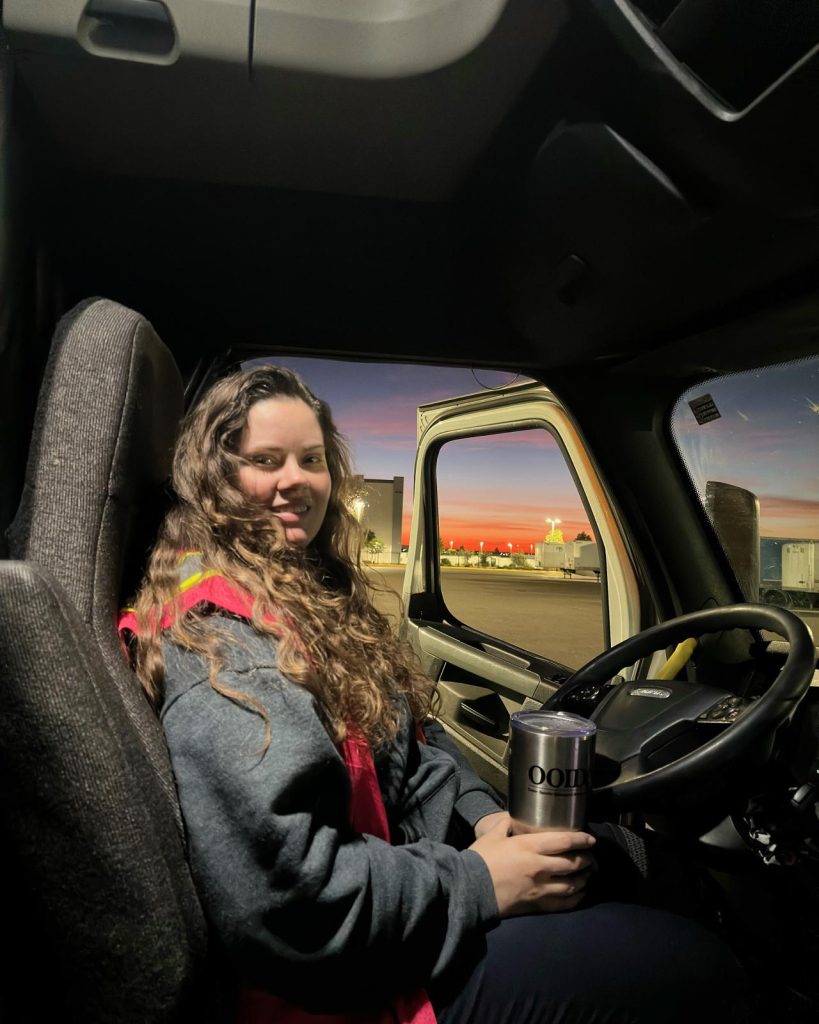
A health issue forced a pause, but she promised herself: “Once I recover and return to the United States, I’m going to become a trucker.” After surgery, Nat moved to the Arizona desert.
Trucking school was her first splash of reality. Like in Italy, only three out of 30 applicants were women. “It’s not just learning to drive a truck –add the machismo, prejudice, and disrespect.” Self-esteem and conviction remain her main emotional tools: “You have to be comfortable with the word ‘no.’”
The most frustrating thing was the double standard. “A woman is not allowed to make mistakes. If you mess up and can’t park, they comment: ‘ah, you can’t be here because this isn’t for you,’ but if they’re men, they are more lenient. Also, I think if you’re the only woman in a space, you have to ask yourself: what are you doing within your means to attract other women?”
The rewards of the road, however, were magnificent: the freedom of being alone, the beauty of desert sunsets, and that feeling of not knowing what the next day would bring. Her work allowed her to choose herself –something the corporate world never gave her. “Every day is something different; it’s a very unpredictable job, and I like the feeling of not knowing what will happen.”
However, her miles abruptly halted in 2024 after an accident. “If I hadn’t saved 30 percent of my salary, I wouldn’t be here.” This “horrible” blow reinforced her discipline, forcing her to have a “plan A, plan B, plan C, plan Z.”
She is now actively advocating for truckers, having recently presented the Safe Communication Act –a national secure communication law– to the Federal Motor Carrier Safety Administration (FMCSA). The initiative proposes a standardized system to evaluate truckers’ English proficiency. “This will lead to more safety; it’s about taking care of truckers, and it concerns public safety, which affects all of us.”
Honoring Those Who Move the World
Nat’s coffee brand, NACRUSÁN, stemmed from indignation: the poor quality of coffee at truck stops. Her mission: to provide a quality product to an essential yet often underserved community.
The design of her Over the Road coffee bag, a medium roast and a tribute to drivers, features her red Kenworth T680 truck, the Hoover Dam landscape, and a small detail: the Puerto Rican flag on the windshield.
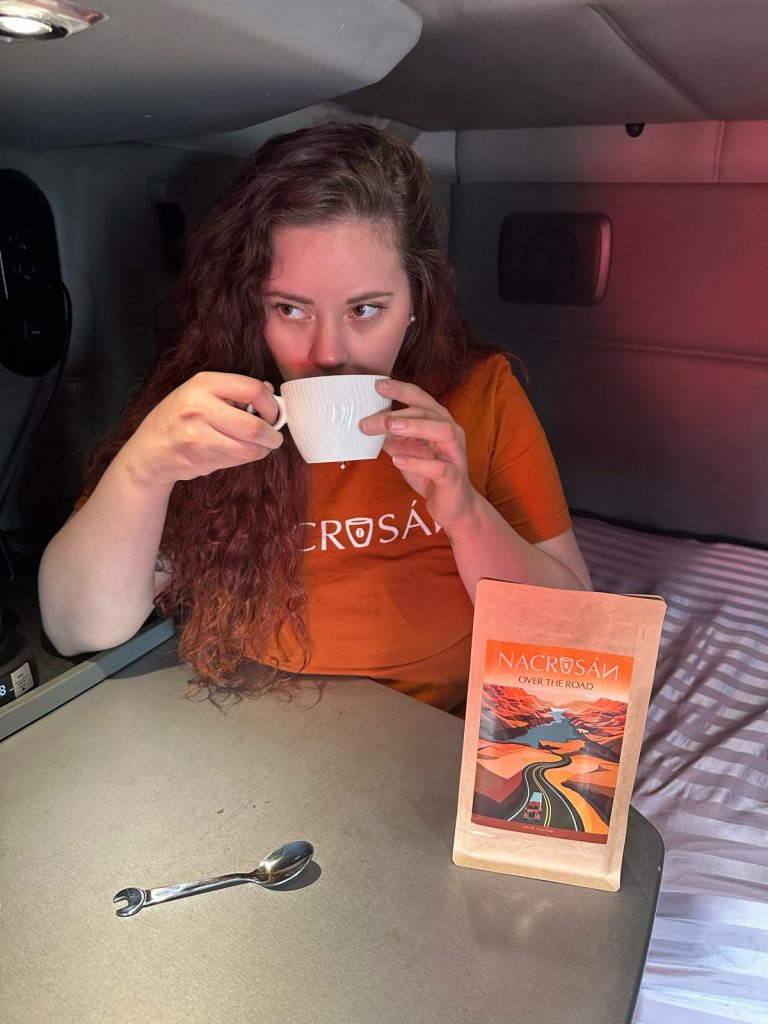
Her vision of equity extends to the supply chain. Natasha actively seeks out women producers, starting with a collective called Las Adelitas in Hidalgo, Mexico, and now with a producer in Chiapas, ensuring her brand’s commitment to a gender perspective is reflected from the seed up. NACRUSÁN is a business born out of empathy: everyone has the right to drink good coffee, especially those who move the world in their trucks.
Something Different
I met Nat on social media, and this past July, I had the pleasure of enjoying a cigar with her in Houston. We ate Chinese-Puerto Rican cuisine, she prepared me a cup of coffee (a truly excellent coffee, I must admit), and we smoked good Dominican cigars at my sister’s house, just a few hours before my return to Mexico.
One could say her personality is overwhelming, but in the best sense of the word. She is an intelligent, focused, hardworking woman with fire in her heart and no fear of the future.
She is just beginning her journey in the art of the fine smoke, and while that story is still unwritten and hasn’t yet led to any radical decisions, we shouldn’t rule it out. For starters, we welcome her as a new collaborator who will be reporting on the latest in tobacco activity and coffee from Houston, in addition to writing opinion pieces –something she hasn’t done before, something different.