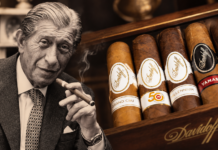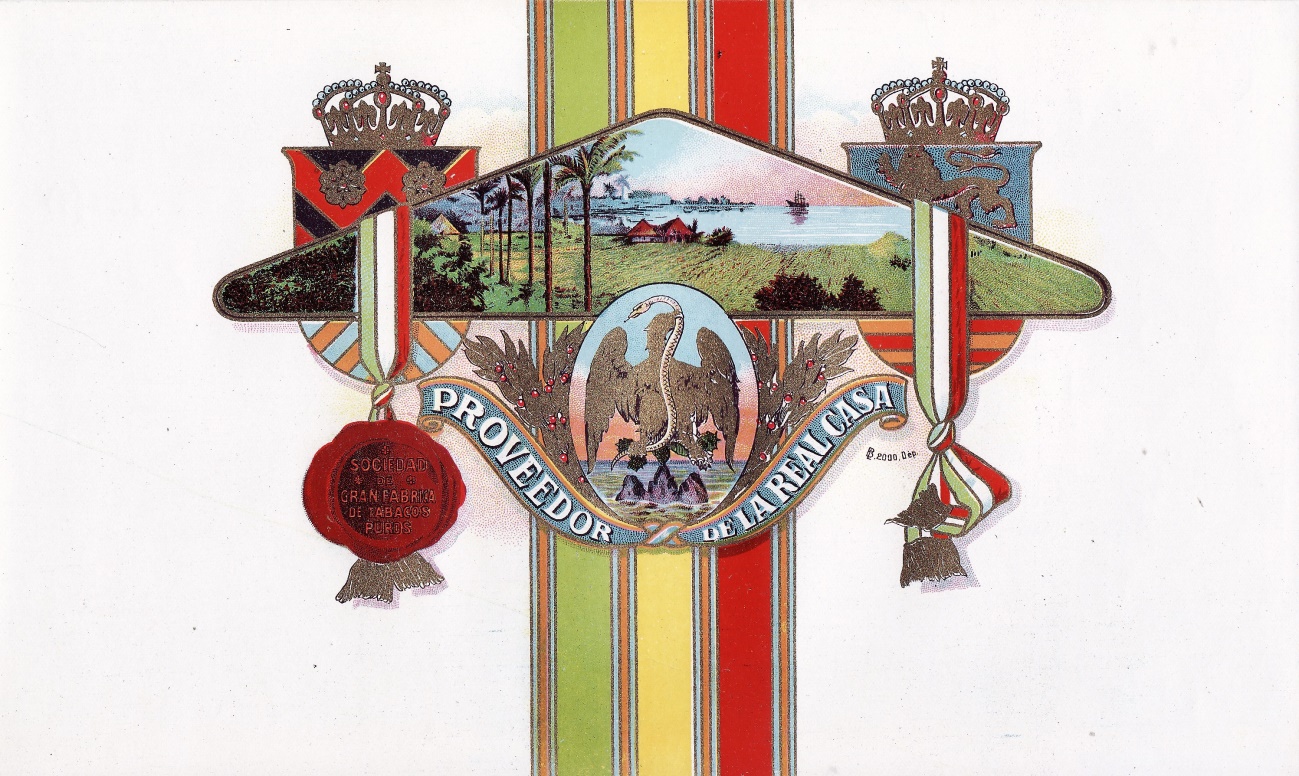
El Aroma cigars gained renown not just in Mexico, but internationally, as regular shipments were crafted expressly for a discerning clientele in Spain, Germany, France, and other countries.
Don Francisco de la Cera y Mora, 40, a single man originally from Oviedo, Spain, and a resident of San Andrés Tuxtla, Veracruz, married doña María de la Concepción Santos, 21, a single woman also from San Andrés Tuxtla, on October 12, 1881.
From this union, Juan de la Cera Santos was born on December 19, 1884. At just eleven years old, he began his apprenticeship at Don Guillermo Mayer’s La Rica Hoja factory, where he learned every phase of the tobacco industry, from planting to marketing.
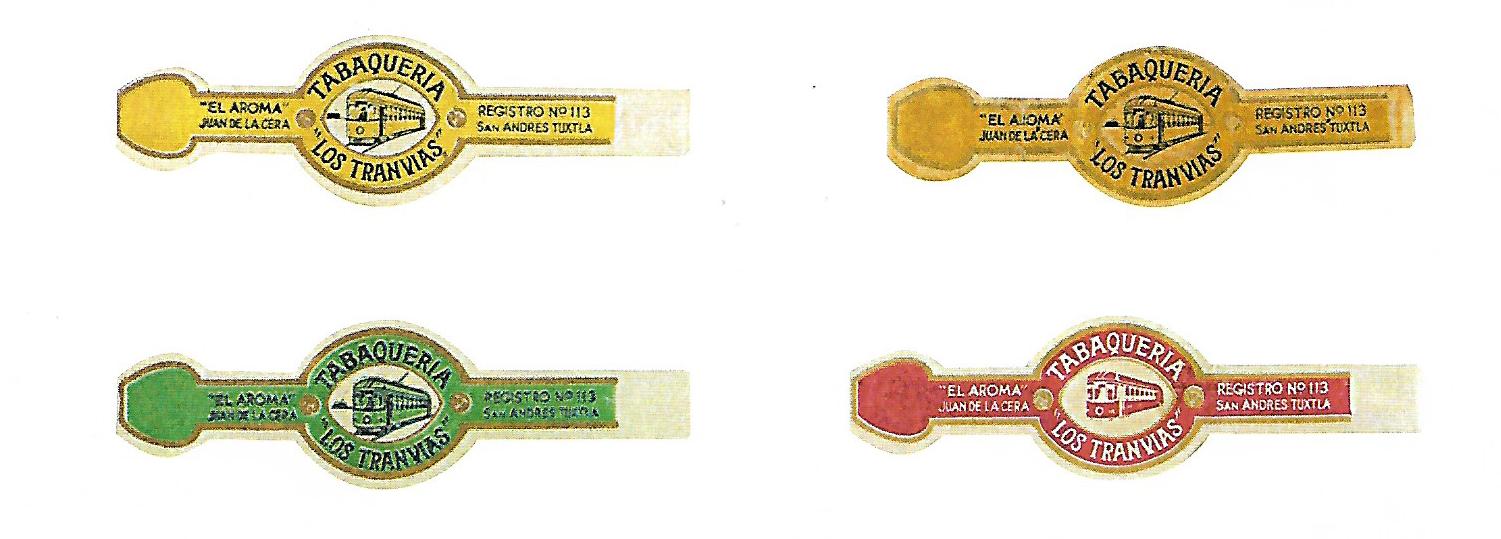
In 1913, Juan married María Antonieta Tenorio Figueroa in San Andrés Tuxtla. By 1917, the same company hired him as a lector—a reader for the workers—at El Aroma, a factory located on Bernardo Peña Street, near his marital home. The factory eventually became his own.
Around that time, El Aroma had 45 employees who primarily made two types of cigars, both wrapped in Mogolla leaf, the finest tobacco from San Andrés Tuxtla: Ferrocarrileros and Taquitos.
The cigars from El Aroma were known not only in Mexico but also abroad, where regular shipments were sent specifically for distinguished clients in Spain, Germany, France, and other countries.
Due to health problems, Juan de la Cera sold the factory in 1964 to doña Alicia Zapata de Villa, who kept it for about four years at 11 Venustiano Carranza Street. It then passed into the hands of a foreigner with the last name Suárez, who, due to a lack of product knowledge and financial issues, ended up dismantling it.
In addition to his prestige as a cigar maker, Juan de la Cera had another interesting facet: he was passionate about writing, especially poetry, to which he gave a very traditionalist, folk-art flavor. His verses dedicated to the traditional festivals of San Andrés Tuxtla, under the title Mojiganga, are highly praised.
Juan de la Cera passed away on December 21, 1968, in the city and port of Veracruz, just after his 84th birthday.
LA MEXICANA
Despite his great work in the Mexican tobacco industry, don Andrés Avella Aloy is a figure better known among cigar band collectors than among cigar makers. A native of Palma de Mallorca, where he was born in 1881, he came to Mexico at a young age, eventually becoming the owner of his own cigar factory.
He named the company La Mexicana, and it was first established in Villahermosa, Tabasco, where Andrés Avella married Rafaela Rovirosa Hernández. Their son, Andrés Avella Rovirosa, born on April 8, 1916, would later marry Antonia Vázquez Domínguez.
In the early 20th century, don Andrés relocated his factory to Orizaba, Veracruz, where it was located at 48 Colón Street and 239 Poniente Street. His son provided much of this information during a 1997 interview with the then-president of the Spanish Vitolphilic Association (AVE) at his home in Orizaba.
Unfortunately, La Mexicana did not have a happy ending, and its productive life was rather short. Don Andrés was forced to close it in 1937 as a result of major and serious labor disputes. This was no trauma for the industrialist, who then dedicated himself to manufacturing and selling footwear. He passed away ten years later.
Among the cigars made at La Mexicana, the following are worthy of mention: El Número 18, a type of long cigar that was twisted and curved along its length, which was highly sought after in European countries; Flores Veracruzanas, approximately 15 centimeters long; Macistes; Coronas Extras; and Popular. The cigar bands were always commissioned from German lithographers, primarily the prestigious Hermann Schött.
Another brand registered by Andrés Avella was La Estrella, which, over time and in the hands of other owners, was renamed La Hoja de Oro.
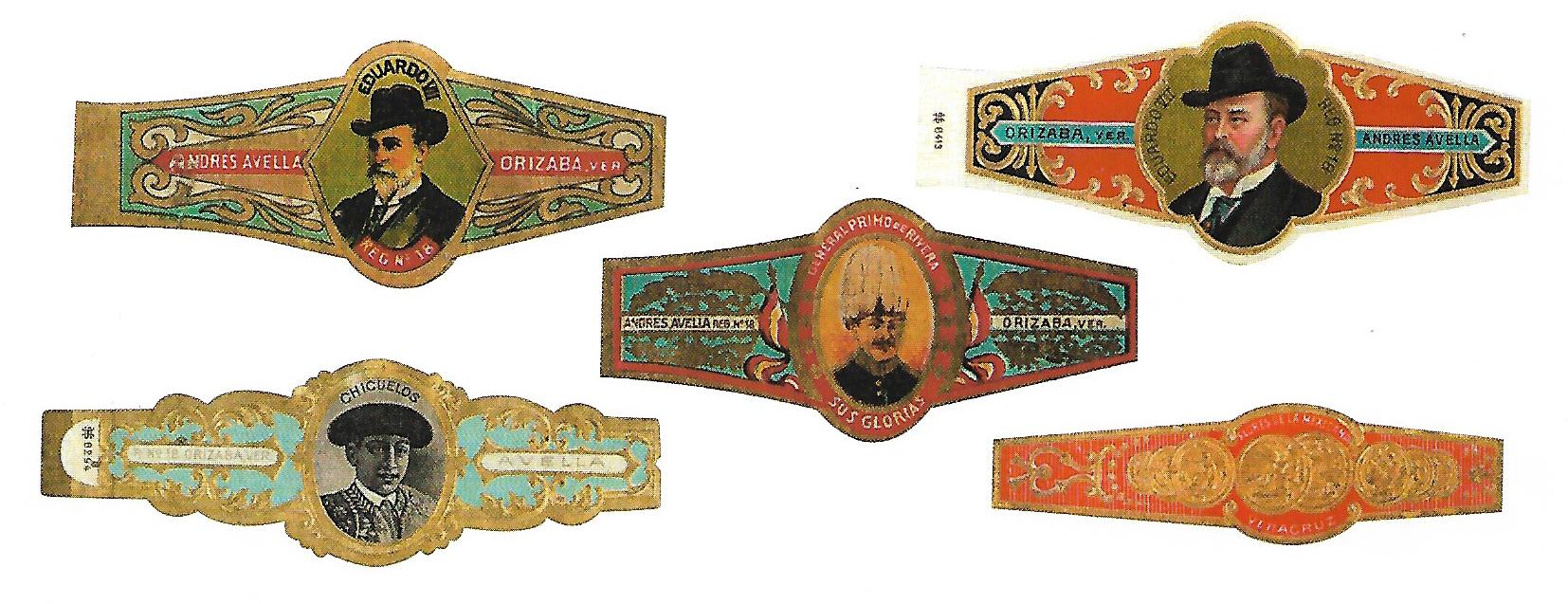
At the bottom are the bands of the great bullfighter MANUEL JIMÉNEZ MORENO, CHICUELO, who was born and died in Seville (1902-1967), and at the far end, a LA MEXICANA brand band with two medals visible at its center.