After eight years leading La Resistencia in Puerto Rico, La Hoja del Chan also spearheads the tobacco industry in a country where José Gabriel Cruz Ayala, El Chan (1981–2024), should be recognized as a man who loved and cherished his homeland. He fought for the revival of an industry that nearly went extinct. For every Puerto Rican, there’s a story tied to tobacco, and now –somehow– also to Gaby.
Read in the magazine (rotate your device for a better reading experience):
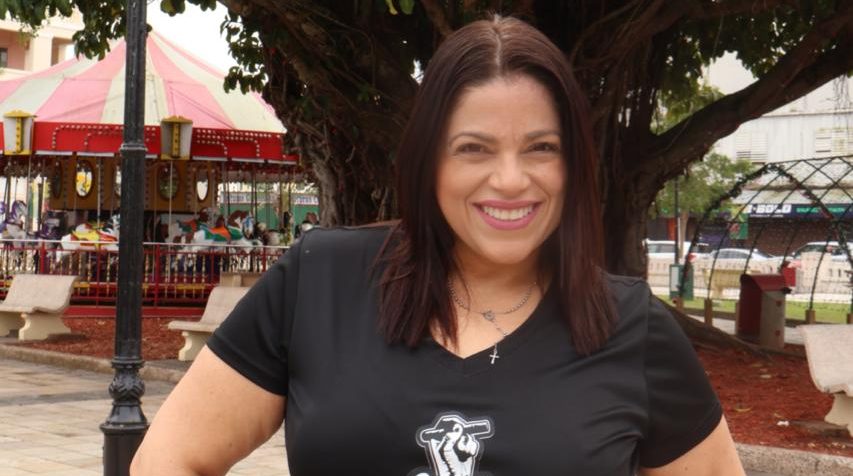
Liz Janice López, his widow and business partner, is currently the only woman owning a company in Puerto Rico’s cigar industry. In addition to maintaining the projects she started with her husband, she has focused on reorganizing the company with a more commercial perspective. While she continues supporting cultural activities, her primary goal is to extend the company’s benefits to more families through job creation.
“I believe there is a before and after in Puerto Rico’s tobacco sector thanks to José Gabriel Cruz Ayala. He played a fundamental role not only in the revival, production, and marketing of cigars,” says Liz Janice, who believes Gaby’s legacy endures through the people he mentored and inspired.
The Background
After the Colonial era and the Cuban War (late 19th century), Puerto Rico’s tobacco industry thrived during its golden age between 1910 and 1940. This period ended with mass production by U.S. companies, a decline in cultivation, and the subsequent closure of cigar factories. Cultural shifts towards cigarettes, alongside anti-smoking programs and laws, worsened this crisis, leaving only a few artisans by the start of this century.
In 2017, a movement led by Liz Janice and Gaby emerged. Under the slogan Somos la resistencia (We Are the Resistance), it aimed to revive the island’s tobacco industry. Beyond producing premium cigars, the initiative sought to promote their commercialization, rejuvenate tobacco farming, and preserve artisanal skills through the training of cigar rollers.
Despite challenges such as Hurricane María and the Covid-19 pandemic, most of their objectives have been achieved. They launched brands like El Chan Cigars and Galiz, certified as artisans, established the La Hoja del Chan factory and cigar lounge in the heart of Caguas, trained cigar rollers, earned the Hecho en Puerto Rico quality seal, and became the first fully Puerto Rican company to participate in the Premium Cigar Association (PCA) 2024 trade show, among other accomplishments.
A Brand Refresh
Liz Janice plans to focus on refreshing the brand in 2025. “Although our cigars and blends will remain as part of Gaby’s legacy –and his face will always appear on El Chan Cigars– the company, La Hoja del Chan, must chart its own path, rooted not only in its image.”
The factory and cigar lounge in Caguas’ central plaza continue to operate. An agreement with a neighboring vendor specializing in food and spirits will create a space for visitors to eat, drink, and enjoy cigars. The location will have fixed hours, and more sales points will be established across Puerto Rico. “While we haven’t yet reached our production peak, we are seeking funding to expand our current workforce.”
The brand’s regular catalog remains unchanged, including handcrafted humidors. The main line consists of Robusto and Toro in Connecticut, Maduro, and Habano wrappers, as well as Galiz, featuring two box-pressed options in Habano and Maduro wrappers. Special editions include El Chan Pig (Pigtail) and Big Bro, a full-flavor blend with a San Andrés wrapper.
Their latest blend, 9/21, is a Corona Pigtail measuring 5.5 inches with a 42-ring gauge –Gaby’s favorite vitola. It features a Corojo Estelí wrapper, Indonesian binder, and Jalapa and Puerto Rican fillers, with a Sweet Tip brown sugar variant for Galiz. Liz notes this vitola and the Robusto are highly popular, although demand for larger cigars, like the 6-inch, 60-ring gauge, has declined. “Market changes will be important to monitor.”
The Legacy of La Hoja del Chan
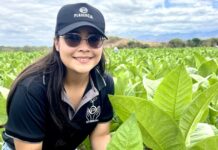
In restructuring the company, Liz Janice sought to strengthen it and “turn the page on this year without Gaby.” For example, they are advancing tobacco cultivation in Barceloneta, where a farmer and her husband grow Habano 2000 and Burley varieties from seeds provided by El Chan. These tobaccos are used as Ligero in their cigars.
The goal is to progress agriculturally and produce a fully Puerto Rican cigar by 2027.
Regarding the Premium Cigar Association trade show, to be held in New Orleans next April, Liz Janice aims to expand the presence of their products in the U.S. Following their first PCA participation, several distributors have expressed interest, and she hopes to solidify their position in that market.
Currently, El Chan Cigars and Galiz are available at various locations, including Puerto Rican airports, cigar lounges, and stores in Connecticut, Lakeland, and Miami. Products are also sold through their website, www.lahojadelchan.com, and social media channels Instagram (@lahojadelchanpr) and Facebook (La Hoja Del Chan).
This family business receives support from Liz Janice’s daughters, Daniela and Ámbar, who assist with sales, as well as her mother, in-laws, and Gaby’s cousin, Jonathan. Her young son, Gael, is already eager to learn the cigar-rolling craft.
An Extended Family
For this year, Liz Janice plans to hold the third edition of the Festival Viva la Hoja and expand the company’s workforce by hiring at least four more cigar rollers outside the family. “After everything we’ve been through, the goal remains what it has always been: creating more jobs and forming an extended family.”
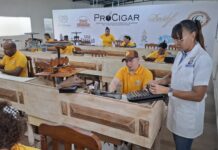
To support this vision, cigar-rolling courses will resume. “I’m very proud of that first generation from our little school, who call themselves Los Hijos de La Hoja del Chan. People like Jonathan, Héctor, Mario, and Lino are extensions of Gaby due to their passion, dedication, and commitment to the industry.”
“We are the resistance, but in constant evolution. What once seemed negative always resulted in something positive. Our plans are materializing, possibly with a more structured approach, because this work fulfills and inspires us. We want more people to live off this industry and make cigars in Puerto Rico.”
Liz Janice doesn’t just aim for economic success but also wants to leave a lasting legacy. “Let it be known that there was a Puerto Rican who dared to make a difference. When everyone told Gaby it wasn’t possible, he said it was –and he made it happen.”