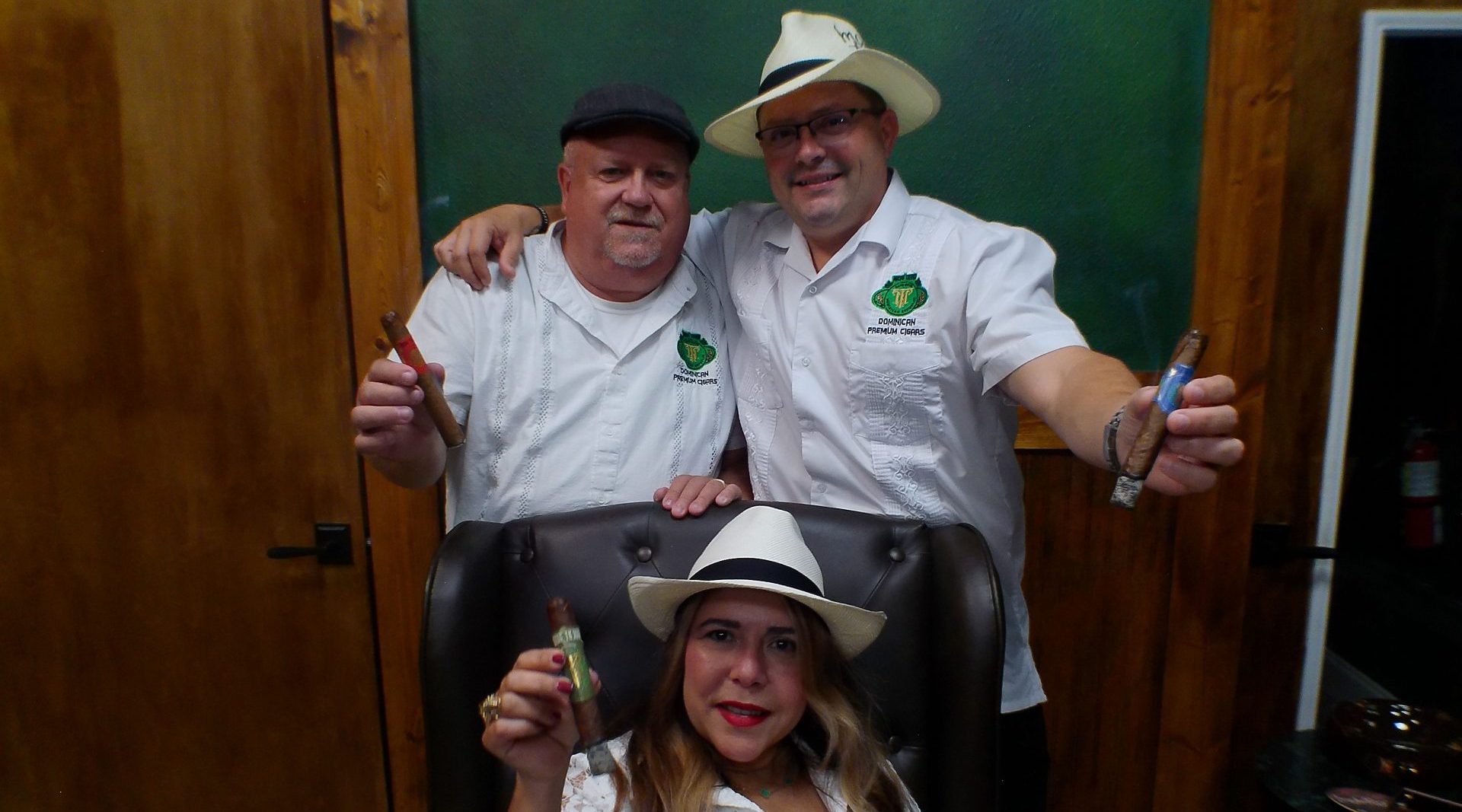
In 2017, Juana de la Cruz, Lisandro de la Cruz and John Deans were planning to partner within their own company. Five years later, heirs to a rich Dominican tobacco tradition, with military and aviation experience, this family decided to take flight and create what today is the very definition of a family business.
Motivated by the market and a clear customer service strategy, Madre Tierra has experienced unmatched growth, with a catalog of seven regular line blends, one special brand, and an impressive array of projects yet to come. This shipment is heading steadily toward its goal: to bring the brand to the highest levels of the international tobacco industry.
Read in the magazine (rotate your device for a better reading experience):
Taxiing
John Deans is a former United States Air Force flight engineer with 22 years of service, retired as a mechanic for Delta Airlines, and now a tobacco enthusiast; but this wasn’t always the case.
Born in Ohio but raised in Florida, John’s only connection to the tobacco industry was chewing tobacco, until he met Juana de la Cruz and Lisandro, siblings from a Dominican family of tobacco growers with more than 50 years of experience.
In 2017, as John and Juana’s relationship was growing, Lisandro would often bring home bundles of cigars from a private production labeled LDC (Lisandro’s initials); soon enough, their house was filled with cigars, though the couple didn’t smoke.
During the Covid-19 lockdown, curiosity –fueled by boredom– led Juana and John to try one of the cigars filling their home, a moment that sparked their passion for premium tobacco.
Almost immediately, John reached out to Lisandro to share their decision to create a brand and introduce his creations to the U.S. market. Soon, they began crafting blends, hiring cigar rollers, and registering the brand in both countries.
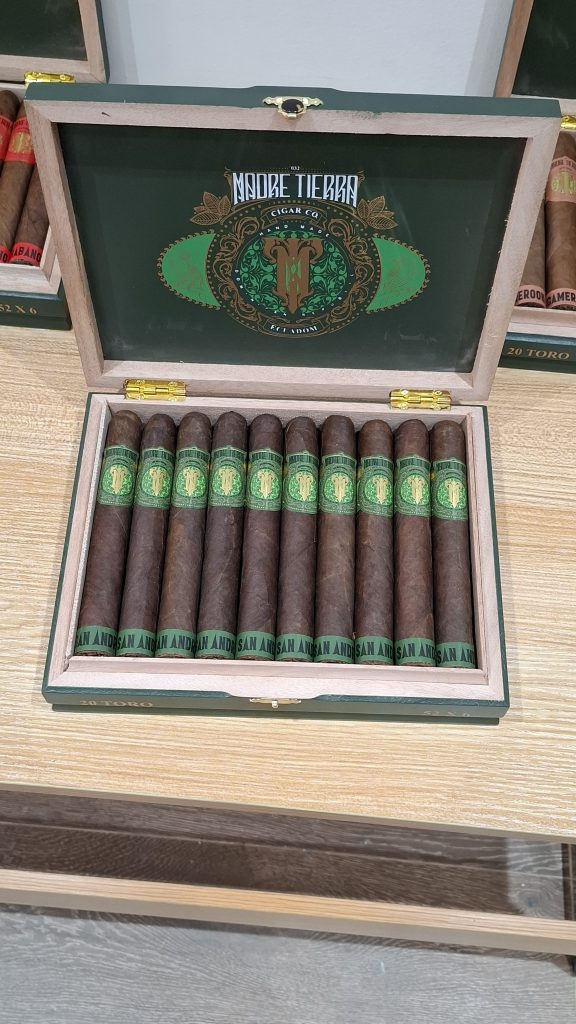
Just two years ago, in 2022, the company launched its inaugural product, a Toro, 6 inches, 52 ring gauge, San Andrés wrapper, which was well-received by the market, marking a prosperous start in the tobacco industry, where family-owned brands hold a special place.
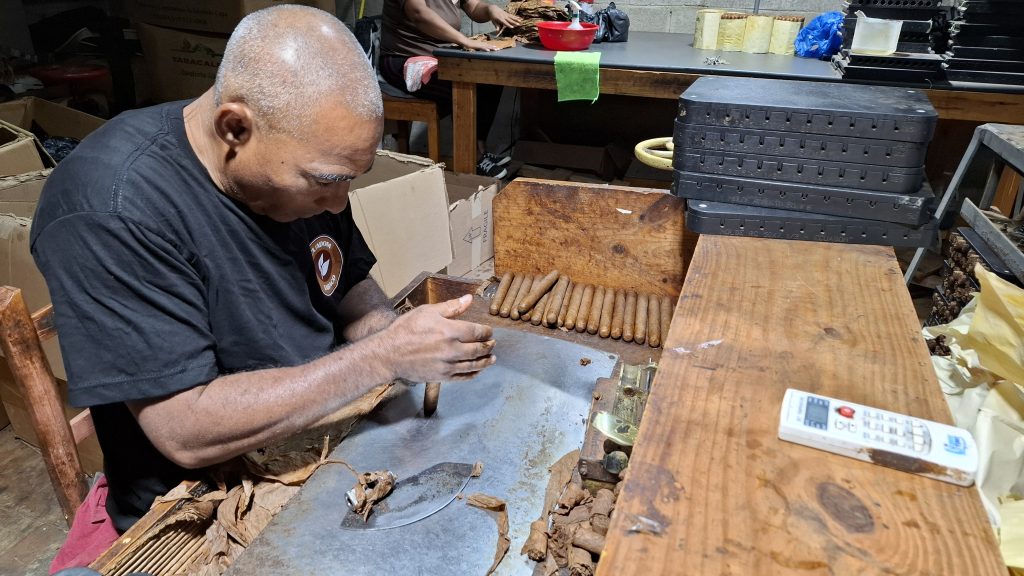
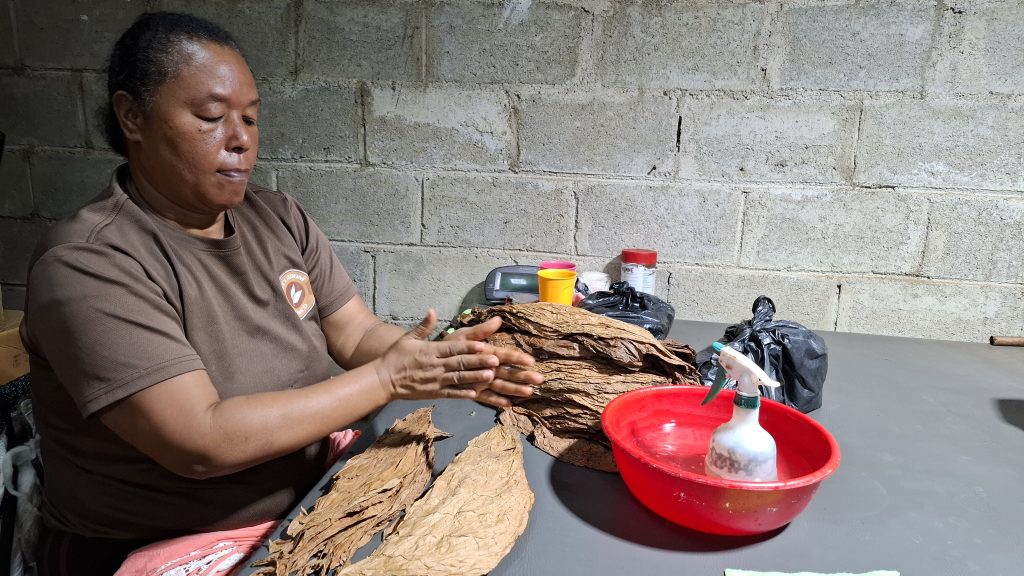
The cigars are made from a proprietary production, using tobacco harvested from the De la Cruz family farms in the Dominican Republic and Ecuador. Each cigar is produced at their own factory in Tamboril, Santiago de los Caballeros, the World Cigar Capital.
In the Deans’ home, they still have a bundle of the initial cigars as a testament to the company’s beginnings and a treasured legacy for future generations. “Lisandro doesn’t know we still have them, I always say that whenever he visits, I lock them up in the safe,” John jokes.
Takeoff
During our video interview, John recalls the first event they attended as a brand: a fundraiser for children undergoing cancer treatment, where attendees came to him with dozens of questions about cigars, a moment for which he was unprepared. “People would come to me with so many questions I didn’t have answers to. I thought a cigar was just a cigar, nothing more. That night, I spent about $300 on calls to the Dominican Republic with Lisandro to get his advice,” he shares.
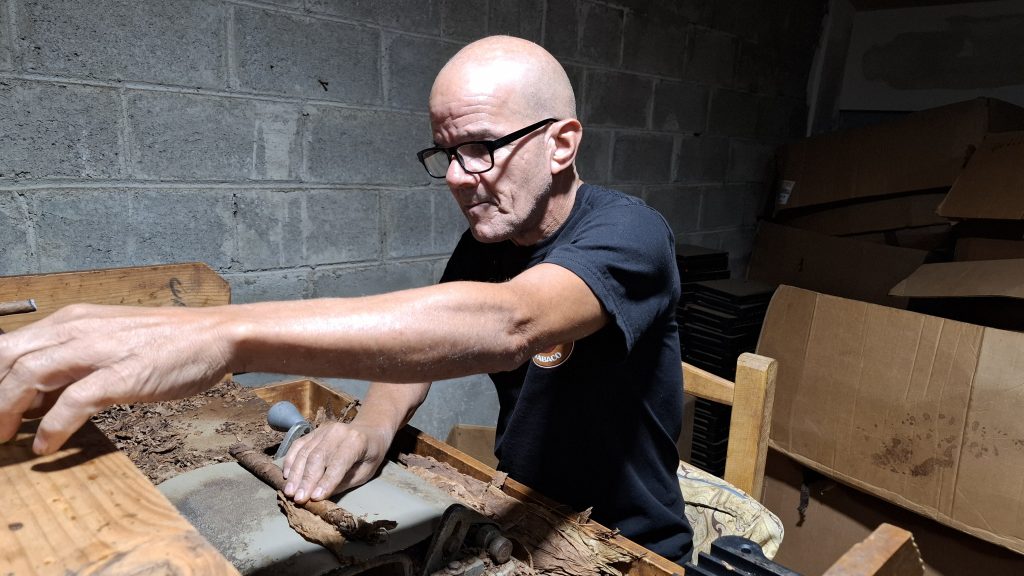
That night, the Madre Tierra San Andrés was a total success, and John’s passion for tobacco was ignited. Rather than being discouraged by his inability to answer customer questions, the experience motivated him to study and learn about tobacco, even traveling to the Dominican Republic to experience the field processes firsthand, learning to strip leaves, roll cigars, harvest, and even place the bands. “I needed to know how things were done to answer the questions,” he adds.
Meanwhile, in the U.S., Juana de la Cruz is a stylist, but her family has been producing tobacco for a long time. She learned to roll perritos, the rustic cigars her family sold in their own store. “We sold up to three thousand pieces. The 12 children of one of my grandmothers knew how to make them and never stopped producing,” she remembers.
Juanna lived in New York for a time before moving to Florida, and during every trip back to Santo Domingo, she would visit the factory to stay close to her tradition. During those visits, the idea to create her own brand emerged, thanks to her brother’s suggestion.
As part of John’s retirement benefits, Juana would travel two to three times a month to her homeland, facilitating coordination with Lisandro to bring the brand to life.
Lisandro de la Cruz is in charge of production, with industry experience dating back to 1982, and he is the creator of all the current blends, except for the Habano, which was created by one of the factory’s master rollers as an idea that surprised them.
According to John, Lisandro is a very particular, precise, organized, and perfectionist person, qualities that contribute to the brand’s and company’s success.
Two years after its launch, Madre Tierra has established itself as a small company within the industry, with the goal of growing and positioning itself internationally, relying primarily on high-quality blends and a unique customer service strategy.
“We are a company of just four people, which makes some processes difficult,” they acknowledge. This situation does not interfere with their desire to attend every event to interact closely with people, without neglecting marketing.
“And here’s where the advantage comes in, because when you call any other company, sometimes you speak with Juan, then Betty, and the next time Susan; but with us, it’s different, you always talk to me, and that makes a difference, the customers love it,” John asserts.
Climbing
Aware that launching a wide range of blends is not recommended, Madre Tierra’s debut in the premium cigar industry received the market’s endorsement, and just two years into existence, the brand’s catalog now includes seven regular line blends, all in a Toro format, 6 inches, 52 ring gauge, with Connecticut, Rosado, Habano, San Andrés, Pennsylvania Broadleaf, Corojo, and Cameroon wrappers, as well as La Fuma Ricardo, a 6-inch, 50 ring gauge short filler cigar with an Habano Ecuador wrapper and Dominican binder, named in honor of Rick Kellerman, a widely recognized podcaster in the industry.
Thus, Madre Tierra offers a cigar for every palate, with blends to satisfy those looking for a strong smoke to those preferring something milder. “Lisandro always experiences tension with each new launch, but fortunately, each blend has been a success, one after another,” they state.
For a brand to grow, identifying weaknesses and turning them into opportunities is essential. In this regard, Madre Tierra has set out to modernize its website madretierracigars.com to make it an efficient sales tool, along with the business deals that Juana and John can close personally.
For these entrepreneurs, the journey into the premium tobacco industry has been quite an adventure, but they are convinced that maintaining this closeness with their customers is what sets them apart, keeps them in demand, and will help them achieve their future goals.
“We recently won a contract among 50 other companies to supply a chain of clubs with 19 locations across the U.S., and this is just the beginning,” they assert.
Cruise
With eight cigars successfully introduced to the market, Madre Tierra will pause on creating new blends without halting their progress within the industry.
According to John, the next step is to produce other sizes, such as the Magnum, 6 inches, 60 ring gauge, a cigar not suitable for everyone, which will only be made in Habano, Broadleaf, and possibly Corojo blends.
This format will be joined by some Torpedos and a Short version of La Fuma Ricardo to meet the needs of clients who prefer a quick smoke, something they can enjoy during breaks, lunch, or before returning to their hotel room.
Destination
For the partners, the journey has been tough, but they remain firm in their roadmap toward manufacturing a million cigars a year, a goal they hope to reach by 2025. “We’re not even close now, but the projections are big, and La Fuma Ricardo will be a key driver of this goal,” they say.
It’s only been two or three weeks since the fruits started to come in consistently, but Madre Tierra is already embarking on its next adventure by hiring more staff to help meet the numbers they’re targeting.
An example of this is the first order of La Fuma Ricardo, a shipment of five thousand cigars that hasn’t even arrived in the U.S. yet, but is already sold out. “That was the success of the samples we distributed, we had to call Lisandro to order another five or ten thousand cigars,” they highlight.
Additionally, John shares that, by next summer, Juana will travel to the Dominican Republic with the sole aim of designing her own cigar. She will work with the blenders and rollers, name it, band it, and do everything necessary to create a personal cigar.
Two or three months later, John will do the same, followed by Jacob. “The goal is to have a personal line to enjoy and gift to friends, nothing more. I want a Lancero, it’s hard to sell in the U.S., but I like it, and it will be for me,” he explains.
A Veteran Owned Business
In addition to being a mechanic for Delta Airlines, John is a U.S. Air Force veteran, having served as a flight engineer for a Lockheed C-141 Starlifter, a cargo plane, with 15 combat missions completed in various countries; while Jacob Senior, a sales collaborator and friend, served as a PJ (Pararescue), a unit specialized in search, rescue, and combat trauma.
The background of both partners gives Madre Tierra a special connection with veteran organizations in the United States, most notably the Concerned Veterans for America (CVA), a foundation that works with former military personnel to ensure they receive adequate income and healthcare after leaving military service.
Every month, the company donates 100 cigars for veterans and sends various shipments to deployed troops around the world. This is their way of addressing social and health issues related to military life and deployment.
“There are many family problems, post-traumatic stress, or health issues due to amputations that veterans face upon returning to civilian life. Smoking a cigar allows you to disconnect from the world for an hour, relax, and not worry about anything else. And that’s how we try to help.”
La Fuma Ricardo
In a simple way, La Fuma Ricardo is a cigar born from the need to offer an affordable, high-quality product capable of competing with tobaccos from Nicaragua and Honduras, which generally have a lower cost than those produced in the Dominican Republic.
But the story of this cigar goes beyond that. It managed to captivate the palates of the Cigar Hacks, an influential podcast with seven years in the premium tobacco industry. According to John, the members of the show have a very particular palate, which is difficult to satisfy.
John recalls taking the cigar to the location where the podcast is recorded, usually in a tobacco shop, sharing it with the hosts, and receiving extremely positive feedback.
“Jokingly, after the show ended, Nurse Rick asked what the cigar would be called, and Juana suggested it would be a good idea to name it in his honor. He didn’t believe it was real, but we did it because he is a very well-known person in the industry, and the fact that he agreed to let us use his name and join us in this venture was very important for our story,” John shares.
La Fuma Ricardo is a short filler cigar that has surprised a market that generally doesn’t trust this type of tobacco due to the weakness of its ash. “But the construction of this cigar is so good that you can achieve about 2 to 2.5 inches of ash, and people can’t believe it,” they say.
Nurse Rick
Rick Kellerman, also known as Nurse Rick, is a 63-year-old certified psychiatric nurse based in northern Boston. He has been a smoker for 30 years and a podcaster for seven, accompanied by a group of enthusiasts known as the Hacks, a term used to describe someone inexperienced or lacking in skill.
The main mission of the Cigar Hacks podcast is to promote local tobacco consumption by encouraging listeners to buy cigars in-person from their local tobacconists, instead of online.
Drawn to Florida’s good weather, Rick and his wife often travel there during the winter, taking the opportunity to visit their daughter, who lives in the city. Naturally, he also visits local cigar shops, one of which is where he met Juana and John.
According to Nurse Rick, the original name for the cigar was very similar to a couple of existing brands, presenting an issue with copyright. “It was a shame it didn’t have a name because it was an excellent cigar, so I jokingly suggested they name it after me, but in Spanish: Ricardo,” he recalls.
While there are slight variations in the versions of the story, one thing remains clear: the cigar’s flavor delights everyone who tries it, and when this quality is combined with Nurse Rick’s influence in the premium tobacco community, the result can only be successful.
“I’m just an average guy, nothing more, so I feel very honored, grateful, and even amused to have this cigar,” he expressed during our phone call.