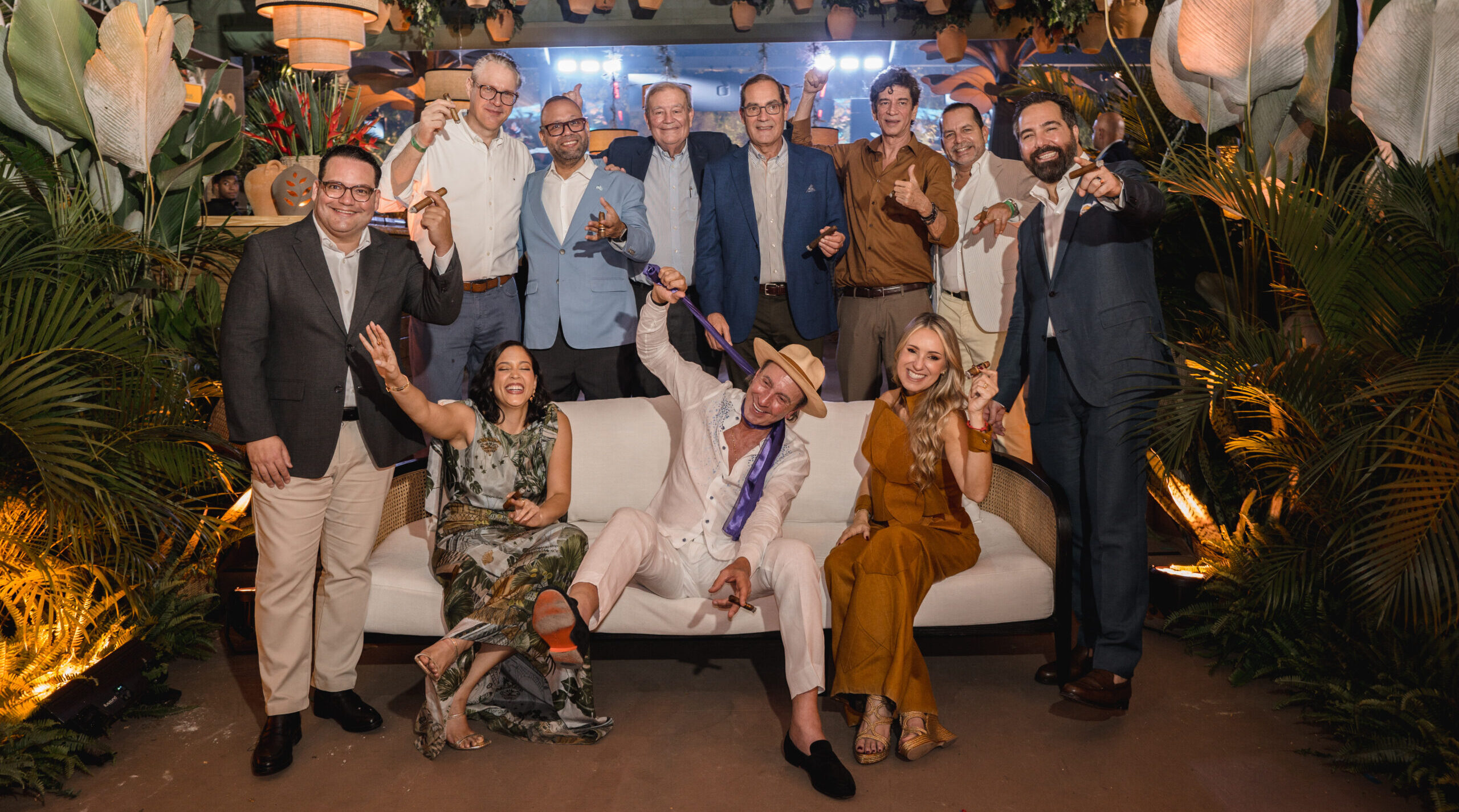
The Procigar Festival is an experience of such high caliber that its members –the owners of the most prominent factories in the Dominican Republic– welcome you like a friend inviting you into their home to eat, drink, and smoke their finest cigars. Yes, that kind of friend.
Since 2008, when its inaugural edition was announced, the goal has remained unchanged: to create an experience that centers on the attendees, providing exceptional hospitality and the warmth of the Dominican people, while offering an in-depth look at where the country’s premium cigars are born and how they are crafted.
Read in the magazine (rotate your device for a better reading experience):
This experience is so spectacular, exclusive, and personalized that it is difficult to forget, especially for first-time attendees. According to the organizers, this was the case for a large portion of the more than 1,000 international participants in this 2026 edition.
In essence, the festival is divided into two parts of the day: field tours and factory lunches by day, and evening gala parties by night: the Warm-up Festival and three main dinners –Welcome, White, and Gala. At each event, guests receive commemorative boxes featuring the finest products from the members of the Association of Dominican Cigar Manufacturers (Procigar): Arnold André, Casa Carrillo, De los Reyes Cigars, General Cigar, La Aurora, La Flor Dominicana, PDR Cigars, Quesada Cigars, Tabacalera Arturo Fuente, Tabacalera de García, Tabadom Holding Inc., and Tabacalera Palma.
These are spectacular celebrations, planned and executed as only the Dominicans can. As one of their slogans says: So premium! Whether served as a set menu or a buffet, the international and Caribbean cuisine is a delight, complemented by an open bar and a remarkable level of organization and spectacle –such as the fireworks at the White Dinner by the Monument to the Heroes of the Restoration, or the grand finale show at the Gala.
An Industry at Its Peak
In the Dominican Republic, tobacco and cigars have been declared Cultural Heritage of the country. Furthermore, this industry generates more than 100,000 direct jobs and is the leading employer in the free trade zones, with over 43,000 positions, most of which are held by women. In 2025, exports exceeded $1.3 billion, and the country is currently the second-largest supplier of cigars to the United States.
These figures are due, in part, to the enormous support provided by President Luis Abinader, whose mandate saw the Cultural Heritage declaration and who attended the Welcome Dinner. During the Gala Dinner, Litto Gómez presented an award to the former Minister of Industry, Commerce, and MSMEs, Víctor Ito Bisonó, who supported and maintained a commitment to the tobacco sector, which was strengthened “thanks to his leadership and collaborative spirit.”
“Never before have cigars been of such high quality as they are today,” Litto Gómez stated during his speech at the Gala –the event that marks the festival’s closing and hosts the traditional charity auction, which reached a historic record of $618,000 this year.
These funds will support institutions such as the Voluntariado Jesús con los Niños, the Hospicio San Vicente de Paúl, and other health and community development organizations, as well as the opening of the Museum of the Monument to the Heroes of the Restoration in Santiago de los Caballeros.
“The cigars we so proudly craft in the Dominican Republic bring special moments to people all over the world. And those who smoke cigars are the best people in the world: we are good people, we are relaxed, we love to enjoy life…”
“Without You, We Are Nothing”: AJ
The highest bid at the auction came from Nicaraguan producer Abdel Fernández of AJ Fernández Cigars, who paid $150,000 for the Arturo Fuente humidor –a moment that undoubtedly defined the night(*) and served as the perfect conclusion to a festival that is arguably the most important of its kind in the world today.
“When I saw the video of the workers’ homes and the social responsibility that everyone here upholds, it made me so proud that it left me speechless, and I want to be a part of that. For me, it is a point of pride because I am Caribbean; I am Cuban, I am Dominican, and I am Nicaraguan,” he said upon taking the stage at Litto’s invitation.
Abdel, one of Nicaragua’s leading producers, congratulated the Procigar members and thanked them for their century-long histories, noting that were it not for them, he would not be in the premium cigar business. “They forced us to compete and taught us to work better every single day. Moreover, they have welcomed me my entire life, even back when I had nothing.”
Finally, he stated that without the aficionados, the producers would not exist: “We wouldn’t be who we are today,” he said, extending a special thanks to them. “In the Dominican Republic, as well as in Nicaragua, Honduras, and everywhere in the world where cigars are made, we put the best of our souls into doing things better. A cigar is not a vice; it is a pleasure, and we are here to satisfy all pleasures.”
(*) A recording of this moment is available on Humo Latino’s social media channels.
From the Field to the Factory
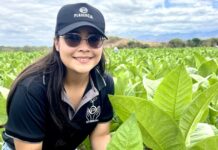
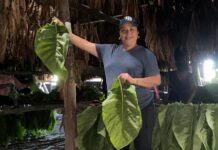
One of the most incredible experiences a premium cigar enthusiast can have is visiting the greenhouses and fields where tobacco grows, carpeting the landscape in green; walking inside a curing barn, where tobacco sways with the wind; or entering the fermentation rooms and aging warehouses –those “treasure vaults” that smell so divine.
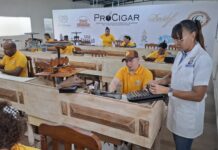
But touring a cigar factory is equally impactful: sitting with the rollers, talking with the staff, witnessing the process live, and confirming that more than 150 hands touch the product from seed to final packaging. It is an experience that helps you understand, but above all, to value this passion even more.
With their unique personalities, tastes, and individual stories, each member of Procigar offers experiences that can be extravagant, traditional, or innovative, all following the same dynamic: field tours to learn about pre-industrial processes, followed by factory visits where meals and fine cigars are shared.
Those attending the full festival can choose from the available field and factory tours; as you might imagine, the Arturo Fuente visit is among the first to sell out.
This year, we attended the tours of La Flor Dominicana, Tabacalera Palma (La Galera Cigars), and La Aurora.
LFD Will Always Belong to the Gómez Family
The tour with Litto Gómez, owner of La Flor Dominicana, was deep and extravagant. This is a man who knows how to build memorable moments –whether he’s explaining every process from the seedbeds to the aging room, or wielding a shovel at his factory’s barbecue while taking a swig directly from the bottle alongside the chef in the euphoria of the fire ritual.
Reading the company’s history will never be the same as hearing him tell it personally as you walk and smoke by his side while he shows you the facilities. Hearing that La Flor Dominicana didn’t start in a carpeted boardroom, but by hauling bales of tobacco on his shoulders into an old Toyota minivan, is priceless.
It was 1994 when Litto Gómez, alongside his wife Inés, founded the company. “We had no chance of success,” he confesses 32 years later, with the serenity of someone who has defeated fate, while contemplating the bales of tobacco aging in the warehouse.
His beginnings were marked by a lack of capital and a dependence on the open market, where tobacco was a volatile and faceless currency. He also learned that manufacturing wasn’t enough; he had to control the soul of the product: the land.
In 1997, Litto made the decision that would transform the small La Flor Dominicana factory into a tobacco powerhouse. He bought a piece of land in La Canela, despite the fact that, at the time, “he couldn’t even keep a plant alive at home.” Today, that farm is the company’s “rock.” “We couldn’t make good cigars without owning a farm. This land is what gives our cigars their personality.”
It is a declaration of principles: if a smoker doesn’t like an LFD, Litto doesn’t blame the supplier; he assumes total responsibility because the tobacco is his from start to finish. For the La Flor Dominicana smoker, there is an unbreakable promise: the blend does not change. He understands that those who smoke his brand aren’t just looking for nicotine and flavor, but a special moment of relaxation and reflection. To ruin that moment with an inconsistent blend would be a lack of respect.
He elevates the act of smoking to a philosophy of global peace: “If everyone in the world smoked cigars, there would be no wars,” because the cigar smoker is, by definition, a happy person who knows how to stop time to celebrate or simply meditate on their day.
One of the most moving moments of the tour happened in the fermentation area. Standing on a chair so everyone could hear him, he confessed that in a world dominated by corporations that buy and sell brands like financial assets, he has received multi-million dollar offers for his company. His response was always the same: “This company is for my children, for my family.”
He takes pride in being the first generation to enter an industry dominated by dynasties like the Padróns or the Fuentes. His greatest success, he stated, isn’t his award-winning vitolas, but ensuring that his children –Tony, Litto, and Valentina– are the second generation to inherit not just a business, but the pride of the Gómez family.
“My wife and I are the first generation to enter an industry with these multi-generational companies, like the Padróns and the Fuentes, and I’ve always admired that. I wanted my children to be the second generation because I was a newcomer, someone who just entered the business, and now our children will be a second generation. This is why we work: many years will pass, decades, and [the company] will still be in the Gómez family.”
Litto is not merely a cigar manufacturer; he is a guardian of patience in a fast-paced world. From the Toyota minivan to the top of the tobacco world, his path has been guided by faith and hard work. In the end, it all comes down to an act of love and art: “We do what we do with our hearts, and we will always do it the same way.”
We are talking about a Spaniard raised in Uruguay who found his destiny in the Dominican Republic. Every morning, he stands at the door of his tobacco warehouse, looking at the aged inventory and whispering a defiant “fuck you” to those who bet on his failure. Because in the world of La Flor Dominicana, time isn’t money; it’s the ingredient that makes life worth smoking.
Tabacalera Palma: The Next Generation
The tour of Tabacalera Palma and its factory, La Galera, was perhaps the most authentic Dominican experience we had. To start, they welcome you in the field with a cold coconut and a thick, “hangover-curing” sancocho, paired with an ice-cold Presidente beer –just in case you arrived feeling a bit under the weather from the night before (and yes, this is at ten in the morning, because in this beautiful country, no one will judge you for having a beer in your hand at that hour).
Unlike other tours, this one was led by the next generation of the Blanco family: José Manuel, a descendant of the first José Manuel Blanco Lozada, a Spanish migrant who arrived in the Dominican Republic in 1880 and passed down his knowledge of coffee, cocoa, and tobacco cultivation to his son, José Arnaldo Blanco I.
José grew up in and around tobacco, gradually taking the reins of the company. His knowledge is vast and evident throughout the tour; despite his youth, he perfectly masters every process, providing data, recalling statistics, and explaining with precision and depth. He exudes passion and love for what he does.
During the presentation of the exquisite commemorative humidor for the Chinese Year of the Horse, displayed on a horseshoe-shaped table, he spoke to us about the company’s history. The setting was the galera –the rolling hall where the cigars are crafted– amidst the rhythmic sound of the staff bunching and wrapping.
“The company’s official registration was in 1936, although my grandfather started in the late 1920s, in what was a completely different market and world. He produced more rustic-style cigars (pachuchés or perritos) because, at that time, there was no demand for premium cigars; everyone smoked pipes or chewed tobacco. With immigration and the country’s urbanization during the dictatorship from 1930 to 1961, people were encouraged to move to the cities.
“As the blend of urbanization and the Industrial Revolution positioned the cigarette as a trend and a fashion statement, the traditional cigar market was shaken. Local consumption began to drop because those arriving in the city were considered lower class if seen with a cigar. The ‘new’ thing, representing the Industrial Revolution in the Tobacco World, was cigarettes.
“That was when the company began a slow but inexorable decline. My father was a young man of 18 or 19 when he realized that if there wasn’t a change soon, the business would disappear. That is when he focused on the international premium cigar market, back in the 1980s. He started on the second floor of my grandfather’s building, bit by bit, and in the 90s, he built the first warehouse.
“After years of work, we have built more warehouses and expanded the factory, and over the last decade, we have worked on our own brand. Although the company has 90 years of history, we were primarily a contract manufacturer, making cigars for other companies and partnering with other brands. But ten years ago, we decided to take the leap.
“My father basically built everything. He gave me the foundation and put me in a position where I wanted to create my own brand. Now, we are taking the final step toward full vertical integration: from the seed to the shelf.”
La Galera recently celebrated ten years on the market. It reaches more than 90 countries, and year after year, it reduces its third-party production to focus on its own brand. In fact, they doubled their operation and had to move to a new building with more capacity and better working conditions. “At this point, not counting administration and agricultural workers, we have 520 plant employees, which means 520 families.”
La Aurora: Passion for Cigars and Respect for Tradition
La Aurora, which has been crafting cigars in the Dominican Republic for 123 years, is a historical and cultural institution in both the national and international tobacco worlds. This year, it offered an educational experience that brought visitors as close as possible to a professional blending seminar. On Humo Latino’s social media, for instance, one can find Master Blender Manuel Inoa’s explanation of what a Grado Puro (Pure Grade) represents.
At this company, everything runs like a Swiss watch. At the start of the tour, as with all of them, the staff welcomed us –in this case, led by CEO Guillermo León; his daughters, Michelle and Daniela; La Aurora SA CEO Ed McKenna; and Marketing and Sales Director Iturbides Zaldívar.
“Procigar represents the unity, excellence, collaboration, and heritage that define the cigar industry of the Dominican Republic,” stated Don Guillermo, who expressed his pride in being part of this legacy and contributing to projecting his country as a global leader in premium cigars.
“At La Aurora, we understand that a great cigar is the result of a long and disciplined process that begins in the fields and continues through curing, fermentation, aging, blending, and handcrafted production. Each of these steps requires knowledge, precision, and respect for the land and the tobacco. This philosophy is reflected in our journey, From Seed to Smoke.”
He spoke about the incredible opportunity Procigar Festival attendees have to explore every stage of the cigar-making process and gain a deeper understanding of the labor behind every single piece.
He highlighted the celebration of the company’s 123rd anniversary since its founding in 1903: “A journey of perseverance, craftsmanship, and a deep passion for cigars. As a member of the third generation of the family, I am immensely proud to be training the fourth generation of leaders with Michelle and Daniela, who will continue La Aurora’s path and legacy.”
For his part, Iturbides noted that since 1903, they have been dedicated to crafting “dream cigars” with passion, respect for tradition, and a constant drive to improve. “While our roots are deeply traditional, today we define ourselves by how we combine legacy with innovation. We open our doors to all of you because we believe every cigar should tell a story.”
He commented that through the tour provided, attendees could experience the care, precision, and dedication behind every preparation and step, turning every small detail into a connection with their history and their people. “Our people are the foundation of everything at La Aurora. In the immersive experience you will live, From Seed to Smoke, you will observe every stage of the process and put all your senses to work.”
Under the direction of Master Blender Manuel Inoa, this journey began in a curing barn, where he explained and gave us four grados puros (single-origin leaves) from different countries to taste. This allowed us to calculate percentages and create a personalized blend for the cigar each of us would roll.
Thus, La Aurora transformed the attendees from spectators into creators. Upon reaching the factory, we were taken to an area to convert our calculated percentages into the actual leaves needed to assemble our filler (tripa).
Once you had your materials, you went to the galera and sat next to a roller (torcedor or torcedora), who, in a matter of minutes, taught you how to assemble the bunch according to your blend’s proportions and apply the binder (capote) before taking it to the press. While the cigars were pressing, we moved to a lounge to sample their upcoming release for the Premium Cigar Association (PCA) trade show.
After tasting this marvelous cigar, with our palates recharged by the delightful 110th Anniversary Rum, we returned to the galera to wrap (encapar) our cigars. From there, we went to the packaging area, where our stations were ready for us to apply the bands, slide on the cellophane, and pack a five-count box of robustos featuring the legend: Cigars Made by… followed by your own name.
Indisputably, this La Aurora experience was among the most popular this year. When you eventually open that box and light the cigar, you will be able to say: “I made this cigar I am smoking,” perhaps getting –even if just slightly– a sense of what producers feel when they create a new blend.
Suscribe to our Newsletter