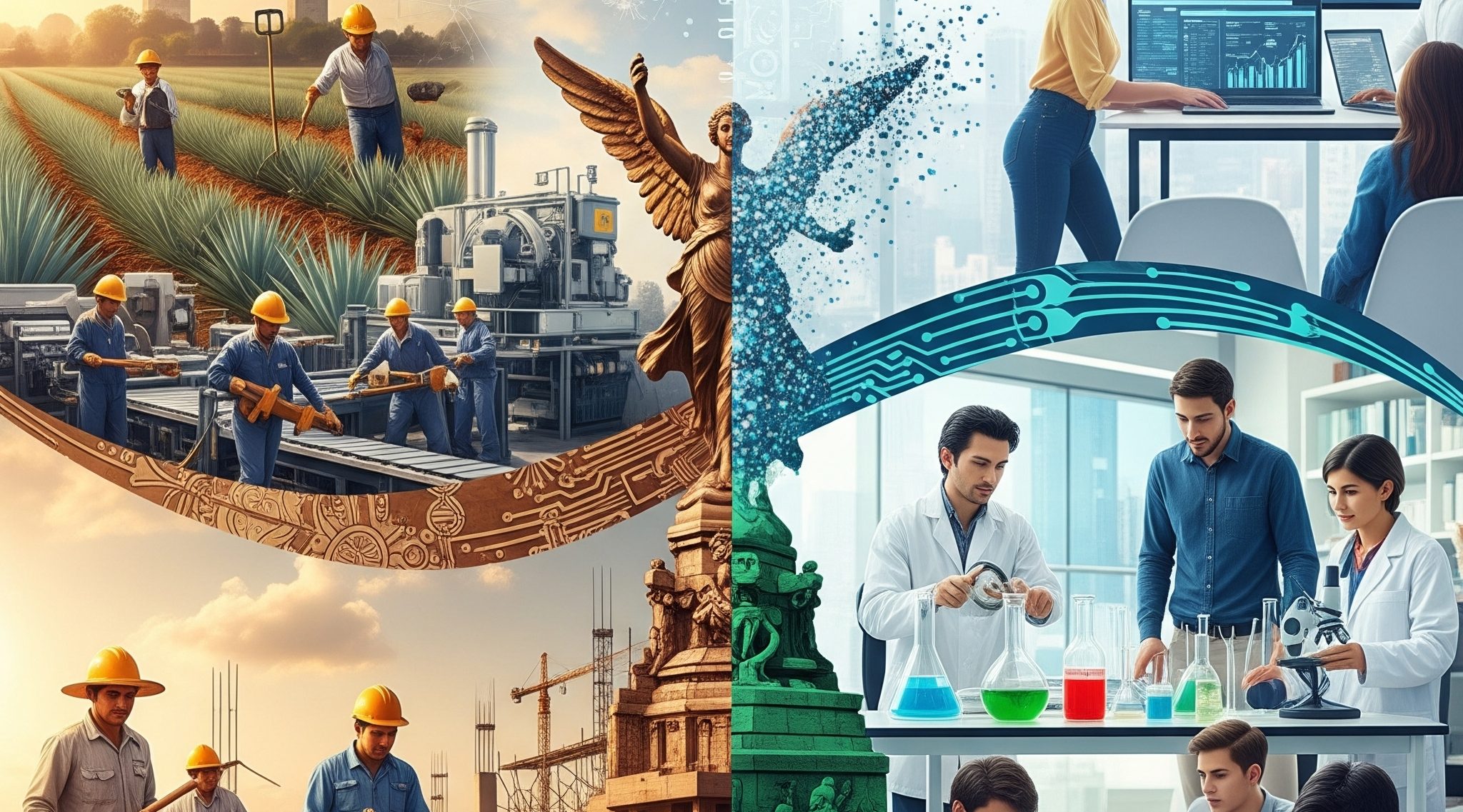
For decades, countries like India have quietly built a powerful legacy by exporting not just goods or services, but talent. Their most influential product isn’t food or textiles, but their educated citizens: engineers, doctors, scientists, and technologists who are pillars of innovation worldwide, from Silicon Valley to research centers.
Behind this success is a value system that places enormous importance on education, intellectual discipline, and social mobility through mental labor.
Read in the magazine (rotate your device for a better reading experience):
Francisco Arias
From Labor Exporter to Knowledge Powerhouse
As Mexicans, we must ask ourselves: why haven’t we done the same? Instead of exporting minds, we have exported hands and backs –workers willing to perform the hardest jobs in the most difficult conditions, often without access to education or protection.
This is not a criticism of the migrant, but an indictment of the internal and external systems that have failed them. We have become dependent on remittances while our most vulnerable people abandon their homes, chasing dreams that often cost them their identity, dignity, and sometimes, their lives.
Many of these workers entrust their children to the American system, hoping they will be accepted and have a better life. But the reality is more complicated. Second-generation Mexicans and Latinos grow up trapped between two worlds, never fully accepted socially in the U.S. and disconnected from their roots. In their desire to assimilate, many become ashamed of their heritage or turn into the harshest critics of their own families.
Countries like India teach their children that success comes not from physical work, but from mastering mathematics, science, or engineering –from mental labor. While we glorify the sweat and sacrifice of those who go north to pick fruit and build walls, they do it with study and strategy, sending their people to write algorithms and build companies.
Today, witnessing the increasingly hostile treatment of migrants by American society, we must ask ourselves if this pain could also be an opportunity. Perhaps we are not just witnessing a crisis, but a turning point that could be the beginning of the end of the American Dream we idealized as a promised land. It may be Mexico’s chance to reinvent itself.
What if, instead of exporting labor, we began to export knowledge? What if we stopped the brain drain and built an ecosystem that kept talent at home, rewarding study, innovation, and entrepreneurship? What if we invested in our children with the same urgency that walls are built to keep them out?
It may be a radical vision, but it’s not an impossible one. We only have to remember how Japan, after World War II, rebuilt itself from the ruins to rise as one of the most disciplined, technologically advanced, and culturally proud nations in the world. Mexico can do the same. We have the history, the creativity, the spirit, and –most importantly– the urgency.
If we act now, we might just witness the start of that transformation, which could take us two or three decades. For many of us, that might be the time we have left. Let’s make it count.