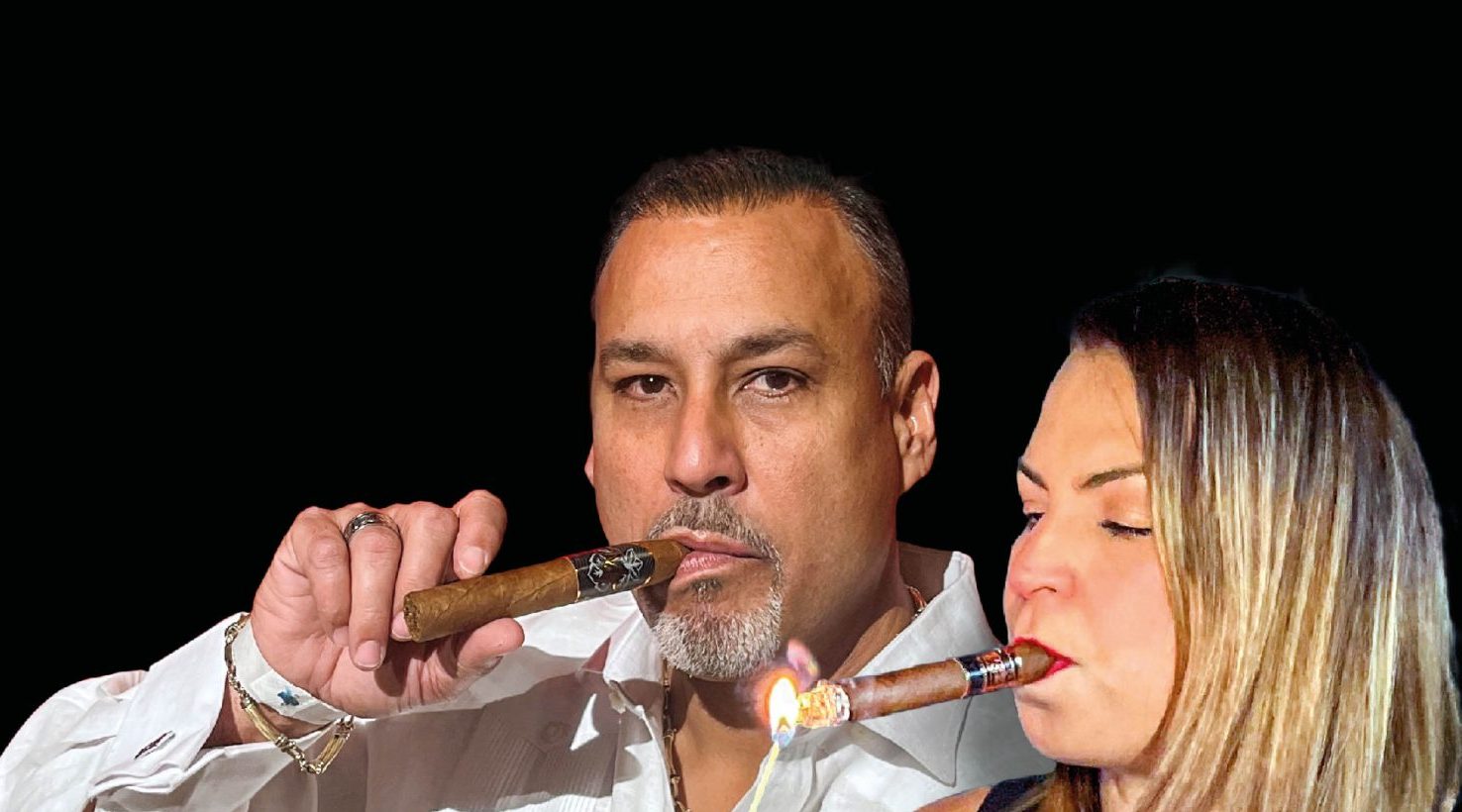
From their home in the Dominican Republic, Luis Márquez and Vivian Torres have set out on a mission: to contribute to the revival of the tobacco industry and culture in Puerto Rico, the land where they were born. Through Tabaquera Márquez Torres and the new products under the Márquez Torres Cigars brand, they’ve fully immersed themselves in a sector that brings together farming, pre-industry processes, and cigar manufacturing.
Read in the magazine (rotate your device for a better reading experience):
He is a man driven by passion; she is a strong, empowered woman. Together, they lead a family that has stood out in various business ventures, all of which reflect their personal passions. One example is their success in cockfighting –where they even won a world championship– and now tobacco, which they approached from the ground up: starting with the cultivation and trade of processed leaves and closing the loop by launching their own cigar brand.
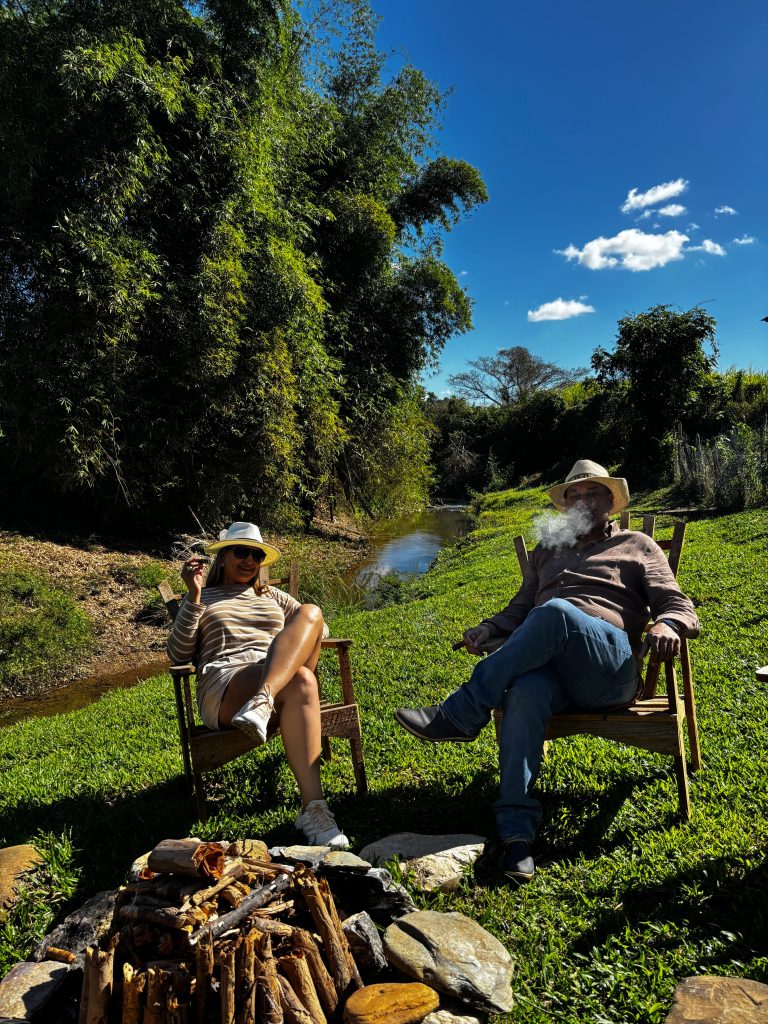
But it’s not all about money. While each business does generate income that supports families in both Puerto Rico and the Dominican Republic, what truly drives them is a desire to revive a once-vibrant tobacco culture on the Island of Enchantment and to promote connection and community. Around a cigar, people get to know each other and share meaningful time.

Luis Márquez is known as Pito Márquez, a nickname that comes from the long whistles (pitos) his friends used to compare him to as a skinny kid growing up in San Juan. Years later, he and his wife Vivi launched a door and window manufacturing business –at a time when that industry didn’t even exist in Puerto Rico. Their success, as always “thanks to God,” was the result of hard work and countless sleepless nights.
Nearly three decades ago, they expanded their ventures into the Dominican Republic, establishing businesses in Santo Domingo and La Romana. But it was their passion for roosters that drew them to Santiago, where they now live –and where they fell in love with tobacco.
It was Luis’ rooster-breeding friendships that led him into the Tobacco World. He didn’t even smoke cigarettes before. But when the conversation at gatherings shifted and cigars came out, all he could do was listen. So he started trying cigars, slowly developing a real appreciation that led him to study online and earn a certification from the Cigar Academy. He’s now enrolled in the Habanosommelier course.
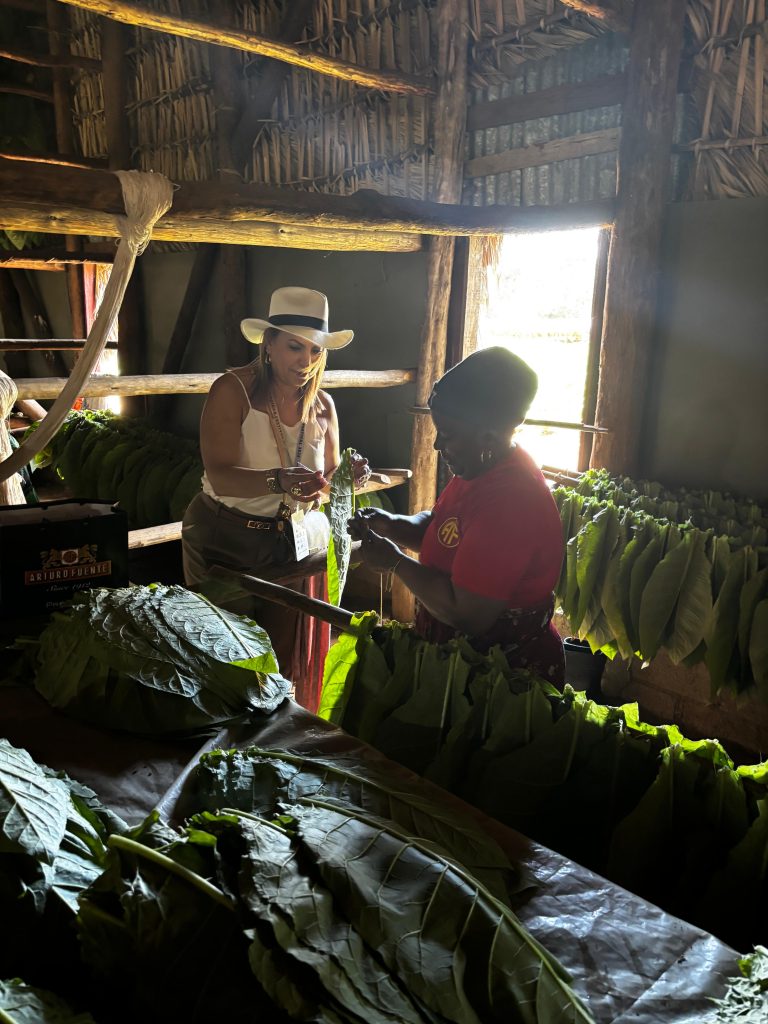
Nearly four years ago, he stepped into tobacco farming. He used to talk to growers who lamented how buyers wouldn’t pay fair prices for their leaves –and before he knew it, he was involved. “I started financing farmers who were abandoned financially, reselling their tobacco or keeping some for myself and sharing it with friends to split the cost.”
He began learning about varietals like Corojo and Olor Dominicano, and discovered that Olor from Navarrete isn’t the same as Olor from Villa González or Tamboril –or Yamasá, for that matter. So he went back to “school” in a sense, and life brought him full circle to his roots. He planted his own seeds because he liked a particular type of leaf and wanted to grow it his own way. Now, in addition to financing some operations in El Cibao, he also cultivates roughly 47 acres in San Juan de la Maguana, in the country’s south, as a member of a tobacco growers association.
He grows T-13, a variety developed by the Dominican Republic’s Tobacco Institute (Intabaco, in its Spanish acronym), as well as Criollo 98 and Olor Dominicano. For the upcoming harvest in October, he plans to cover some of the growing plots to test wrapper leaves using a Habano variety. He’s also considering planting “a few” additional plots near Tamboril.
The tobacco is processed at their ranch in Santiago, where they also raise their roosters. There, they handle fermentation, destemming, sorting, and baling. In fact, an Aging Room will soon be ready for storing tobacco bales “under the right conditions and with the right equipment. It’s about doing things properly, because with today’s high demand, tobacco isn’t being given the time it needs to become true premium product.”
It’s hard to find tobacco aged for two, three, or four years. “But that’s exactly what I want to do,” Luis says. “And I want to document it. I mean, I want to be able to prove that a bale was sealed on this date and opened on that date… after the proper amount of time.”
From his perspective, “When you first start smoking, you chase after bands and brands and take selfies with certain cigars. But once you’re deep into this world, what you really want is to create your own brand,” says Luis. So he sought out people with real knowledge –and found great human beings. He began by supplying a cigar maker with his raw materials and starting small-scale production in the artisan’s workshop. Today, he works with another artisan in a shared factory, including some of his own tobacco.
Together, they developed three blends, which Luis explains in his own way: “Blending tobacco and having it succeed is like writing songs. You might write the best song ever and it never hits, or you might write a terrible one and it goes viral… We’re on this adventure with three cigars that I think are great, and now we need to give them exposure –get people to try them and share their thoughts.”
Though he personally enjoys strong cigars, they developed blends with broader appeal. The first is a 5.5-inch, 54 -ring gauge cigar with a Mexican San Andrés wrapper. “A really solid medium-bodied stick called Pito Márquez. That’s my nickname, and since the cigar didn’t have a name, we started handing it out to friends and loved ones –who ended up baptizing it with that name.”
Next came a 6-inch, 56-ring gauge Toro with an Ecuadorian Habano 2000 wrapper and Corojo binder, named Don Márquez in honor of Luis’s father –a serious, strong man he describes as “fantastic.” Then there’s a 7-inch, 50-ring gauge Churchill, also with an Ecuadorian Habano 2000 wrapper but a San Vicente binder. Aside from the wrappers, both blends are essentially Dominican.
“The Churchill has a secondary band labeled ‘Limited Edition’ because it includes tobacco aged for two years with documented provenance –and we’ll never be able to get those same leaves from the same sector again. Right now, we’re also aging a new cigar that’s just wild… Just the filler alone uses six different varieties.”
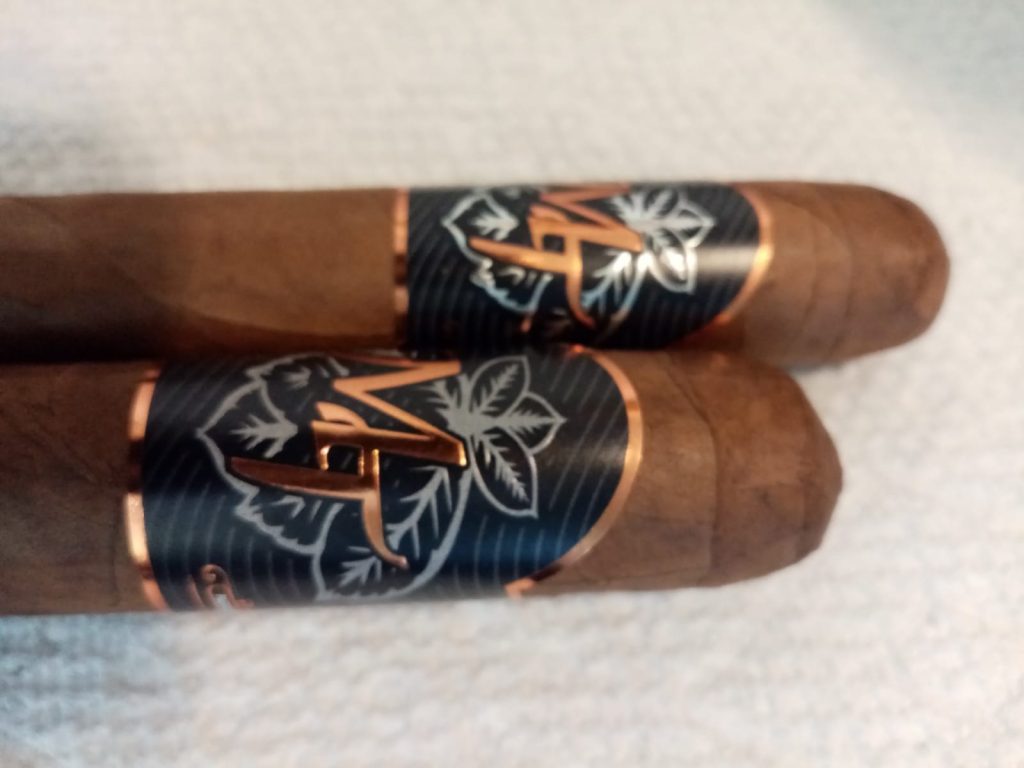
As for presentation, the main band features a matte black background with the initials “MT” in old gold, with fine details and a subtle grey illustration of a tobacco bundle in the background. The band closes with a circle containing the Puerto Rican flag. “I had to include it,” says Luis, “even though it’s made in the Dominican Republic.”
In an interview held during the Premium Cigar Association (PCA) trade show in New Orleans, the couple shared that their Márquez Torres business plans are progressing in Puerto Rico, which along with the United States, is their primary market.
Licensed to import and export tobacco in the U.S., they will soon be opening several cigar lounges and a distribution center simultaneously. They already have a presence in airports and plan to install large and mid-sized humidor displays –stocked with various brands, including their own– in shops, restaurants, and hotels.
Luis recalls that in the 1950s, Puerto Rico was the fifth-largest tobacco exporter in the world. Today, it doesn’t even register. This isn’t to take anything away from the Dominican Republic, Cuba, Nicaragua, or Honduras: “Before the embargo, Cuba supplied many, but when a plague hit their crops, José Padrón said in an interview that Puerto Rico was the only country that could deliver the quality he needed. Why not now?” That realization opened Luis’s eyes to the potential of the cigar and farming market.
He plans to wait until the new Puerto Rican government settles in before seeking ways to support local growers and make them competitive with other countries. “Minimum wage is $1,600 a month over there, and that would be impossible to pay. But we could start manufacturing –bring my tobacco over to process it. We’ll eventually establish a factory there, but without touching the one in the Dominican Republic… Though honestly, what I’d love most is to plant.”
For now, Luis and Vivian are focused on promoting their products and getting people to try them. This year, they’ve attended the Procigar Festival in the Dominican Republic and the Festival del Habano in Cuba as guests. PCA was their first appearance at a U.S. trade show. “We came to learn how it works, but next year we’ll be exhibiting –just like we’ll be doing this month at the Dominican Cigar Expo.”
They believe they need more exposure. “It’s not about baby steps… I’m an ambitious person, in the best sense,” says Luis. “Not to hoard, but because I like doing things right –and big. We’re still newcomers in the Cigar World, but we’ve taken it very seriously, with real commitment, and everything’s going well.”

Vivian says Luis was born with a knack for business. “He’s someone who never goes unnoticed –because he’s fully dedicated and succeeds at whatever he does.” She notes that entering this industry takes funding, “and he thanks God that we’ve had the resources to do it. We still have a lot to learn, but we want to lend a hand and help as many people as we can –that’s what matters.”
Luis says that she’s not just his wife –she’s an angel who guides and supports him. “If I wanted to open a bike shop tomorrow, she’d dive in and ride one herself. These days she’s really into the fields –visiting farmers, bringing them coffee and water… and I say she spoils them too much,” he laughs.
They agree they truly complement each other. While she provides structure and focuses on the big picture, he’s more of a risk-taker –and that balance is essential for sound decisions. Their two sons and daughter are also at the heart of everything they do. “We always include them. If they say no, then it’s a no –because it’s important that we’re all on the same page.”
They also have two young grandchildren, whom Luis pictures riding horses around the ranch someday. What they hope to leave behind is a legacy their family will carry forward: “That feeling of knowing mom and dad were here and left a trail –and that following in their footsteps was something beautiful.”
Between the Dominican Republic and Puerto Rico, they don’t favor one over the other. “Both are our first choice. We’re split down the middle –‘miti miti’– because of family, friends, and business.” So the dream of reviving the Tobacco Culture in one country is perfectly complemented by the other, where seeing women smoking cigars is entirely normal –something they hope people will better understand and embrace, given the vital role women play today.
“When our kids sit down with us to enjoy a cigar, put their phones away, and we share a little coffee or a glass of whisky… that helps us connect. That’s the kind of moment we want to support –where you can sit around a table, light up, and spend some real quality time together.”