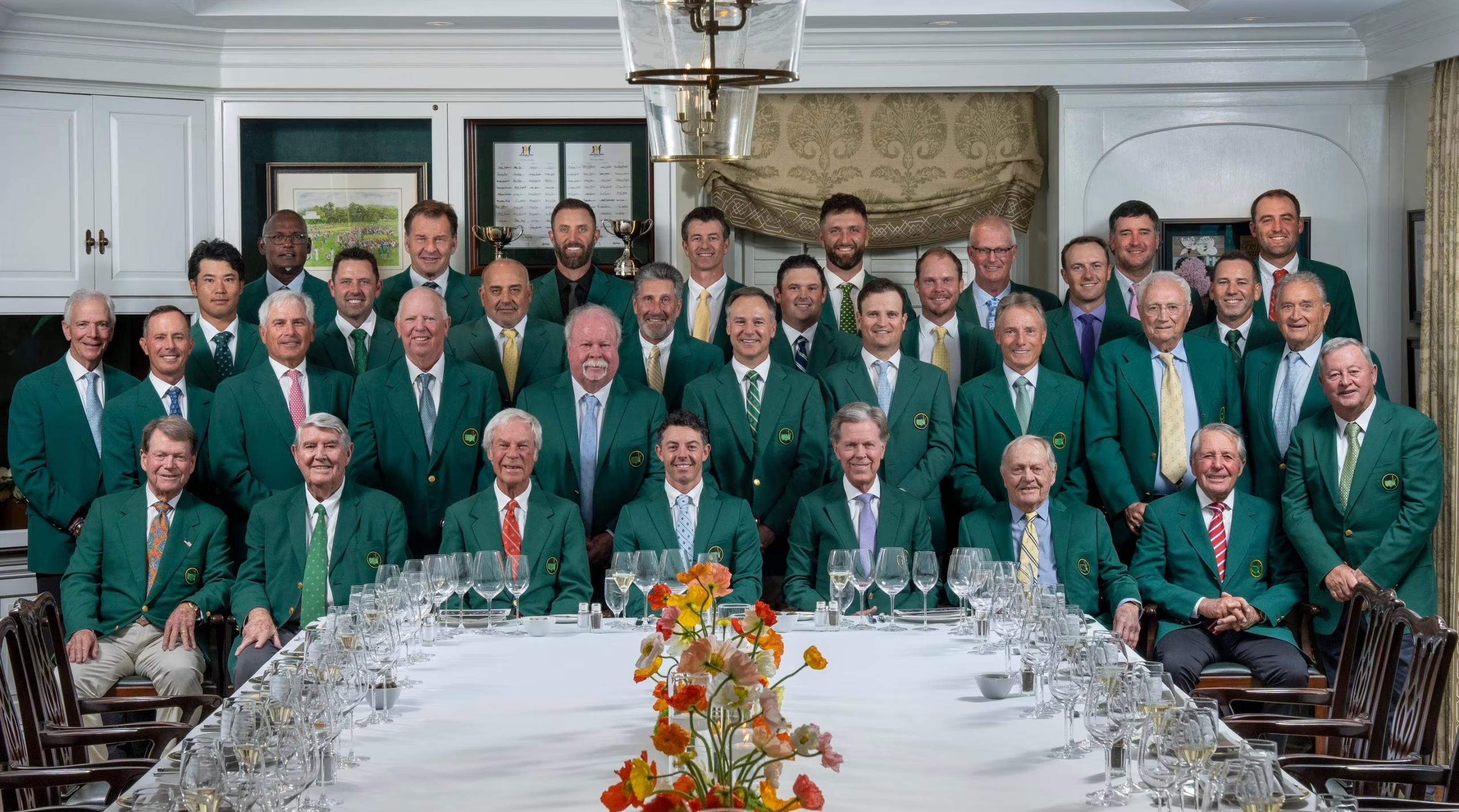
From Tuesday night’s Champions Dinner hosted by Rory McIlroy –winner for the second consecutive year– to the discreet presence of public figures on the course, the Augusta Masters reminds its guests that tradition stands above celebrity: “Luxury is present, but it is not the point. Here, even prestige must behave itself.”
Cigar Sommelier
A year ago, I wrote about this golf tournament from the perspective of a weekend of excellence, friendship, and great cigars, focusing on the camaraderie that naturally comes alive. But now, upon returning, I was able to pay attention to something less obvious: the social order, which makes Augusta feel distinct from almost any other major sporting event.
This is part of its enduring appeal, as every April it gathers some of the most recognized athletes, artists, and public figures in the world. However, once inside, the venue itself takes control: the course, the customs, and the atmosphere remain at the center.
As I walked the grounds with my friend Pedro de los Santos and his son Juan Pablo, it became clear that we were witnessing more than just high-level golf. We also observed subtle dynamics that seem entirely unique.
Former quarterbacks Peyton and Eli Manning, alongside Heisman Trophy winner Fernando Mendoza, enjoyed the tournament together, while other high-profile personalities moved discreetly through the venue. Yet, even with all that recognition in the air, no one seemed to eclipse the place itself.
The same feeling surrounds the Champions Dinner, the private ritual that remains one of the most symbolically charged moments of Masters week. First established in 1952, when Ben Hogan gathered past champions for a private dinner, it has become one of the tournament’s most enduring traditions. Each defending champion takes their turn as host, selecting the menu and welcoming those who form one of the most exclusive circles in sports.
Rory McIlroy’s version of this gathering seemed to strike the right balance. The menu was elegant, personal, and luxurious, without falling into excess. The selection offered consisted of peach and ricotta flatbread, rock shrimp tempura, bacon-wrapped dates, grilled mini elk burgers, and yellowfin tuna carpaccio with foie gras on toasted baguette.
For the main course, guests could choose between Wagyu steak and seared salmon, followed by sticky toffee pudding with vanilla ice cream. The general impression was that of a host more interested in hosting his guests well than in making an impression.
That sense of proportion matters. In a room full of past Masters champions, there is little need for showmanship. The task, quite simply, consists of being a good host, and Rory’s choices suggest that he understood this perfectly.
As for the wine, it quickly became part of the story. Reports indicated that a 1990 Château Lafite Rothschild was served, meaning this evening could be one of the most expensive of its kind in recent history, as rumors suggest the cost of the wine alone exceeded 50,000 dollars. The exact accuracy of this figure matters less than what it represents, as Augusta continues to fascinate the outside world as a place where luxury and moderation somehow coexist.
Perhaps the Champions Dinner continues to spark so much interest because, more than a luxurious meal, it allows a glimpse into the internal grammar of the Masters, where memory, continuity, and conduct still matter. The dinner does not simply honor a champion; it places him, for a moment, within a tradition larger than himself.
In this sense, more than a tournament, it feels like the opening chapter of a tradition among lifelong friends, which now extends toward a new generation.
Walking that course with Pedro, and watching Juan Pablo experience Augusta for the first time, was a reminder that certain rituals do not conclude with their final round: they remain, they return, and they call us back. Events like this endure because each generation receives them, adds them to their memory, and then passes them on. Perhaps the deepest power of this tournament does not lie simply in preserving tradition, but in inviting us to become a part of it.
Photos: Kelly Gavin / Augusta National
Suscribe to our Newsletter