There are cities or places that become our sanctuary –spaces where we feel relaxed and, in a way, in harmony with the sensations they evoke. For me, Barcelona has become that refuge amidst the chaos of professional and personal routines. After several business trips over the past year, its landscapes, spectacular gastronomy, and the art that saturates the city have gradually transformed it into my second home.
Read in the magazine (rotate your device for a better reading experience):
Sofía Ruiz
Master Habanosommelier
Madrid, Among Smokes
Located in northeastern Spain on the Mediterranean coast, Barcelona is the second-largest city on the Iberian Peninsula, one of the most populous, and the most visited by tourists annually. Perhaps it is due to this very sense of sanctuary? As the capital of the autonomous community of Catalonia, it is also global: a crucible where different cultures melt together, and where tradition, modernity, and dynamism converge.
Genius and Stature
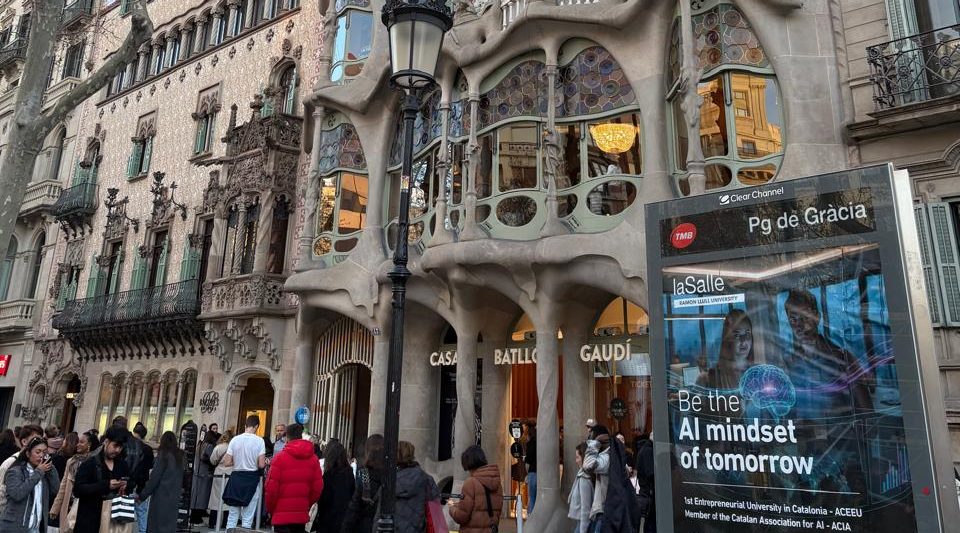
In my wanderings, I reached the famous Las Ramblas and Passeig de Gràcia, comparable to Avenida de los Insurgentes in Mexico City, Gran Vía in Madrid, or the connection of Piccadilly Circus to London’s main arteries. In the late 19th and early 20th centuries, this boulevard –considered as such due to its width and design– housed the homes of the Catalan bourgeoisie.
Here we find part of the magic of Antoni Gaudí, and the city seems to open up to make way for the universe born of his brilliance and a vision that defies time. Casa Batlló and Casa Milà (better known as La Pedrera) stand out as authentic symbols of an art that beats in the heart of Barcelona.
One cannot think of Catalan architecture without Gaudí; from my perspective, they are one and the same. I will open a small parenthesis to speak more about this figure, who gifted us some of the most extraordinary works in a discipline that can transform a simple circle into a light entrance shaped like a tortoise shell.
As Elies Rogent, director of the Barcelona Architecture School, expressed in 1878 on the day of Gaudí’s graduation: “We have given this title to either a fool or a genius; time will tell…” and so it did.
Antoni Gaudí was born in Reus or Riudoms, Spain, on June 25, 1852, and moved to Barcelona in 1868. Once in university, he alternated his studies with work for prominent architects like Joan Martorell, his main mentor.
Among his early works is Casa Vicens (1883–1885), though on November 3, 1883, he accepted what would be his greatest challenge: the construction of the Sagrada Família. The main structures of this temple are set to be completed this year, 2026, marking the centenary of his passing.
Like many enlightened souls, Gaudí met a tragic end: he was struck by a tram on June 10, 1926. Due to his disheveled, almost beggar-like appearance at the time, he went from being a gentleman of elegant bearing to being practically ignored on the day of his death.
Visionary Men
One afternoon, I set out to visit one of the great works Gaudí left us. Remembering his words –“Originality consists in returning to the origin”– I made my way through the crowds on Passeig de Gràcia to Casa Batlló, located in the famous Manzana de la Discordia (Block of Discord).
The original building was constructed in 1877, and José Batlló i Casanovas purchased it in 1903. Batlló was a Spanish industrialist and businessman, a visionary of his time and the patron of what would become a masterpiece of Spanish Modernism.
Parallelly, another equally visionary Spaniard left his mark in a very different but equally emblematic field: José Gener, the founder of Hoyo de Monterrey, one of the noblest and most iconic Habano brands. Both men, in their respective fields, transformed the everyday into art and left a legacy that continues to inspire.
Gener, originally from Tarragona, arrived in Havana at age 13. By 1865, he had acquired total mastery of tobacco and purchased the Hoyo de Monterrey farm in San Juan y Martínez, Pinar del Río –the property that gave the brand its name.
A Racing Heart
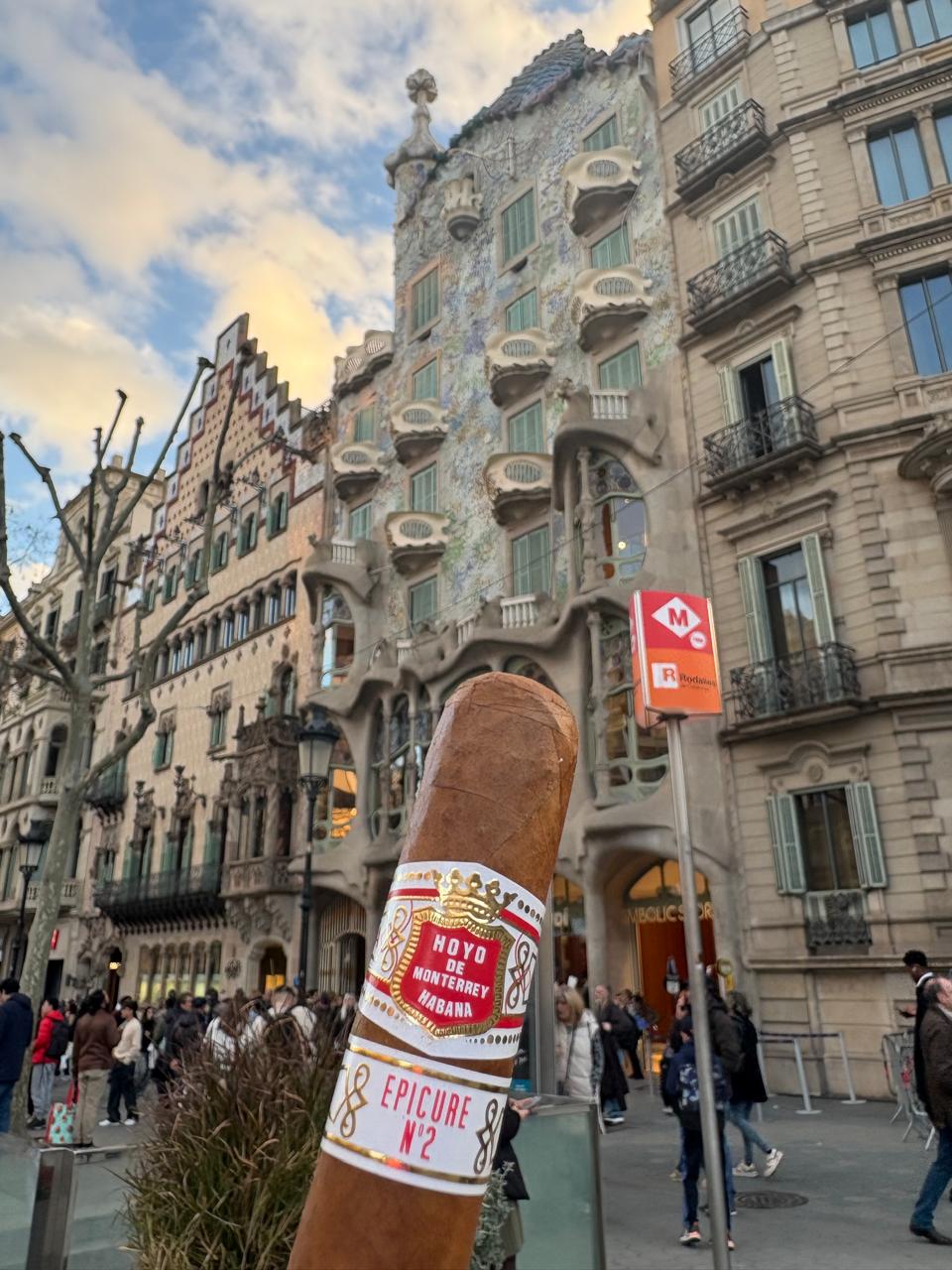
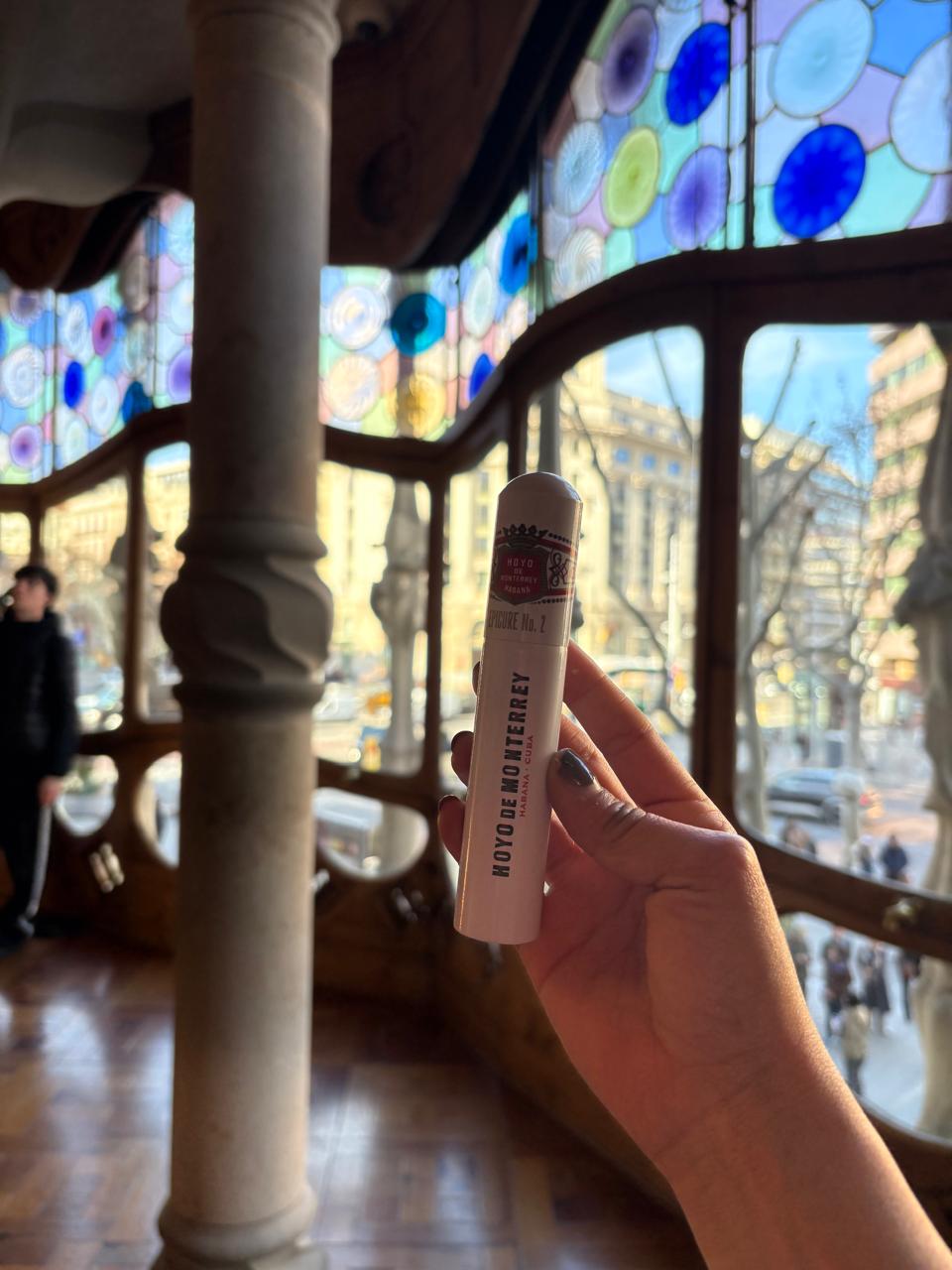
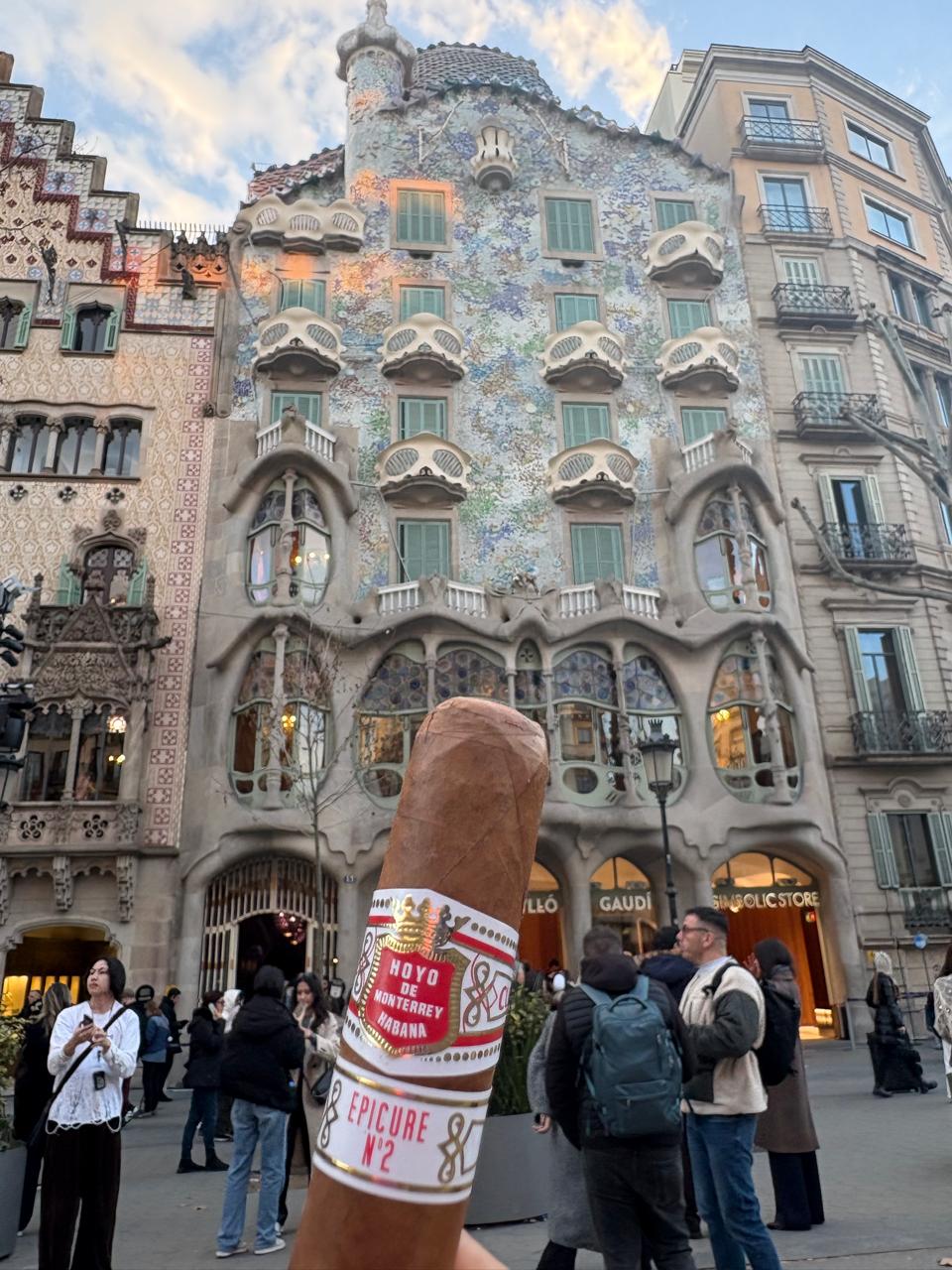
For that day, I chose the vitola I consider most emblematic: the Hoyo de Monterrey Epicure No. 2, a Robusto, 50 ring gauge, 124 mm lengh. It was the first Habano I ever enjoyed when I first entered this culture of fine smoke. Entering the house feels like stepping onto the ocean floor: shell-shaped windows and tones of white and blue blend with a spectacular staircase, whose wooden handrail evokes the spine of a whale.
The best moment was crossing the staircase. From the ceiling, snail-shaped windows allow a spectacular light to illuminate the first floor. I felt a peace that is hard to describe… because Casa Batlló is experienced through the senses; it accelerates the heart.
The first floor is the heart of the home and a reflection of Gaudí’s identity: his play between architecture and nature. At the front lies Mr. Batlló’s office, where a mushroom-shaped fireplace invites one to imagine the conversations held there and the number of Habanos that must have been lit in that room.
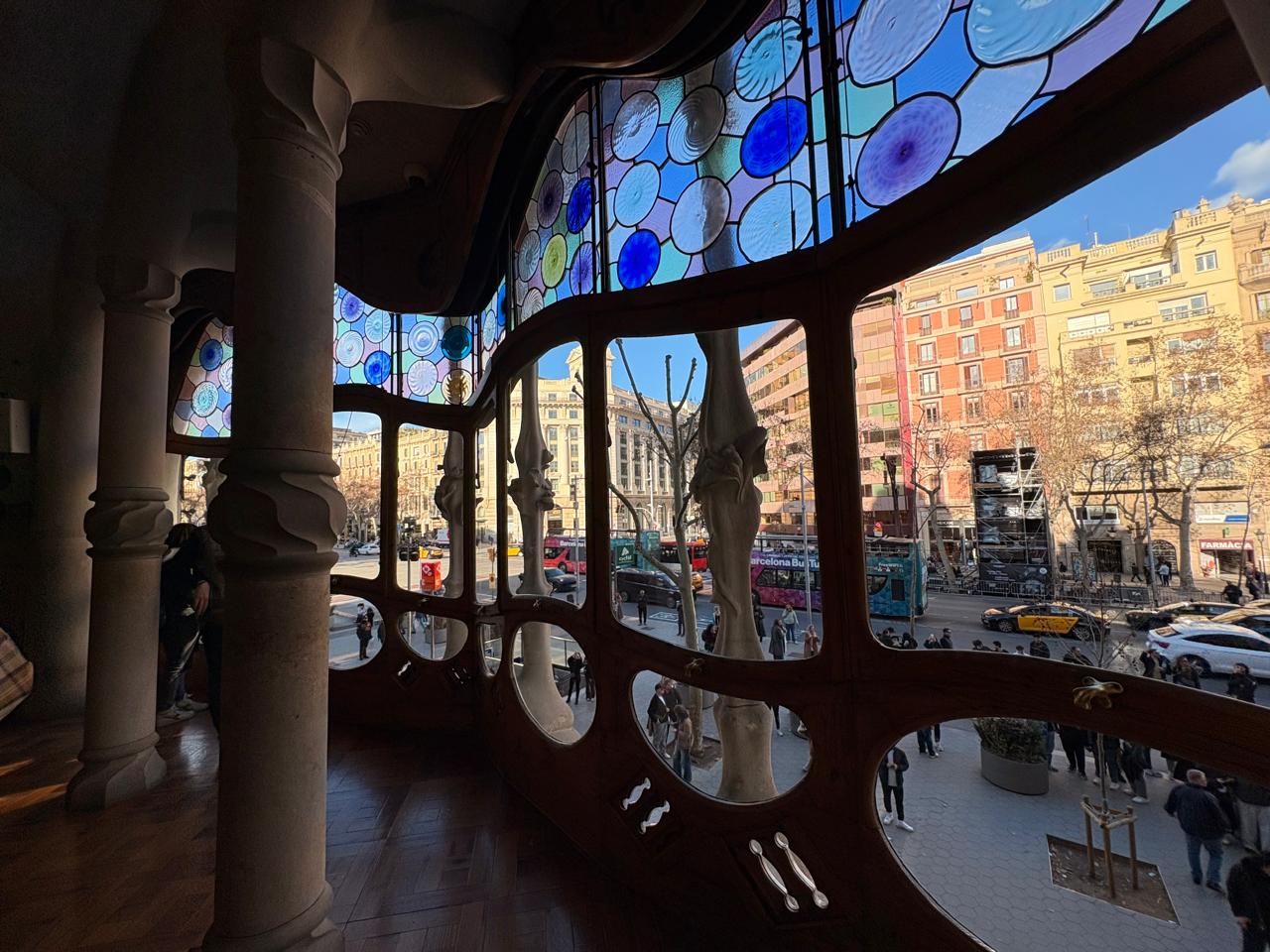
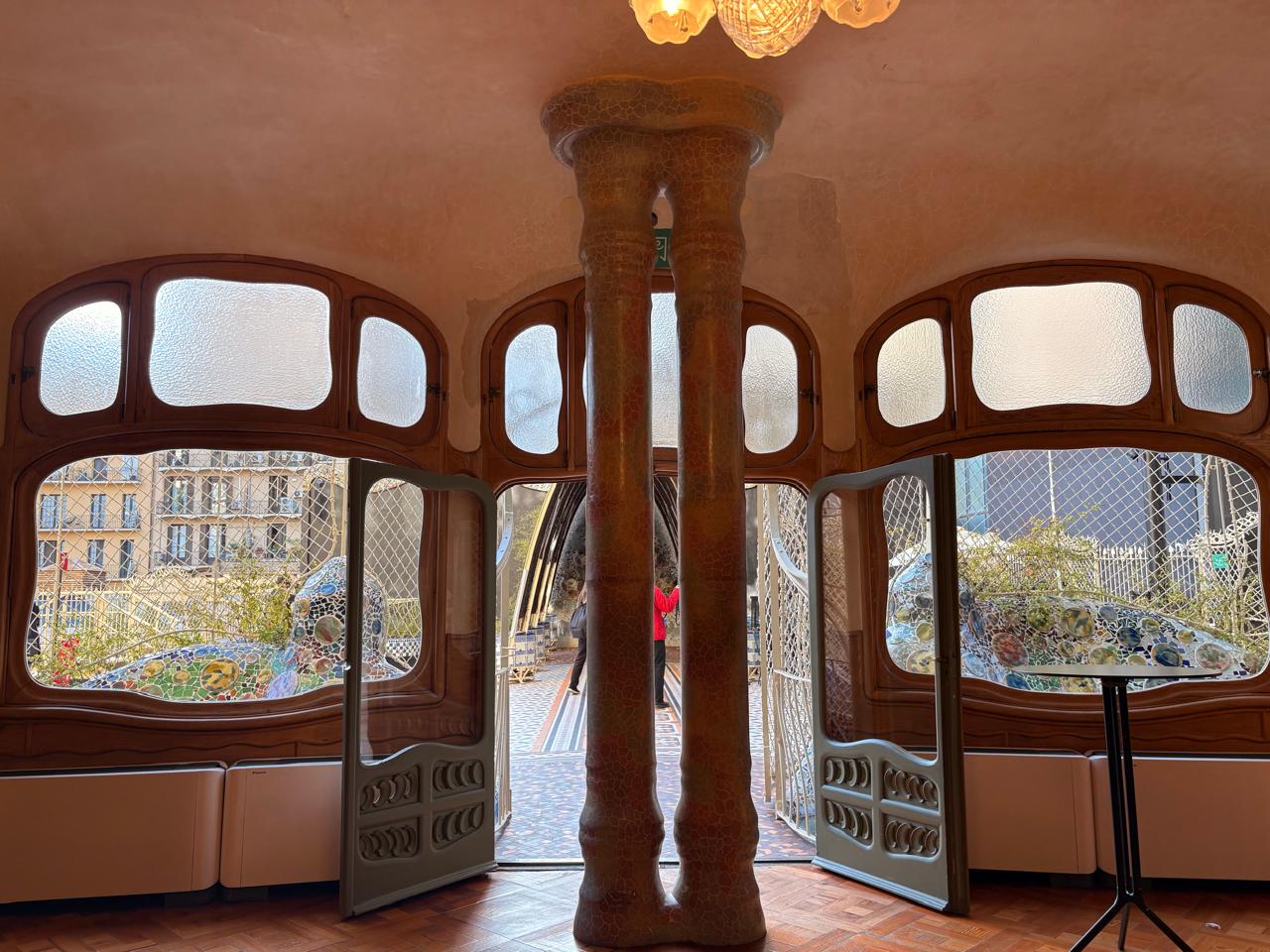
The main salon features a massive window acting as a platform over Passeig de Gràcia. Other highlights include oak doors with organic shapes and a completely undulating ceiling that alludes to the strength of the sea.
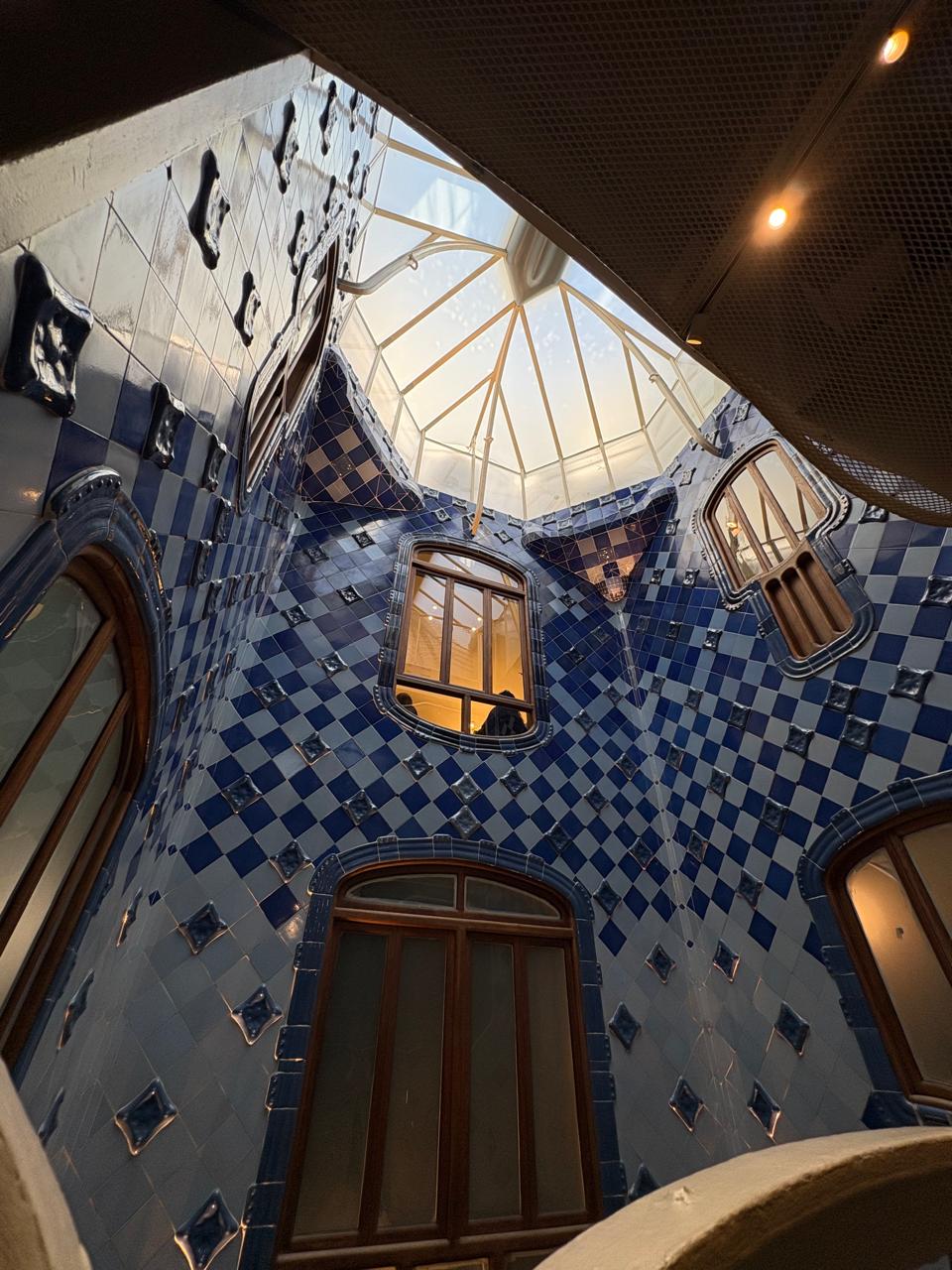
The lightwell warrants a detailed look from the very top of the house. The upper windows are smaller, and as you descend, they become larger; an ingenious effect that allows for a balanced distribution of natural light. You can even interact with the wooden slats at the base of these windows; you will be in for a pleasant surprise.
The varying shades of blue reflected in the tiles lining the high walls of these wells –there are actually two of them– reminded me of the facade of the Casa de los Azulejos in Mexico City, home to the iconic Sanborns.
The Gaudinian Moment
Without a doubt, every corner of the house heightens the senses from a personal perspective. Just as it happens with a Habano, every enthusiast enjoys it differently: some prefer a specific third, while others are drawn to the history or the strength of the brand, for example. My philosophy is that every Habano has its moment.
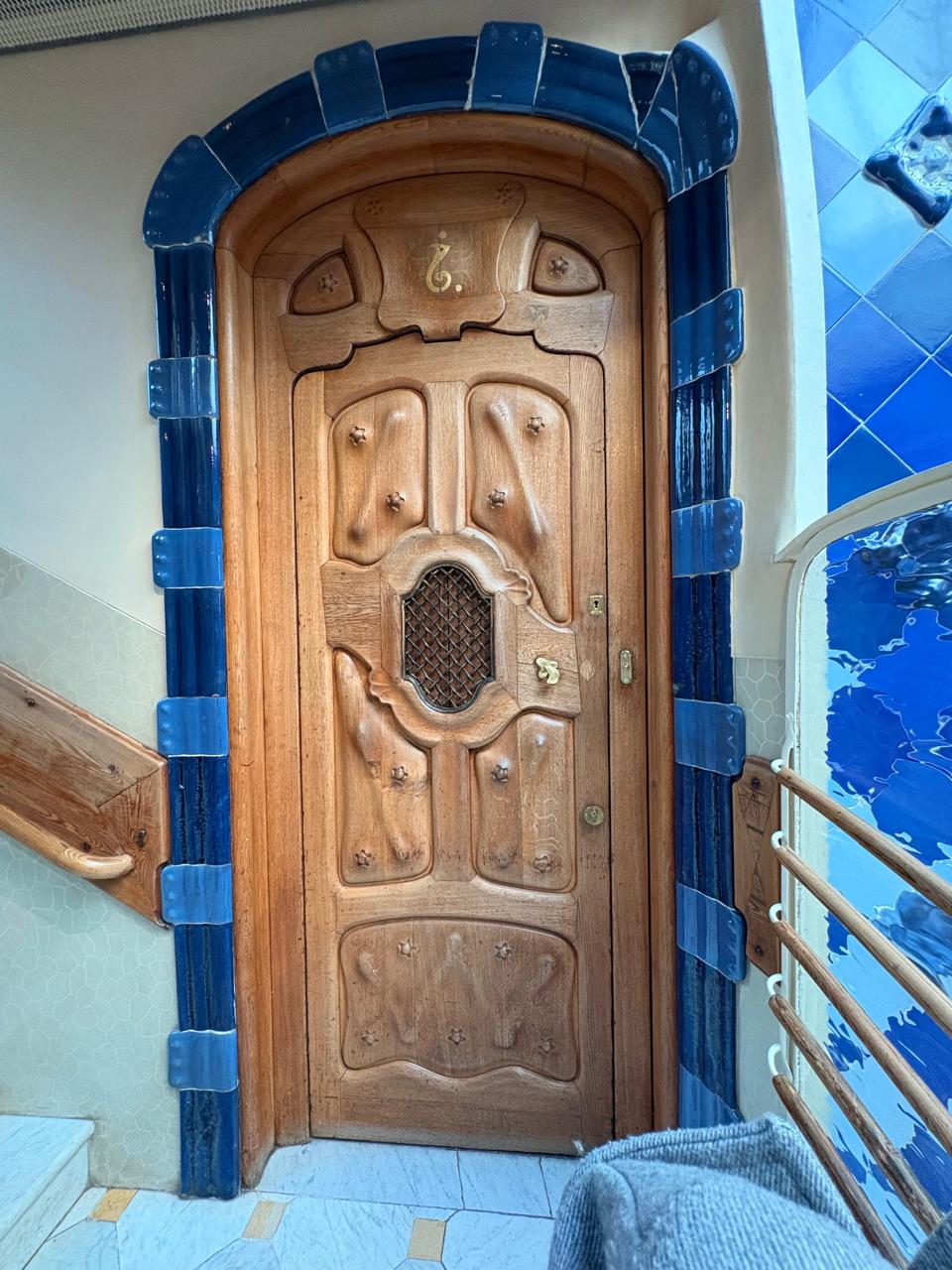
This is exactly what happened to me with the doors. We might take for granted that they are simple, boring rectangles, but at Casa Batlló, the wood takes on circular, star-like, and other shapes that invite exploration. Unfortunately, I found no additional information to explain these motifs in detail, but perhaps this warrants a return visit –and another vitola waiting to be discovered.
The main courtyard is a small oasis in the heart of enigmatic Barcelona. It was designed as a vertical garden of glass and ceramic, symbolizing a climbing plant. From this vantage point, one can observe the iron balconies protruding from the rooms.
It was then that a Gaudinian moment struck me: a humid chill against my skin. Yet, I dared to sit and enjoy a delicious glass of Cava, a staple in Catalan lands. This brought back the memory of the first time I smoked a Hoyo de Monterrey Epicure No. 2 ten years ago –alongside my bosses– during a sort of job orientation.
Now, that Habano led me to reminisce and reaffirm my path in this world. I knew that later, in another place, I would light up and enjoy, puff by puff, the rich Cuban black tobacco and its culture.
Imagination and Surrealism
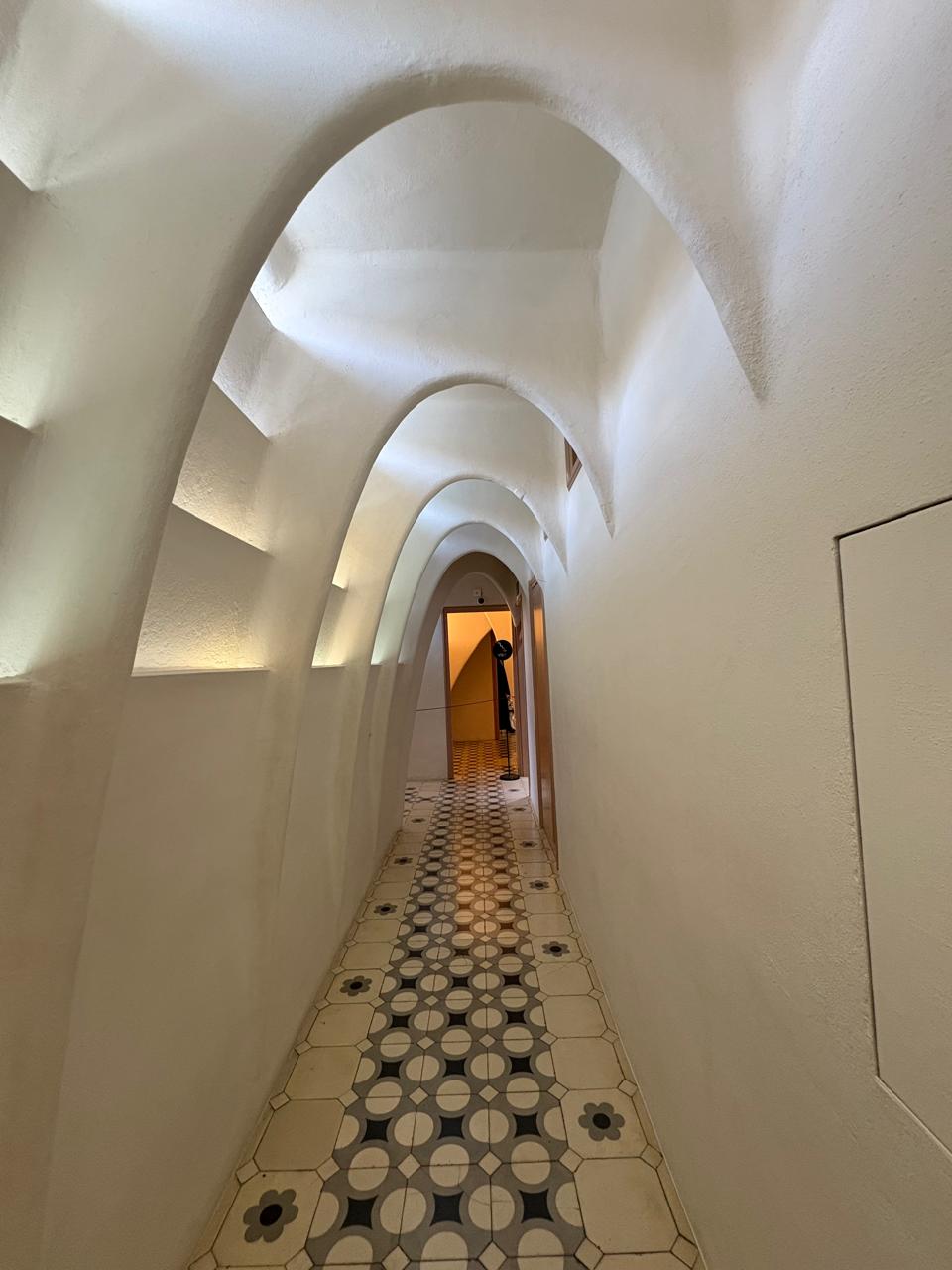
On the top floor of the building, the attic is a space that looks like something out of a Tim Burton film. You can imagine being inside an animal, in an exquisite combination of aesthetics and functionality. The simplicity and minimalism of its forms –between the white color covering the entire room and the play of sixty catenary arches crossing it– resemble an animal’s ribcage.
To my luck, near the end of the tour, the house offers an impressive descent through all its floors, accompanied by an exhibition by Japanese architect Kengo Kuma. Through curtains made of aluminum beads, the installation pays homage to the Mediterranean: its light and shadows, and the colors of its sky and sea.
But… as with every visit, the best is yet to come. When speaking of Casa Batlló, the first thing that comes to mind, of course, is its façade. I wanted to save this space for last, because to truly discover it, you need to traverse and understand Gaudí’s art first. Just like with people, you must get to know them first to later understand their essence and marvel at their gaze.
The façade is like Alice in Wonderland brought to life. Filled with imagination and total surrealism, its marine shapes highlight the effect of an undulating surface made of stone, glass, and ceramic. And in the morning light, it glows.
The front incorporates stone columns with bone-like shapes and Modernist floral details. A highly striking feature at first glance are the balcony “masks,” which seem to protrude from the building in three dimensions. The house itself is crowned by a spectacular roof formed by large scales that simulate an animal’s back. Another prominent element is the tower, from which a four-armed cross emerges, corresponding to the cardinal points.
Its blue, green, yellow, and orange tones resemble watercolors about to spread across a blank canvas. Apparently, Gaudí never offered explanations regarding the design or the meaning of the façade’s elements. That is why every visitor makes their own interpretation… Just as in life, where everyone defines their own meaning, and just as it happens with our fine smokes.
Barcelona is my façade, a feeling of refuge, and the sensation that lingers until the very last ash of a Habano.
SOURCE: casabatllo.es
Suscribe to our Newsletter