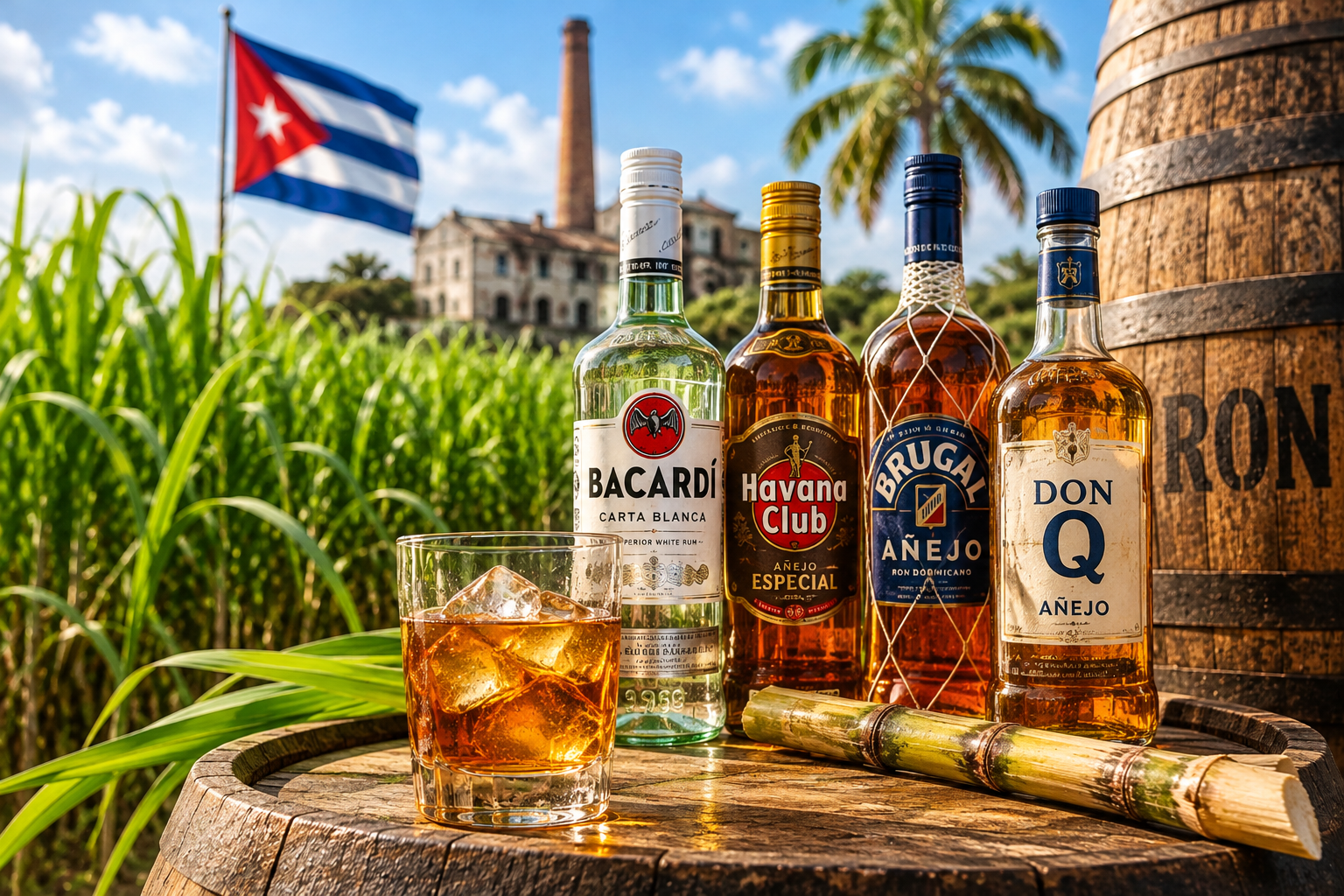
Did you know that Bacardi, Brugal, Don Q, and Havana Club are linked to the tradition of light Caribbean rums? Developed and refined in Cuba during the 19th century, this style is known for producing smooth, dry, and elegant spirits with delicate aromatic profiles. Its production combines fermentation, distillation, and aging techniques that helped Cuban rum earn international recognition.
One of its defining features is the use of column stills, which produce lighter, purer spirits. Equally important is the work of master rum blenders, who have perfected the art of blending: combining distillates of different ages and characteristics to achieve a balanced, consistent profile. The use of previously employed oak barrels also plays a role. Since these barrels have already undergone several aging cycles, they impart subtler notes, allowing the rum to retain its delicate character without being overpowered by the wood.
This tradition eventually spread beyond the island. Bacardi, founded in Santiago de Cuba in 1862, was one of its major pioneers, although the company moved its production outside Cuba after the Revolution. Don Q represents Puerto Rico’s rum-making tradition, while Brugal is one of the leading names in the Dominican Republic. Havana Club, meanwhile, maintains its direct connection to Cuban production. Although these brands have their own identities and methods, they share part of the technical heritage associated with light rums.
Cuba also left an enduring mark on cocktail culture. The island became the birthplace or setting for the international rise of classics such as the Daiquiri, made with white rum, lime juice, and sugar; the Mojito, which combines rum, mint, lime, sugar, and soda water; and the Presidente, a cocktail made with rum, vermouth, and other ingredients. These drinks showcase the versatility of Cuban rum and its lasting influence on international cocktail culture.