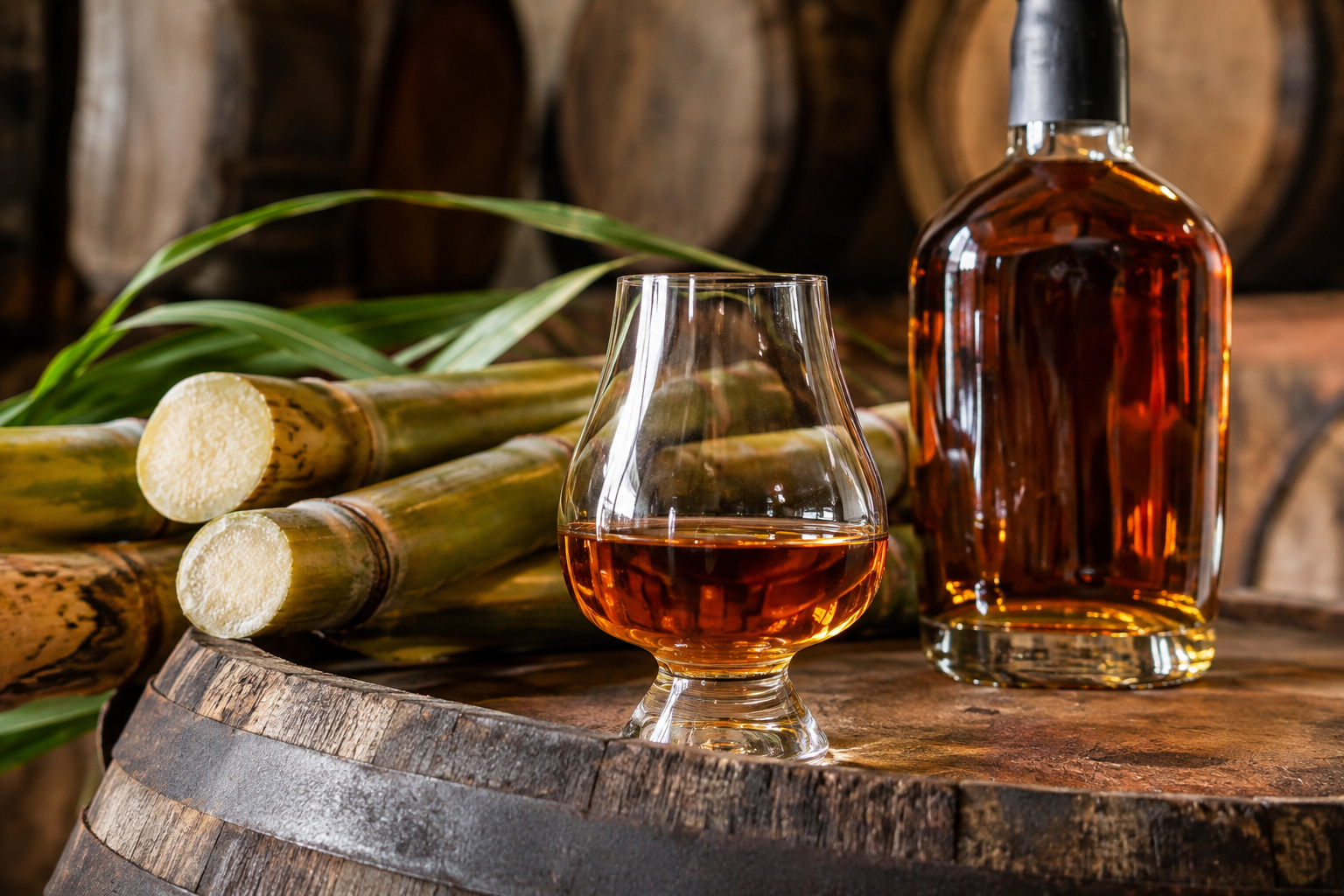
Rum is made from three products derived from sugarcane: fresh juice, cane syrup, and molasses. Each contributes distinct characteristics to the spirit, shaping part of its aromatic and flavor profile. The juice is obtained directly by crushing sugarcane; cane syrup is produced by concentrating its juice, while molasses is the thick residue left after sugar crystals have been extracted. These three ingredients gave rise to different rum-making traditions that spread throughout the Caribbean and other producing regions.
Broadly speaking, there are three major styles of rum: French, Spanish, and English. The French style primarily uses fresh sugarcane juice, as in rhum agricole. Spanish and English styles, on the other hand, are generally made from molasses or cane syrup. The differences go beyond the raw ingredients: fermentation methods, still types, and distillation techniques also play a role, resulting in spirits with very distinct characteristics.
New England, in the United States, became one of the leading rum-producing centers during the 18th century. Much of its industry depended on molasses imported from the Caribbean, which was used to produce a strong, harsh spirit that was often consumed shortly after leaving the still. Its aggressive character gave rise to popular names such as Kill Devil, Rumbullion, and Rumbustion, all of which evoked the intensity of the drink. It was a rum associated with sailors, merchants, and pirates, quite different from the smooth, aged spirits we know today.
Barbados, meanwhile, holds a fundamental place in the history of rum, as it is credited with being one of the first territories to develop its distillation and barrel-aging practices. Some of these casks originally arrived filled with whisky, wine, and other spirits, and were later reused to store rum for periods of up to two years. Prolonged contact with the wood softened its intensity and introduced new nuances, including notes of caramel, molasses, and honey. This process helped transform an initially harsh spirit into a more complex and aromatic drink, laying the foundations for an aging tradition that would come to define much of the identity of Caribbean rum.