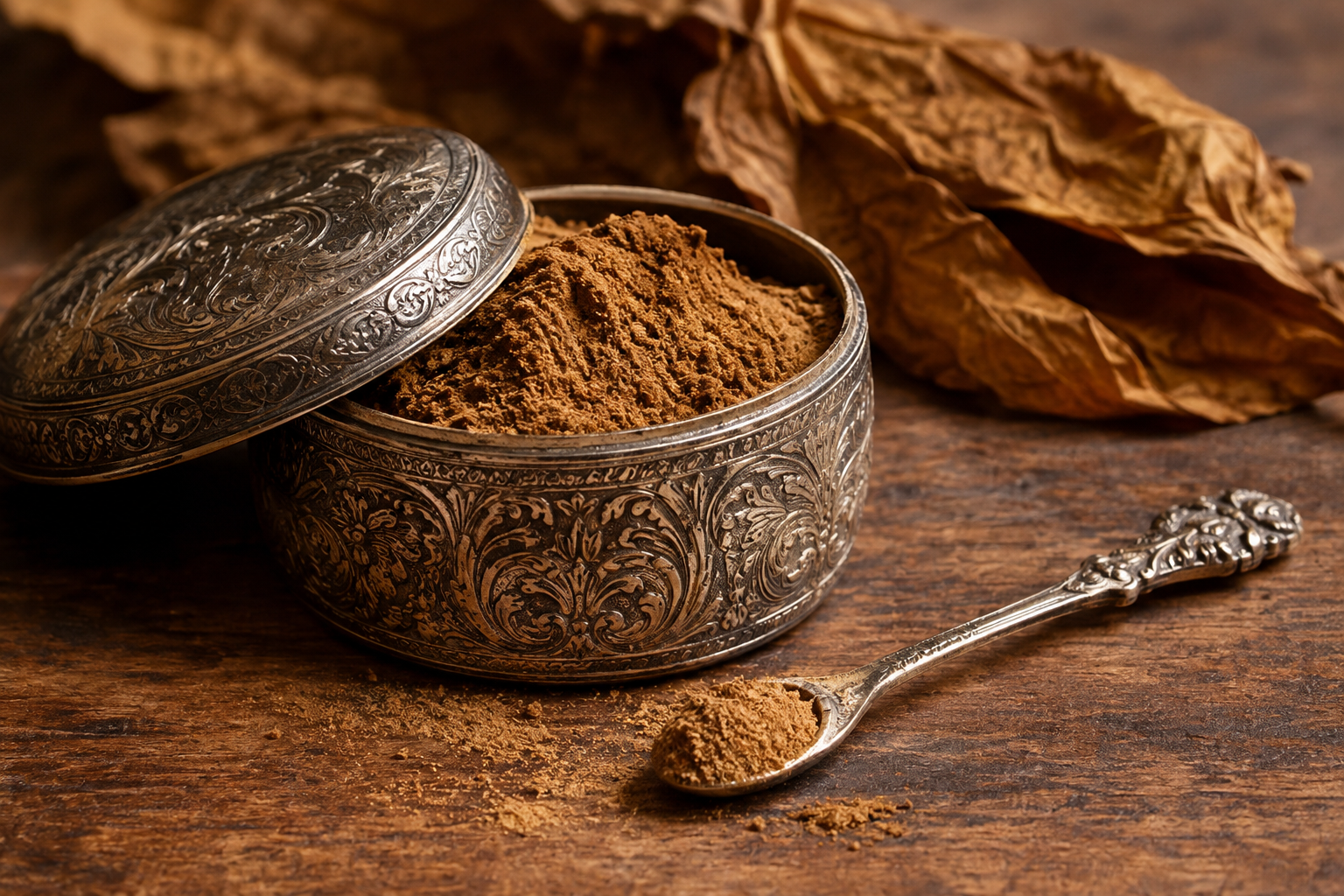
Did you know that the Spanish expression echarse un polvo may have its origins in an old tobacco-related custom? Long before cigars and pipes became popular, one of the ways people consumed tobacco was in powdered form, through a preparation known as snuff. Probably originating in South America, its use reached Europe in the 16th century, where it was initially employed for medicinal purposes before becoming a recreational habit.
During the 18th century, snuff gained enormous popularity among European aristocratic circles. Its consumption became so widespread that numerous varieties emerged, scented with different essences and spices. Special accessories were also developed for its preparation and use: small graters for grinding tobacco leaves, tiny spoons for taking a pinch, and elegant boxes for storing it, some made from precious materials and featuring elaborate decorative finishes.
Snuff eventually became a symbol of social distinction and refinement. Taking a pinch was part of aristocratic daily rituals, both at private gatherings and public events. One popular explanation for the origin of the Spanish expression echarse un polvo is linked to this custom: gentlemen supposedly stepped away from social gatherings to take snuff, although the phrase later acquired a different connotation. While this etymological connection has not been conclusively established, it remains part of the stories surrounding the history of tobacco consumption in aristocratic Europe.