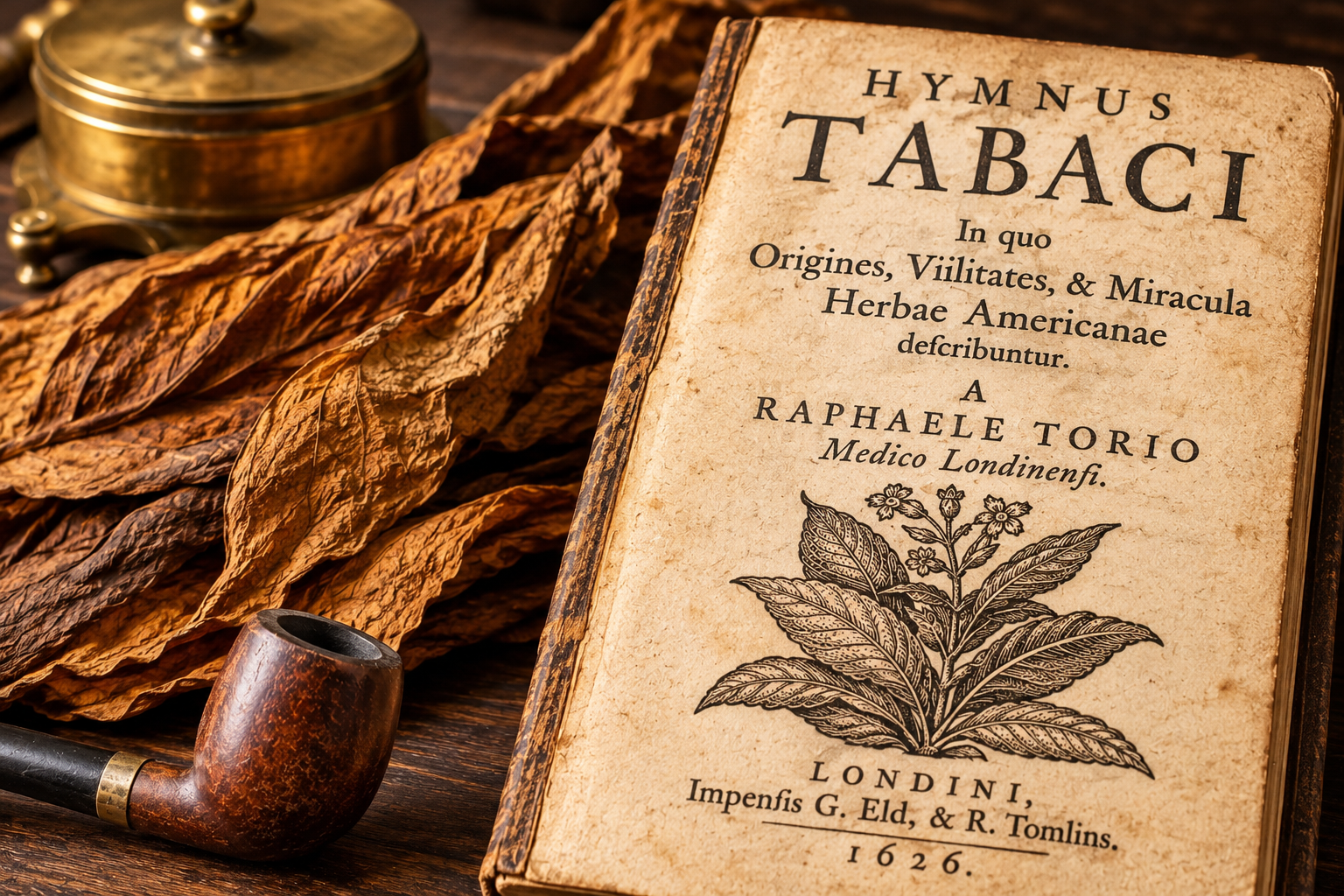
The Hymnus tabaci, by Rafael Thorius, is a poem of approximately 1,100 verses written in Latin. Its first version was composed around 1610 and published in 1625. In this work, the physician and poet of Dutch origin, who settled in London, combines classical mythology, medical knowledge, and agricultural recommendations to extol the virtues of a plant that inspired both admiration and controversy in Europe.
Thorius creates a mythological origin for tobacco through Bacchus, the god of wine, who sets out on an expedition to the Indies accompanied by his maenads. During the journey, his followers, exhausted by thirst, discover a valley covered with tobacco plants. At first, they eat the leaves, but become ill from consuming them in this way. Silenus then teaches them to smoke the leaves instead. The smoke restores their strength, and as they advance through clouds rising from their pipes, they manage to frighten and subdue their enemies. In this way, the poet presents the discovery of tobacco as a divine revelation, placing it within the world of Greco-Roman mythology.
Following this episode, much of the poem is devoted to describing the properties then attributed to tobacco. Thorius credits it with benefits against various ailments, including gout, colic, toothache, and certain respiratory problems. He also attributes effects on sleep, digestion, and mood to the plant. He even addresses its possible drawbacks, arguing that its effects depend on each person’s constitution and on the moderation with which it is consumed. These claims reflect the medical beliefs of the period, rather than present-day clinical knowledge.
The poem also distinguishes between different varieties of the plant and offers recommendations for its use. Its pages include guidance on identifying large-leaved tobacco and distinguishing it from other types, as well as practical advice on cultivation: choosing suitable soil, ensuring adequate sunlight, pruning the lower leaves, and curing them through stacking and drying. These instructions reflected the growing interest in producing tobacco in England rather than relying exclusively on imports from Spanish territories in the Americas.
Combining poetry, medicine, and agriculture, the Hymnus tabaci is a remarkable record of the fascination tobacco inspired as it spread throughout Europe. The work does more than celebrate the plant; it also offers a glimpse into the ideas, debates, and practices that accompanied its introduction into European life.