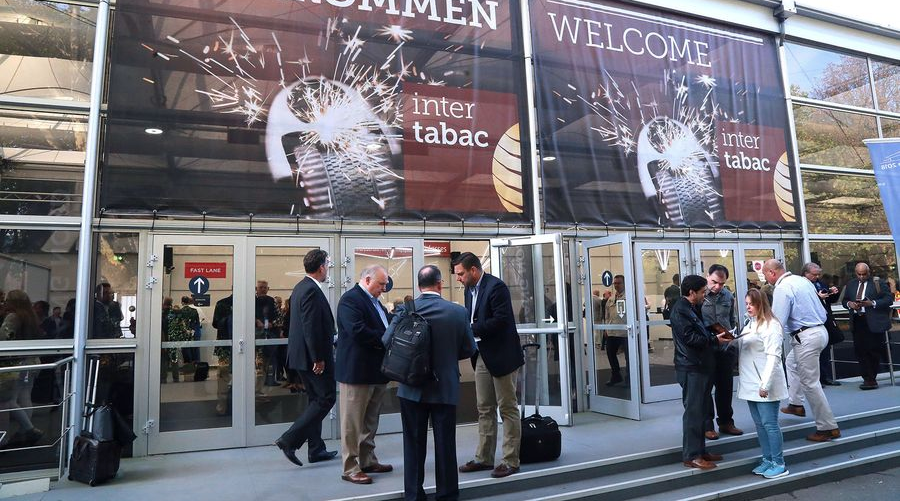
The upcoming edition of the InterTabac Trade Show, taking place from September 19 to 21, will be a new opportunity for visibility for various boutique brands seeking to establish themselves within the global industry.
Unlike other trade shows and events dedicated to the sector, InterTabac brings together the markets of Europe, Asia, the Middle East, and Africa in one place, which is why producers from various origins see it as a window to the Tobacco World.
Read in the magazine (rotate your device for a better reading experience):
From the Dominican Republic, Jonathan Almánzar, CEO of Linga Cigars, is one of the producers who has experienced attending Dortmund, Germany, to witness the business opportunities that this show represents.
According to his philosophy, shared with every client who comes to his Alma and Crú factory with the idea of entering the industry, understanding the vast universe of trade shows is essential for achieving success. It is an opportunity to interact with and learn from producers and brand representatives of all sizes, analyze their sales strategies, and develop one’s own.
Jonathan highlights that entering a diverse range of markets, such as those represented by InterTabac, brings with it challenges to consider, such as the variety of requirements and regulations imposed on tobacco, depending on the country or region of interest.
“There are issues like Track and Trace, which were announced in advance and provided an opportunity to plan, but for this and other requirements, the advice is to have a logistical partner who handles the import processes while you focus on maintaining a high-quality cigar to offer,” he explains.
Manolo Santiago, co-founder of Casa 1910, a representative of Mexican tobacco globally, explains that entering the international market does not require modifications to your products. Instead, it is important to maintain a broad catalog that satisfies as many palates as possible.
With extensive experience attending InterTabac, he details that for Casa 1910, it has been advantageous to have three different lines: one with 100 percent Mexican tobacco, one with a Dominicana-México blend, and the third Nicaragua-México, as well as different vitolas within each of them.
“It’s not about designing a different product for each market. It’s about having such a variety that consumers from different parts of the world find something suitable to their palate and personal taste,” he elaborates.
Additionally, as part of his experience at this show, Manolo shares that unlike other events like TPE or the PCA Trade Show, InterTabac focuses more on large-scale business, so interactions are geared toward tobacco producers and global distributors, with fewer local retailers from Germany.
In this difference, he points out, lies the need to create a work plan entirely focused on post-show interactions, gathering a portfolio of clients interested in your product. “Here, everything is more European in style, a bit more serious than in the United States. Contacts are made and negotiations continue later, unlike PCA, where many sales are closed on the spot.”
For Marcos Pérez, CEO of 1901 Papuro, who will be in Dortmund for the first time with Tabacalera Juan de León, showcasing his boutique brand at InterTabac is nothing more than a growth opportunity for his company. It is a forum where major industry representatives converge, whom he views not as competitors but as focal points that will highlight the effort he puts into his brand from New Jersey and the Dominican Republic.