Aurelio Contreras Moreno
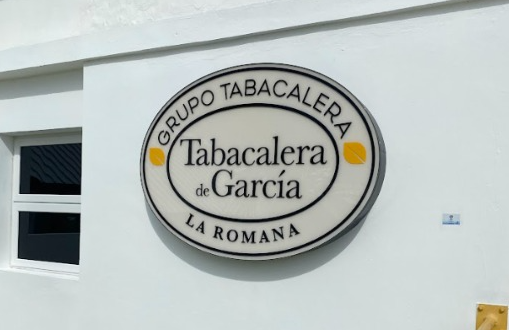
Tabacalera de García, based in La Romana, Dominican Republic, is internationally recognized for the high quality of the tobacco in its cigars, making it the largest premium cigar factory in the world thanks to its numerous top-tier blends and over five thousand employees.
Tabacalera manages four main premium lines: Montecristo, the most prestigious, with the Clásico, Platinum, White, Monte by Montecristo, and Montecristo Epic lines.
They also have the Romeo y Julieta line, which is the highest-volume brand: 1875, Reserva Real, Romeo by Romeo y Julieta, and VegaFina, the company’s most international brand, which has experienced rapid growth, from producing 600,000 cigars annually to 12 million today.
Read in the magazine (rotate your device for a better reading experience):
Another of their brands is H. Upmann, with lines like Reserve, Grupo de Maestros, The Banker, aimed at the U.S. market. They have also just launched the Romeo y Julieta Book of Love, a limited edition.
One key to Tabacalera de García’s success is the work of a group of top-tier master blenders, responsible for creating new blends and overseeing production processes.
Founded in the early ’90s by Don José Seijas, a member of the Cigar Hall of Fame, this team, also known as the blending team, initially made up of Javier Elmúdesi, Pedro Ventura, Carlos Travieso, Víctor Ávila, Néstor Rodríguez, Cándido Rosario, Elmer Suárez, and Joel Alvarenga, is called the Grupo de Maestros (Masters Group). They certainly live up to the name.
Two of them, Javier Elmúdesi and Pedro Ventura, shared their experience, work philosophy, and what drives them to stay at the top of the international blending game with Humo Latino Magazine.
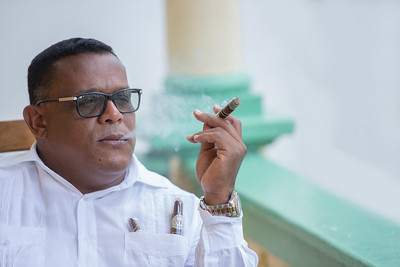
The Master Blender, a chef who cooks cigars: Pedro Ventura
Pedro Ventura, currently the Operations Director of Tabacalera de García, is originally from La Romana. He has always been connected to the agricultural sector, first through sugarcane and later with tobacco.
His father taught him the importance of taking care of the land to ensure that crops reach the expected levels and being responsible for the tasks assigned. “I would say they are a fundamental part of my upbringing and what I am today.”
He studied Computing at the Universidad Central del Este, and just five months after graduating, he began working at Tabacalera de García, the only large factory in La Romana and the only place he has worked for just over 26 years.
His first contact with tobacco was through a friend, Giovani Honorio Cuevas, who gifted him his first cigar. “I say that from the moment I smoked it, I was hooked on this world. It was a splendid Dunhill, a huge cigar, and I smoked it down to the nub, as we say. Seeing that I liked it so much, he got it from a friend who worked here at the Tabacalera. That cigar definitely marked me.”
Mentor
Like all members of the Grupo de Maestros, Pedro Ventura recognizes the teachings and influence of Don José Seijas, whom he calls “a great mentor.”
“I was able to work with him early on when I arrived and got close to him, learning about the process of creating new blends, the knowledge of tobaccos. I also visited the fields, specifically in the Santiago area, in the Cibao Valley, which is where the Dominican tobacco zone is,” he recalls.
At that time, he, along with other recent university graduates, joined a program designed by Don José Seijas to elevate the academic level of the administrative department of Tabacalera de García through training in the tobacco world.
“Since I had this great curiosity, I was always researching from the first day, looking for an opportunity to be closely linked to cigar production. It wasn’t three months before an opportunity arose as a supervisor in the packaging area. I applied and got the position, and that’s how I began. I was lucky that many growth opportunities appeared, and I took advantage of them,” Pedro Ventura narrates.
Within three years, he advanced through the company’s ranks to the position of superintendent thanks to his determination and curiosity to learn about the tobacco world, more than for economic ambition.
“What drove me was the opportunity for growth. At that time, I would even go as far as sacrificing money just to see a good growth opportunity, thinking more in the medium and long term,” he clarifies.
As a superintendent in the Packaging area, he also took on a role related to new launches, the creation of blends, box design, and sample preparation, which he did simultaneously. Later, he was promoted to Manager of New Product Development. “I spent some years there and was also already in the Grupo de Maestros Ligadores.”
After Don José Seijas’ departure from Tabacalera de García in 2011, the Grupo de Maestros took on a more prominent role in the company. “In fact, the concept of the Grupo de Maestros was born with José Seijas’ departure. When he left, the factory and the brands were left without a name behind them, which is crucial today in the world of handmade cigars, and that’s when the formalization of the Grupo de Maestros as a marketing element began.”
Without good tobaccos, there are no good blends
From the position of Product Development Manager, he coordinated the Grupo de Maestros as the direct link with the markets, managing new launches, product types, and characteristics, which form the basis for designing and creating a new blend with medium, high, or mild strength. “I served as a link between the market and the factory, and I presented this information to the Grupo de Maestros. That’s when we would start the process of creating new blends,” he explains.
Pedro Ventura emphasizes that designing a new blend starts with understanding the characteristics of the tobaccos because without that knowledge, “you could have a beginner’s luck, combining tobaccos and making a good sample, but that will happen once, if it happens at all.”
“So, the first thing is to know the characteristics of the tobaccos, and that takes time. Unlike the habano world, which uses tobacco from a single origin, we use tobacco from 11 different origins, for example. So, the only way to get anywhere is by really understanding the characteristics of the tobaccos,” he points out.
The Grupo de Maestros –he mentions– employs the technique of tasting tobaccos 100 percent, which helped them develop their palate. “We made some samples when we received tobacco with the wrapper, filler, and binder from the same tobacco lot, and that ultimately made us appreciate the properties of that tobacco. It was one of the ways the whole group used to develop the palate, which allowed us to know from the start which tobaccos to start mixing when we wanted to introduce a product with certain characteristics.”
He says they would make 20 to 30 different blends, smoking them blindly and evaluating them on forms with organoleptic characteristics and technical aspects like the burn and roll. In the end, they would give a score, and the highest-scoring samples would move on to the next round. The process could take anywhere from six months to over a year.
Based on this knowledge of tobaccos, he continues, it’s also necessary to understand market trends because the current consumer is very different from the one 15 or 20 years ago.
“Before, the consumer wasn’t into strong cigars. They focused on cigars with good flavor and low to medium strength. That has changed a lot, and I can’t make blends I like, but for the person who buys them. Why has this changed so much? Because, before, cigar smokers were older people. You didn’t see a young person, like someone in their 20s, smoking, and today they represent 24 percent of the consumers in the U.S. market, and they seek out cigars with higher strength. There are also people trying to quit smoking cigarettes, and they want that intensity from smoking two or three packs of cigarettes a day,” explains Pedro Ventura.
A master blender, he asserts, must take this into account, because simply having knowledge about the characteristics of tobaccos isn’t enough; it’s also essential to understand what the market is looking for.
“These are the main things needed to create a good blend, in addition to having a good palate and good raw materials. Because without good tobaccos, you can’t make good cigars. So, the processes of planting, curing, and fermentation are crucial for a high-quality product,” he points out.
Pandemic, the Perfect Storm
For Pedro Ventura, the pandemic was like “the perfect storm,” as the demand for tobacco surged by 33 percent. “Stabilizing production as we had it and increasing it according to demand has undoubtedly been the biggest professional challenge I’ve ever faced. As the person responsible for production, obviously all eyes were on me, saying we had to produce and also manage the staff under such difficult conditions as those during the pandemic. It was a tough time, but we came out stronger and became more creative than we thought we could be. That was the positive side of the pandemic.”
In fact, the demand in 2021 was so high that this period has been referred to as the mini tobacco boom. “We produced 45 million cigars that year, something nobody expected,” he says.
He recalls that, like all major companies, Tabacalera de García had to close its factory during the lockdown months. When they were able to reopen, “we couldn’t bring back all the staff. We had to gradually increase the workforce due to social distancing. We had to get very creative, even launching a rotating shift system, where one group would work for four days and then go home, and another group would come in for four days to maintain half of the usual staff.”
For Pedro Ventura, the pandemic represented a turning point for the industry and how it interacts with the market.
“During the pandemic, I did more than 20 live sessions with journalists, bloggers, and enthusiasts. I had one almost every week with people from different parts of the world. There was a closer relationship, intermediaries were eliminated in the process of creating a cigar, and smokers had greater access to information.”
Another effect of the pandemic was the full incorporation of women into the tobacco consumer market. “It’s incredible how many women are smoking now around the world, and you can even see this in the local market in the Dominican Republic, something that would have been unthinkable 10 or five years ago. There are even women smoking clubs,” highlights Pedro Ventura.
He believes that the pandemic accelerated the shift in smoking trends, with more young people smoking and more women joining the market. From a business perspective, this demands that the industry adjust more quickly. As a result, the characteristics of their blends are now more aligned with this trend than with the ones they traditionally made.
Thanks to these business strategies, Tabacalera de García remains the number one choice among consumers of mild and medium-bodied cigars, capitalizing on the trend of new smokers as the traditional smoker base shrinks. “So, if you fall behind, you’ll end up being small,” he states.
Pedro Ventura reflects on the main challenges he has faced in his career. “The first was getting into the Grupo de Maestros and earning the acceptance of a group of people with a world of experience, while I was just a young guy coming out of college with no tobacco family background. Achieving the acceptance of that group and getting to the point where they truly accepted me as part of the group was a huge accomplishment, one of the first milestones in my career.”
The second challenge was working in a multinational company with a culture that was not necessarily aligned with a hand-rolled cigar factory, but rather with the world of cigarettes and machine-made cigars. “Being able to deal with that, and making the executives understand that there were things that didn’t necessarily apply to the operation of hand-rolled cigars, was a tremendous challenge.”
Finally, as a master blender, Pedro Ventura advises new smokers that if they want something intense, they should start with a medium-strength cigar to develop their palate and better appreciate the characteristics of different types of tobacco. “That way, they can truly appreciate a good cigar, as they first work on developing and educating their palate.”
All that training of the palate and sense of smell in the creation of cigar blends is part of an ongoing education process, which even shares notable similarities with the gastronomic world. “In the end, we’re chefs who, instead of food, create cigars.”
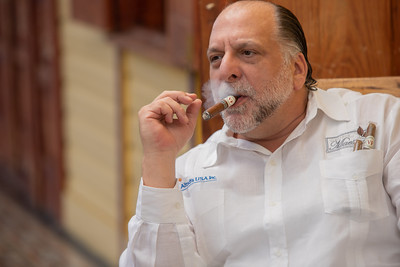
What is the best cigar? The one that sells: Javier Elmúdesi
José Javier Elmúdesi Rodríguez is the Industrial Affairs Manager at Tabacalera de García. He is an Industrial Engineer and holds a Master’s in Business Administration. He was born in Santo Domingo, Dominican Republic, in a family with strong Catholic values and a deep sense of family unity.
Tabacalera de García: Meeting Tobacco
Although his family doesn’t come from a tobacco tradition, Javier was always somehow involved with tobacco.
“My grandfather smoked cigars. He smoked La Aurora cigars and chose them carefully to ensure none had holes or tobacco worms. He would take 20 cigars and smoke them throughout the week, but he always had his cigar with him and loved to smoke,” he recalls.
His first direct contact with cigars came when he joined Tabacalera de García in 1996. His wife’s mother was a close friend of the factory’s manager at the time, José Seijas. “They had a very close relationship, and she passed my resume to Mr. José when they were looking for a manager for an operation at the lipstick case assembly factory here.”
At the time, the owner of the factory also owned the Revlon cosmetics brand, and they used the factory workforce to assemble lipstick cases. “It was a very clean operation, and we assembled up to 40 million cases in a year.”
His first cigar was given to him by José Seijas, with whom he worked very closely. “José Seijas took a liking to me from the very first day I entered. In fact, I worked in an office near his, in the same building, and in the mornings, we would attend meetings where everyone smoked. He saw me take a cigar, and came to my office to suggest that we do something, knowing I wanted to start smoking. He told me to begin with a Vega Fina Regular, which came out in 1998.”
“He told me to smoke that cigar for a while because he didn’t want me to be discouraged by a stronger cigar, and that I should gradually work on my palate. I took that cigar from José and smoked one every morning with coffee, and another in the afternoon. Little by little, I started increasing the strength and complexity, and I believe that’s the right way to start smoking cigars,” he explains.
Javier Elmúdesi says he was fortunate to have had the best mentors in the cigar industry since he started working in the primary tobacco leaf department, involved in the leaf conditioning processes, where he met George Herschel and Nick Van Holden, who at the time were the buyers for Consolidated Cigar, and Julio Aponte, who worked for over 50 years buying tobacco.
He claims that those years were very important because working in the fields and with tobacco suppliers is an experience that lays the foundation for understanding this wonderful industry. He believes it’s the right starting point for anyone entering the field: to begin with tobacco as a leaf.
Once in the tobacco area at Tabacalera de García, he worked on testing the blends of cigars that would be launched to the market. “We smoked almost daily, and in any meeting, we would try a blend and discuss what could be improved. Anyone in the group could bring a new blend or a better version of one we had smoked, and in those meetings, we would talk about how to enhance it. This created an experience and knowledge of using different types and grades of tobacco for different smoking experiences.”
Smoking All the Time: The Master Blender’s Responsibility
This was the foundation for what would later become the Grupo de Maestros, working closely with Néstor Rodríguez, Pedro Ventura, Víctor Ávila, José Seijas, Cándido Rosario, and Carlos Travieso.
“It became our responsibility to keep smoking, not only to ensure the consistency of the brands we had to maintain but also because the market demanded new things, innovations. Today, 30 percent of what is sold in a year is innovations, and we must always be looking for something new for the consumer,” he emphasizes.
Becoming a master blender is a years-long task that involves trying countless variations of tobacco to educate the palate, he mentions.
“Here, we have always worked with 13, sometimes 14 different origins for the filler, six to seven for the binder, and up to 14 origins for the wrapper. So, when I mention an origin, for example, a Dominican tobacco, there are three varieties of seed, four different regions, and four different positions on the plant. Only by smoking you can know that a cigar has 33 percent Dominican Piloto tobacco, 30 percent Nicaraguan, with some Peruvian and an Olor Domincano binder,” he explains.
Javier Elmúdesi gives an example of a special edition cigar produced for a family with whom they had worked for many years. “We planted for this edition, with time and proper fermentation, also using their own Piloto de la Canela. We ended up with a cigar that didn’t resemble any other cigar. This is the kind of work we do when the market asks for innovation.”
He explains that creating a new blend can take up to nine months, especially when you have a high-quality tobacco inventory like at Tabacalera de García. “Back then, we had a minimum of 24 months of tobacco leaf inventory for all those references, and not every industry could have that; it was a huge advantage. We were like children playing with a lot of toys. That’s what truly allows the development of blends.”
The pandemic changed many things worldwide, and the tobacco industry was no exception. Javier Elmúdesi highlights the transformation in production and promotion processes, which included adopting technology, holding meetings and smoking sessions remotely, and alternating shifts in the factory due to the required social distancing.
Moreover, it was a major challenge, as while cigar production had to be reduced, demand skyrocketed. For the world’s largest factory, it was a real challenge, having to double efforts to hire additional staff to meet the growing market.
In this regard, he points out that Tabacalera de García serves two markets: the United States, where 60 percent of its production goes, and the remaining 40 percent is sold worldwide.
He believes that the U.S. market will increasingly focus on cigars of higher complexity and strength, particularly among younger consumers. Furthermore, American smokers are knowledgeable and demand consistency between the price and quality of cigars.
At the same time, he notes that the international market will also move toward cigars of greater complexity. “But in the end, I believe the smoker will recognize, just like with wine, when a cigar has well-fermented and well-aged tobacco. The market is becoming more and more educated,” he adds.
Javier Elmúdesi emphasizes that the company is prepared to manufacture what the market is asking for. “What’s the best cigar? The one that sells. And the one that sells at a reasonable price,” he concludes.